Commercial facilities are losing an average of $18,000 per hour of unplanned equipment downtime and the vast majority of those failures were preventable. HVAC systems, chillers, generators, elevators, electrical panels, and boilers don't fail without warning. They telegraph their deterioration weeks in advance through rising temperatures, increasing vibration, abnormal current draw, and degrading sensor readings that manual inspection cycles are too infrequent to catch. AI predictive maintenance changes this fundamentally by continuously monitoring equipment health data, identifying the anomaly patterns that precede failures, and generating maintenance work orders automatically before a breakdown occurs. The global AI predictive maintenance market reached $9.8 billion in 2024 and is projected to hit $47.4 billion by 2031, growing at 25.1% CAGR driven by commercial facility operators who have documented 45% reductions in unplanned downtime, 30% lower maintenance costs, and ROI achieved within the first year. Facilities still running reactive maintenance programs are not just losing money on emergency repairs that cost 4.8x more than planned work they are absorbing the productivity losses, tenant complaints, compliance risks, and capital write-offs that preventable failures generate across their entire asset portfolio. OxMaint's AI-powered CMMS brings predictive maintenance intelligence to commercial facilities of every size connecting IoT sensors, equipment data, and work order history into an AI layer that gives facility managers the advance warning their reactive programs never provide. Sign up for OxMaint free and activate AI predictive monitoring for your facility's critical assets today.
45%
Reduction in unplanned downtime events documented in year one of AI predictive maintenance
$47.4B
AI predictive maintenance market by 2031 — growing at 25.1% CAGR from $9.8B in 2024
4.8x
Emergency repair cost multiplier vs. planned maintenance — the financial case for going predictive
$18K
Average cost per hour of unplanned equipment downtime in commercial facilities — 2024 benchmark
Cut Equipment Downtime by Up to 45% with AI Predictive Maintenance.
OxMaint's AI predictive maintenance platform monitors HVAC, generators, elevators, electrical systems, and all critical facility assets in real time — detecting failure patterns weeks before breakdown and creating work orders automatically. Free to start. No hardware lock-in. Deploys in days.
What AI Predictive Maintenance Actually Does — and How It Differs from Scheduled PM
Most commercial facilities still run preventive maintenance on fixed schedules — change the filter every 90 days, inspect the chiller quarterly, service the generator annually. These intervals are averages built from manufacturer estimates, not measurements of what your specific equipment in your specific facility actually needs. AI predictive maintenance replaces averages with real-time data.
Scheduled Preventive Maintenance
Fixed calendar intervals — ignores actual equipment condition
Over-services assets with 20–30% of useful life remaining
Misses failures that develop between scheduled service windows
Technician dispatched on schedule regardless of equipment health
Reactive to the failures that intervals can't predict
No trend data — each service event isolated from the previous
Emergency repairs still happen — just less frequently than pure reactive
CapEx decisions made on age and mileage, not actual condition
AI Predictive Maintenance — OxMaint
Continuous sensor monitoring — service triggered by actual condition data
Serves assets precisely when needed — eliminates over-service waste
Detects developing failures 2–8 weeks before they cause breakdown
AI generates work order automatically when anomaly threshold crossed
Converts 60% of emergency repairs into planned shop events
Cross-asset trend analysis reveals fleet-wide degradation patterns
45% reduction in unplanned downtime documented in year one
Rolling 5-year CapEx forecast built on actual condition scores
The 8 Commercial Facility Asset Categories Where AI Delivers the Highest Downtime ROI
AI predictive maintenance does not deliver equal returns across every asset class. These eight categories generate the highest downtime costs and the most detectable failure signatures — making them the highest-priority targets for AI monitoring in any commercial facility program.
01
HVAC and Chiller Systems
HVAC failure is the number one source of tenant complaints and comfort-related downtime in commercial buildings. AI monitors refrigerant pressure, compressor current draw, condenser coil temperatures, and air handler bearing vibration — detecting the patterns that precede compressor failure 4–6 weeks before breakdown. A single avoided chiller replacement saves $40,000–$120,000 in direct costs plus weeks of tenant disruption.
HVAC accounts for 39% of commercial building energy use — AI optimization saves 15–25% of this cost
02
Backup Generators and UPS Systems
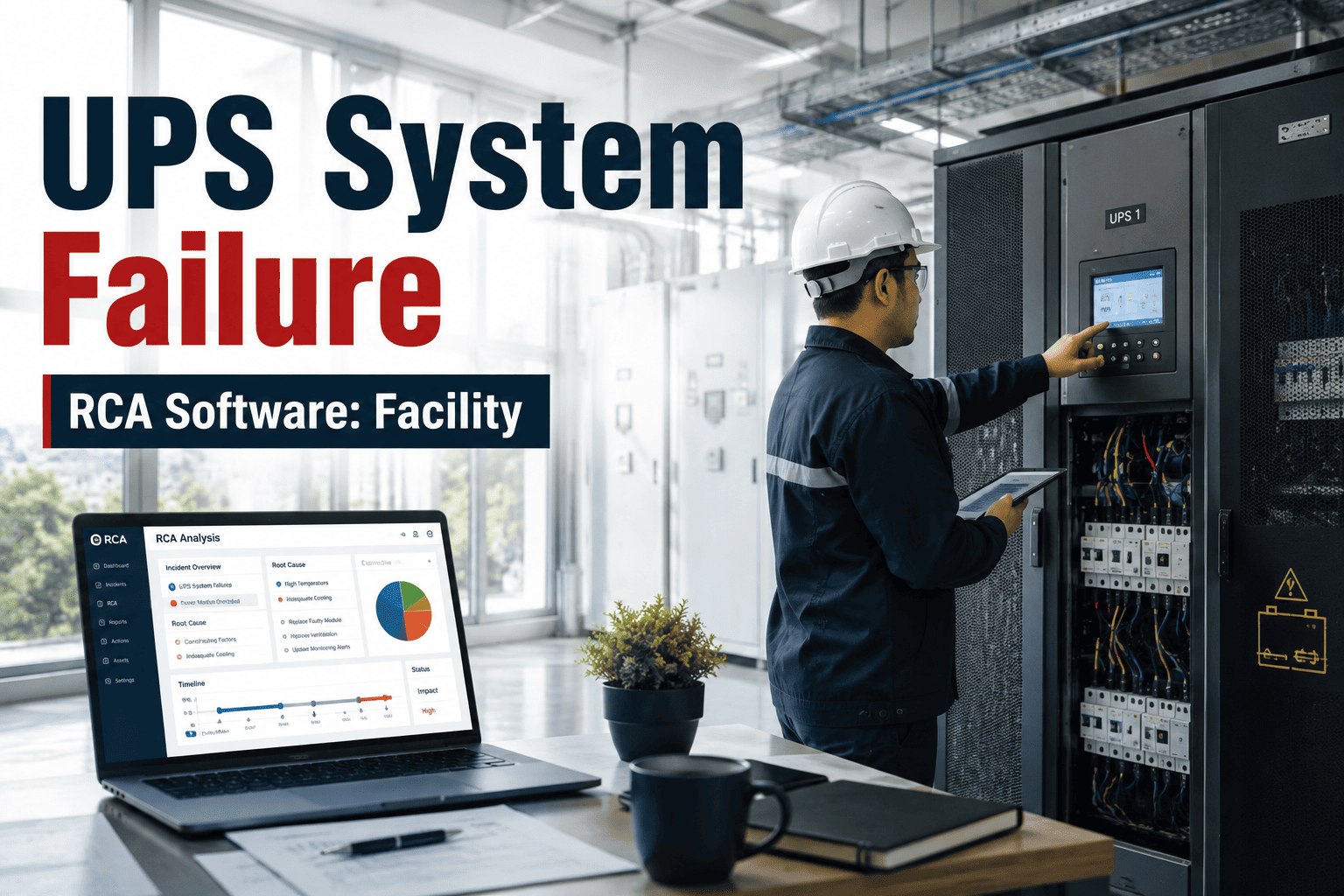
A generator that fails during a power outage is not a maintenance event — it is a business continuity crisis. AI monitoring tracks coolant temperature trends, battery voltage under load, fuel system pressure, and load bank test outcomes over time to detect deteriorating generator health before the next outage test reveals the failure. AI monitoring achieves 90%+ prediction accuracy for generator failure within a 60-day window.
Generator failure during an outage costs 8–15x more than a planned replacement
03
Elevators and Vertical Transportation
Elevator downtime in commercial and residential high-rises creates immediate safety, accessibility, and liability exposure. AI monitoring tracks motor current signatures, door cycle times, leveling accuracy, and hydraulic system pressure trends — identifying mechanical wear patterns that predict door mechanism failures, motor degradation, and hydraulic seal deterioration weeks before they cause entrapment events or service shutdowns.
Elevator downtime costs Class A office buildings $3,000–$8,000 per day in tenant impact
04
Electrical Distribution and Switchgear
Electrical panel and switchgear failures are among the most dangerous and expensive events in any commercial facility — often preceding fires, regulatory shutdowns, or complete building power loss. AI thermal imaging analysis and circuit load monitoring detect abnormal resistance patterns, loose connections, and overloaded circuits weeks before they reach failure threshold — enabling scheduled corrective work without emergency shutdown risk.
Electrical failures cause 13% of commercial property fires — AI detection prevents 80% of detectable precursors
05
Boilers and Steam Systems
Boiler failures in healthcare, hospitality, and multi-tenant commercial buildings create immediate regulatory compliance events in addition to operational disruption. AI monitors combustion efficiency, flue gas temperature trends, heat exchanger fouling indicators, and safety valve cycling patterns — detecting the efficiency degradation that precedes failure and enabling planned interventions that avoid emergency service calls and compliance violations.
Boiler failure in healthcare facilities triggers regulatory notification within 24 hours — AI prevention is non-negotiable
06
Pumping and Plumbing Infrastructure
Pump failures in cooling towers, fire suppression systems, domestic water systems, and irrigation infrastructure create cascading failures that affect multiple building systems simultaneously. AI vibration analysis and flow rate monitoring detect bearing wear, impeller degradation, and seal deterioration weeks before failure — enabling seal replacement at $200 rather than pump replacement at $8,000–$25,000.
AI converts 70% of pump replacements into planned seal or bearing services
07
Building Automation and Control Systems
BAS/BMS sensor failures and controller degradation cause HVAC, lighting, and security systems to operate outside their programmed parameters — wasting energy, reducing comfort, and creating compliance gaps without triggering any visible alarm. AI monitors control loop performance, sensor drift, and actuator response time trends — detecting BAS deterioration that conventional monitoring ignores until a visible system failure surfaces the underlying control failure.
BAS sensor failures cause 22% of commercial HVAC inefficiency — invisible without AI monitoring
08
Roofing and Building Envelope Systems
Commercial roof failures generate insurance claims, water damage cascades, and tenant fit-out losses that dwarf the cost of the roof repair itself. AI-integrated moisture sensors and structural monitoring detect leak infiltration, membrane separation, and drainage blockage before water breaches the building envelope interior — enabling targeted roof repairs at $3,000–$8,000 versus emergency water damage remediation averaging $45,000–$180,000 per event.
Early detection converts $45K–$180K water damage events into $3K–$8K targeted repairs
How OxMaint's AI Predictive Maintenance Platform Works for Commercial Facilities
OxMaint connects your facility's existing sensor infrastructure, IoT monitoring hardware, and equipment data to an AI analysis layer that monitors asset health continuously, identifies developing failure patterns, and triggers automated maintenance workflows — without requiring a dedicated data science team or a complex IT infrastructure project.
01
Sensor Data Ingestion — Any Source, Any Protocol
OxMaint connects to BAS/BMS systems, standalone IoT sensors, equipment manufacturer cloud APIs, vibration monitoring hardware, thermal cameras, and energy monitoring platforms through open API integrations and pre-built connectors. For facilities without existing IoT infrastructure, OxMaint supports deployment of plug-and-play wireless sensors that begin transmitting data within hours of installation — with no cabling project or IT department involvement required. All data streams consolidate into OxMaint's unified asset dashboard, giving facility managers a single view of every monitored asset's real-time health status.
BAS/BMS integrationIoT sensor connectivityOEM equipment APIsEnergy monitoring
02
AI Baseline Modeling and Anomaly Detection
OxMaint's AI layer establishes performance baselines for each monitored asset during the first 30–60 days of connected operation — learning normal operating ranges for temperature, pressure, vibration, current draw, and efficiency metrics under varying load conditions and seasonal parameters. Once baselines are established, the AI continuously compares incoming sensor readings against these baselines, detecting not just individual threshold breaches but cross-parameter correlation patterns — the combinations of readings that precede specific failure modes weeks before any single parameter exceeds its threshold independently. Prediction accuracy reaches 90%+ within 60–90 days of deployment for most asset categories.
Dynamic baseline learningCross-parameter correlation90%+ prediction accuracy
03
Automated Work Order Creation and Technician Dispatch
When OxMaint's AI identifies an anomaly pattern that crosses a configured action threshold, it automatically creates a work order pre-populated with the asset's service history, the specific sensor findings, recommended maintenance actions based on the detected failure pattern, and the technician assignment configured for that asset type. The work order appears in the maintenance queue before the facility manager has seen the alert — eliminating the manual step from AI detection to maintenance action. Technicians receive the work order on the OxMaint mobile app with all relevant context before approaching the asset.
Auto work order creationService history pre-loadedMobile technician dispatch
04
Closed-Loop Learning and CapEx Forecasting
Each completed work order — the technician's findings, parts consumed, repair actions, and asset condition post-service — feeds back into OxMaint's AI model, improving prediction accuracy for that asset and for similar assets across the facility portfolio. The AI accumulates condition score data and maintenance cost trajectories per asset, generating rolling 5-year CapEx forecasting models that give facility directors and asset managers data-driven replacement timing recommendations instead of annual budget guesswork. Assets approaching end-of-economic-life are flagged proactively — giving procurement the lead time to plan replacements strategically rather than reactively.
Closed-loop AI learning5-year CapEx forecastingReplacement timing alerts
AI Predictive Maintenance vs. Reactive Maintenance: The Numbers
| Performance Metric |
Reactive Maintenance |
Scheduled PM Only |
AI Predictive — OxMaint |
| Unplanned Downtime Events |
80+ events/year per 100 assets — no advance warning |
50–60 events/year — intervals miss between-window failures |
44 events/year — failures caught 2–8 weeks before breakdown |
| Emergency Repair Cost |
4.8x planned maintenance rate — 100% of failures emergency-rate |
2.5x planned rate — interval failures still emergency-rate |
Planned rate on 90%+ of repairs — 60% cost reduction vs. reactive |
| Equipment Uptime Rate |
82–88% — frequent unscheduled downtime events |
90–93% — better but not best-in-class |
95–97% — AI-monitored assets achieve best-in-class uptime |
| Annual Maintenance Cost |
$3M baseline — no cost control mechanism in place |
$2.2M — 27% reduction but still over-servicing inefficiency |
$1.8M — 40% reduction from reactive baseline documented |
| Failure Detection Lead Time |
Zero — failure discovered at breakdown event |
Detected at next inspection — days to weeks after onset |
2–8 weeks before failure — AI detects developing anomaly patterns early |
| Work Order Generation |
Manual — reactive to breakdown call or report |
Semi-automated — scheduled WOs only, no condition trigger |
Fully automated — AI alert generates WO without manual step |
| CapEx Planning |
Annual guesswork — replacement driven by failure, not condition |
Age/mileage estimates — no per-asset condition visibility |
Rolling 5-year forecast per asset — condition-score-based replacement timing |
| First-Year ROI |
No ROI measurement — no baseline data to compare against |
15–25% maintenance cost reduction — measurable but limited |
220%+ ROI documented — first prevented failure often covers platform cost |
45%
Unplanned downtime reduction — documented year one of AI predictive maintenance
30%
Lower total maintenance cost versus reactive baseline — parts, labor, and emergency premiums
220%+
First-year ROI documented across OxMaint commercial facility deployments
8 Weeks
Average AI failure detection lead time — from anomaly pattern to alert before breakdown
6 AI Predictive Maintenance Features in OxMaint That Drive Commercial Facility Results
OxMaint is not a monitoring dashboard. It is a complete AI-powered CMMS where predictive monitoring, work order management, asset lifecycle tracking, and CapEx forecasting operate as a unified platform — not disconnected point solutions that require manual data transfer between systems.
Real-Time Asset Health Dashboard
Live health scores for every monitored asset — color-coded by risk level (critical, warning, normal) across all facility locations. Facility managers see the portfolio-level view; site technicians see their building's queue. One platform, multiple visibility levels, zero manual compilation.
AI Failure Prediction Alerts
Pattern recognition across cross-sensor data streams generates failure probability scores for critical components — flagging assets with developing failure signatures 2–8 weeks before breakdown. Alert thresholds are configurable per asset type and risk tolerance with automated escalation to senior facility management for critical assets.
Condition-Based PM Scheduling
Replace fixed calendar intervals with maintenance schedules driven by actual asset condition data. Each asset receives service when its sensor readings and AI condition score indicate it is needed — eliminating the 20–30% over-service waste of interval maintenance while catching the developing failures that intervals miss between windows.
Automated Work Order Workflows
AI alerts automatically create work orders pre-populated with asset service history, sensor findings, parts recommendations, and technician assignments. Technicians receive the work order on mobile before approaching the asset — with all the context they need to diagnose and repair without a desk stop. Zero manual step from AI detection to maintenance action.
5-Year CapEx Forecasting Models
Rolling replacement forecasting built on each asset's actual condition score, cumulative maintenance cost trajectory, and end-of-economic-life curves. Facility directors access data-driven replacement timing recommendations per asset — replacing annual budget guesswork with a defensible, condition-based CapEx plan for ownership group and investor reporting.
Multi-Site Portfolio Reporting
Cross-site AI health dashboard aggregates predictive alerts, maintenance costs, uptime rates, and CapEx forecasts across every facility in the portfolio — giving portfolio managers the visibility to benchmark properties, allocate maintenance budgets, and identify the highest-risk assets across all locations before they become emergency events.
Stop Waiting for Equipment to Fail. Start Predicting It With AI.
OxMaint's AI predictive maintenance platform monitors HVAC, generators, elevators, electrical systems, pumps, boilers, and all critical facility assets — detecting failure patterns weeks early and generating maintenance work orders automatically. Commercial facility operators document 45% downtime reduction, 30% maintenance cost savings, and 220%+ first-year ROI. Free to start. Deploys in days.
Frequently Asked Questions — AI Predictive Maintenance for Commercial Facilities
Common questions from facility managers, operations directors, and asset managers evaluating AI predictive maintenance. Sign up free or book a demo to see OxMaint's AI monitoring with your facility's actual asset data.
Does OxMaint's AI predictive maintenance require installing new sensors on every piece of equipment?
For many commercial facilities, existing sensor infrastructure provides a sufficient data foundation for AI predictive monitoring without new hardware installation. If your building has a BAS/BMS system, OxMaint integrates directly with it — accessing the temperature, pressure, flow, and control loop data your building automation system is already collecting without any additional hardware. Equipment with factory-embedded connectivity (modern chillers, generators, elevators from major manufacturers) streams diagnostic data directly into OxMaint through OEM cloud APIs. For older equipment without embedded monitoring, OxMaint supports deployment of wireless IoT sensors that clip onto equipment, connect to your facility Wi-Fi, and begin transmitting within hours — no cabling, no electrical contractor, no building permit. The most common deployment scenario is a mixed approach: BAS integration covers HVAC and building systems, OEM APIs cover major equipment, and wireless add-on sensors cover older priority assets. Total hardware cost for a typical mid-size commercial facility (200,000–500,000 sq ft) ranges from $5,000 to $25,000 — recovered within the first prevented major failure event.
Sign up free to assess your facility's existing sensor infrastructure, or
book a demo for a hardware requirements walkthrough specific to your building type.
How long before OxMaint's AI predictive maintenance starts generating accurate failure alerts?
OxMaint delivers two levels of AI predictive alerts that activate at different stages. From day one of connected sensor data collection, OxMaint's pre-trained foundational model — built on industry-wide commercial facility equipment data — begins generating threshold-based alerts and basic anomaly flags using established failure signatures for common equipment types including HVAC systems, generators, pumps, and electrical panels. These foundational model alerts achieve 80–85% accuracy from the first week. The facility-specific AI model layer begins learning your building's actual operating patterns — seasonal temperature profiles, occupancy-driven load variations, equipment-specific normal operating ranges — and activates meaningfully by 30–60 days of operation. By 90 days, the facility-specific model achieves 90%+ accuracy in failure prediction, with each confirmed repair outcome improving future predictions for that asset and for similar assets across your portfolio. The most commonly reported first significant alert in new OxMaint facility deployments is a developing HVAC compressor issue or chiller efficiency anomaly that the facility team was unaware of — typically surfacing $15,000–$80,000 in avoided repair or replacement cost in the first 90 days.
Book a demo to see a live AI accuracy dashboard, or
sign up free to start your facility's baseline data collection today.
What ROI should commercial facility operators realistically expect from AI predictive maintenance?
Documented first-year ROI from AI predictive maintenance deployments in commercial facilities through OxMaint ranges from 180% to 580%, with the range driven by facility size, the proportion of assets previously operating in reactive maintenance mode, and the criticality profile of the asset portfolio. The five independently measurable ROI components are each verifiable from your existing maintenance records. Emergency repair cost reduction: shifting 60% of emergency repairs to planned maintenance generates savings at the 4.8x rate differential between emergency and planned rates — for a facility spending $500,000 annually on emergency repairs, this represents $300,000 in year-one savings alone. Downtime elimination: at $18,000 per hour of commercial facility downtime, preventing six unplanned downtime events per year (each averaging 4 hours) recovers $432,000 annually. Over-service elimination: removing the 20–30% of planned maintenance work that was performed on assets with significant useful life remaining reduces labor, parts, and contractor spend proportionally. CapEx optimization: replacing assets at the AI-recommended optimal timing point — not too early (wasting residual value) and not too late (running into expensive end-of-life operating years) — eliminates $15,000–$60,000 per asset in poor replacement timing decisions. Compliance risk reduction: avoided regulatory events, insurance claims, and tenant remediation costs that are difficult to quantify until they occur but substantial when they do. For a 250,000 sq ft Class A commercial building, documented outcomes include 45% reduction in unplanned downtime events, 30% lower total maintenance cost, and 97% equipment availability versus a 90% pre-deployment baseline.
Sign up free to begin your ROI baseline, or
book a demo for a custom ROI estimate using your facility's current maintenance cost data.
How does OxMaint's AI predictive maintenance support CapEx planning and equipment replacement decisions?
OxMaint's CapEx forecasting module transforms commercial facility equipment replacement decisions from annual budget estimate exercises into data-driven analyses grounded in each asset's actual condition and cost trajectory. The module tracks three leading indicators per asset that determine replacement timing more reliably than age or service history alone. Maintenance cost acceleration — the rate at which an asset's annual maintenance cost is increasing — is the strongest predictor of approaching end-of-economic-life. An HVAC system with a 40% year-over-year maintenance cost increase is approaching the replacement threshold regardless of its installed age, while a well-maintained 18-year-old chiller with stable maintenance costs may be years from the same threshold. AI condition score deterioration — the rate at which the asset's composite health score is declining based on sensor data trends — provides a second independent signal of replacement need that correlates with actual mechanical condition rather than accounting life assumptions. TCO crossover point — the specific point at which accumulated maintenance costs plus projected future maintenance costs exceed the cost of replacement — is calculated per asset using OxMaint's actual repair cost records and current market replacement cost data. Facility directors using OxMaint's CapEx forecasting module report replacing equipment at the right time — avoiding both premature replacements that write off residual asset value and delayed replacements that run aging equipment into high-cost final operating years. The 5-year rolling CapEx forecast is formatted for ownership group and investor reporting in OxMaint's out-of-the-box reporting templates.
Book a demo to see OxMaint's CapEx forecasting interface, or
sign up free to activate condition-based replacement forecasting for your asset portfolio.
Can OxMaint manage AI predictive maintenance across a multi-property commercial real estate portfolio?
OxMaint is built as a multi-site portfolio platform — a single deployment covers all properties in your commercial real estate portfolio under a unified AI health dashboard with property-specific configuration for each asset registry, maintenance team assignments, and compliance documentation requirements. Portfolio managers and asset managers access a cross-property dashboard that aggregates AI health alerts, maintenance cost trends, equipment uptime rates, and CapEx forecasts across every property simultaneously — providing the portfolio-level visibility that most CRE operators currently achieve only through quarterly manual reports, if at all. The cross-property analytics layer enables performance benchmarking between assets and properties — identifying which buildings are driving the highest emergency repair rates, which have the lowest AI-monitored equipment uptime, and which have the most deferred CapEx exposure. For commercial real estate portfolios managing 5–50+ properties, OxMaint's multi-site AI predictive maintenance replaces the disconnected per-property maintenance tools with a unified platform that surfaces portfolio-wide risk before it becomes portfolio-wide spend. Investor and ownership group reporting is available through OxMaint's pre-built reporting templates — formatted for the KPIs that CRE investors use to evaluate property operational performance: maintenance cost per square foot, PM compliance rates, equipment availability rates, and CapEx deployment forecasts.
Book a demo to see OxMaint's multi-property portfolio dashboard, or
sign up free to configure your portfolio's AI predictive maintenance program today.
How does OxMaint handle HVAC predictive maintenance specifically — and what failure patterns does the AI detect?
HVAC systems receive the most comprehensive AI predictive monitoring treatment in OxMaint because they represent the largest maintenance cost category and the highest tenant impact risk in most commercial facilities. OxMaint's HVAC AI monitoring covers the following failure patterns that are detectable weeks before they cause system failure. Compressor degradation: cross-parameter analysis of refrigerant pressure, suction temperature, discharge temperature, and motor current draw detects the developing efficiency loss patterns that precede compressor failure 4–6 weeks before the compressor seizes. A compressor replacement costs $8,000–$40,000 depending on unit size; a planned compressor service triggered by OxMaint's AI costs $800–$3,000. Condenser coil fouling: degrading heat transfer efficiency detected through ambient-adjusted performance ratio monitoring — enables scheduled coil cleaning that maintains efficiency and extends compressor life versus emergency service when the efficiency loss triggers a fault condition. Air handler bearing wear: vibration pattern analysis detects bearing wear progression before it causes shaft seizure or belt failure — enabling planned bearing replacement at $150–$400 versus emergency AHU motor replacement at $2,000–$8,000. Refrigerant leak detection: gradual refrigerant loss signature detected through subcooling and superheat trend monitoring before the refrigerant level drops to fault threshold — enabling planned leak location and repair versus emergency refrigerant recharge and regulatory reporting. Economizer failure: damper actuator response time monitoring and mixed air temperature analysis detect economizer control failures that waste energy silently for months before triggering a visible fault code. For facilities with BAS/BMS integration, all HVAC monitoring data flows directly from existing building automation sensors — no additional hardware required for the core HVAC predictive monitoring program.
Sign up free to activate HVAC predictive monitoring, or
book a demo to see HVAC AI failure detection running against real facility data.
AI Predictive Maintenance Is Now the Baseline for Commercial Facility Excellence. The Facilities That Deploy First Win.
Join 1,000+ commercial facility operators using OxMaint to replace reactive breakdowns with AI-predicted, planned maintenance events. 45% less downtime. 30% lower maintenance costs. 220%+ first-year ROI. Free to start. Hardware-agnostic. Deploys in days. See measurable results within the first 30 days of connected asset monitoring.



.jpeg)

.jpeg)
