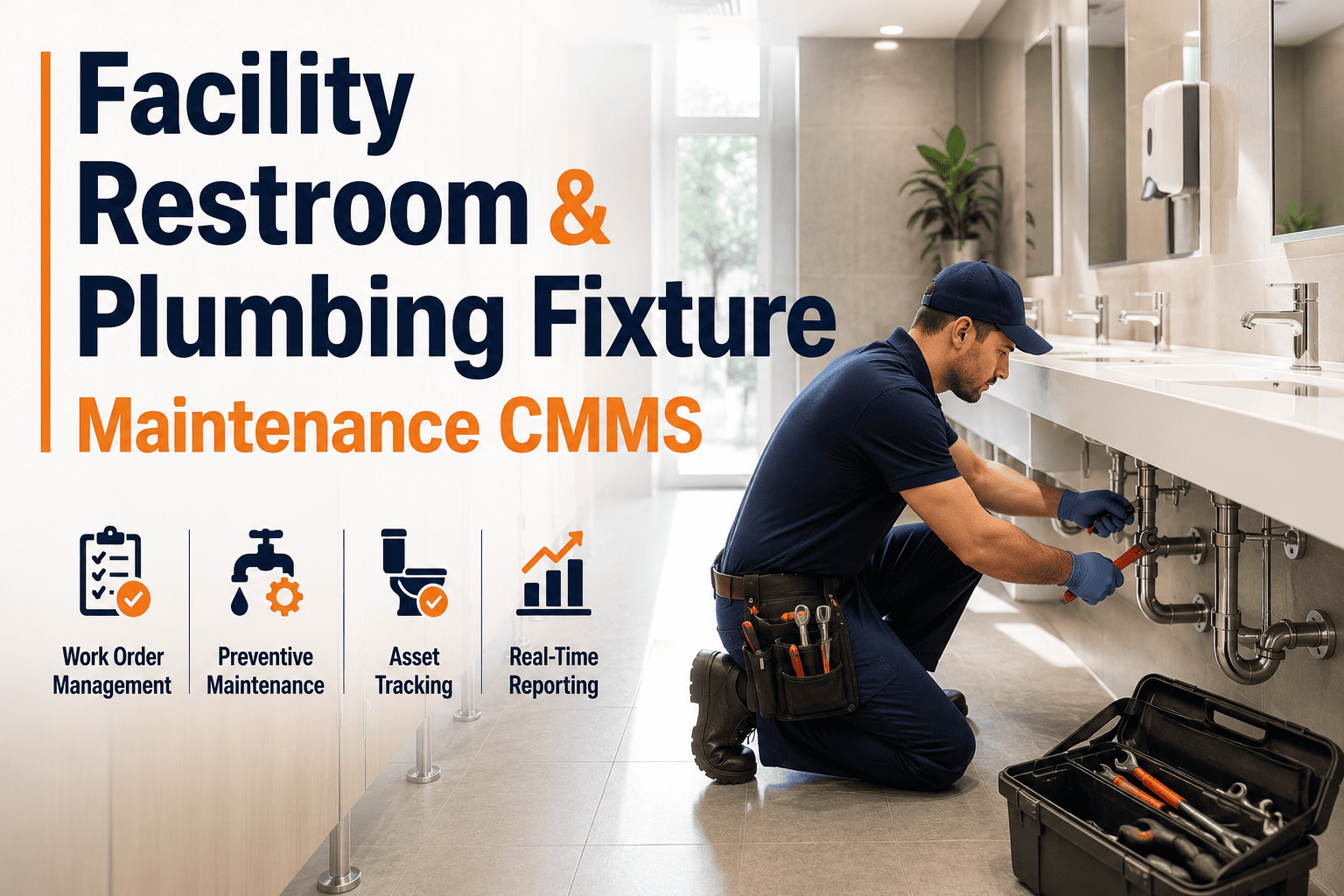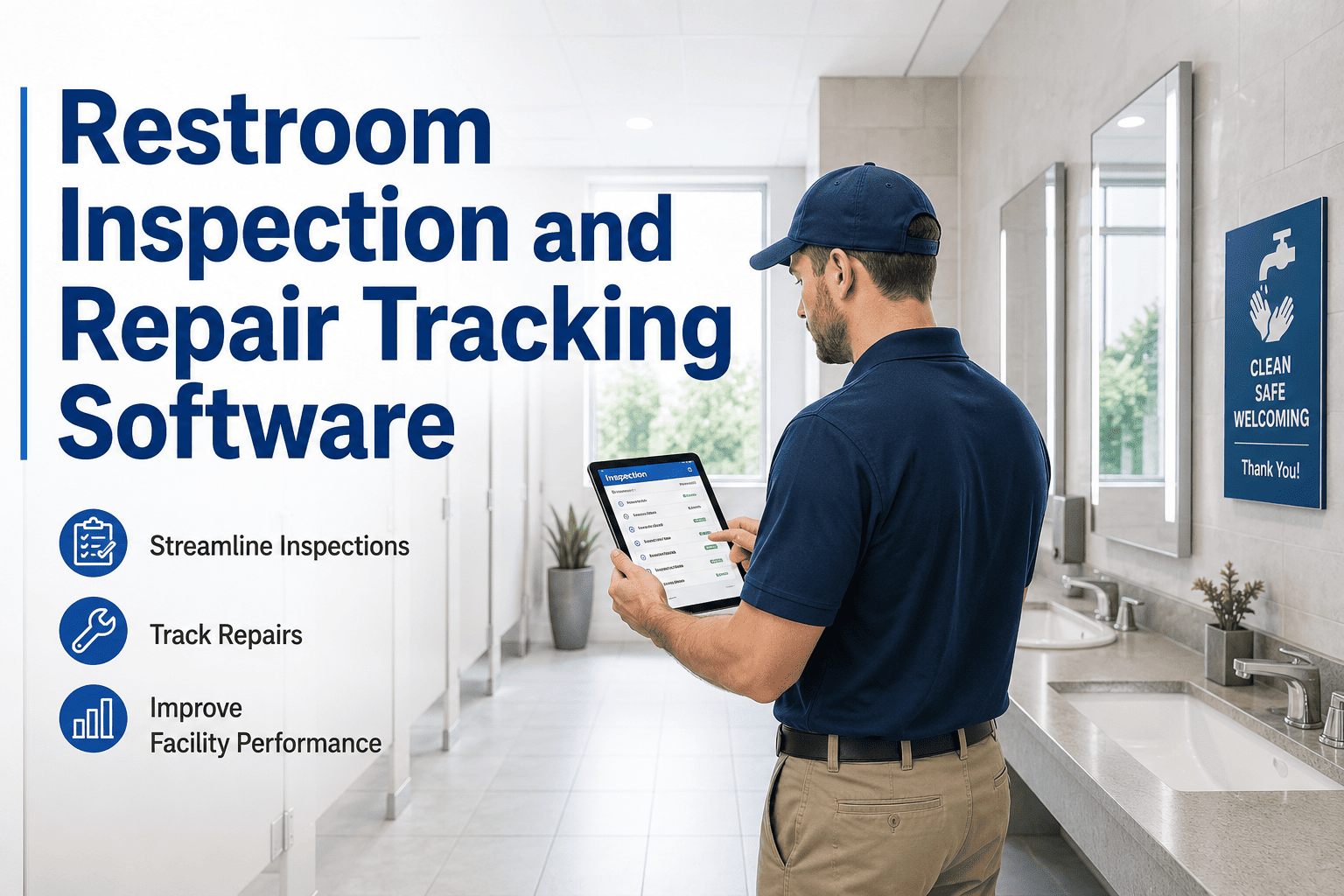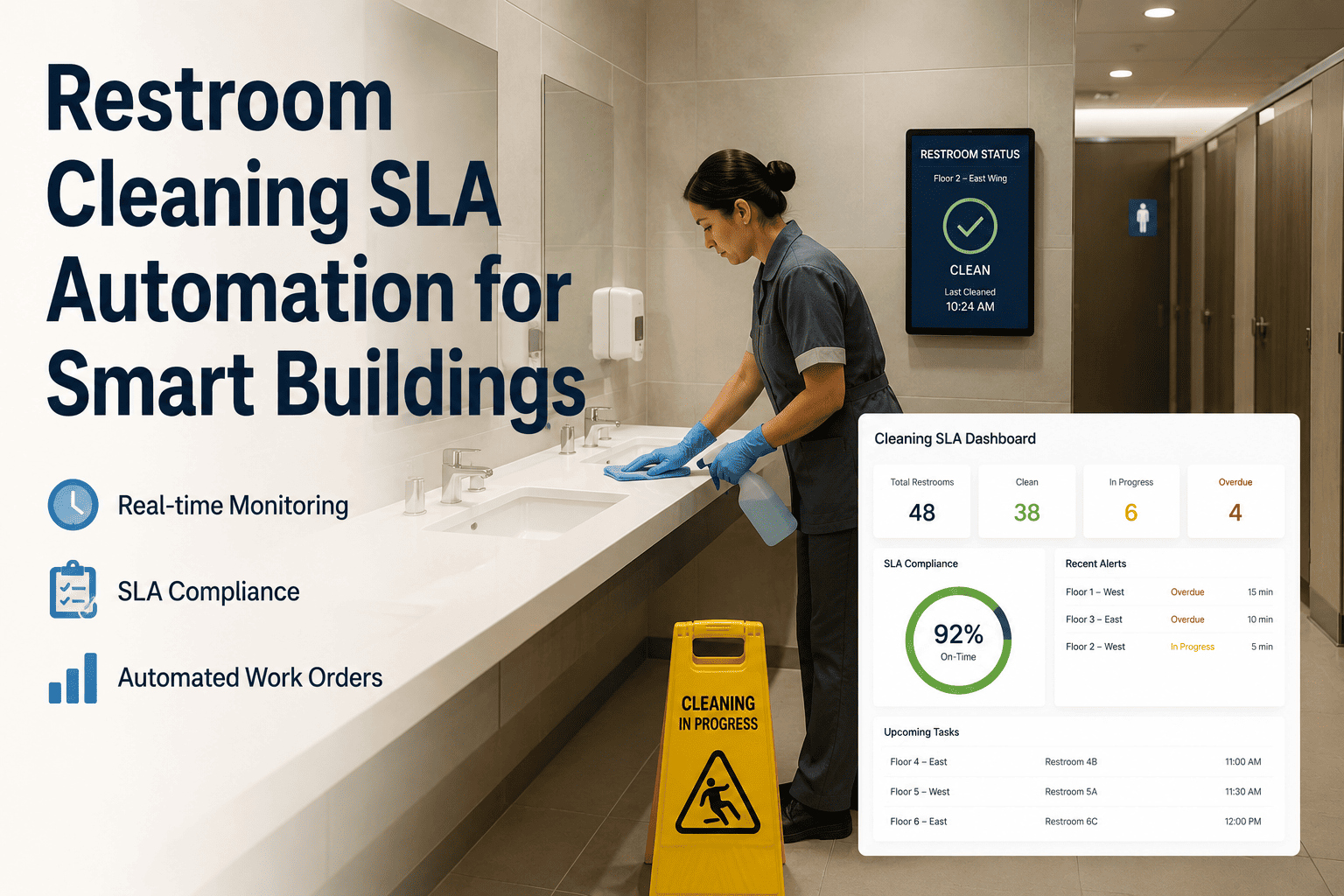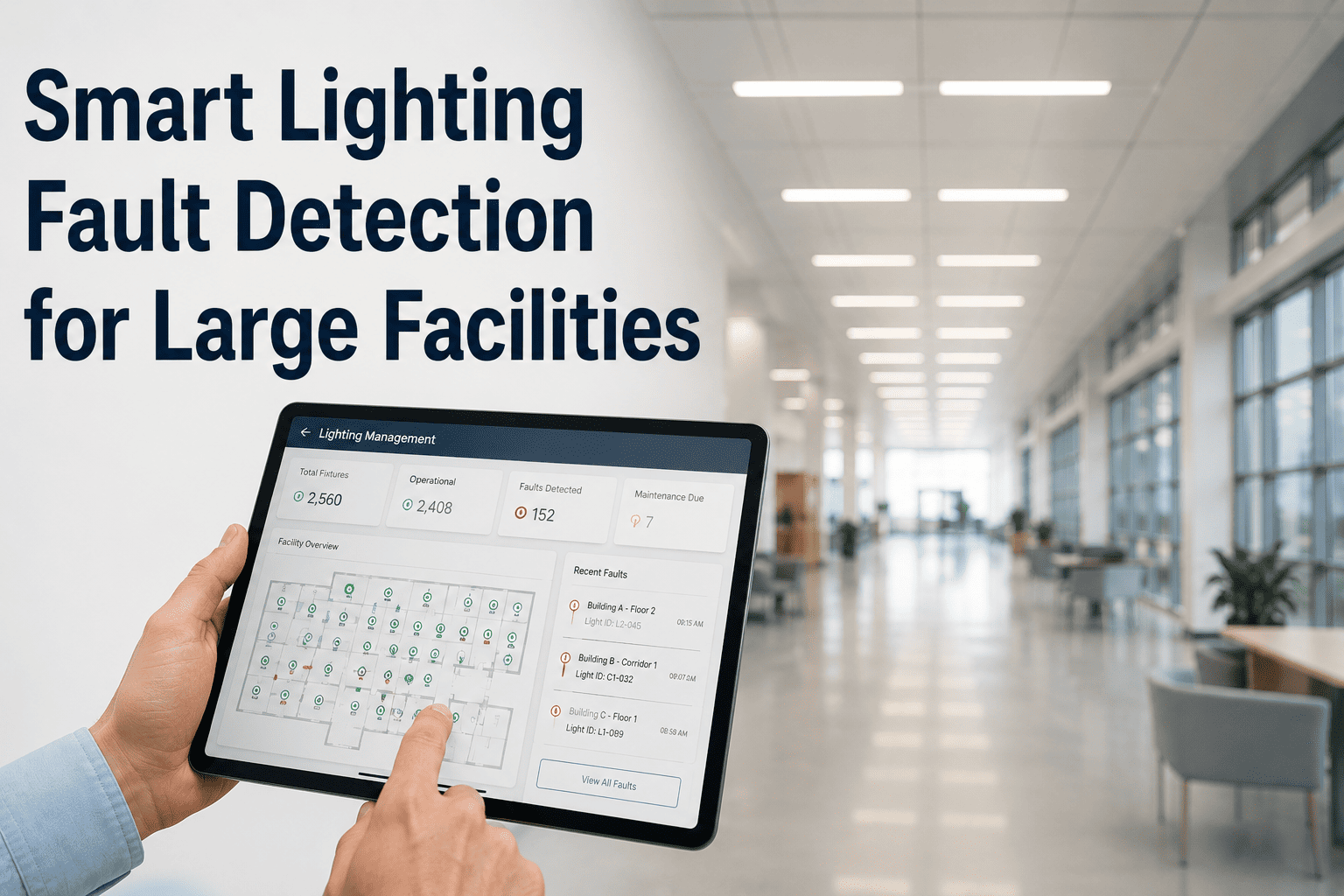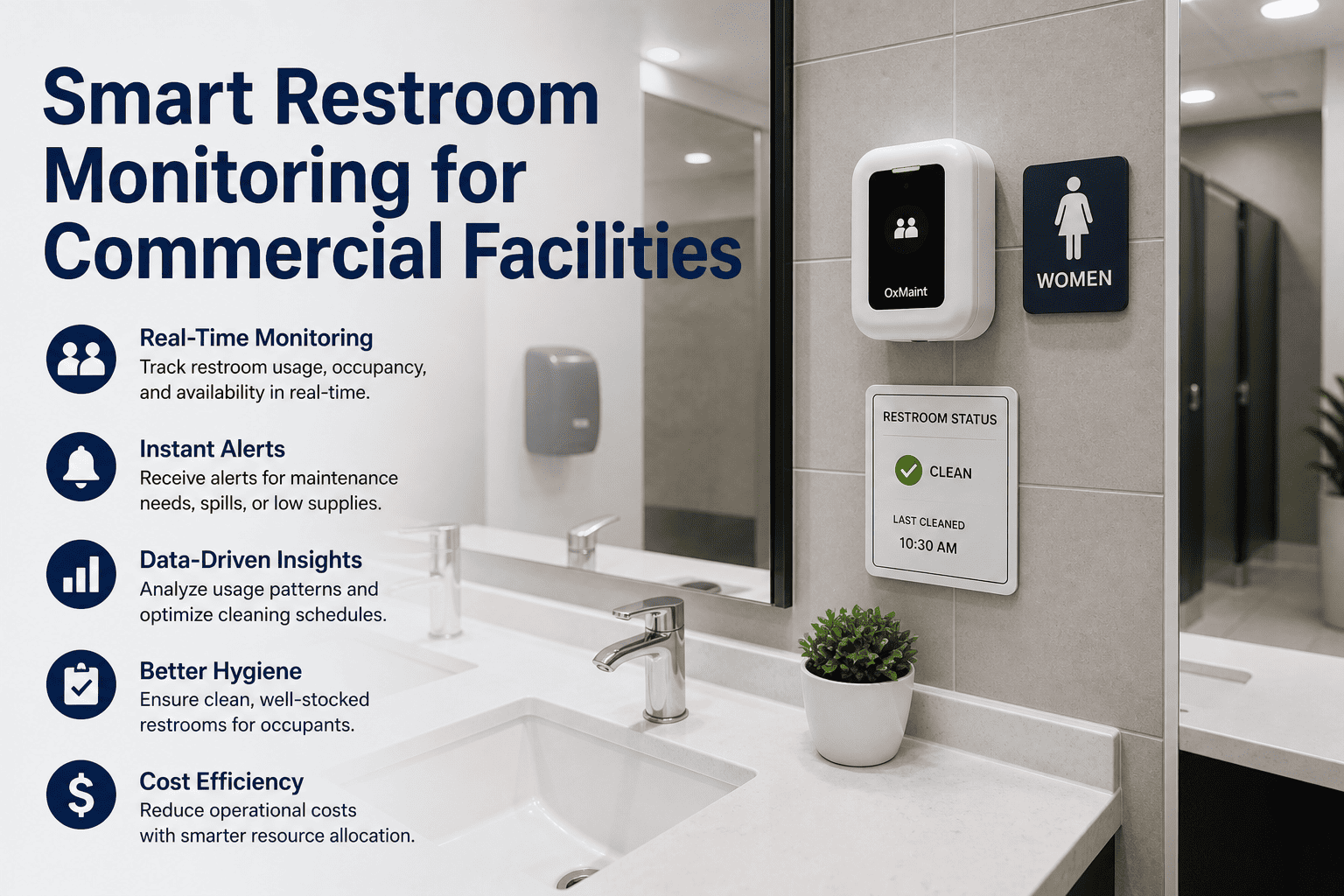
Commercial facilities lose thousands of dollars annually to restroom complaints, supply stockouts, and reactive plumbing repairs — all preventable with smart monitoring. OxMaint's IoT-integrated CMMS connects restroom sensors to automated cleaning workflows, supply tracking, and real-time occupant feedback — so facility teams stop reacting and start preventing.
Article · Smart Building Systems · Facility Management
Smart Restroom Monitoring for Commercial Facilities
Sensors · Automated Cleaning Workflows · Supply Tracking · Plumbing Alerts · Occupant Satisfaction
73%
of occupants judge a facility's overall cleanliness by restroom condition alone
2.3x
more cleaning visits dispatched reactively vs. occupancy-based scheduling
$18K
average annual cost of undetected slow leaks in commercial restrooms
40%
reduction in supply waste when restrooms use sensor-triggered replenishment
How Smart Monitoring Works — The 5 Sensor Layers
01
Occupancy Sensors
Count entries and exits in real time. When a threshold is crossed — say 40 uses since last clean — OxMaint auto-generates a cleaning work order routed to the nearest available attendant.
Trigger: Usage count · Time elapsed
02
Supply Level Sensors
Soap, paper towel, and toilet roll dispensers fitted with weight or optical sensors report fill levels continuously. Low-supply alerts hit the CMMS before the dispenser runs empty.
Trigger: Fill level below 20%
03
Odour & Air Quality
VOC and ammonia sensors detect odour buildup before it reaches occupants. Elevated readings trigger an immediate inspection work order — not a scheduled clean, but a targeted response.
Trigger: VOC threshold exceeded
04
Leak & Water Detection
Floor sensors under sinks and behind toilets detect moisture within minutes of a leak starting. Plumbing work orders are raised automatically with photo-upload prompts for the attending technician.
Trigger: Moisture detected
05
Occupant Feedback Terminals
QR-code or button-based terminals at the exit capture real-time satisfaction ratings. Negative feedback instantly opens a service request in OxMaint — bridging the gap between occupant experience and FM response.
Trigger: Rating below threshold
Reactive vs. Smart Monitoring — Side by Side
| Scenario | Reactive Approach | Smart Monitoring + OxMaint |
|---|---|---|
| Soap dispenser empty | Occupant complains · Attendant dispatched | Sensor alert at 20% · Supply restocked before empty |
| Odour complaint | Escalated to supervisor · Trust damage | VOC sensor triggers clean · Issue resolved before complaint |
| Slow plumbing leak | Detected weeks later · Structural damage | Floor sensor alert within minutes · Work order auto-raised |
| Cleaning schedule | Fixed time intervals regardless of use | Occupancy-triggered · Labour optimised by 35% |
| Compliance records | Paper sign-off sheets · Audit risk | Digital timestamps · Instant audit export |
See Smart Restroom Monitoring in Action
OxMaint connects your IoT sensors to automated work orders, supply alerts, and compliance records — all in one dashboard your team already uses.
Cleaning Efficiency — Occupancy-Based vs Fixed Schedule
Average Cleaning Visits Per Day
Fixed Schedule
Occupancy-Based
Complaint-Driven
Occupancy-based scheduling reduces unnecessary visits by 33% while maintaining or improving satisfaction scores. Source: ISSA Facility Cleaning Industry Analysis, 2023.
"
The biggest shift in commercial restroom management over the last five years is moving from calendar-based cleaning to data-driven cleaning. When you put an occupancy sensor on a restroom that serves 300 people a day and one that serves 30, you immediately see that the same fixed schedule creates over-service in one location and under-service in another. OxMaint's IoT integration closes that loop — the sensor talks to the CMMS, the CMMS generates the work order, and the attendant goes where the data says, not where the schedule says. That is the difference between a restroom programme that costs money and one that builds occupant trust.
Sandra Kowalski, LEED AP, CFM
Director of Facility Operations · 18 Years Commercial FM · IFMA Certified Facility Manager · Specialist in IoT building systems, occupancy analytics, and hygiene compliance for Class A commercial portfolios
Frequently Asked Questions
What types of sensors does OxMaint integrate with for restroom monitoring?
OxMaint integrates with occupancy counters, supply-level sensors, VOC and ammonia detectors, water leak mats, and feedback terminals via standard IoT protocols including MQTT and REST API. Most commercially available sensors from brands like Sanitact, Kimberly-Clark, and Meritech are compatible. Sensor data flows directly into the work order engine — no middleware required. Start a free trial to connect your existing sensors. Setup typically takes less than one business day for a standard multi-restroom facility, and the OxMaint team provides onboarding support to map each sensor to the correct asset and workflow rule.
How does OxMaint handle compliance documentation for restroom cleaning audits?
Every cleaning work order completed in OxMaint is timestamped, geo-tagged to the restroom location, and stored with the attendant's digital sign-off. Inspection checklists — stall condition, dispenser fill, floor status, odour — are completed on the mobile app and attached to the work order record. At audit time, the full cleaning history for any restroom can be exported as a PDF or CSV in seconds. Book a demo to see the audit export workflow. This replaces paper sign-off sheets entirely and eliminates the risk of missing or falsified records during health authority or ISO 41001 audits.
Can OxMaint prioritise restroom work orders based on occupant feedback ratings?
Yes. OxMaint's work order priority engine can be configured to escalate any restroom service request generated from a negative occupant rating — for example, any rating of 1 or 2 out of 5 — to Priority 1 status with a 15-minute response SLA. The escalation is automatic: the feedback terminal data hits the CMMS, the work order is created with the highest priority tier, and the nearest available attendant receives a push notification on their mobile device. Try OxMaint free to configure your feedback escalation rules. Response time and closure data is then tracked against the occupant feedback record, giving FM managers a clear view of service quality over time.
OxMaint · Smart Restroom Monitoring
From Sensor Alert to Clean Restroom — Automated.
Connect your facility's restroom sensors to OxMaint's CMMS and turn raw data into cleaning work orders, supply alerts, and compliance records automatically.