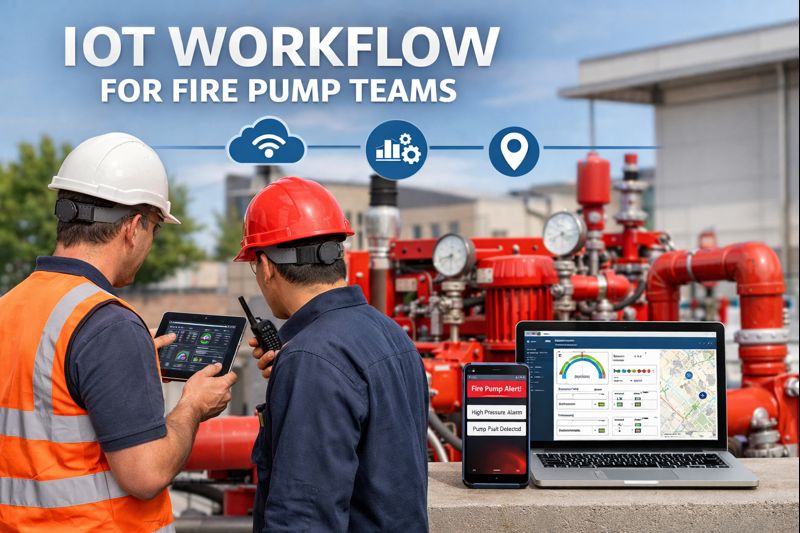
Water pump teams face a critical challenge: managing distributed pump stations across wide geographies with limited on-site staff while preventing costly failures that disrupt operations. Traditional maintenance approaches relying on manual inspections and paper-based tracking miss developing issues until they become emergencies. IoT-enabled workflows transform how pump teams operate by delivering real-time monitoring, automated alerts, and predictive maintenance capabilities that keep water systems running reliably. Schedule a consultation to explore how IoT workflows can streamline your water pump operations.
Why IoT Workflow Matters for Water Pump Teams
Water utilities and industrial facilities depend on pumps for critical operations from water distribution to wastewater treatment. When pumps fail unexpectedly, the consequences cascade through entire systems affecting service delivery, regulatory compliance, and operational costs. IoT workflows address these challenges by connecting pump monitoring data directly to maintenance processes.
The Case for IoT-Enabled Pump Workflows
86%
Reduction in pump repair costs achieved by water utilities using IoT monitoring with early fault detection
30%
Energy savings from IoT-based pump monitoring systems through optimized operation and scheduling
25%
Reduction in maintenance costs through predictive analytics and proactive issue identification
20%
Improvement in uptime through continuous monitoring and automated maintenance scheduling
Ready to transform your pump team's workflow? Join water utilities and industrial facilities using IoT-connected maintenance to reduce downtime and cut costs.
Modern IoT pump monitoring systems connect sensors, data processing, and maintenance management into a unified workflow that enables teams to respond proactively rather than reactively. Understanding the components helps teams plan effective implementations.
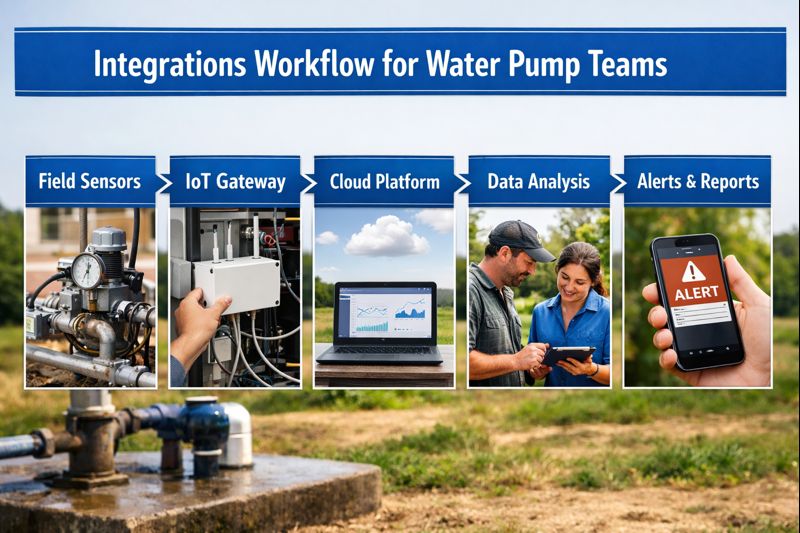
Connected Pump Workflow ComponentsFrom sensor data to maintenance action
01
Smart Sensor Network
Wireless sensors attached to pumps continuously monitor critical parameters including vibration, temperature, pressure, flow rate, and motor current. These sensors transmit data without requiring wired connections, making deployment practical even at remote pump stations.
02
Edge Processing Gateway
Local gateway devices collect sensor data, perform initial anomaly detection, and transmit information to cloud platforms. Edge processing ensures critical alerts reach teams even during network interruptions while reducing bandwidth requirements.
03
Analytics Platform
Cloud-based analytics process incoming data using machine learning algorithms that detect patterns indicating developing faults. The platform compares current performance against historical baselines and equipment specifications to identify anomalies.
04
CMMS Integration
When analytics detect issues requiring attention, the system automatically creates work orders in your maintenance management platform. This eliminates manual data entry and ensures nothing falls through the cracks. Sign up for Oxmaint to connect your IoT sensors directly to maintenance workflows.
05
Mobile Team Dispatch
Technicians receive alerts and work orders on mobile devices with complete context including sensor readings, historical trends, and recommended actions. Teams can respond quickly with the information they need to diagnose and resolve issues efficiently.
Key Monitoring Parameters for Pump Health
Effective IoT workflows focus on the parameters that provide early warning of developing pump problems. Each measurement serves specific diagnostic purposes and connects to maintenance actions when values fall outside acceptable ranges.
Critical Pump Monitoring Metrics
Vibration Analysis
Tracks pump and motor vibration patterns to detect misalignment, bearing wear, impeller damage, and cavitation before they cause failures. Axial and radial measurements reveal specific fault types.
Temperature Monitoring
Continuous temperature tracking on bearings, motors, and pump housings identifies overheating conditions caused by friction, electrical issues, or inadequate cooling that lead to premature failure.
Pressure Differential
Measures inlet and outlet pressure to assess pump performance and detect blockages, air entrainment, or impeller degradation affecting output capacity.
Flow Rate Tracking
Monitors actual flow against expected output to identify efficiency degradation, leaks, or system restrictions affecting pump performance and energy consumption.
Motor Current Analysis
Electrical current monitoring reveals motor health, load conditions, and power quality issues. Current signature analysis detects developing electrical and mechanical faults.
Level Sensing
Tank and wet well level monitoring enables automated pump cycling, prevents dry running damage, and optimizes pump scheduling based on actual system demand.
See IoT pump monitoring in action. Book a demo and we'll show you how connected workflows improve pump team efficiency.
IoT-enabled pump workflows go beyond monitoring to automate routine processes that consume team time. Automation ensures consistent responses to common situations while freeing technicians to focus on complex issues requiring human expertise.
Automated Workflow Functions
Workflow Type
Trigger Condition
Automated Actions
Alert Escalation
Parameter exceeds threshold
SMS/email to on-call tech, supervisor notification if unacknowledged, emergency dispatch protocol
Work Order Generation
Anomaly detected by analytics
Create work order with sensor data, assign to appropriate technician, schedule based on severity
Preventive Maintenance
Run hours or calendar interval
Generate PM task, attach checklist and procedures, reserve parts from inventory
Pump Cycling Control
Level sensor readings
Start/stop pumps based on levels, rotate lead/lag pumps, balance run hours across units
Compliance Reporting
Scheduled interval
Compile operating data, generate regulatory reports, archive records automatically
Traditional vs. IoT-Enabled Pump Workflows
Understanding the operational differences between traditional and IoT-enabled approaches helps teams recognize the transformation potential and plan implementation priorities.
Workflow Approach Comparison
Traditional Approach
X
Manual site visits for inspections
Paper logs and spreadsheet tracking
Reactive response to failures
Fixed PM schedules regardless of condition
Limited visibility at remote locations
25+unplanned breakdowns monthly
IoT-Enabled Workflow
Y
Remote monitoring from anywhere
Automated data collection and analysis
Predictive maintenance alerts
Condition-based service scheduling
Real-time visibility across all sites
80%fewer unexpected failures
Connect Your Pump Fleet with Intelligent Workflows
Oxmaint integrates with IoT sensors to bring real-time pump data into your maintenance workflows. Create automated alerts, generate work orders from sensor readings, and give your team mobile access to pump health information across all locations.
Water pump IoT workflows serve diverse industries with unique operational requirements. Each application benefits from connected monitoring while addressing sector-specific challenges.
IoT Pump Workflows by Industry
Industry
Primary Applications
Key Workflow Benefits
Water Utilities
Distribution pumping, booster stations, treatment plants
Remote station monitoring, regulatory compliance tracking, pressure management
Water usage optimization, energy cost reduction, crop yield improvement
Manufacturing
Process water, cooling systems, wastewater
Production continuity, quality assurance, energy management
Mining
Dewatering, slurry transfer, process water
Remote site management, harsh environment monitoring, safety compliance
HVAC
Chilled water, hot water, condensate
Building comfort optimization, energy efficiency, equipment life extension
Implementation ROI
IoT pump workflow implementations deliver measurable returns through multiple value streams including reduced downtime, lower maintenance costs, extended equipment life, and improved energy efficiency.
Documented Implementation BenefitsBased on water utility and industrial deployment data
80%
Faster anomaly detection vs. manual methods
60%
Reduction in emergency service calls
45%
Decrease in unplanned downtime
30%
Improvement in pump energy efficiency
Calculate your potential savings. Create a free Oxmaint account and our team will help model the ROI for your pump operations.
Successful IoT pump workflow deployments follow proven approaches that minimize disruption while maximizing adoption and value realization.
Recommended Deployment Approach
Phase 1
Pilot Planning
Select critical pumps for initial deploymentDefine monitoring parameters and thresholdsPlan CMMS integration requirements
Phase 2
Sensor Installation
Deploy wireless sensors on pilot pumpsConfigure gateway connectivityVerify data transmission and quality
Phase 3
Workflow Setup
Configure alert rules and escalation pathsSet up automated work order generationTrain team on new processes
Phase 4
Scale and Optimize
Expand to additional pump assetsRefine thresholds based on experienceImplement predictive analytics
Remote pump stations spread across wide geographies with little on-site staff have traditionally prevented continuous monitoring. IoT technologies are helping utilities overcome these challenges, enabling effective predictive maintenance of pumps and other critical equipment.
- Industrial Pump Monitoring Research
Modernize Your Pump Team Workflows with IoT
Manual inspections and reactive maintenance cannot keep pace with today's demands for reliable water systems. Oxmaint connects your pump monitoring sensors directly to maintenance workflows so your team can respond faster, prevent failures, and extend equipment life across every location.
Basic pump monitoring typically includes vibration, temperature, and pressure sensors. More comprehensive setups add flow meters, motor current sensors, and level sensors for tanks or wet wells. Wireless sensors are preferred for easier installation and reduced wiring costs, especially at remote locations. Schedule a consultation to discuss sensor requirements for your specific pumps.
How does IoT monitoring integrate with existing maintenance systems?
Modern IoT platforms connect to CMMS software through APIs to automatically create work orders, update asset records, and populate maintenance histories. Oxmaint provides direct integration with popular IoT monitoring platforms, enabling sensor data to flow directly into your maintenance workflows without manual data entry.
What ROI can we expect from IoT pump workflows?
Water utilities report maintenance cost reductions of 25% or more through predictive maintenance enabled by IoT monitoring. Energy savings typically reach 10-30% through optimized pump operation. Most organizations see positive ROI within 12-18 months of deployment. Sign up for a free account to explore ROI modeling for your operation.
Can IoT workflows work with older pump equipment?
Yes. External sensors can monitor virtually any pump regardless of age or manufacturer. Retrofit solutions attach sensors to pump housings, motors, and piping without requiring equipment modifications. This makes IoT monitoring practical even for legacy pump installations.
How do teams manage alerts from multiple pump sites?
Effective IoT workflows include alert filtering based on severity, criticality, and risk to prevent alarm fatigue. Teams configure escalation rules so routine notifications go to assigned technicians while critical alerts reach supervisors immediately. Mobile access ensures teams can respond to alerts from anywhere. Book a demo to see how Oxmaint manages multi-site pump monitoring.