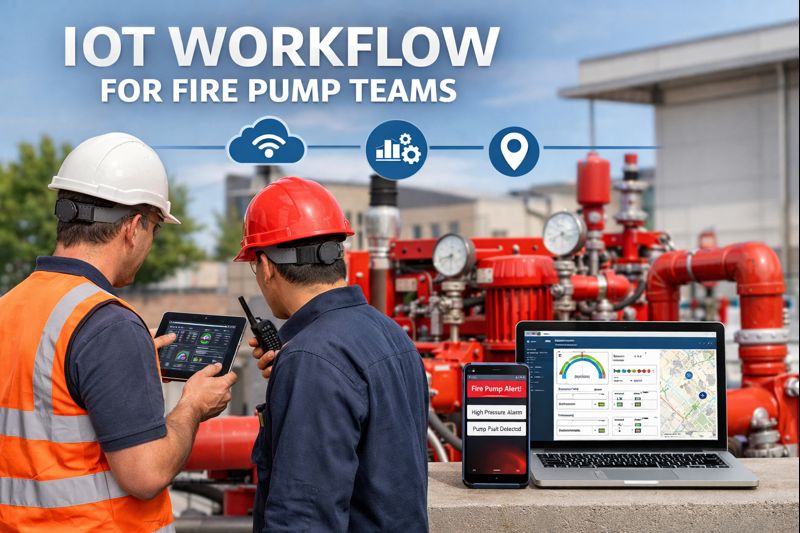
Water pump teams face a unique operational challenge: managing distributed infrastructure across treatment plants, lift stations, and distribution networks while keeping pumps running at peak efficiency. Traditional workflows—paper logs, siloed systems, and reactive maintenance—leave teams scrambling when pumps fail and struggling to meet regulatory requirements. Integrated maintenance workflows transform how pump teams operate by connecting SCADA systems, IoT sensors, and mobile tools into a unified platform that automates work orders, tracks performance, and keeps every team member informed in real-time. Schedule a consultation to explore how integrated workflows can transform your water pump operations.
Why Integrated Workflows for Water Pump Teams
Water utilities and industrial facilities depend on pumps to move millions of gallons daily. When pump maintenance relies on disconnected systems—spreadsheets for scheduling, paper forms for inspections, separate databases for parts inventory—critical information gets lost, response times slow, and costs spiral. Modern integrated workflows eliminate these gaps by creating a single source of truth for pump operations.
The Case for Integrated Pump Workflows
40%
Reduction in maintenance costs when shifting from reactive to proactive pump management with integrated systems
82%
Of companies experienced unplanned downtime in the past three years—integration helps prevent costly failures
$50B
Annual cost of unplanned downtime across industrial manufacturers—pump failures represent a significant portion
25%
Average reduction in total energy consumption when pumps are properly maintained through integrated workflows
Ready to eliminate pump workflow inefficiencies? Join leading water utilities using integrated maintenance platforms to reduce downtime and improve team coordination.
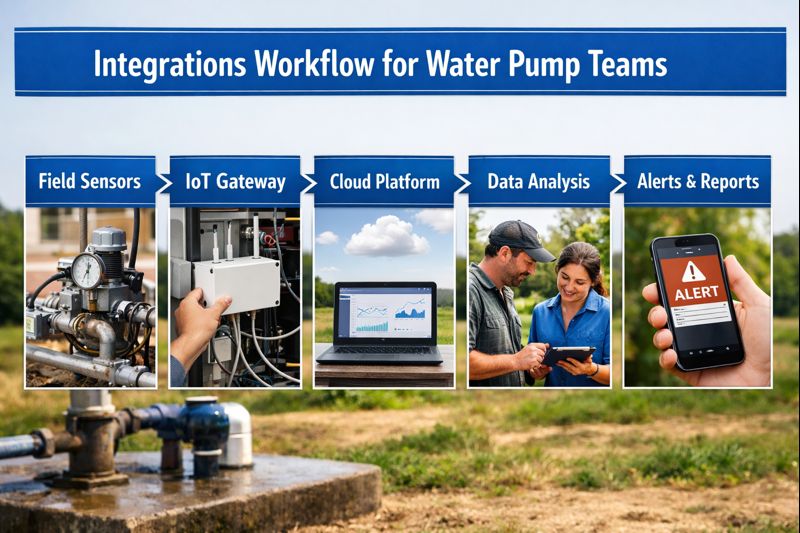
Modern pump maintenance platforms connect multiple systems into a cohesive workflow. From field sensors detecting vibration anomalies to technicians receiving mobile work orders, every component works together to keep pumps operating efficiently and teams responding quickly.
Integrated Workflow ComponentsFrom sensor data to completed maintenance
01
SCADA Integration
Connect your existing SCADA system to automatically capture pump run hours, pressure readings, flow rates, and alarm conditions. Real-time data feeds directly into the maintenance platform, triggering work orders when thresholds are exceeded.
02
IoT Sensor Network
Deploy vibration, temperature, and pressure sensors on critical pumps. These sensors provide continuous condition monitoring, detecting bearing wear, seal degradation, and efficiency losses before they cause failures.
03
Automated Work Orders
When sensors detect anomalies or run-hour meters reach PM thresholds, the system automatically generates work orders with relevant data, assigns technicians based on skills and location, and schedules maintenance windows.
04
Mobile Field Execution
Technicians receive work orders on mobile devices with complete pump history, diagrams, parts lists, and safety procedures. Offline capability ensures work continues even in areas without connectivity. Sign up for Oxmaint to enable mobile workflows for your pump teams.
05
Analytics and Reporting
Completed work orders feed back into the analytics engine, building historical records for regulatory compliance, identifying failure patterns, and optimizing future maintenance schedules across your entire pump infrastructure.
Core Integration Capabilities
Water pump teams need specific integration features that address the unique challenges of managing pumps across treatment plants, lift stations, wells, and distribution networks. These capabilities ensure seamless data flow and coordinated team response.
Key Integration Features
SCADA-Triggered Maintenance
Automatically generate work orders when SCADA alarms trigger for vibration, temperature, or pressure anomalies. Relevant sensor data and screenshots attach to work orders for technician context.
GIS Asset Mapping
Integrate with GIS systems to pinpoint pump locations, access route information, and view infrastructure relationships. Technicians locate remote lift stations and wells without paper maps.
Run-Hour PM Triggers
Connect to pump run-hour meters for condition-based preventive maintenance. Schedule oil changes, seal inspections, and bearing replacements based on actual operating hours rather than calendar dates.
Offline Mobile Access
Work in basements, remote stations, and areas with limited connectivity. Mobile apps sync automatically when connection restores, ensuring no data loss and complete work documentation.
Inventory Integration
Connect parts inventory to work orders for automatic stock updates. Track critical spare parts like seals, bearings, and impellers across multiple storerooms with min/max level alerts.
Compliance Documentation
Automatically compile maintenance records for regulatory audits. Generate reports showing PM completion rates, inspection histories, and corrective actions for water quality compliance.
See integrated pump workflows in action. Book a demo and we'll show you how SCADA integration and automated work orders work for water utilities.
Understanding the operational differences between disconnected maintenance approaches and integrated workflows reveals why water utilities are transitioning to unified maintenance platforms for their pump teams.
Workflow Approach Comparison
Disconnected Systems
X
Manual data entry across multiple systems
Paper-based inspections and work orders
Reactive response to SCADA alarms
No visibility into technician location or status
Spreadsheet-based compliance tracking
8-15%of pump failures preventable with integration
Integrated Platform
Y
Automatic data flow between all systems
Digital inspections with photo capture
Predictive alerts before failures occur
Real-time team coordination and dispatch
Automated compliance reports
44%reduction in unplanned work orders
Unify Your Pump Team Workflows
Oxmaint connects SCADA systems, IoT sensors, and mobile tools into a single platform—giving your pump teams the visibility, automation, and coordination they need to reduce downtime and maintain compliance.
Comprehensive pump workflow integration requires connecting systems at multiple operational levels—from individual pump sensors to enterprise resource planning. Each integration point serves specific operational and compliance purposes.
System Integration Configuration
System Type
Integration Method
Data Exchanged
Workflow Value
SCADA/PLC
OPC-UA, Modbus
Alarms, run hours, operating parameters
Automatic work order generation, condition monitoring
IoT Sensors
MQTT, REST API
Vibration, temperature, pressure, flow
Predictive maintenance, early warning alerts
GIS Platforms
ArcGIS, REST API
Asset locations, service areas, routes
Field navigation, asset mapping, spatial analysis
ERP/Financial
Scheduled batch, API
Cost codes, budgets, purchase orders
Cost tracking, budget management, procurement
Laboratory Systems
LIMS integration
Water quality data, test results
Compliance correlation, treatment optimization
Integration methods vary by system vendor and version. Standard protocols ensure compatibility across diverse infrastructure.
ROI of Integrated Pump Workflows
Integrated workflow investments deliver returns through reduced emergency repairs, improved technician productivity, extended pump life, and streamlined compliance processes. The financial impact compounds across multiple operational areas.
Documented Integration BenefitsBased on water utility deployment data
27%
Reduction in unplanned downtime
42%
Decrease in unplanned workloads
20%
Improvement in MTTR scores
5:1
Typical ROI within first years
Calculate your potential savings. Create a free Oxmaint account and our team will help model the ROI for your pump operations.
Successful pump workflow integration requires careful planning across system connections, data mapping, and team adoption. A phased approach delivers quick wins while building toward comprehensive integration across all pump assets.
Typical Integration Roadmap
Week 1-2
Discovery and Planning
Current system inventoryIntegration requirements mappingAPI and protocol assessment
Week 3-4
Core Integration
SCADA connection setupAsset hierarchy importWork order automation rules
Week 5-6
Team Deployment
Mobile app configurationTechnician training sessionsWorkflow testing and refinement
Pumps consume 25 to 50 percent of total energy in industrial plants, yet most teams manage them with disconnected systems and reactive maintenance. Integrated workflows reveal hidden inefficiencies and give teams the tools to act before failures occur.
— Water Utility Operations Manager
Transform Your Pump Team Workflows
Your pump teams deserve better than paper forms and disconnected systems. Oxmaint integrates SCADA, IoT sensors, GIS, and mobile tools into unified workflows—automating work orders, coordinating technicians, and ensuring compliance documentation is always audit-ready.
How quickly can we integrate with our existing SCADA system?
Most SCADA integrations are completed within 2-4 weeks, depending on your system's protocol support. We support standard protocols including OPC-UA, Modbus, and direct database connections. Our team works with your SCADA vendor to ensure proper data mapping and alarm configuration. Schedule a consultation to assess your specific SCADA integration requirements.
Will the mobile app work at remote pump stations with poor connectivity?
Yes. The mobile app is designed for water utility environments where connectivity is often limited. Technicians can download work orders, complete inspections, capture photos, and record data offline. All information syncs automatically when connectivity restores, ensuring no data loss and complete work documentation regardless of location.
Can we automate work orders based on pump run hours?
Absolutely. The system connects to your SCADA or pump controllers to capture real-time run-hour data. You define PM thresholds for each pump type—when run hours reach your specified limits, the system automatically generates work orders with appropriate tasks, parts lists, and technician assignments. Sign up for a free account to explore run-hour based maintenance triggers.
How does integration help with regulatory compliance?
Integrated workflows automatically document all maintenance activities, inspections, and corrective actions in a central database. When auditors request records, you generate compliance reports in seconds rather than hours. The system tracks PM completion rates, inspection schedules, and work order histories with full audit trails showing who did what and when.
What if we have multiple pump types from different manufacturers?
The platform supports pumps from any manufacturer. You create asset types with specific maintenance procedures, parts lists, and inspection checklists for each pump model. Whether you're managing centrifugal pumps, positive displacement pumps, or submersible units, the system adapts to your equipment mix. Book a demo to see how multi-manufacturer support works.