Move management and workplace churn consume 25–40% of the typical facilities budget in large portfolios, yet most teams still coordinate internal moves through email chains and spreadsheets. Every workplace relocation disrupts two teams at once — the one moving out and the one moving in — so even small inefficiencies compound across hundreds of annual moves, adds, and changes (MAC). A structured move management FM process turns this chronic distraction into a predictable, cost-controlled operational service. OxMaint gives facilities and maintenance teams the work-order, asset-tracking, and analytics backbone to plan, execute, and audit every relocation — you can Start Free Trial or book a demo to see it on your portfolio today.
Every internal move costs money and disrupts two teams. Is your churn quietly consuming the FM budget?
A 2,000-seat portfolio averaging 400 moves a year can burn over $1.2M in hidden coordination, IT-reconnection, and lost-productivity costs. OxMaint converts move-add-change chaos into a managed, auditable workflow — planned, tracked, and closed inside one AI-powered CMMS.
in a 2,000-seat portfolio
What is workplace churn rate and why does it drain the FM budget?
Workplace churn rate measures the percentage of seats or workstations that change occupants over a given period — typically 20–40% annually in dynamic organisations, and over 60% in high-turnover call centres and consulting firms.
How to design a move-add-change (MAC) process that controls cost
Unstructured office move management relies on email requests, shared spreadsheets, and tribal knowledge — so costs spiral and accountability disappears. A mature move coordination FM workflow standardises every MAC into six predictable stages.
Request & Intake
Submit a structured move request via portal or mobile app — capture origin, destination, employee, equipment, IT needs, and target date. OxMaint auto-creates a work order and routes it to the right coordinators.
Feasibility & Cost Estimation
Assess destination readiness — power, data, furniture, HVAC, space utilisation. Generate a cost estimate covering labour, cabling, assets, and downtime so the business sponsor signs off before execution begins.
Scheduling & Coordination
Sequence the move to avoid business disruption — evenings, weekends, or phased waves. OxMaint schedules dependent tasks (IT disconnect, movers, IT reconnect, cleaning) as linked child work orders with dependencies.
Execution & Asset Tracking
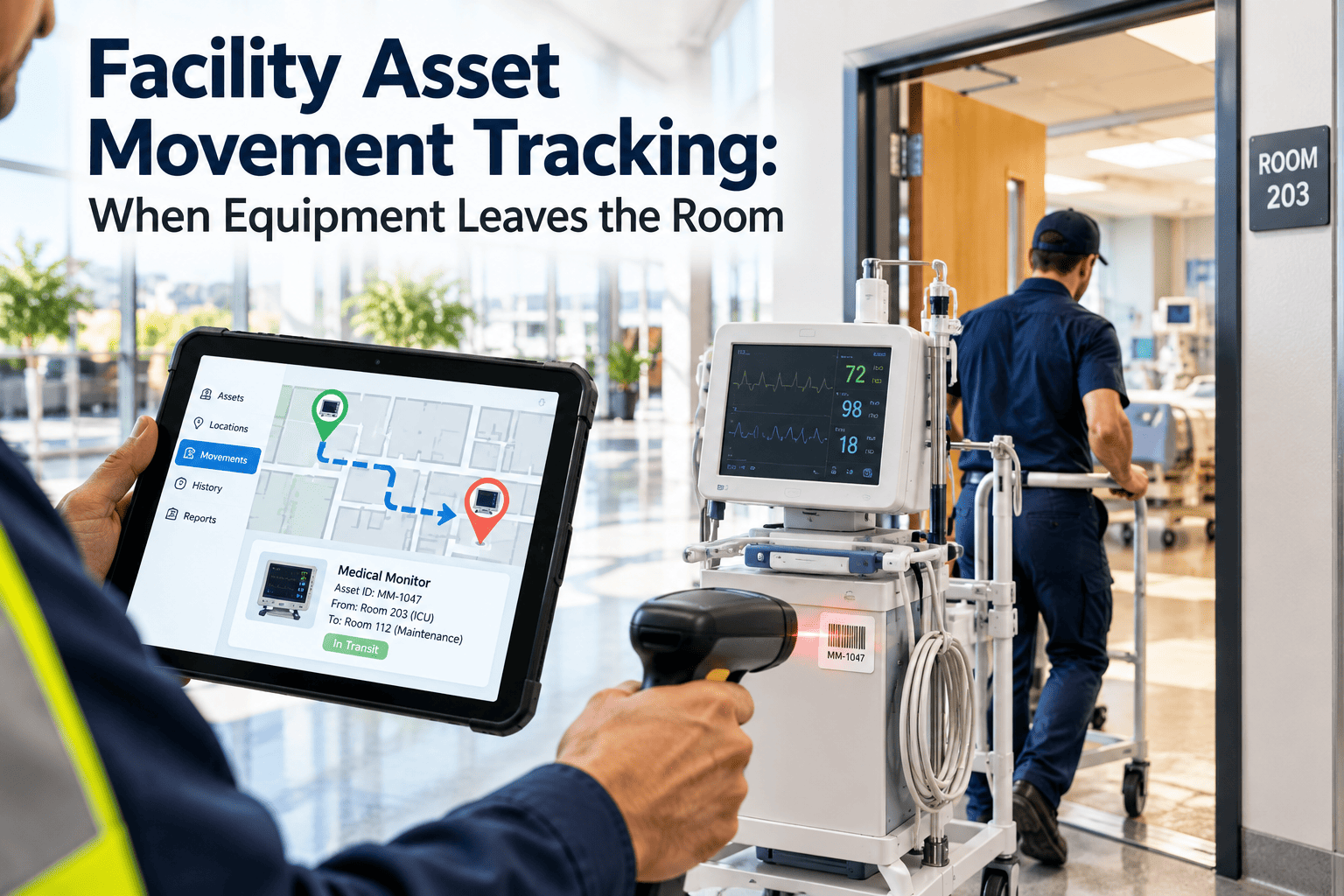
Execute the physical move. Scan asset barcodes or QR codes to update locations in real time — monitors, phones, ergonomic chairs, and specialised equipment all follow the employee automatically in the EAM register.
Reconnection & Validation
IT and facilities confirm the destination is fully functional — data ports live, phone routed, workstation inspected, snag list closed. The work order cannot be marked complete until all checklist items pass.
Closure & Cost Capture
Record actual labour hours, parts, and vendor charges against the move. OxMaint rolls the data into analytics dashboards so leadership sees true cost-per-move, cycle time, and churn trends by department or building.
True cost of an internal move — and who should pay for it
In most organisations, move costs are scattered across facilities, IT, furniture vendors, and the requesting department — so nobody sees the full picture. Centralising cost capture in a CMMS lets you charge back accurately and expose waste.
| Cost Component | Typical Range per Move | Often Captured? | Impact if Missed |
|---|---|---|---|
| Move coordination labour (FM) | $200 – $500 | Sometimes | Understaffed FM team, delayed moves |
| IT disconnect / reconnect & cabling | $400 – $1,200 | Rarely | IT budget silently consumed |
| Furniture reconfiguration | $300 – $900 | Sometimes | Capital vs. OpEx misclassified |
| Cleaning & snag resolution | $75 – $250 | No | Hidden in janitorial contract |
| Employee productivity loss | $500 – $1,500 | Never | Largest hidden cost — 2–6 hrs per employee |
| All-in cost per internal move | $1,475 – $4,350 | — | 60% of true cost is untracked |
A 1,800-seat professional services firm
This firm runs 540 moves per year (30% churn) at an average $2,800 all-in cost — totalling $1.51M annually. Before OxMaint, only $620K was captured in the FM budget; the remaining $890K was absorbed by IT, furniture reserves, and unmeasured productivity loss. After implementing structured MAC work orders with cost roll-up, the firm identified $310K in avoidable reconfiguration waste in year one and cut average move cycle time from 14 days to 6.
How OxMaint turns workplace churn into a managed service
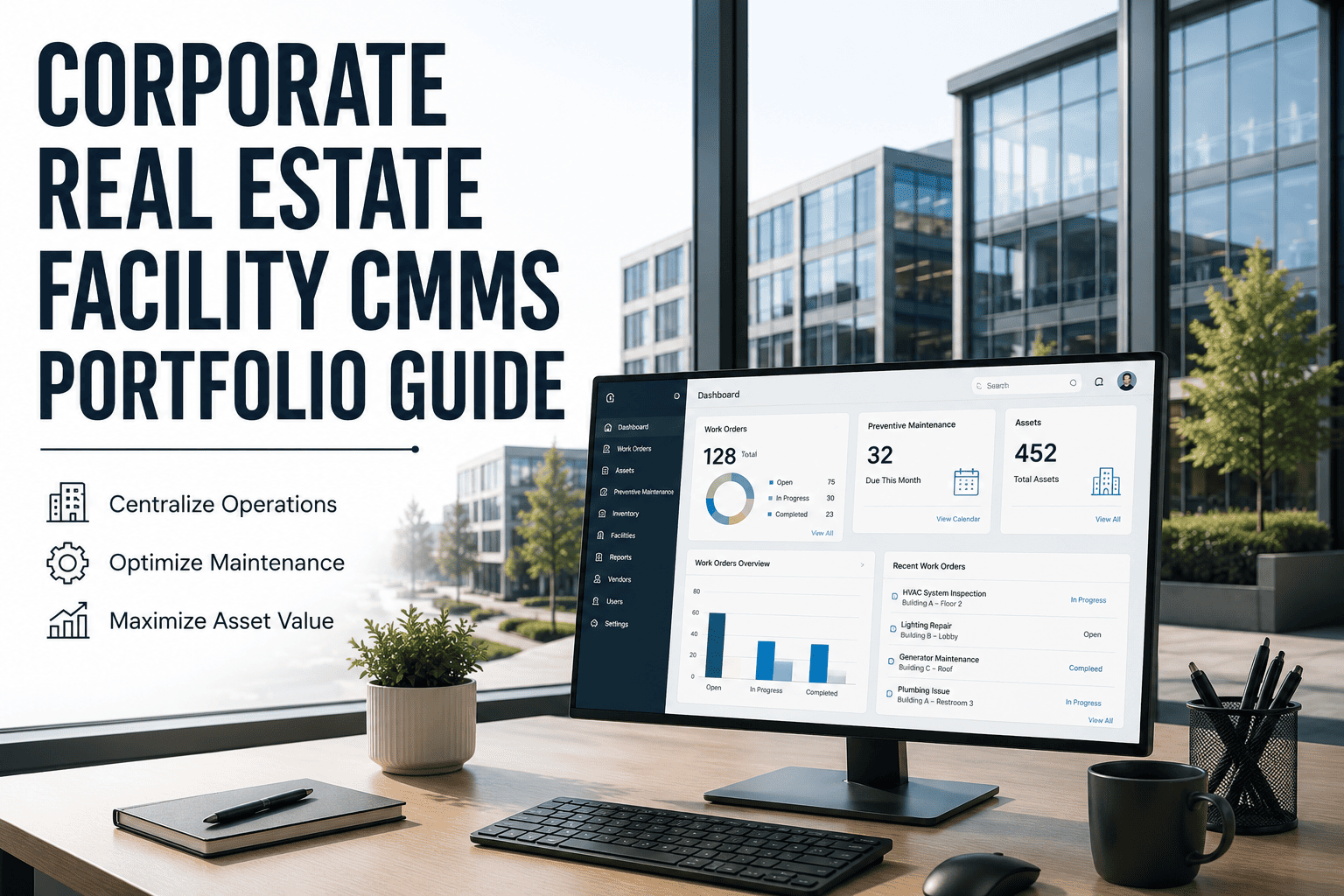
OxMaint is an AI-powered CMMS and EAM platform that brings every move, add, and change into a single system of record — from request to cost closure — so facilities teams can prove ROI on every relocation.
Structured MAC Work Orders
Every move becomes a parent work order with linked child tasks for IT, furniture, cleaning, and validation — each with assignees, due dates, and dependencies. Eliminates email-chain chaos and cuts coordination time 40–60%.
Real-Time Asset Tracking
Scan a QR code or barcode to relocate monitors, phones, and ergonomic equipment in the EAM register instantly. Asset history follows the employee — no more lost or orphaned equipment across 500+ annual moves.
Cost Capture & Chargeback
Every labour hour, part, and vendor charge rolls up to the move work order. Generate chargeback reports by department, building, or project so leadership sees true cost-per-move — not a fraction of it.
Predictive Churn Analytics
AI-driven dashboards reveal churn trends, cost-per-move benchmarks, and bottleneck stages — so FM leaders can forecast demand, right-size teams, and spot departments burning budget before year-end.
See OxMaint manage your next 500 moves — book a 30-minute demo
We will map your current MAC workflow onto OxMaint live, show you the cost-per-move analytics dashboard, and send you a custom ROI projection for your portfolio.
Move management checklist: what every FM team must control
Use this checklist to audit your current office relocation FM process — every unchecked item is a source of hidden cost, delay, or compliance risk.
Pre-Move Planning
- ✓ Move request submitted with origin, destination, employee, and target date
- ✓ Destination readiness assessed (power, data, furniture, HVAC)
- ✓ Cost estimate generated and approved by business sponsor
- ✓ Asset list attached (monitors, phones, specialised equipment)
Execution Day
- ✓ IT disconnect completed and confirmed in work order
- ✓ Assets scanned and location updated in EAM register
- ✓ Movers escorted; destination protected from damage
- ✓ Snag list created for any issues at new workstation
Post-Move Closure
- ✓ IT reconnection tested (phone, data, peripherals)
- ✓ Employee confirms satisfaction in mobile app
- ✓ Actual costs recorded — labour, parts, vendor invoices
- ✓ Work order closed; data feeds churn analytics dashboard
Workplace churn and move management — your questions answered
What is a good workplace churn rate for a corporate portfolio?
A typical corporate portfolio sees 20–40% annual churn. Below 20% suggests low organisational mobility (which can mean poor space utilisation); above 40% signals instability or aggressive growth. The key is not the rate itself but whether every move is planned, costed, and executed through a structured MAC workflow — untracked churn at any rate is what drains the FM budget. You can Book a Demo to benchmark your portfolio.
How much does an internal office move actually cost?
The all-in cost per internal move ranges from $1,500 to $4,350 when you include FM coordination, IT disconnect and reconnect, furniture reconfiguration, cleaning, and employee productivity loss. Most organisations only capture 30–40% of this in the formal FM budget — the rest hides in IT, vendor contracts, and unmeasured downtime.
What is the difference between move management and churn management in FM?
Move management is the operational execution of individual relocations — request, plan, schedule, execute, and close. Churn management is the strategic layer: measuring the rate, forecasting demand, benchmarking cost-per-move, and right-sizing teams and space. OxMaint supports both — the CMMS handles execution while the analytics layer tracks churn trends and flags departments driving disproportionate cost.
How does a CMMS improve move coordination for facilities teams?
A CMMS replaces email chains and spreadsheets with structured parent-child work orders, automated task dependencies, real-time asset tracking via QR codes, mandatory checklists, and cost roll-up. Teams using OxMaint typically cut move coordination time 40–60%, reduce average cycle time from 14 days to under 7, and capture 95%+ of true move costs for the first time. Start Free Trial to test it on your next move.
How do I calculate and reduce workplace churn cost?
Calculate churn cost by multiplying your annual move volume by the all-in cost per move ($1,500–$4,350). Reduce it by standardising the MAC process, capturing every cost component in a CMMS, batching moves into scheduled waves, improving destination readiness checks, and using analytics to spot high-cost patterns. Most portfolios can cut move costs 20–30% within the first year of structured management.
Stop letting workplace churn consume your FM budget
Plan, execute, and cost every internal move in one AI-powered CMMS — and prove the ROI of your facilities team on every relocation.
Free 14-day trial · No credit card