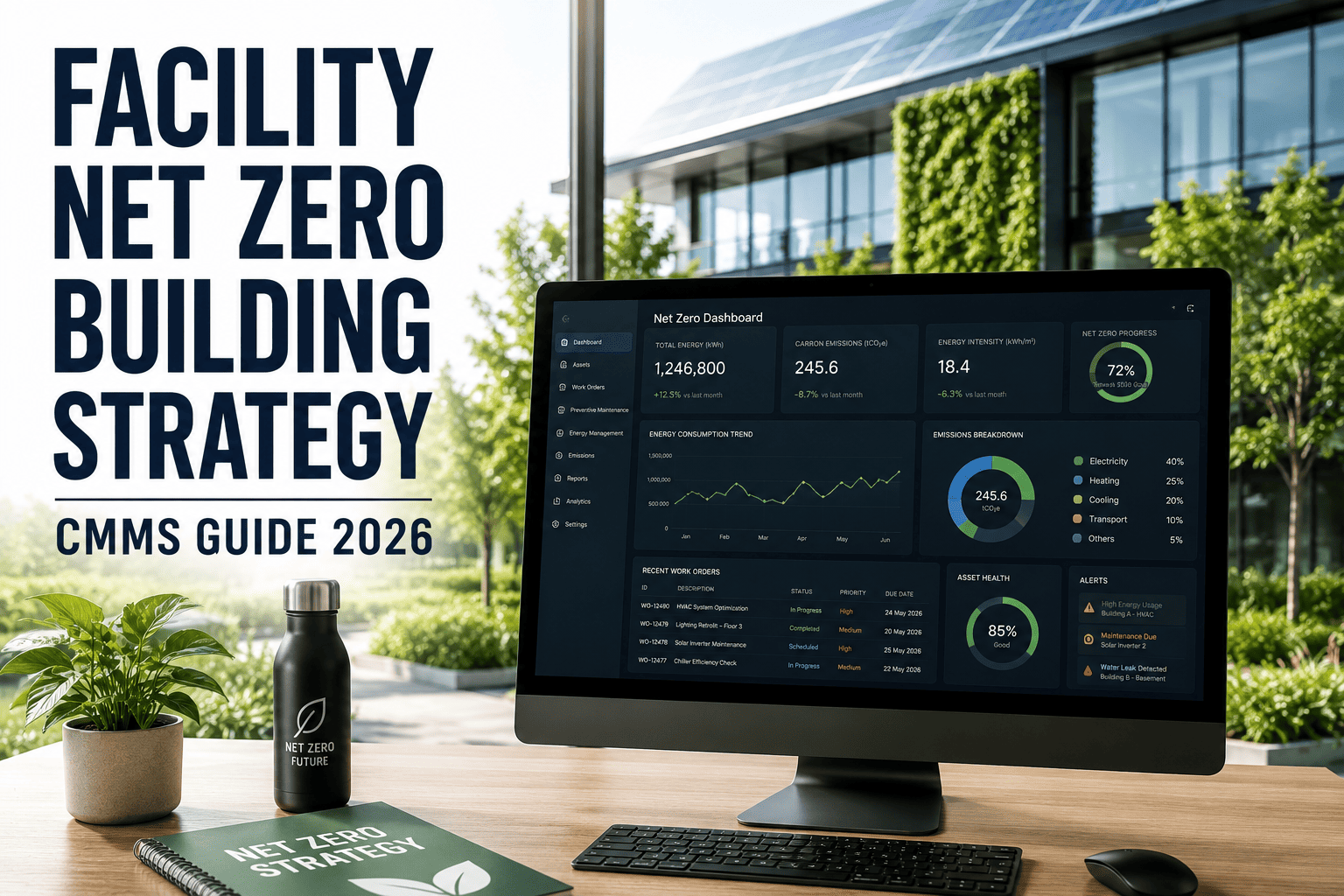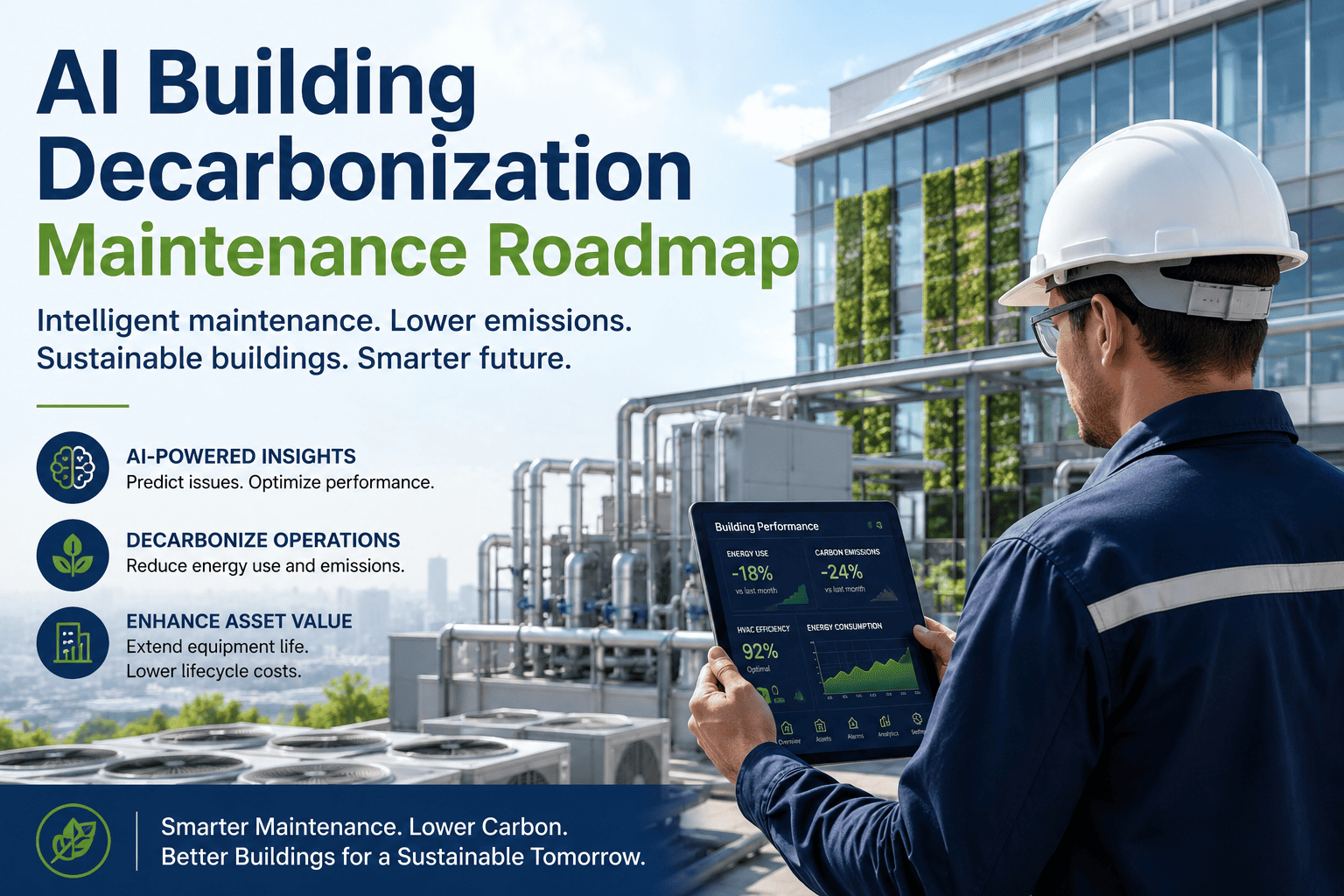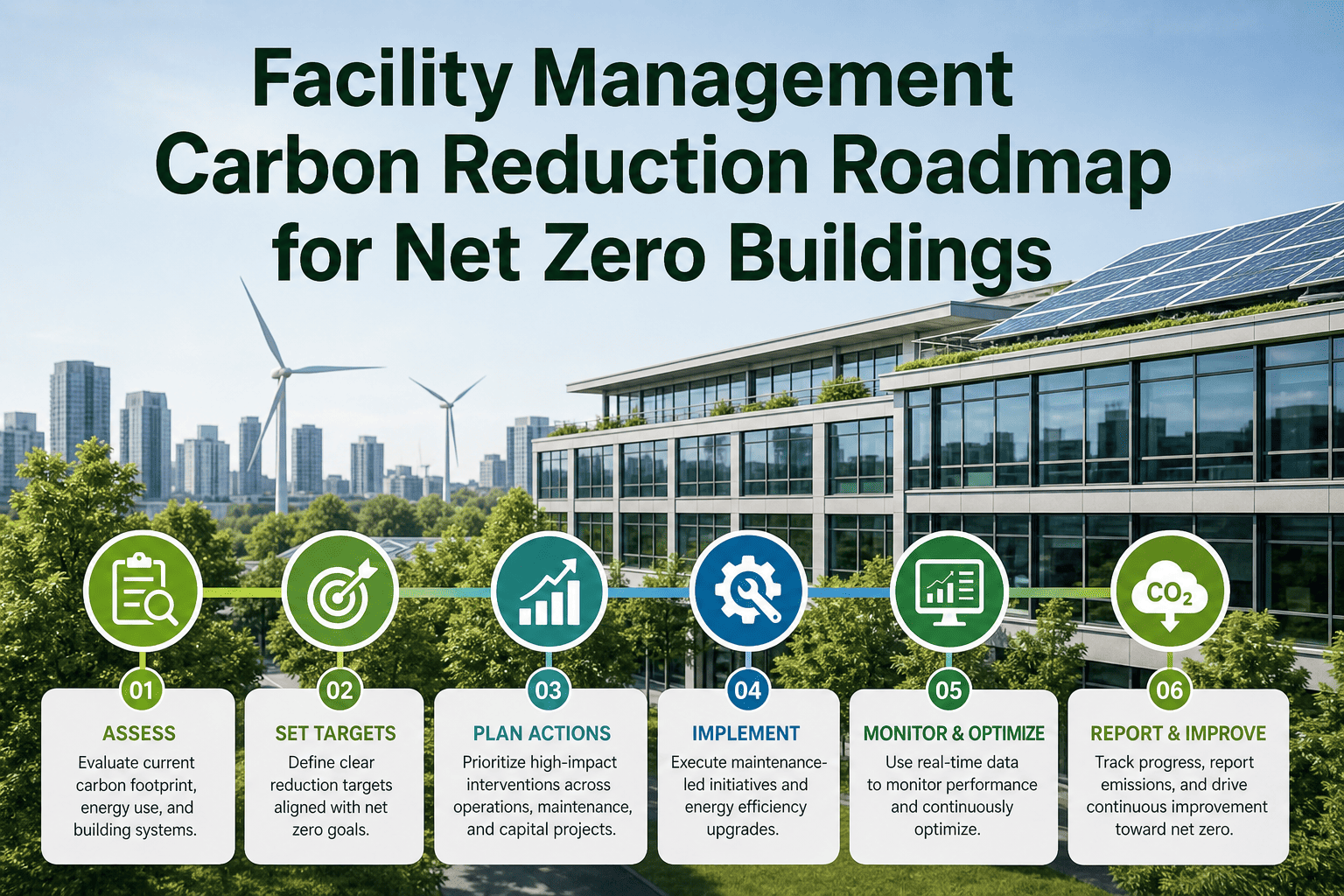
Net zero for commercial buildings is a defined engineering challenge, not an abstract aspiration. It requires reducing operational energy consumption to the point where on-site or procured renewable generation offsets all remaining carbon emissions. For most commercial buildings, that means achieving a 50 to 70% energy reduction before renewables are even considered. Facility managers own the operational pathway to net zero — the equipment efficiency decisions, maintenance practices, and utility monitoring systems that determine whether a building reaches its target or misses it by a decade. This roadmap covers the practical sequence from energy audit to net zero, with the specific facility management actions at each stage. Sign up free on Oxmaint to start tracking your building's decarbonisation progress, or book a demo for a net zero pathway walkthrough.
Track Your Building's Net Zero Progress Across Every System in Oxmaint
Oxmaint's energy and sustainability module tracks EUI reduction, Scope 1 and 2 emissions, renewable generation, and offset activity across your full portfolio against your net zero targets. Live in 14 days.
A net zero building achieves a balance between the carbon emissions produced by its operation and the carbon removed or offset through on-site generation, renewable energy procurement, and verified offset purchasing. Operational net zero requires no embodied carbon accounting from construction materials. For most existing commercial buildings, the path to net zero runs through efficiency first (50 to 70% energy reduction), then electrification (replacing gas with electricity), then renewable procurement or generation to offset remaining electrical emissions.
Phase 1: Energy Audit and Baseline Establishment
No net zero programme can be designed without a credible energy baseline. The audit produces the EUI profile, Scope 1 and 2 emission inventory, and equipment efficiency assessment that defines the gap between current performance and net zero target.
ASHRAE Level 2 covers energy use analysis, field inspection, and identification of ECMs (Energy Conservation Measures) with estimated costs and savings. It provides the priority-ordered improvement list that becomes the net zero implementation plan. Level 2 is the minimum standard for institutional portfolio decarbonisation planning.
Output: prioritised ECM list with ROI per measureScope 1 sources: natural gas (boilers, CHP), refrigerant leakage, diesel generators, and any fuel combustion on-site. Scope 2 sources: purchased electricity. Each source is quantified in kgCO2e/year. The emissions inventory establishes the exact reduction target the net zero programme must achieve for each source category.
Output: emissions by source, reduction target per categoryCMMS asset data provides installation dates, condition scores, and remaining useful life estimates per piece of equipment. This data determines whether the net zero pathway includes equipment rehabilitation or capital replacement, and whether efficiency upgrades can be deferred to align with natural replacement cycles to reduce capital costs.
CMMS FCI data drives ECM capital timing decisionsGap analysis quantifies the distance between current EUI and the target EUI consistent with net zero for the building type and climate. ENERGY STAR's Target Finder and the CRREM (Carbon Risk Real Estate Monitor) tool provide science-based targets aligned with 1.5C pathways. Gap analysis outputs the required annual EUI reduction rate to reach net zero by the target year.
CRREM provides 1.5C-aligned EUI targets by building typePhase 2: Operational Efficiency (Target 50 to 70% Energy Reduction)
| Efficiency Measure | Energy Reduction | Capital Cost | Payback Period |
|---|---|---|---|
| AI HVAC optimisation (BMS integration) | 15 to 30% HVAC energy | Low: $8K to $30K per building | 12 to 18 months |
| LED retrofit with occupancy controls | 50 to 75% lighting energy | Medium: $3 to $6/sq ft | 2 to 5 years |
| Building envelope air sealing | 5 to 15% total energy | Low: $0.50 to $1.50/sq ft | Under 2 years |
| Chiller replacement (high efficiency) | 20 to 35% chiller energy | High: $120K to $400K per chiller | 7 to 15 years; align with natural replacement |
| VFD installation on HVAC fans and pumps | 20 to 45% fan and pump energy | Medium: $3K to $15K per motor | 1.5 to 4 years |
| Building recommissioning | 10 to 20% whole-building energy | Low: $0.20 to $0.40/sq ft | Under 1 year |
Phase 3: Fuel Switching and Electrification
Once operational efficiency has reduced total energy demand by 50 to 70%, Scope 1 emissions from gas combustion must be eliminated through electrification. Heat pumps replacing gas boilers represent the primary electrification pathway for commercial buildings in most climates.
Frequently Asked Questions: Net Zero Buildings
Track Your Net Zero Pathway Progress Across Every Building in Oxmaint
EUI reduction, Scope 1 and 2 emissions, renewable energy procurement, and offset tracking against your 2030 net zero targets. Live in 14 days, no separate sustainability tool required.