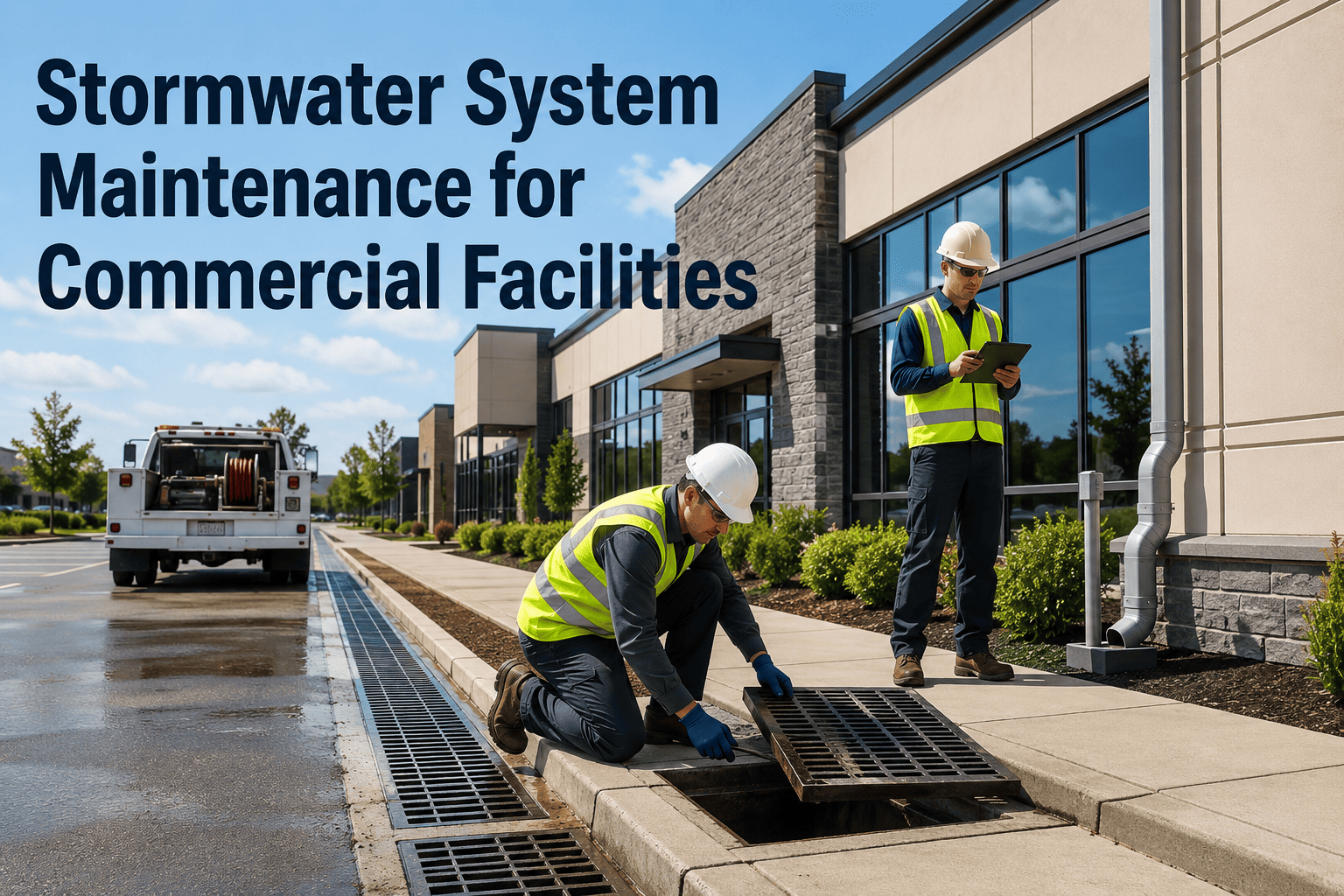
Managing stormwater systems at commercial facilities is one of the most under-tracked maintenance responsibilities in facility management. Blocked catch basins, failing pumps, and unscheduled inspections lead to flooding events, EPA violations, and costly emergency repairs. A proactive stormwater maintenance program protects your property, reduces compliance risk, and extends the life of your drainage infrastructure. Book a Demo to see how Oxmaint tracks every drain, pump, and inspection across your entire site automatically.
What Stormwater Maintenance Actually Covers
Commercial stormwater infrastructure includes catch basins, inlet grates, underground pipes, retention ponds, pump stations, and outfall structures. Each component has its own inspection frequency and failure mode. Without a centralized maintenance schedule, teams miss quarterly cleanouts, skip pump runtime tests, and lose inspection records during audits. Facility managers across the US report that stormwater is the most frequently deferred maintenance category — until a flooding event forces emergency action.
| Component | Inspection Frequency | Common Failure | Compliance Risk |
|---|---|---|---|
| Catch Basins | Quarterly | Sediment buildup, blockage | High |
| Inlet Grates | Monthly | Debris accumulation | Medium |
| Retention Ponds | Semi-Annual | Vegetation overgrowth | High |
| Stormwater Pumps | Monthly | Motor failure, clogged intake | Critical |
| Outfall Structures | Annual | Erosion, discharge violations | High |
| Underground Pipes | Annual | Root intrusion, collapse | Medium |
Stop Reacting to Floods — Start Preventing Them
Oxmaint schedules catch basin cleanouts, pump tests, and drainage inspections automatically. Get real-time alerts before a blocked drain becomes a $40,000 emergency.
Stormwater Compliance: What Regulators Look For
Under the EPA's NPDES permit program and local municipal separate storm sewer system (MS4) requirements, commercial facilities must document all stormwater inspection and maintenance activities. During audits, inspectors specifically request maintenance logs, inspection dates, corrective action records, and contractor certifications. Facilities without digital records routinely fail these audits — not because maintenance wasn't done, but because documentation was lost or incomplete.
"Most facility teams I work with treat stormwater as a once-a-year budget line item instead of a recurring operational priority. The problem is that catch basins fill up faster than anyone expects, pump seals degrade silently, and by the time you notice a problem, it's already a flooding event or a compliance violation. Digital maintenance scheduling that automatically triggers inspections and documents every action has reduced our stormwater-related incidents by over 70% across our portfolio. The ROI is immediate — one avoided flood event pays for several years of software."
Frequently Asked Questions
Every Drain, Basin, and Pump — Tracked and Compliant
Join facility teams managing stormwater infrastructure with Oxmaint's preventive maintenance platform. Automate inspections, stay audit-ready, and eliminate surprise flooding events.



.jpeg)
