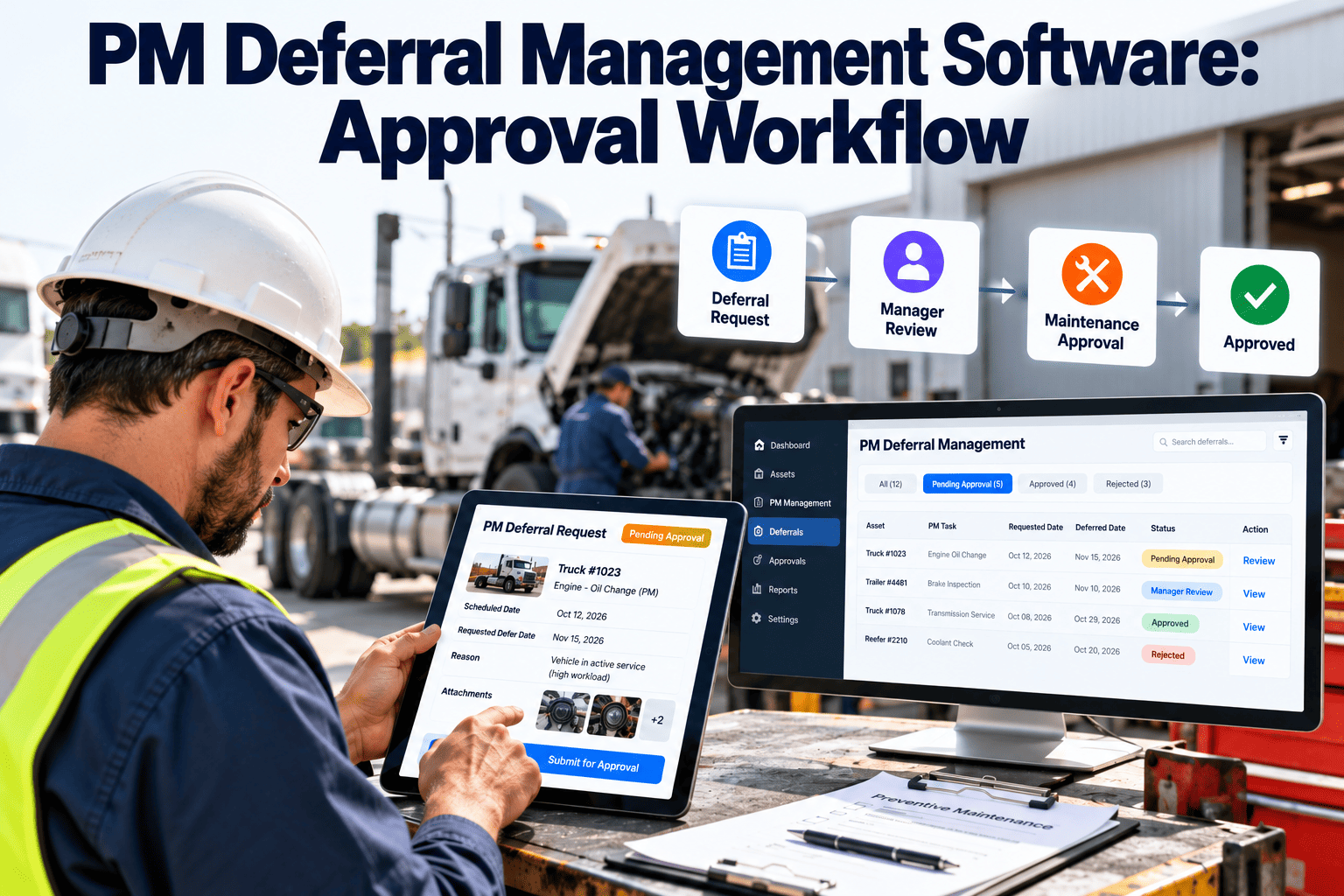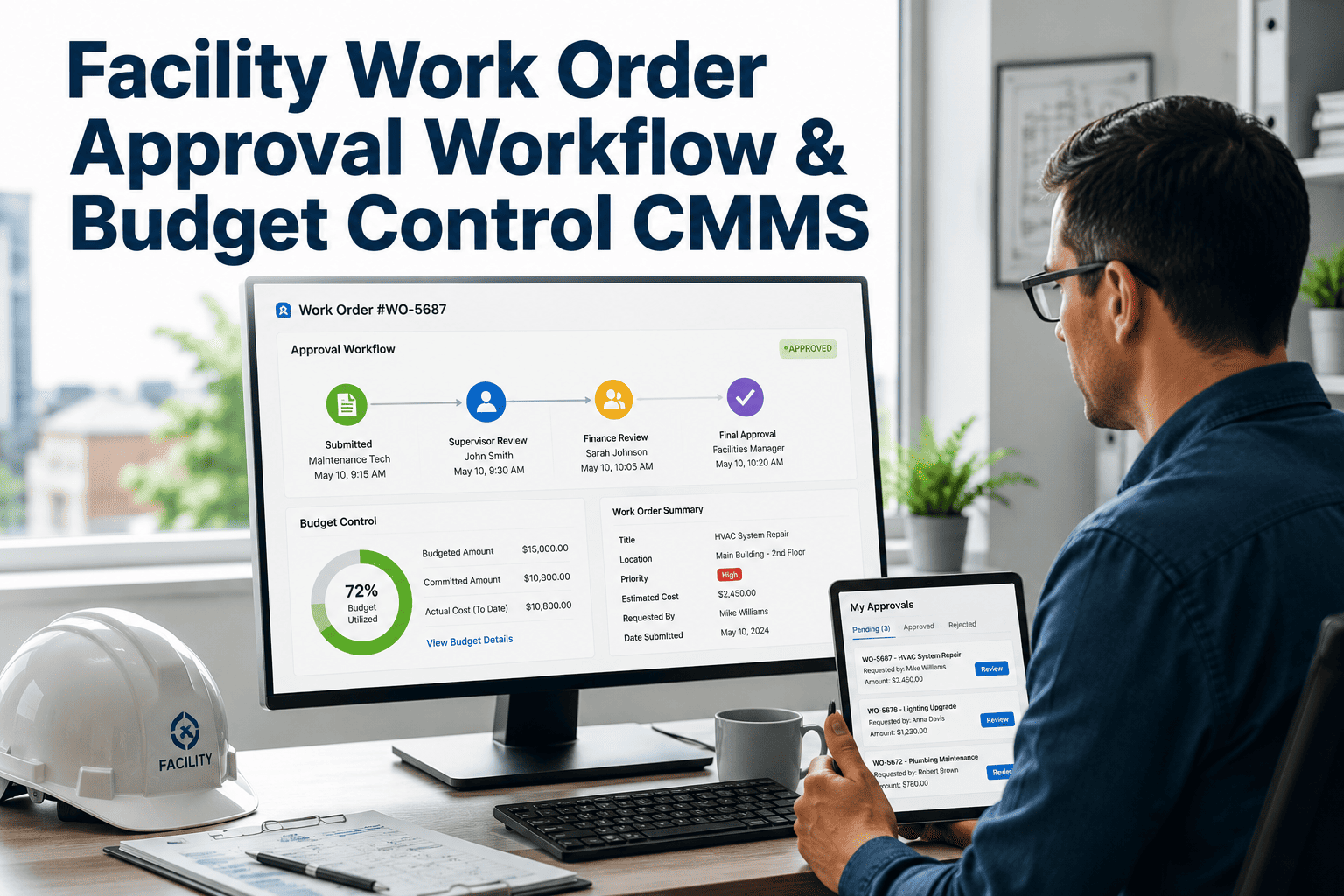
A PM waiver is a documented decision to skip or defer a scheduled preventive maintenance task. Used sparingly, it keeps a facility flexible when a chiller cannot be shut down during a heat wave or a tenant event blocks access to a plant room. Used loosely, it becomes skip culture, where overdue tasks are pushed forward until the schedule means nothing. The answer is not banning waivers. It is a governance policy that decides who may request one, who must approve it, and how it is recorded, which a CMMS such as Oxmaint can enforce inside the normal work order flow.
PM Waiver Governance: When to Skip a PM and Who Approves
A skipped PM should be a recorded, approved and time-limited decision, never a quiet default. Use a four-step waiver policy to keep PM discipline tight while still allowing legitimate exceptions.
Why Unmanaged PM Waivers Become Skip Culture
Skipping a PM rarely happens as one big decision. It happens as many small ones: a busy week, a locked room, a missing part. Without a policy, nobody owns the pattern, and PM compliance numbers drift while the backlog quietly grows.
Without waiver governance
- Technicians close or push tasks forward with a verbal okay
- Nobody can tell a justified deferral from a missed task
- The same asset is skipped cycle after cycle
- Compliance reports look healthy or unhealthy for the wrong reasons
- Auditors and insurers find gaps with no explanation on file
- Failures trace back to a PM nobody remembers skipping
With waiver governance
- Every exception has a named requester, reason and approver
- Deferrals carry an expiry date and a make-up task
- Repeat waivers on one asset trigger escalation automatically
- Reports show compliance both with and without waivers
- Audit questions are answered from the asset history
- Leadership sees where schedule pressure actually comes from
When Skipping a PM Is Legitimate and When It Is Not
A good PM exception policy starts by listing acceptable grounds in advance. That removes the argument at the moment of pressure and gives approvers a consistent test instead of a judgment call.
Acceptable grounds for a waiver or deferral
- The asset is out of service, decommissioned or being replaced
- Access is blocked by a tenant event, construction or a safety hold
- Operating conditions make shutdown unsafe, such as peak cooling load
- A condition-based reading shows the task is not yet needed
- A manufacturer bulletin or engineering review changes the interval
- The task is being combined with a larger scheduled outage
Grounds that should be rejected
- The team is short staffed this week
- The asset has not failed recently
- A previous waiver on the same task is still open
- Parts or tools were not staged in advance
- The task is tied to a code, insurer or warranty requirement
- The requester simply prefers to do other work first
Waiver Tiers: Who Approves What
Approval authority should rise with risk. The table below is a starting point for a commercial facility PM waiver policy, and each team should adjust the limits to its own assets, contracts and risk appetite.
| Tier | Scope | Typical Limit | Approver | Evidence Required |
|---|---|---|---|---|
| Tier 1 | Low-criticality assets, routine tasks such as filter changes or visual checks | One short deferral within the same cycle | Maintenance supervisor | Reason code and new due date |
| Tier 2 | Critical assets such as chillers, boilers, air handlers, elevators | Deferral with a fixed expiry and a make-up task | Facility manager with engineering input | Risk note, asset history review, interim checks |
| Tier 3 | Regulatory or life-safety tasks such as fire pumps, sprinklers, emergency generators | Reschedule inside the permitted inspection window only | Compliance owner or director | Confirmation the code or authority window is respected |
| Escalation | Any second consecutive waiver on the same task or asset | No further deferral without review | One tier above the original approver | Root cause for the repeat and a corrective plan |
The Four-Step Waiver Policy: Request, Review, Approve, Log
The policy works because each step has one owner and one output. Skipping any step turns a governed exception back into an informal skip.
Request
Review
Approve
Log
What a Complete Waiver Request Must Contain
Incomplete requests are the main reason waivers get approved by habit. A short mandatory form keeps the review fast and the record useful months later.
- Asset name, location and criticality rating
- The exact PM task and the original due date
- Reason code chosen from a fixed list
- Risk if the task is delayed, in plain words
- Compensating action such as a visual check or reading
- Proposed new date or replacement task
- Count of previous waivers on this asset
- Whether a code, insurer or warranty term applies
- Name of the requester and the reviewer
- Approver decision with time stamp and expiry
Give Every PM Exception an Owner and an Expiry Date
Skip, Defer, Reschedule or Cancel: Use the Right Word
Teams often use these terms interchangeably, which hides what actually happened. Defining them in the policy makes waiver reporting honest and comparable across sites.
| Action | Meaning | Counts as Compliant? | Typical Approval |
|---|---|---|---|
| Skip | The task is not done this cycle and no make-up is planned | No, unless the asset is retired | Highest tier available for that asset |
| Defer | The task is delayed to a new, approved date with an expiry | Only after it is completed in the approved window | Tier based on asset risk |
| Reschedule | The task moves inside its normal tolerance window | Yes, if finished inside the window | Planner or supervisor |
| Cancel | The task is removed because the asset or the interval no longer applies | Not applicable, schedule is corrected | Engineering or facility manager |
A Waiver Is Temporary: The Expiry and Make-Up Timeline
The most valuable rule in the policy is that every waiver ends. The timeline below shows how a deferral stays visible from approval to closure.
Metrics That Show Whether Waiver Governance Is Working
Track waivers as a managed population, not as an afterthought. These measures show whether exceptions are rare and justified or a symptom of a deeper planning problem.
Warning Signs Your Waiver Process Is Being Bypassed
Even a well written policy can erode. Review the waiver log regularly for these patterns, which usually appear before PM compliance visibly falls.
- Work orders closed with a note instead of a waiver record
- Approvals clustered on the last day of the month
- One approver signing nearly every request
- Generic reason codes used for most waivers
- Tier 3 tasks appearing in the deferral list
- Waivers with no expiry date or no make-up task
- Technicians asking for waivers after the work window has passed
- Failures on assets with open or repeated waivers
A Reason Code List That Keeps Waivers Comparable
Free text reasons are impossible to trend. A short, fixed list of reason codes lets you see why PMs are really being skipped across buildings, shifts and asset classes.
| Reason Code | Example Situation | Default Tier | Evidence to Attach |
|---|---|---|---|
| Access blocked | Tenant event or construction hold limits entry to a plant room | Tier 1 or 2 | Notice from tenant or contractor and a new access date |
| Operational constraint | Shutting down an air handler would breach comfort or process requirements | Tier 2 | Operations sign-off and a planned outage window |
| Asset out of service | Equipment isolated, awaiting repair or being replaced | Tier 1 | Out-of-service status and return-to-service plan |
| Condition-based extension | Readings show the component is healthy and the task can wait | Tier 2 | Recent readings, inspection notes and the revised interval |
| Parts or contractor delay | A required part or specialist is unavailable on the due date | Tier 2 | Purchase order, supplier confirmation and delivery date |
| Interval review | Engineering is reassessing the task frequency | Tier 2 or 3 | Review record and the decision deadline |
Worked Scenario: A Chiller PM During a Heat Wave
The same situation can end very differently depending on whether a waiver process exists. This scenario is illustrative, not a case study.
Informal skip
- The supervisor tells the technician to leave the chiller PM until next week
- The work order is closed with a note that says "deferred"
- Next week the same conditions apply and nobody revisits it
- Months later a failure is traced to the missed condenser and oil checks
- No record shows who agreed to the delay or why
Governed waiver
- The planner raises a Tier 2 request citing operational constraint
- The facility manager approves a deferral with a seven-day expiry
- Daily visual and temperature checks are added as compensating controls
- A make-up PM is scheduled for the first cooler overnight window
- If the date slips, the waiver escalates and the repeat is reviewed
Audit Readiness: What Inspectors and Insurers Want to See
When an auditor asks why a task was late, the answer should come from the system, not from someone's memory. A governed waiver record answers the questions below without a scramble.
- Who requested and who approved the exception
- Which requirement or interval the task supports
- What risk was assessed at the time of approval
- Which compensating controls were applied
- When the task was actually completed
- Whether the waiver stayed within its expiry date
- Whether the asset had earlier exceptions
- Whether life-safety tasks stayed inside their allowed windows
Running the Waiver Policy Inside Oxmaint
A policy on paper depends on memory. A maintenance management platform makes the same policy part of the daily workflow, which is where Oxmaint fits for facility teams.
Preventive maintenance schedules
Work orders and approvals
Asset history and compliance records
Reporting and dashboards
Rolling Out the Policy Without Slowing the Team Down
A governance policy fails if it feels like paperwork. Introduce it in stages, keep the first version simple, and show technicians that a clear process protects them as much as the asset.
- Start with Tier 1 and Tier 2 only, then add regulated tasks
- Limit the request form to the fields that approvers truly need
- Agree response times so approvers answer the same day
- Brief supervisors first, since they handle most requests
- Share the first monthly waiver report with the whole team
- Review rejected requests to confirm the rules feel fair
- Adjust tier limits after the first quarter of real data
- Recognize teams that keep waivers rare and well documented