Commercial Property Inspection Checklist for Facility Managers
By shreen on March 14, 2026
Walk through any commercial building that has deferred inspections for six months, and you will find the same pattern: a roof drain clogged since the last storm, an emergency exit light burned out for weeks, a parking lot crack that has become a trip hazard, and an HVAC unit cycling inefficiently because nobody checked the filter since Q1. These are not catastrophic failures—they are the slow accumulation of overlooked items that eventually trigger tenant complaints, insurance claims, and code violations. Facility managers who replace clipboard walk-throughs with a structured digital inspection system like Oxmaint catch 3x more deficiencies per inspection cycle and close corrective actions 60% faster than teams still working from paper checklists.
72%
Of commercial building code violations originate from missed routine inspection items, not sudden equipment failures
3x
More deficiencies caught per cycle when facilities switch from paper checklists to digital inspection workflows
60%
Faster corrective action closure with automated work order generation directly from inspection findings
Why Ad-Hoc Property Walk-Throughs Miss Critical Issues
Most commercial facility managers inspect their buildings—but without a standardized checklist tied to automated follow-up, inspections become inconsistent, incomplete, and undocumented. The same high-traffic areas get checked repeatedly while mechanical rooms, rooftops, and parking structures go months between visits. When a tenant files a complaint or an insurer requests inspection records, the gaps become expensive. Book a demo to see how Oxmaint standardizes every inspection route and ensures nothing falls through the cracks.
Inspection Gaps
No Standardized RouteInspectors take different paths each visit, leaving blind spots in mechanical rooms and rooftops
No Photo EvidencePaper checklists cannot capture visual condition data, making deficiency disputes unresolvable
No Auto Follow-UpFindings sit in filing cabinets; corrective work orders require manual re-entry into a separate system
No Trend TrackingWithout historical data, recurring issues appear as isolated incidents every inspection cycle
Key Insight
$4.25 Per Sq Ft in Deferred Maintenance Costs
Commercial buildings that skip or shorten routine inspections accumulate deferred maintenance at an average rate of $4.25 per square foot annually. For a 100,000 sq ft property, that translates to $425,000 in compounding repair costs within a single year—costs that structured quarterly inspections with Oxmaint's digital checklists prevent by catching issues early when repairs cost 5-10x less.
Each section below covers a critical inspection domain for commercial facility management. Teams using Oxmaint's mobile inspection module complete these checks with photo capture, severity scoring, and automatic work order generation for every deficiency found.
EXT
Exterior & Building Envelope
Exterior & Building Envelope
The building exterior is your first line of defense against water intrusion, structural deterioration, and liability exposure. Exterior deficiencies visible to tenants and visitors also directly impact occupancy rates and lease renewals.
Roof Membrane & Flashing IntegrityInspect for ponding water, membrane blistering, exposed fasteners, and flashing separation at all penetrations and parapet walls
Facade & Cladding ConditionCheck exterior walls for cracks wider than 1/8 inch, efflorescence staining, loose panels, sealant deterioration at expansion joints
Window & Door SealsVerify weather stripping integrity, check for condensation between panes indicating seal failure, test closer mechanisms
Drainage & GradingConfirm downspouts discharge away from foundation, gutters are clear, site grading directs water flow to stormwater drains
What This Section Detects
+ Water intrusion pathways before they cause interior damage or mold growth
+ Structural envelope failures that trigger code violations and insurance premium increases
MEC
HVAC & Mechanical Systems
HVAC & Mechanical Systems
Mechanical systems account for 40-60% of a commercial building's energy consumption. Inspection failures here translate directly to inflated utility costs, tenant comfort complaints, and premature equipment replacement. Track every finding in Oxmaint to build equipment health histories that support capital planning decisions.
Air Handler Unit InspectionCheck filter condition and differential pressure, inspect coils for fouling, verify belt tension and alignment, confirm drain pans are clear
Chiller/Boiler PerformanceRecord operating temperatures and pressures, check for refrigerant leaks, inspect combustion exhaust, verify safety relief valve tags
Thermostat & Controls CalibrationVerify zone temperature readings match actual conditions, check BAS communication, confirm occupied/unoccupied scheduling
Ductwork & VentilationInspect accessible ductwork for disconnections, insulation damage, and damper operation; verify outdoor air intake is unobstructed
What This Section Detects
+ Energy waste from fouled coils, clogged filters, and miscalibrated controls costing $0.50-$1.20/sq ft annually
+ Indoor air quality issues that lead to tenant health complaints and potential liability
ELC
Electrical & Lighting
Electrical & Lighting
Electrical deficiencies are the leading cause of commercial building fires and represent the highest-severity findings in property condition assessments. Systematic electrical inspections protect tenant safety and satisfy insurance underwriting requirements.
Main Distribution Panel InspectionCheck for scorching, loose connections, breaker labeling accuracy, adequate clearance maintained per NEC 110.26
Emergency & Exit LightingTest all emergency lights for 30-second illumination, verify exit signs are visible from all required locations, check battery backup
Exterior & Parking LightingConfirm all parking lot, walkway, and entrance fixtures operational; check photocell timers and fixture mounting integrity
GFCI & Outlet TestingTest all GFCI receptacles in wet locations, verify outlet covers intact, check for signs of overloading or daisy-chained power strips
What This Section Detects
+ Fire hazards from overloaded circuits, deteriorated wiring, and improper panel modifications
+ Life safety lighting failures that create evacuation risks and ADA compliance issues
PLB
Plumbing & Water Systems
Plumbing & Water Systems
Water damage is the most common and costly commercial property insurance claim. A single undetected pipe leak can cause $50,000+ in damage within 48 hours. Regular plumbing inspections documented in Oxmaint's asset tracking system provide the maintenance history insurers require to process claims without dispute.
Domestic Water SystemCheck water heater temperature and pressure relief valves, inspect visible piping for corrosion or leaks, verify backflow preventer testing
Restroom Fixtures & DrainageTest flush valves, check for running toilets, verify trap seal integrity, inspect under-sink connections for moisture or staining
Fire Suppression SystemVerify sprinkler heads unobstructed, check system pressure gauges, confirm fire pump starts on test, inspect standpipe connections
Stormwater & SewerInspect roof drains and scuppers for debris, check sump pumps for operation, verify grease interceptor maintenance compliance
What This Section Detects
+ Active and developing leaks that escalate to water damage claims averaging $35,000 per incident
+ Fire suppression impairments that void insurance coverage and violate fire code
LSF
Life Safety & Fire Protection
Life Safety & Fire Protection
Life safety deficiencies carry the highest regulatory penalties and liability exposure of any inspection category. Fire marshals can shut down occupied spaces immediately upon finding non-compliant exit paths, disabled fire alarms, or blocked egress routes.
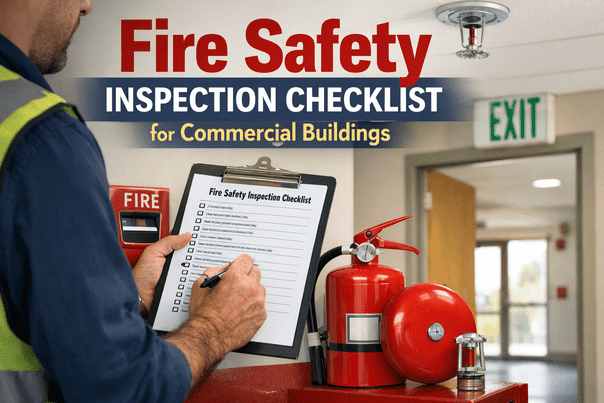
Fire Alarm & DetectionTest pull stations, verify panel communication with monitoring company, check smoke detector placement and battery status
Egress & Exit PathsWalk every exit route from occupied spaces to exterior discharge; verify unobstructed paths, proper signage, and door hardware operation
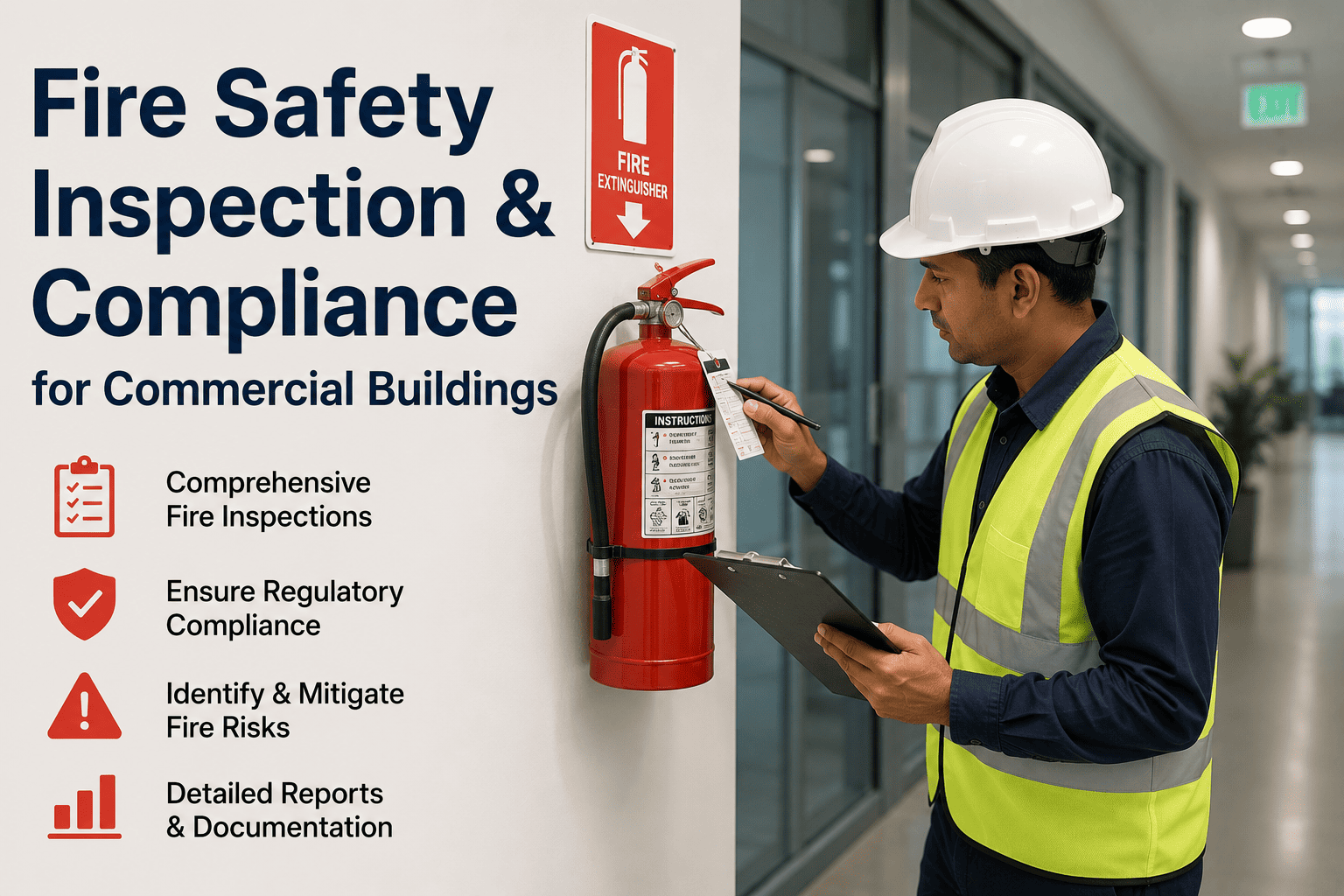
Fire Extinguisher ComplianceConfirm extinguishers in designated locations, verify annual inspection tags current, check pressure gauges in green zone
ADA AccessibilityVerify accessible routes, door clearances, signage with Braille, restroom grab bars, and parking space count and signage compliance
What This Section Detects
+ Fire code violations that carry fines up to $10,000 per day and can force immediate building closure
+ ADA non-compliance exposing ownership to federal civil rights lawsuits with no damages cap
Stop inspecting with paper and start inspecting with purpose. Oxmaint turns every property walk-through into a structured, documented, and actionable event—with automatic work orders for every deficiency found.
Paper Inspections vs. Digital Inspections with Oxmaint
The difference between a paper checklist and a digital inspection platform is not about technology preference—it is about whether findings actually become corrective actions or disappear into filing cabinets.
Paper-Based Inspections
No Photo DocumentationHandwritten notes describe conditions subjectively — no visual evidence for disputes or trend comparison
Manual Work Order TransferFindings require separate data entry into the maintenance system — 40% of items are never transferred
No Historical ComparisonPrevious inspection records buried in binders — impossible to track deterioration trends over time
Inconsistent CoverageEach inspector follows their own route and emphasis — no way to ensure every area receives equal attention
Digital Inspections with Oxmaint
Photo & GPS EvidenceEvery finding includes timestamped photos, GPS coordinates, and severity scoring for audit-ready records
Auto Work Order GenerationDeficiencies instantly become prioritized work orders — assigned, scheduled, and tracked to completion
Trend Analytics DashboardCompare conditions across inspection cycles — spot deteriorating assets before they become emergencies
Standardized Inspection RoutesEvery inspector follows the same checklist sequence — complete coverage guaranteed every cycle
How Oxmaint Streamlines Property Inspections
Oxmaint replaces fragmented inspection processes with a single mobile-first platform that covers scheduling, execution, documentation, and corrective follow-up. Here is how facility managers use it across their property portfolios.
Mobile Inspection Checklists
Customizable templates for every property type and inspection frequency. Inspectors complete checks on phones or tablets with required photo fields, severity dropdowns, and mandatory notes for failed items.
iOS & AndroidOffline-Capable
Automated Work Orders
Every deficiency flagged during inspection auto-generates a work order with the finding details, photos, location, and suggested priority. No manual re-entry required — nothing falls through the cracks.
Auto-PriorityTeam Routing
Multi-Property Dashboard
Portfolio managers view inspection completion rates, open deficiency counts, and corrective action status across all properties in a single dashboard. Drill down from portfolio to building to specific finding.
Portfolio ViewExportable Reports
Compliance Record Vault
Every inspection report, photo, work order, and completion record stored permanently and searchable. Produce audit-ready documentation for insurers, regulators, and due diligence teams instantly.
Audit-ReadySearchable Archive
Inspection Frequency Guide by Building System
Not every system needs the same inspection cadence. This schedule aligns with industry standards from BOMA, IFMA, and major commercial insurance carriers. Book a demo to see how Oxmaint automates inspection scheduling and sends reminders before every due date.
Since switching to digital inspections with Oxmaint, our team completes property walk-throughs in half the time and catches twice the number of deficiencies. The automatic work order generation alone saved us 15 hours per week of administrative work across our 12-building portfolio.
— Regional Facility Director, 1.2M sq ft commercial portfolio
Start Running Professional Property Inspections Today
Every deferred inspection is a deferred problem that compounds in cost and risk. Oxmaint gives your team mobile checklists, automatic documentation, instant work orders, and portfolio-wide visibility—so every building in your portfolio gets the attention it needs, on schedule, every time.
What should a commercial property inspection checklist include?
A comprehensive checklist covers five core domains: exterior and building envelope, HVAC and mechanical systems, electrical and lighting, plumbing and water systems, and life safety and fire protection. Each domain includes specific verification points for equipment condition, code compliance, and safety. Sign up for Oxmaint to access pre-built commercial inspection templates you can customize for your properties.
How often should commercial buildings be inspected?
Frequency varies by system: HVAC and fire safety systems should be inspected monthly, while roof, electrical, plumbing, and site conditions typically require quarterly reviews. Elevators and major capital equipment need annual inspections. High-traffic common areas benefit from weekly visual checks. Most commercial insurance carriers require documented quarterly inspections as a policy condition.
Can Oxmaint handle multi-property inspection management?
Yes. Oxmaint's portfolio dashboard lets facility managers schedule, execute, and track inspections across unlimited properties from a single interface. You can set different inspection templates and frequencies for each building type, assign inspectors by location, and generate portfolio-wide compliance reports. Book a demo to see multi-property management in action.
How do digital inspections improve insurance and audit compliance?
Digital inspections create timestamped, photo-documented records that satisfy insurance underwriting requirements and regulatory audit requests. Every finding, corrective action, and completion record is stored in a searchable archive — producing compliance evidence in minutes instead of the days it takes with paper-based systems.
What happens when an inspector finds a deficiency during a walk-through?
In Oxmaint, flagging a deficiency auto-generates a prioritized work order with the finding details, photos, GPS location, and suggested severity level. The work order is instantly assigned to the appropriate maintenance team and tracked through completion. Managers receive notifications for critical findings. Sign up free to see how inspection findings become actionable work orders.



.jpeg)

