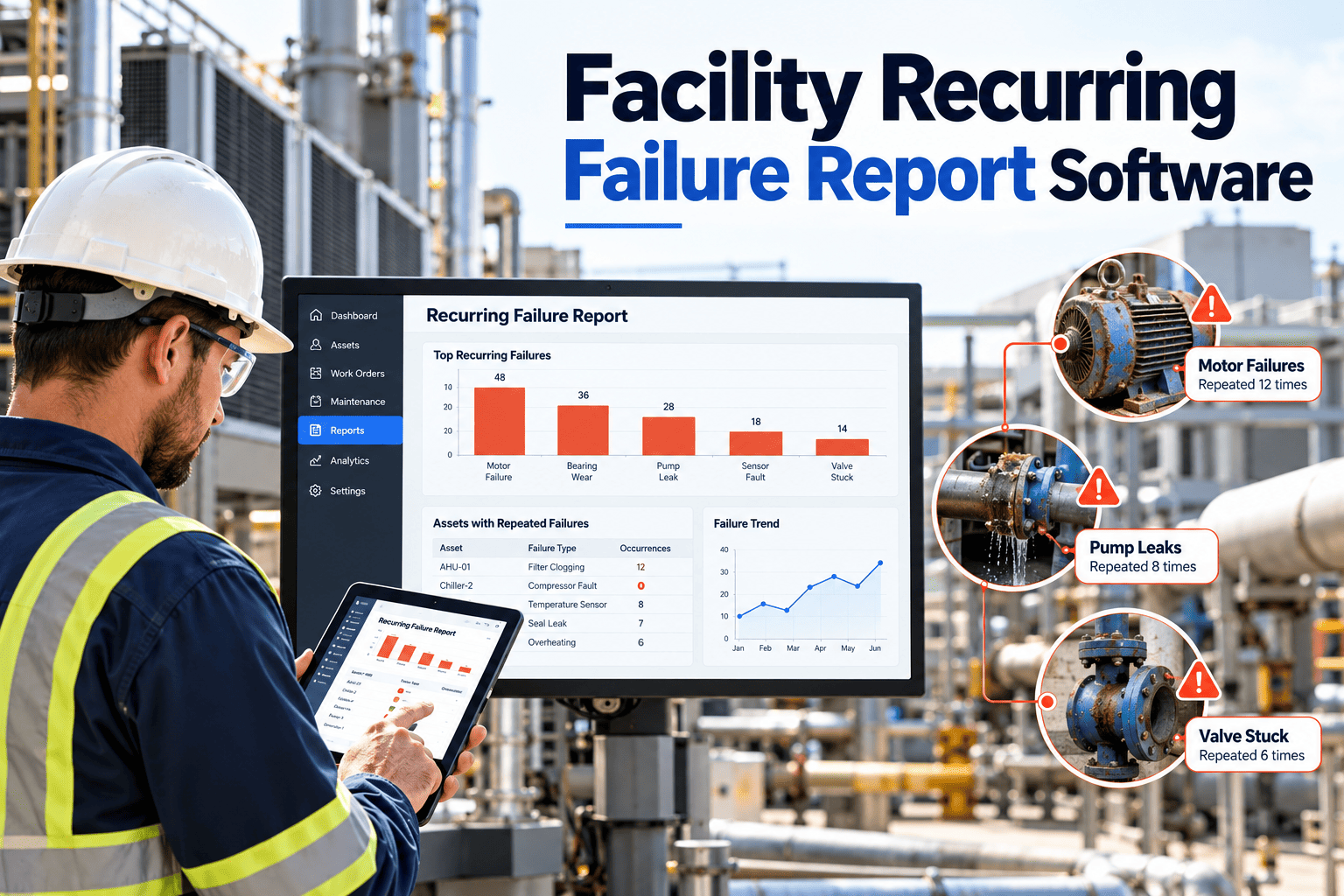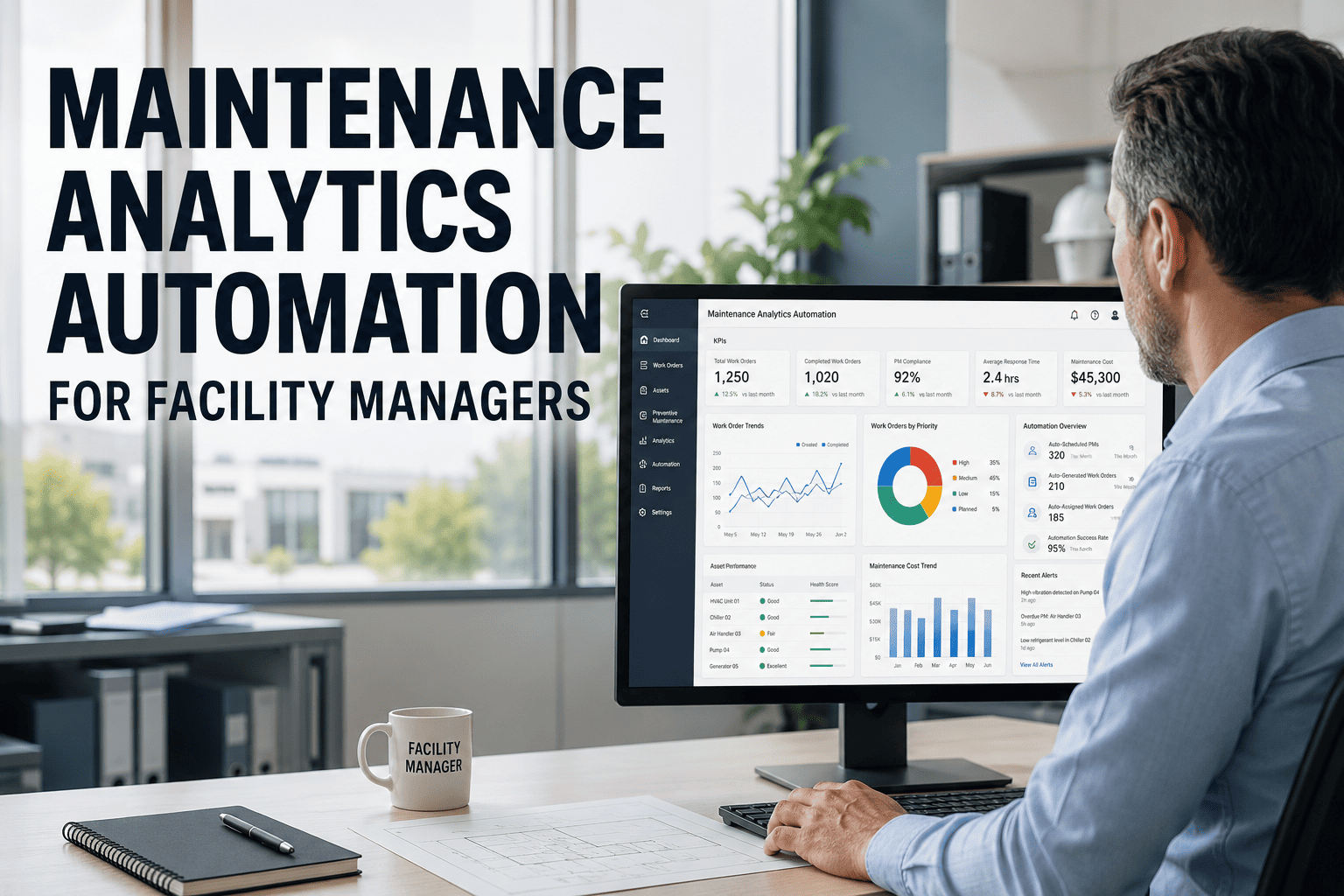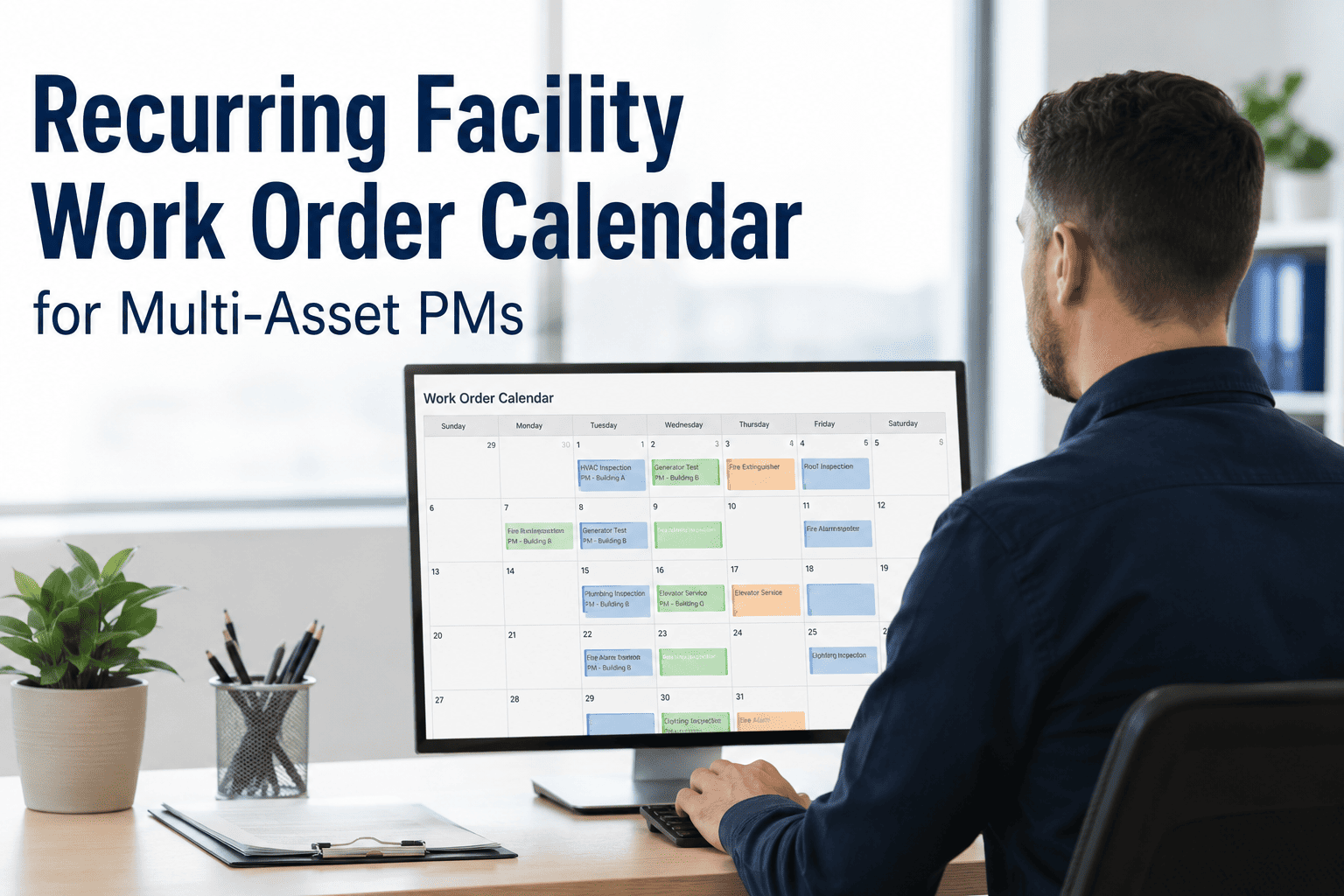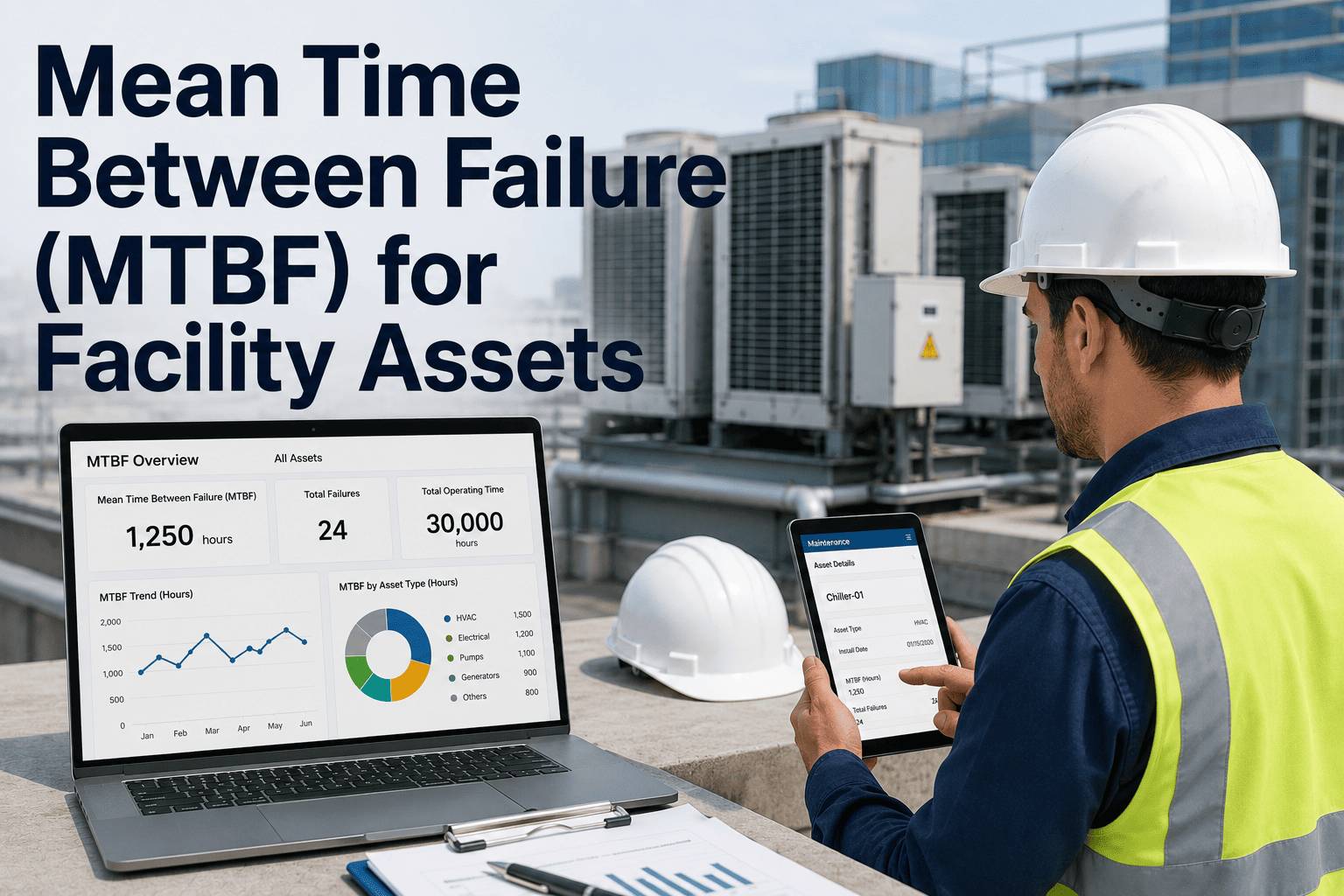
A pump seal that leaks once is a repair. The same seal leaking three times in a quarter is a message: the repair is not addressing the cause. Most facility teams close every work order correctly and still miss the pattern, because the history sits in separate tickets that nobody compares. A recurring defect auto-alert watches for repeat failures on the same asset and pushes a root cause review before the next breakdown. With work order and asset history software connected to your inspections, that rule runs without anyone having to remember it.
Same asset, same defect, three times: stop repairing and start investigating
Auto-alert rules for commercial facilities that flag repeat work orders and inspection findings early enough to run a root cause analysis before the fourth failure.
What counts as a recurring defect
A useful rule is simple enough for a technician to understand and strict enough to avoid false alarms. Four conditions do most of the work.
Why three is a sensible default
- One failure is an event. Parts wear out and things break.
- Two failures may be coincidence, a bad batch of parts, or a one-off misuse.
- Three failures in a short window rarely happen by chance and usually point to an unresolved cause.
Tune the count by asset criticality
Three is a starting point, not a standard. A life safety pump or a main chiller deserves an alert sooner than a bathroom fixture.
| Asset class | Example alert trigger | Reasoning |
|---|---|---|
| Critical (fire pumps, main plant, lifts) | Second occurrence in the window | Cost of a further failure is high, so investigate early |
| Standard building systems | Third occurrence | Balances noise against early detection |
| Low-risk fixtures and finishes | Fourth or fifth occurrence | Avoids flooding supervisors with minor alerts |
What should happen at each repeat
The response should grow with the evidence. Each step adds visibility and ownership without blocking routine repairs.
A repeat-versus-consequence matrix
Not every repeat deserves the same effort. Plot the repeat count against the consequence of failure to decide how fast to respond.
How to define consequence
- Safety or life safety impact on occupants.
- Tenant or revenue disruption if the asset is down.
- Regulatory or compliance exposure.
- Repair cost and the risk of damage to nearby assets.
Catch the third failure before the fourth
Set repeat rules once and let every work order and inspection finding be checked against asset history automatically.
Keeping auto-alerts trustworthy
An alert that fires too often gets ignored. These data rules keep repeat detection credible.
- Normalise defect codes. If one technician writes leak and another writes drip, the system cannot count them together.
- Separate failures from planned tasks. Routine preventive jobs should not count as repeats.
- Reset the count after real fixes. A replaced component or a verified redesign should start a fresh window.
- Handle parent and child assets. Decide whether three faults on three fan coil units count against the floor system or each unit.
- Review dismissed alerts. If supervisors keep closing an alert as not relevant, adjust the rule rather than accept the noise.
From alert to a fix that holds
The alert is only the starting gun. A short, repeatable RCA routine turns it into a durable fix.
Pull the full history
Review every work order, photo, part used, and inspection finding on the asset.Identify the failure mode
Decide whether the failure is wear, misuse, wrong specification, poor installation, or environment.Ask why until it is actionable
Stop at a cause the team can actually change, such as a missing preventive task or the wrong part.Choose the corrective action
Options include redesign, replacement, a new preventive task, training, or a vendor correction.Verify after the fix
Watch the asset for a defined period and confirm the repeat count stays at zero.Examples of root causes behind common repeats
| System | Repeating symptom | Root causes worth checking |
|---|---|---|
| HVAC | Repeated low airflow or tripping | Dirty coils, failing capacitors, control set points, restricted filters |
| Plumbing | Recurring leaks at the same joint | Water pressure, corrosion, installation method, vibration |
| Electrical | Repeated breaker trips | Loose terminations, overloaded circuits, failing devices |
| Lifts | Repeated door faults | Sensor alignment, worn rollers, contractor adjustment quality |
| Roofing | Leaks at the same location | Failed flashing, blocked drains, ponding water |
Who does what when an alert fires
Alerts fail when everyone can see them and nobody owns them. Assign roles in advance.
| Role | Responsibility | Time expectation |
|---|---|---|
| Technician | Record defect code and fix details accurately | At job close |
| Supervisor | Accept the alert and assign RCA owner | Within 2 working days |
| Engineer or lead tech | Complete RCA and propose corrective action | Based on consequence level |
| Facility manager | Approve cost, vendor action, or capital request | At review meeting |
Measure whether the program works
- Repeat work order rate, calculated as repeat jobs divided by total corrective jobs.
- Mean time between failures on assets that had an RCA.
- RCA completion rate and average days to complete.
- Recurrence within 90 days of an RCA fix.
How Oxmaint helps you act on repeat failures
- Asset history: every work order and finding is stored on the asset, so repeats are easy to see.
- Corrective work orders: create RCA tasks with priority, owner, and due date from a flagged repeat.
- Inspections: failed inspection items can generate work orders that feed the same history.
- Preventive maintenance: add a new task or change a frequency when an RCA exposes a gap.
- Reports and dashboards: review repeat rates by system, site, and vendor.
Begin with your worst ten assets
List the assets that generated the most reactive calls last year, apply the rule to them first, and expand once supervisors trust the alerts.
Repeats that are not really repeats
Before opening an investigation, rule out patterns that look like repeats but have a different explanation. This saves effort and keeps trust in the alerts.
- Different root, same label. Three leak reports on one pipe run may be three separate joints. Check location detail before concluding.
- Duplicate reporting. Two tenants reporting the same fault can create two work orders. Merge them so the count is honest.
- Cleaning or housekeeping triggers. A sensor that trips whenever floors are washed is a process issue, not an asset defect.
- Warranty callbacks. A contractor returning to correct their own work is still a repeat and should be visible, but the action differs.
- Seasonal load. Cooling failures during the hottest weeks may reflect capacity limits rather than component wear.
A sample rule setup you can adapt
The table shows how rules might be configured for different asset groups. Treat every value as a starting point and tune it using your own failure history.
| Asset group | Defect codes counted | Window | Trigger | Alert goes to |
|---|---|---|---|---|
| Chillers and boilers | Trip, leak, vibration, control fault | 120 days | 2 occurrences | Engineer and manager |
| Air handling units | Belt, bearing, damper, sensor | 90 days | 3 occurrences | HVAC supervisor |
| Pumps | Seal leak, noise, motor trip | 90 days | 3 occurrences | Plant supervisor |
| Lifts and escalators | Door fault, stop, leveling | 60 days | 2 occurrences | Manager and lift contractor |
| Emergency lighting | Failed test, battery | 180 days | 3 occurrences | Electrical supervisor |
| Washrooms and fixtures | Leak, blockage, fitting | 90 days | 4 occurrences | Maintenance lead |
Attach a task template to every alert
When the alert creates an RCA task, include a short template: history reviewed, failure mode, root cause, action, owner, and verification date. A template makes the quality of investigations consistent across sites.
What repeat failures really cost
A repeated failure is rarely priced by the cost of the part alone. The wider cost is spread across several budget lines, which is why it often goes unnoticed.
| Cost area | How repeats add to it |
|---|---|
| Labor | Each return visit repeats travel, diagnosis, and paperwork |
| Parts and consumables | The same component is replaced again without fixing why it failed |
| Downtime | Tenants, production, or comfort are affected each time |
| Vendor charges | Call-out fees and premium rates accumulate for the same fault |
| Safety and compliance | Repeated faults on protective systems raise exposure |
| Reputation | Tenants lose confidence when the same issue returns |
A simple repair or replace test
- Add the cost of every repair on the asset over the past year.
- Compare it with the cost of replacing or upgrading the failing component.
- Consider remaining life, spare part availability, and the consequence of failure.
- If repair cost is approaching replacement cost, move the item to a capital plan.
Using repeat alerts on contractor work
Repeat detection is not only an internal tool. It gives you facts to use in conversations with service providers.
- Track callbacks by vendor. A pattern of returns on the same contractor's work is a performance topic for the contract review.
- Use warranty terms. Documented repeats help you claim rework within the warranty period.
- Request root cause in the service report. Ask vendors to state why the failure occurred, not only what they replaced.
- Share the history. Giving contractors the asset's repair record helps them diagnose faster.
Introducing auto-alerts over 60 days
A staged rollout builds confidence. Begin with visibility only, then add action as the data proves itself.
Days 1 to 15: clean the inputs
Agree on defect codes, link work orders to assets, and fix obvious duplicates in history.Days 16 to 30: shadow mode
Run the rules but only report results. Review each flagged asset with supervisors to confirm the pattern is real.Days 31 to 45: live for critical assets
Turn on notifications and RCA task creation for critical equipment only.Days 46 to 60: extend and tune
Add standard assets, adjust thresholds from dismissed alerts, and publish the first repeat-rate report.Technician habits that make repeat detection work
Automation depends on the quality of what technicians record. Small habits make a large difference.
- Select the defect code every time. A missing or generic code means the job cannot be grouped.
- Write the actual cause found. Notes such as replaced part do not explain why it failed.
- Record parts and measurements. Readings before and after a repair help the later RCA.
- Attach a photo. A picture of the failed component often settles the failure mode quickly.
- Check history before starting. Reading the last two repairs can save an hour of diagnosis.
Reporting repeat failures to management
Leaders need a short, clear view that shows whether the program is paying off.
| Report item | What it shows | Good direction |
|---|---|---|
| Repeat work order rate | Share of corrective jobs that are repeats | Falling over time |
| Open RCAs by age | Whether investigations are stalling | Few items past their due date |
| Top repeat assets | Where cost and risk concentrate | Turnover as fixes are completed |
| Recurrence after RCA | Whether fixes hold | Close to zero |
| Vendor callback rate | Quality of outsourced repairs | Falling or stable at a low level |
Recurring defect alerts, answered
What time window should the rule use?
Many teams start with 60 to 90 days and adjust by asset type. Fast-wearing assets may need shorter windows.
Does the rule require inspections or only work orders?
Both help. Linking them in Oxmaint catches repeats before a breakdown.
How do we stop alert fatigue?
Use criticality-based counts, normalise defect codes, and review dismissed alerts each month.
Who should own the root cause analysis?
A supervisor assigns it, and an engineer or lead technician usually leads the investigation.
Can we see this working on our own data?
Yes. Book a demo and bring a list of your repeat offenders.
Turn repeat failures into permanent fixes
Give supervisors the history, the alert, and the workflow to find root causes while the evidence is still fresh.