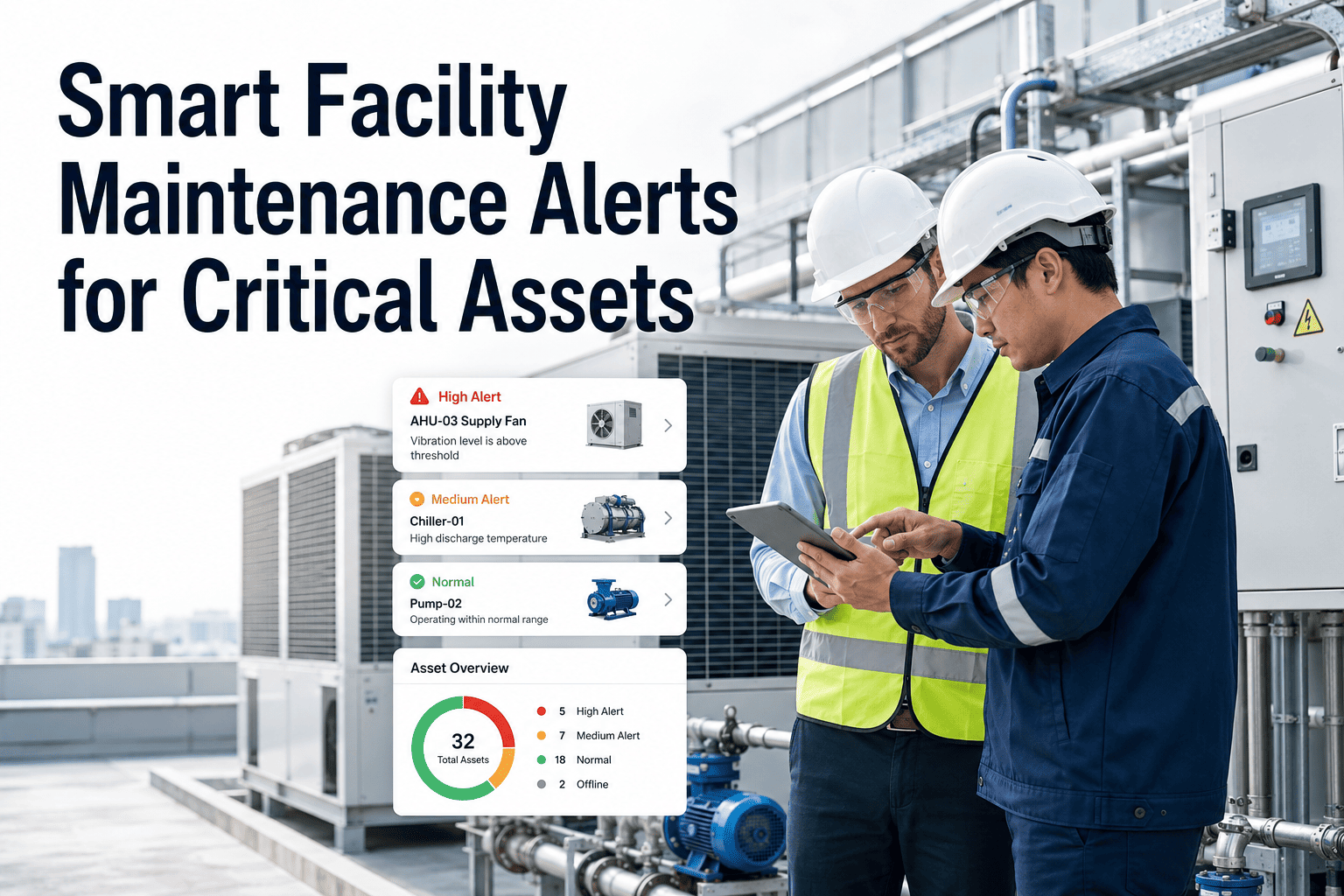
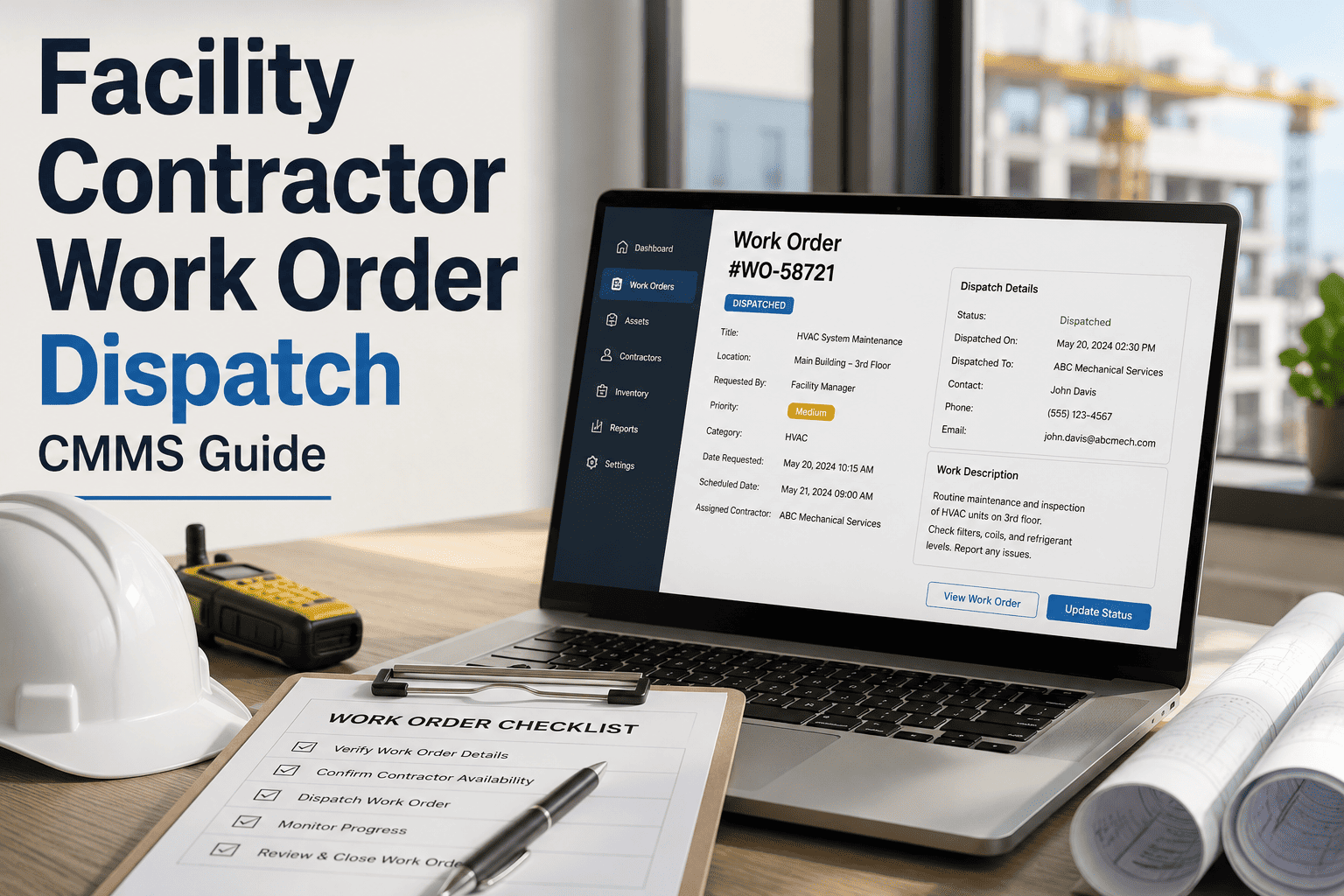
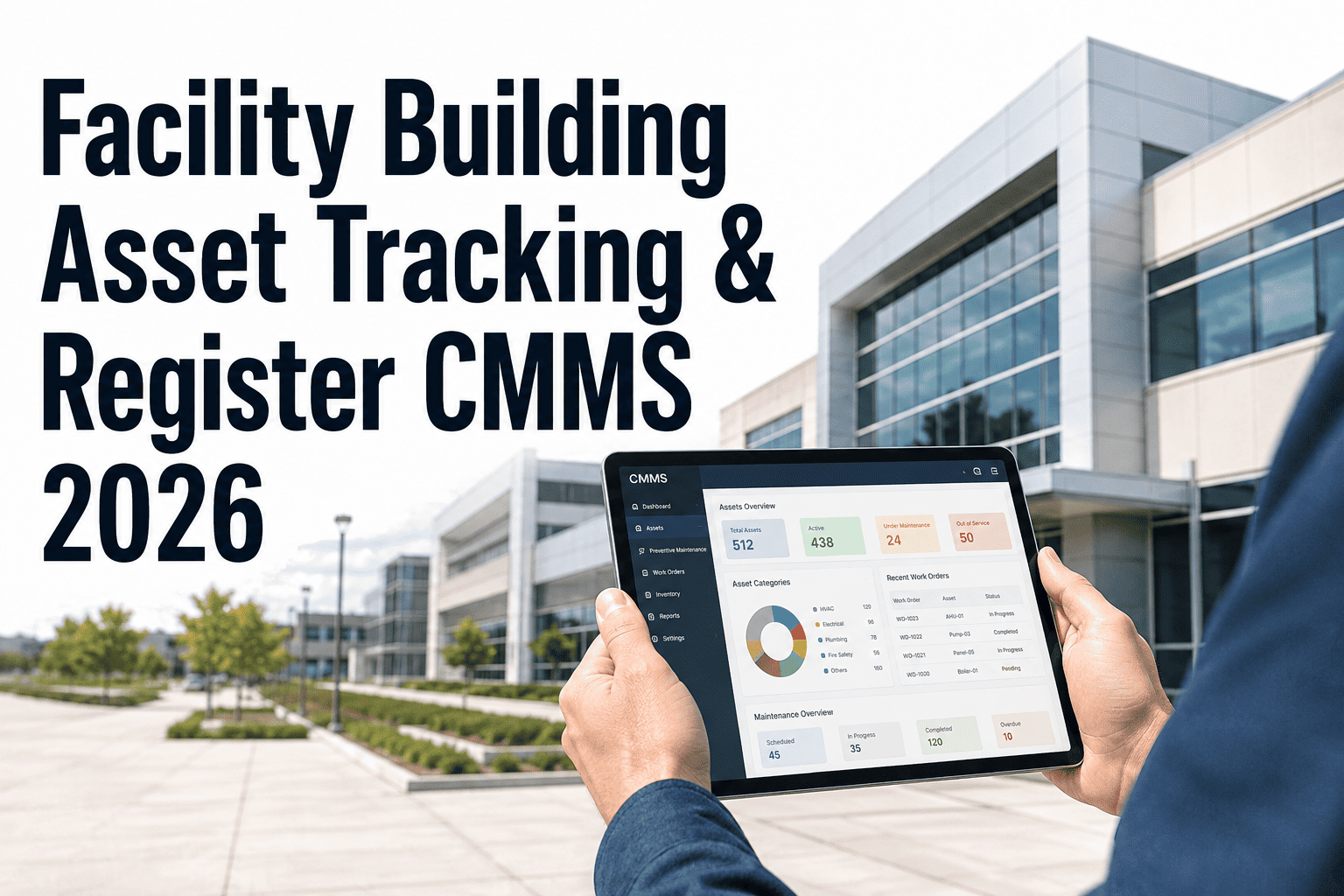
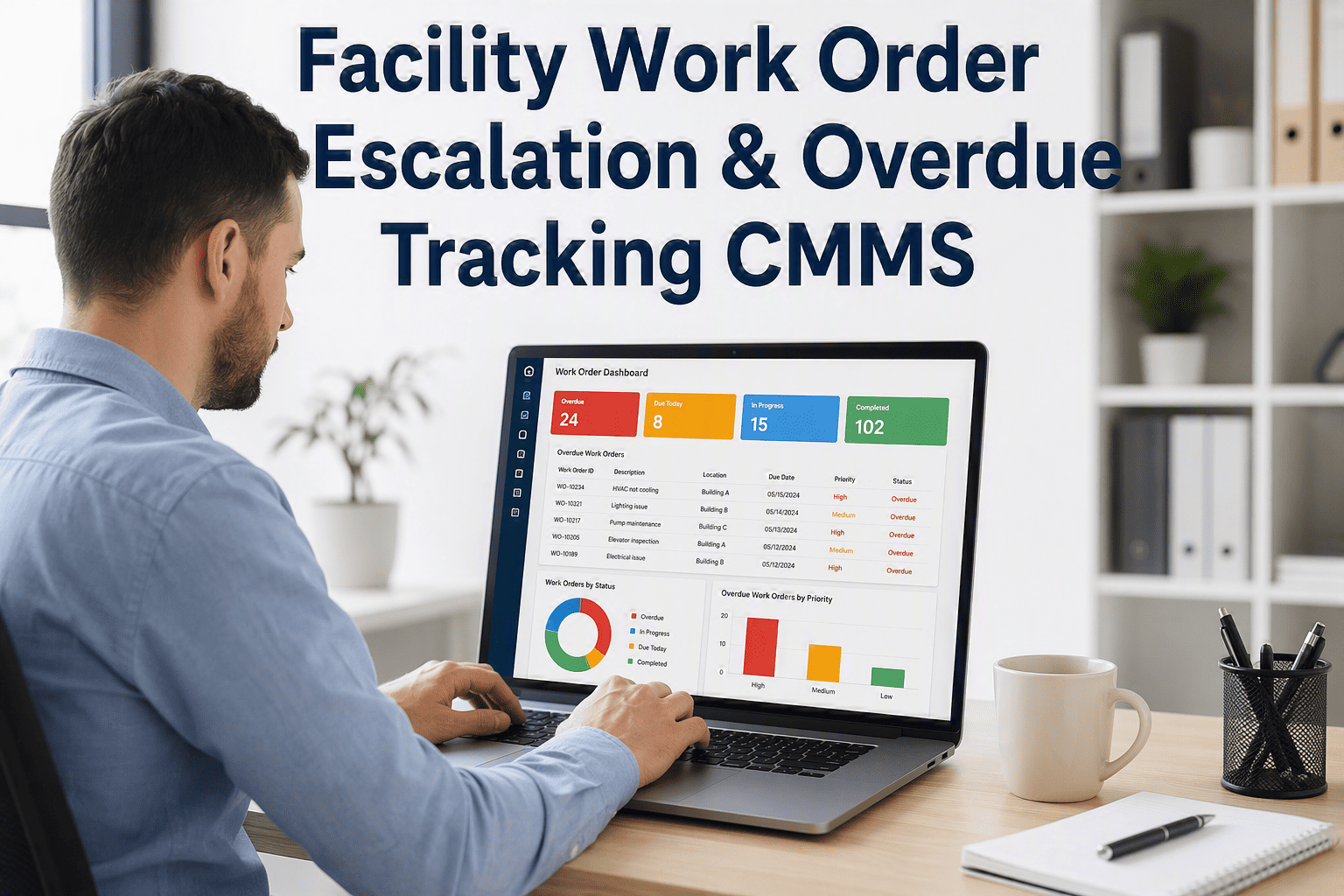
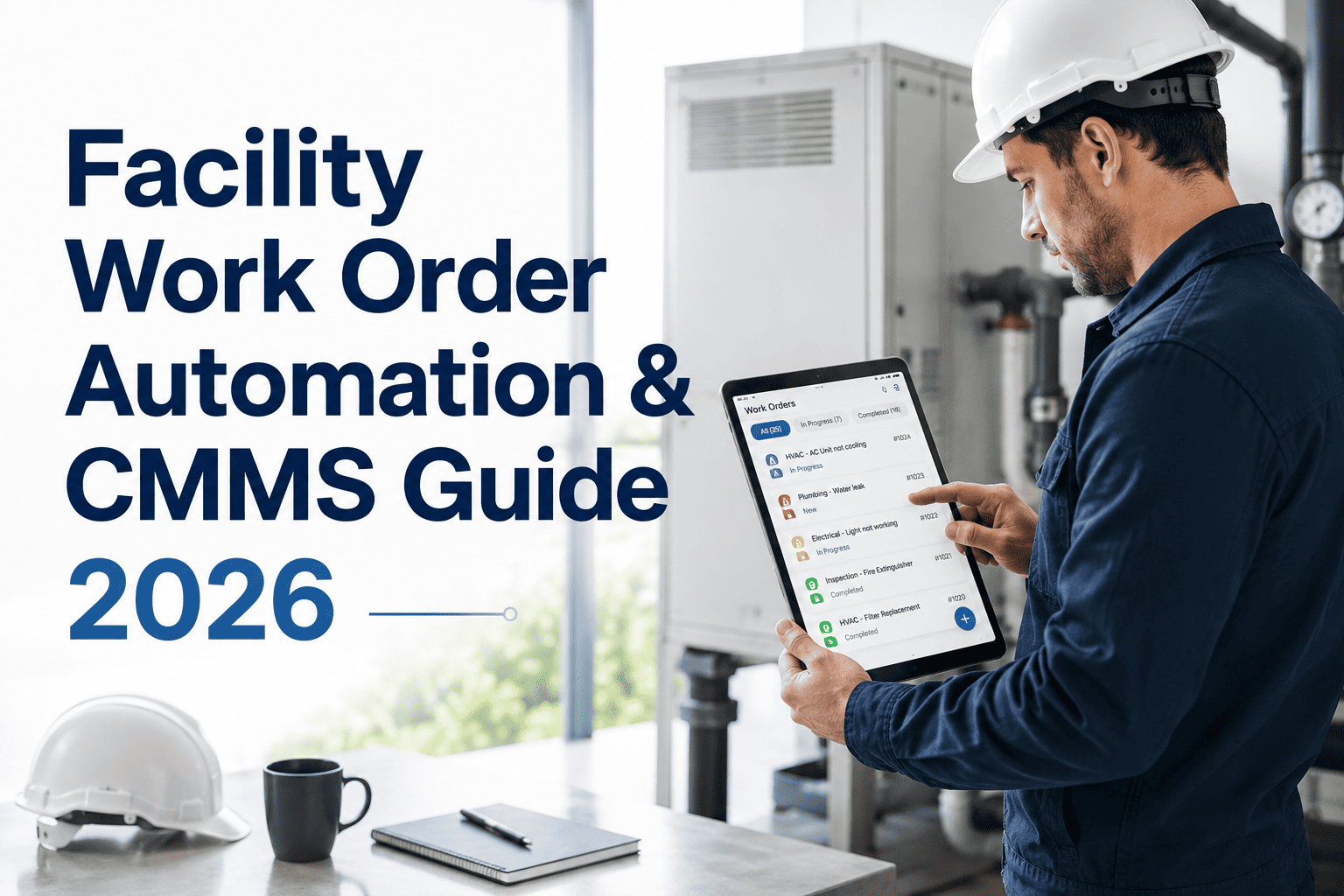
Most facility teams find out about critical asset failures after the damage is done — a chiller trips at midnight, a fire suppression pump fails inspection, a generator that hasn't run a load test in four months refuses to start during an outage. OxMaint's AI Work Order Automation changes that by monitoring every critical building asset in real time and triggering alerts and work orders the moment abnormal readings, missed preventive maintenance, or recurring fault patterns are detected. Facility teams using OxMaint respond to asset problems before occupants notice them — not after. Book a demo to see how smart alerts work across your critical asset portfolio, or sign in to OxMaint to connect your building systems today.
73%
of critical asset failures in commercial buildings show detectable warning signals 48–72 hours before failure
4.2×
higher reactive repair cost vs. proactive intervention triggered by an automated alert
91%
reduction in missed PM cycles at facilities using automated scheduling and escalation alerts
18 min
average response time to a critical alert when work orders are auto-dispatched vs 4.3 hrs manually
The Problem
Silent Failures Are Costing Facility Teams More Than They Realise
01
Missed PMs Go Unnoticed
A PM scheduled for Tuesday gets skipped because a technician called in sick. No escalation fires. The asset runs unserviced for another 6 weeks. By the time anyone checks, the fault has compounded.
02
Recurring Faults Are Invisible
The same AHU trips four times in a quarter. Each time it's logged separately, reset, and closed. No one connects the pattern. The root cause — a failing VFD — costs $40,000 when it finally fails completely.
03
Abnormal Readings Ignored
A chiller's supply water temperature drifts 3°C above its normal operating range. The BMS logs it. Nobody receives an alert. Nobody acts. The refrigerant leak that caused it goes undetected for 11 days.
How It Works
Three Alert Triggers — One Automated Response
OxMaint monitors critical assets across three signal types simultaneously. When any threshold is crossed, a work order is auto-generated, routed, and tracked to resolution.
Trigger 1
Abnormal Readings
Temperature, pressure, vibration, and runtime readings outside defined operating envelopes trigger immediate alerts. Thresholds are set per asset class — not generic defaults.
Chiller supply temp deviation
Generator voltage fluctuation
Pump discharge pressure drop
Trigger 2
Missed Preventive Maintenance
When a scheduled PM passes its due date without completion, OxMaint escalates — first to the assigned technician, then to the supervisor, then to the facility manager. Nothing slips silently.
Overdue filter replacement
Missed monthly inspection
Skipped lubrication cycle
Trigger 3
Recurring Fault Patterns
OxMaint's AI connects repeated faults on the same asset that SPC and simple ticketing miss. Three fault codes of the same type within 30 days generates a pattern alert — flagging root cause investigation before the next failure.
Repeated AHU trip events
Recurring drain blockages
Circuit breaker resets pattern
OxMaint · Smart Alerts · Critical Asset Monitoring
Stop finding out about failures after they happen. Set up automated alerts on your critical assets today.
Asset Coverage
Which Critical Assets OxMaint Monitors
| Asset Class |
Alert Triggers |
Auto Work Order Type |
Escalation Path |
| HVAC / Chillers |
Supply temp deviation, runtime hours, filter differential pressure |
Inspection, corrective, PM |
Tech → Supervisor → FM |
| Electrical Panels |
Overload events, breaker trip count, thermal anomaly |
Corrective, safety inspection |
Tech → Electrical lead → FM |
| Generators / UPS |
Load test overdue, battery voltage, fuel level, runtime |
Load test WO, PM, corrective |
Tech → FM → Management |
| Plumbing / Pumps |
Pressure drop, flow rate anomaly, recurring blockage |
Inspection, corrective, PM |
Tech → Supervisor |
| Fire Systems |
Missed test, alarm activation, suppression charge level |
Compliance inspection, corrective |
Tech → FM → Safety officer |
| Elevators / Lifts |
Service interval overdue, fault code frequency, door cycle count |
Compliance PM, corrective |
Tech → Lift contractor → FM |
Automation Logic
From Signal to Resolved Work Order — Automatically
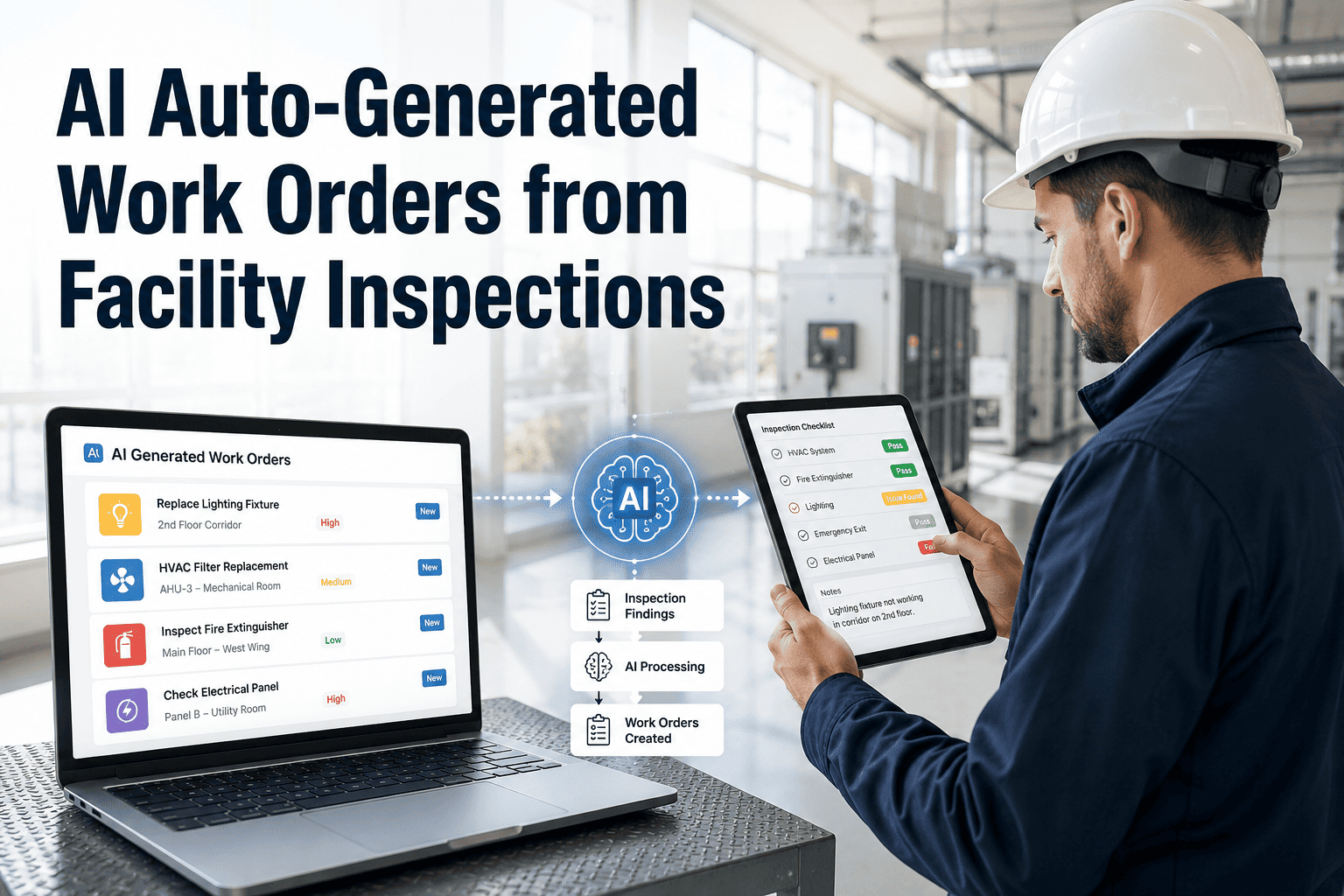
Signal Detected
Sensor reading, missed PM, or fault pattern crosses threshold
→
AI Classification
OxMaint assigns severity, category, and recommended response type
→
Work Order Created
WO auto-generated with asset details, fault history, and checklist attached
→
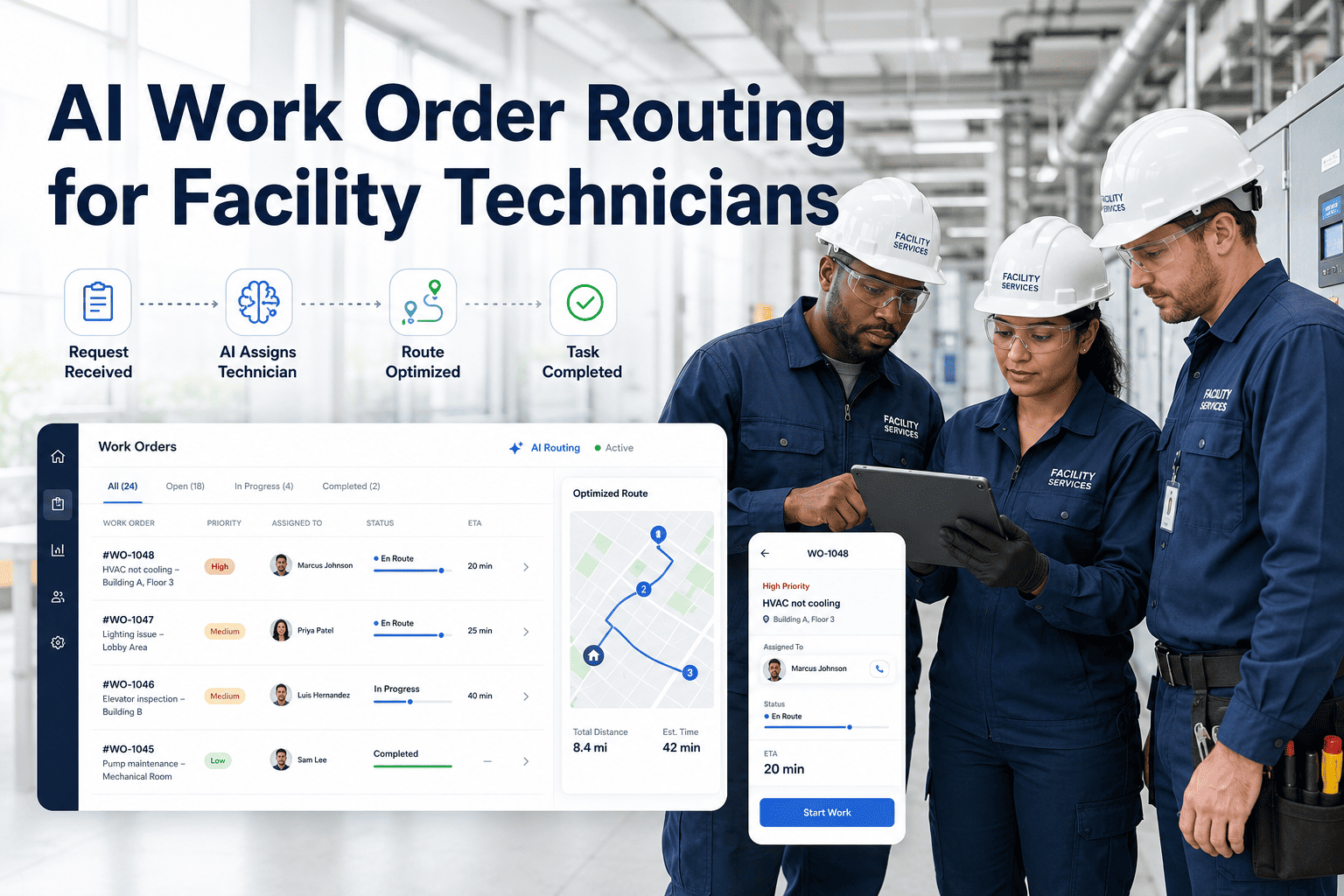
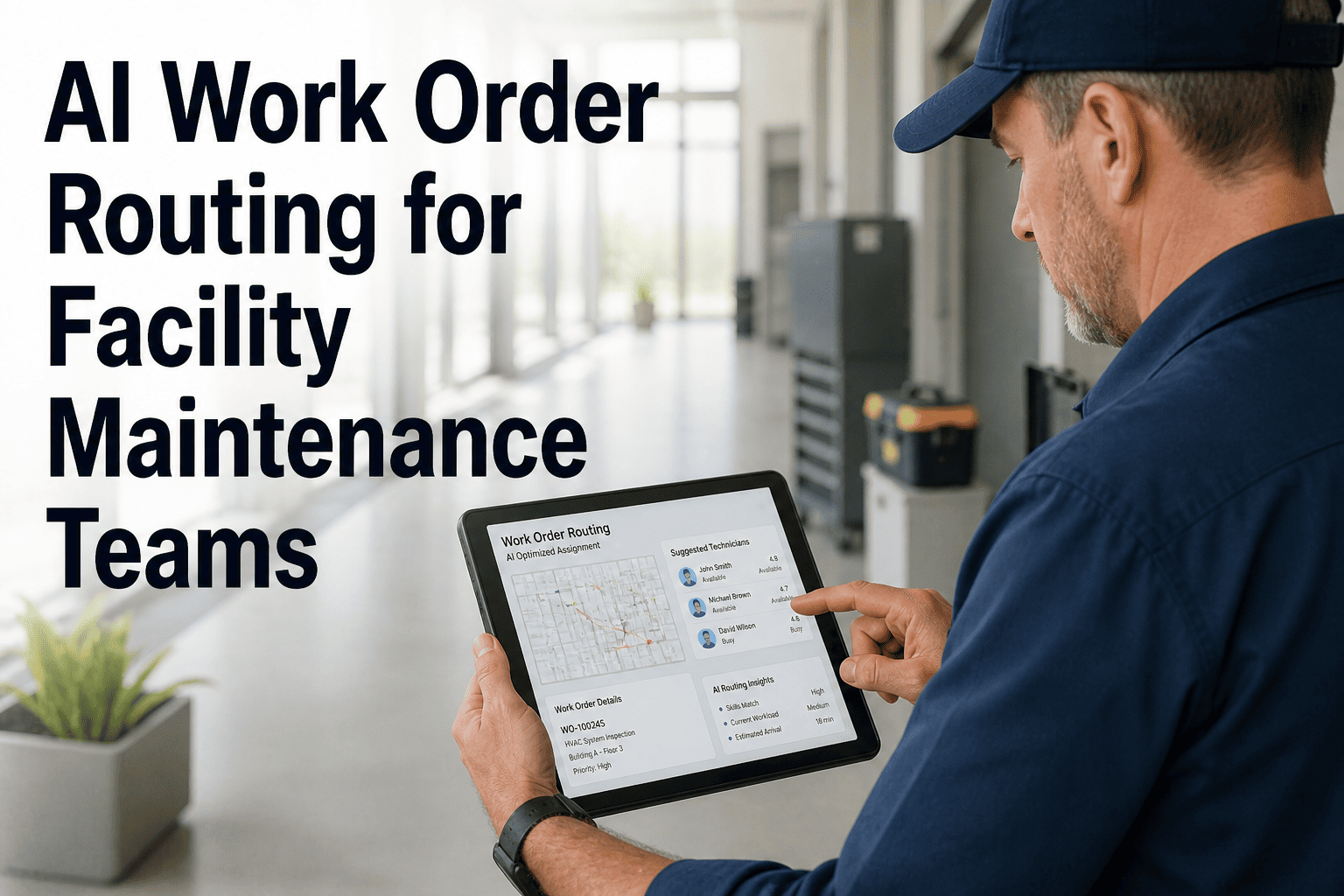
Auto-Dispatched
Routed to the right technician based on skill, availability, and zone
→
Resolved & Logged
Completion recorded, parts used, time tracked, asset history updated
Expert Review
The biggest gap in most facility maintenance programs is not the maintenance itself — it's the notification layer. Work orders that never get triggered, escalations that never fire, patterns that no one has time to hunt through a spreadsheet to find. Smart alert automation closes that gap without adding headcount. The ROI conversation becomes very simple: how much did your last unplanned HVAC failure cost versus the cost of an alert that would have triggered a $200 PM three weeks earlier?
Marcus J. Holloway, CFM
Certified Facility Manager · 19 years, commercial and healthcare real estate · IFMA Fellow
Frequently Asked Questions
Does OxMaint require sensors or BMS integration to trigger alerts?
No hardware is required to start. OxMaint can trigger alerts based on technician-entered readings, inspection outcomes, and PM schedule adherence — all without any sensor integration. For teams ready to connect BMS or IoT sensor feeds,
OxMaint's integration layer supports direct data ingestion to enable threshold-based automated alerts alongside manual data workflows.
How are alert thresholds configured for different asset types?
Thresholds are configured per asset class in OxMaint's asset library — not applied as a single global setting. Facility managers set normal operating ranges for each asset during onboarding, and OxMaint's AI layer refines those baselines as more data accumulates.
Book a demo to see how thresholds are configured for HVAC, electrical, and life safety assets in a typical commercial building portfolio.
Can the alert and escalation logic be customised per building or site?
Yes. Alert routing, escalation timelines, and notification recipients are configured at the site level in OxMaint — meaning a hospital facility can have different escalation paths and response time expectations than a retail location in the same portfolio. Multi-site operators manage all site configurations centrally from a single
OxMaint dashboard without needing separate system instances.
What happens if a recurring fault alert is triggered but it turns out to be a false positive?
Technicians can mark a triggered alert as a false positive with a root cause note, and OxMaint logs that feedback to improve future pattern detection accuracy. False positive rates typically fall below 8% after 90 days of operation as the AI model learns asset-specific normal behaviour.
Book a demo to see how the feedback loop works in the alert management interface.
How does OxMaint handle after-hours critical alerts for unmanned facilities?
OxMaint supports on-call rotation scheduling so that after-hours critical alerts route to the duty technician or on-call supervisor automatically.
Sign in to OxMaint to configure on-call escalation schedules for each site. Push notifications, email, and SMS delivery channels are all available — teams choose which channels apply to which alert severity levels.
OxMaint · AI Work Order Automation · Facility Management
Your critical assets are generating signals right now. OxMaint makes sure the right person receives them.
Smart alerts. Automated work order creation. Escalation routing. Recurring fault detection. All in one facility maintenance platform.