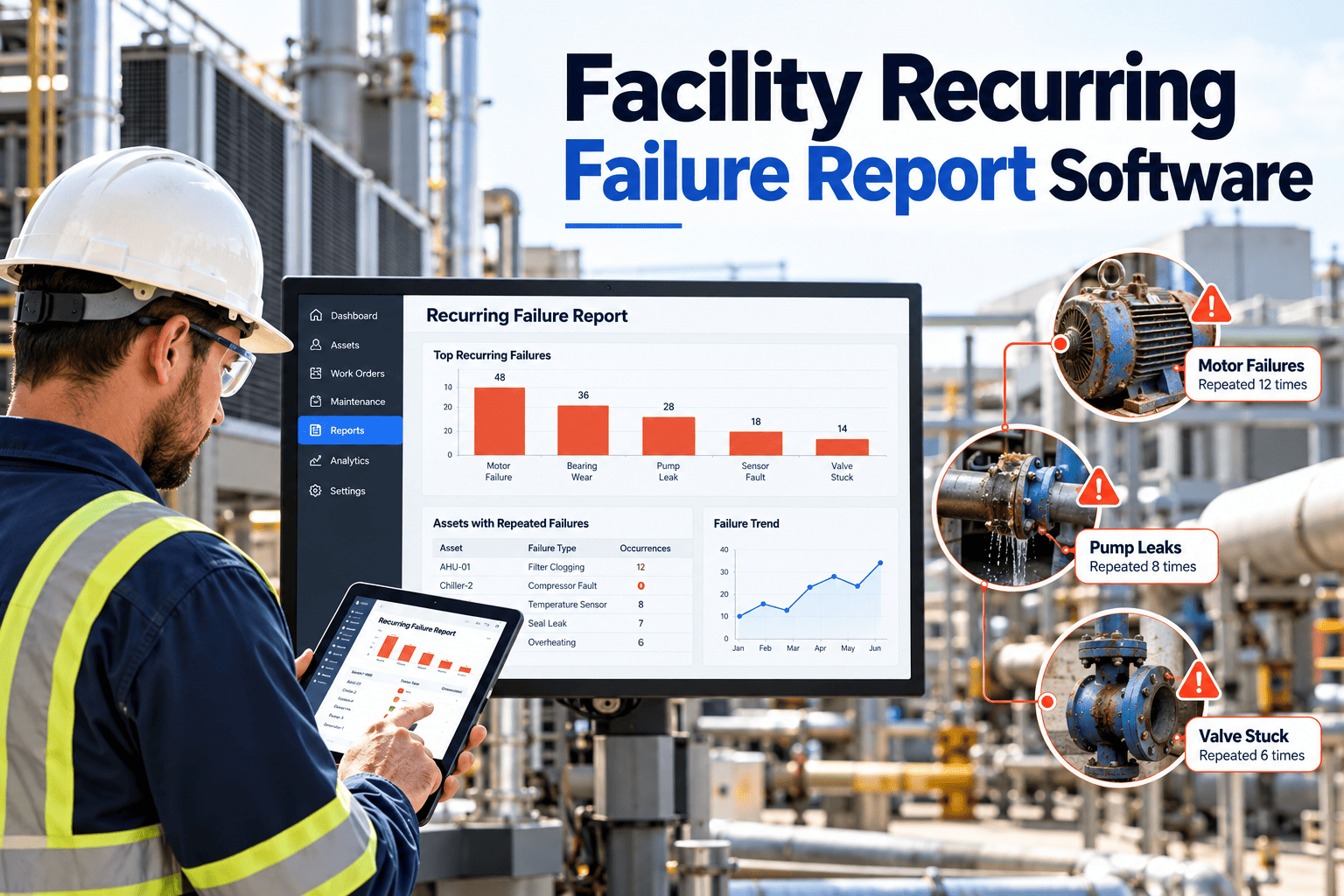
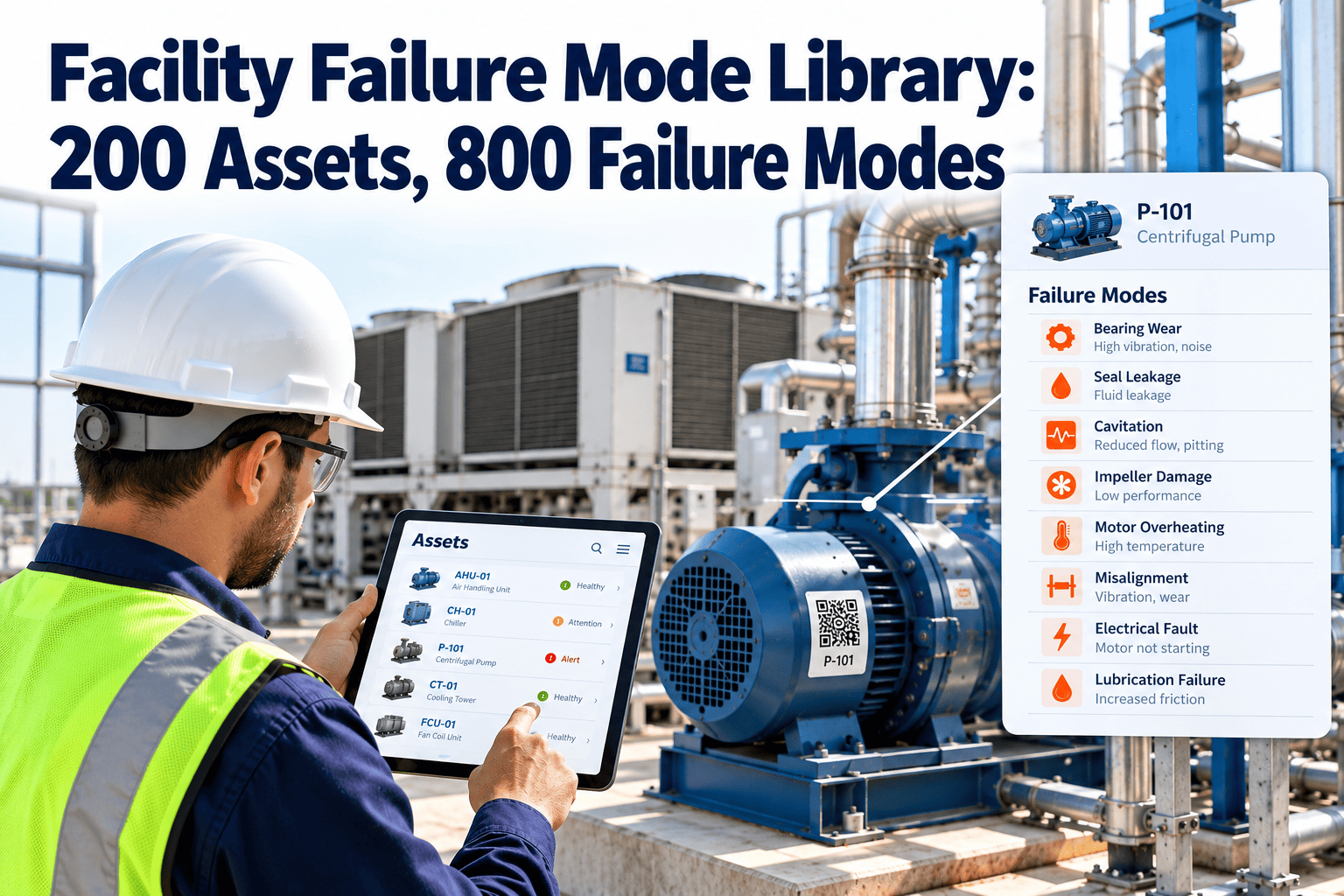
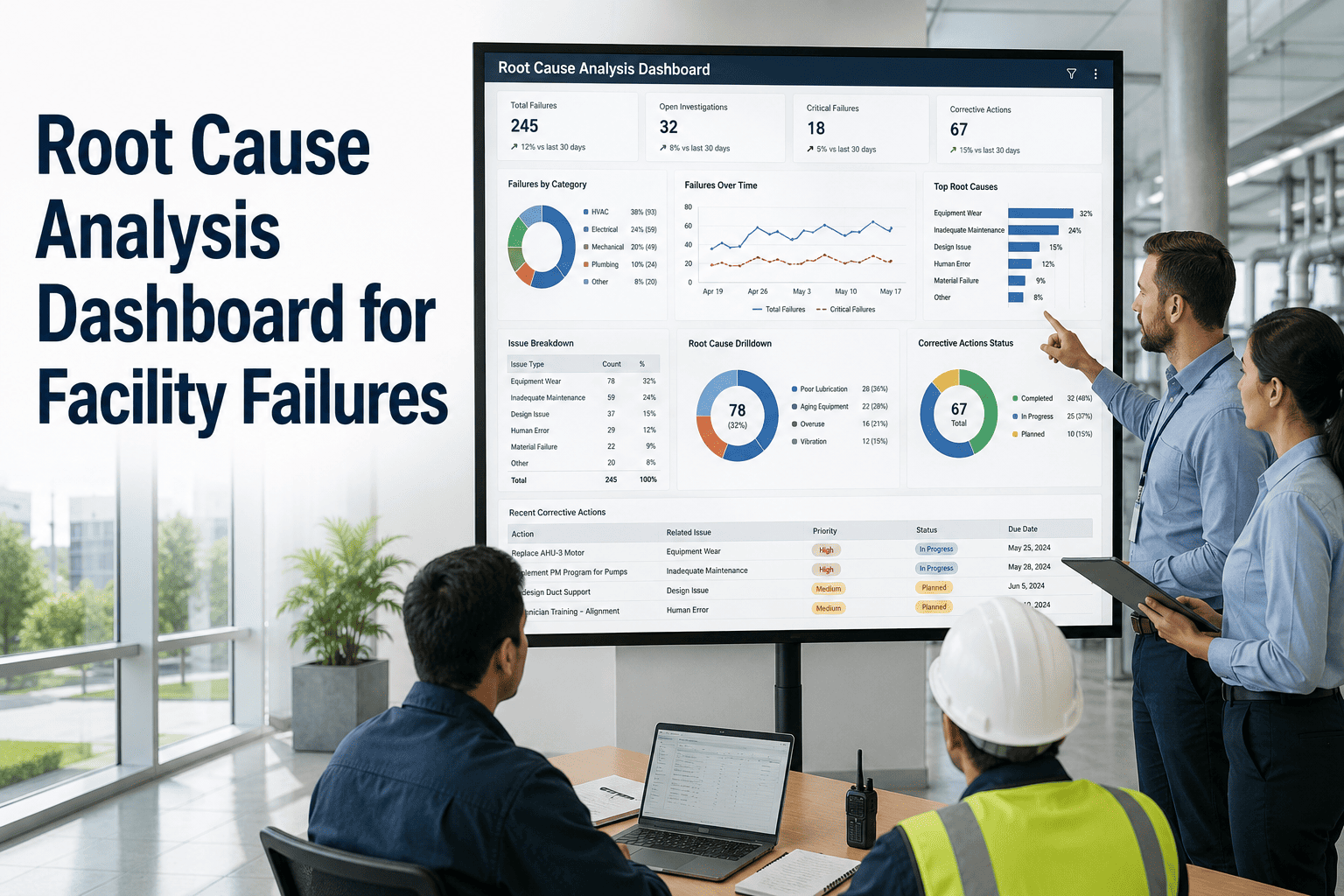
Recurring equipment failures are not bad luck. They are the predictable outcome of a maintenance program that addresses symptoms without identifying causes. A bearing fails, is replaced, and fails again six weeks later. A HVAC unit trips on high-limit, is reset, and trips again the following morning. A drain blocks, is cleared, and blocks again within two weeks. In each case, the repair solves the immediate problem and resets the failure clock without interrupting the underlying failure mechanism. Structured root cause analysis breaks that cycle by requiring the maintenance team to follow the failure chain backward until they reach the causal condition that, when corrected, prevents recurrence. Book a demo to see how Oxmaint automates RCA workflow triggering and failure pattern detection across your asset registry.
Quality Management
8-10 min read
41%
lower annual defect volume in facilities with structured RCA programs versus those that escalate service frequency without root cause investigation
72%
of recurring equipment failures share one of four root cause categories: incorrect PM interval, specification error, environmental factor, or installation defect
2.3x
higher total maintenance cost for reactive teams addressing recurring failures versus teams with structured RCA programs eliminating root causes
6 wks
average time between first recurrence and confirmed root cause identification when AI failure pattern matching is applied to work order history
The Four Root Cause Categories That Drive 72% of Recurring Failures
Recurring equipment failures across commercial facility portfolios consistently cluster around four root cause categories. Understanding which category applies to a specific failure pattern determines which RCA methodology produces the fastest and most accurate root cause identification. Applying a 5 Whys analysis to an environmental root cause, for example, will identify the wrong corrective action and the failure will recur despite the RCA having been completed.
Category 01
Incorrect PM Interval
31% of recurring failures
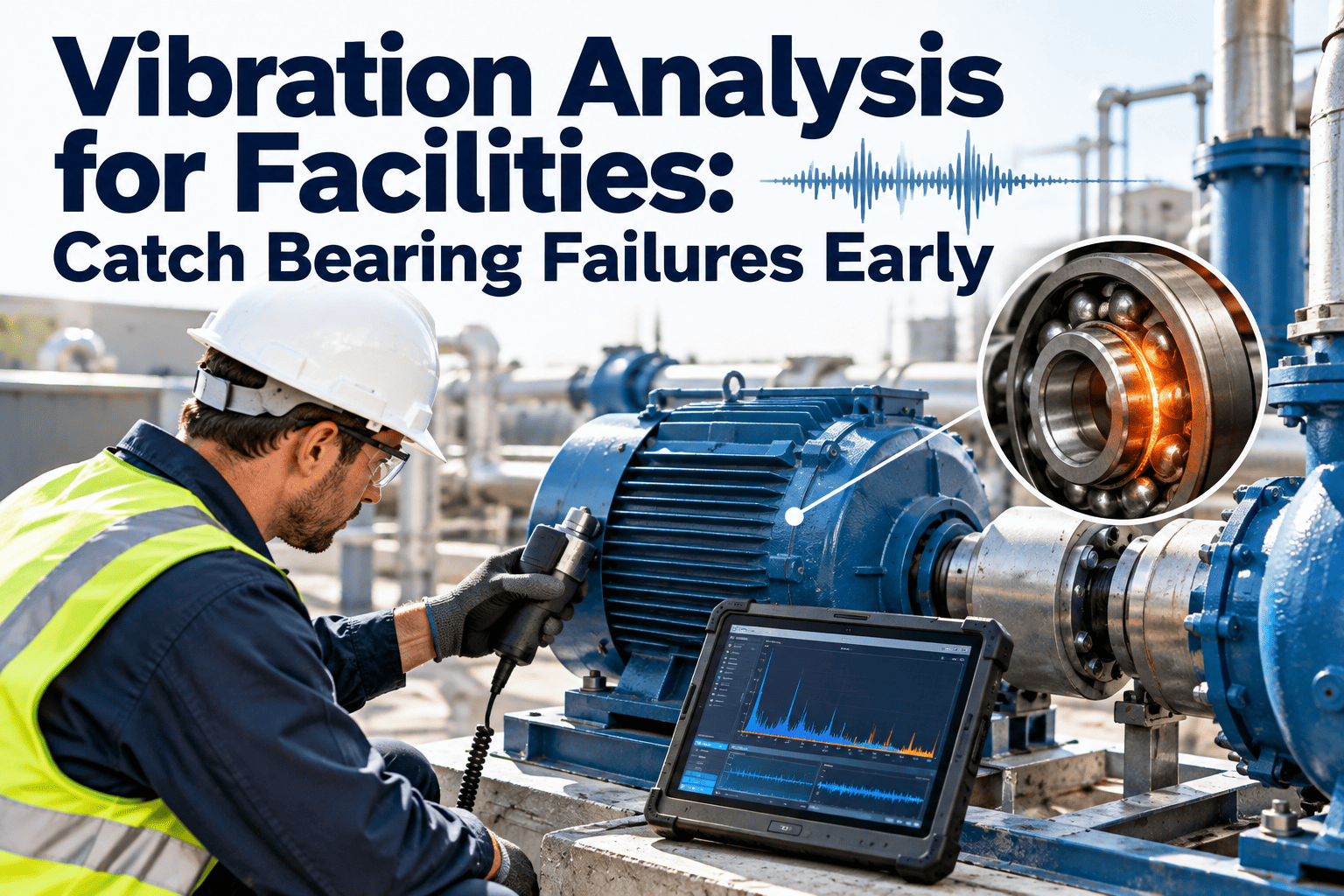
The maintenance interval is correct for OEM specifications under standard conditions but incorrect for the actual operating environment. A bearing rated for 4,000-hour lubrication cycles in a climate-controlled environment may require 2,200-hour cycles when operating above 40 degrees C. When a PM interval mismatch is the root cause, increasing service frequency without changing the interval produces the same failure at slightly lower frequency.
5 Whys
Run-hour trending
OEM review
Category 02
Specification Error
22% of recurring failures
The wrong material, grade, lubricant viscosity, filter MERV rating, or part specification is being used. The replacement part is technically compatible and installs correctly but is not suited to the actual operating condition. Specification errors are rarely identified through visual inspection and require work order history review comparing replacement part records across multiple failure events on the same asset.
Parts history review
Fishbone
OEM specification
Category 03
Environmental Factor
24% of recurring failures
An external condition in the operating environment is driving the failure: elevated ambient temperature, humidity, dust ingress, vibration from adjacent equipment, or chemical exposure that OEM specifications do not account for. Environmental root causes are identifiable through failure timing patterns, which tend to show seasonal correlation or correlation with adjacent operational changes that standard 5 Whys analysis misses entirely.
Failure timing analysis
Environmental survey
Condition monitoring
Category 04
Installation or Repair Defect
23% of recurring failures
The root cause is in how the equipment was originally installed or most recently repaired: incorrect torque, misalignment, inadequate clearance, reversed connections, or uncorrected damage to adjacent components during repair. Installation defects typically produce early failures on a short, predictable timeline after each repair event and are identifiable by comparing MTBF across repairs performed by different technicians or contractors.
MTBF by technician
Installation checklist
5 Whys
Automate RCA Triggering from Your Work Order History
Oxmaint automatically opens an RCA workflow when a configured recurrence threshold is reached, pre-populating the RCA with asset history, failure timeline, and AI-matched similar failure patterns from the portfolio. Start free or book a demo to see automated RCA triggering configured for your asset types today.
Three RCA Methodologies for Facility Equipment Failures
No single RCA methodology is optimal for all failure types. The method selected should match the nature of the failure, the available data, and the root cause category most likely to apply based on failure pattern analysis. Using a structurally inappropriate method produces a root cause hypothesis that may be internally consistent but factually wrong.
01
5 Whys Analysis
Best for: PM interval and installation defect failures
Start from the observed failure and ask "why did this happen?" five times, each time answering with the immediate cause of the previous condition. The process terminates when the answer is a physical condition that can be changed. 5 Whys is most effective when the failure chain is linear and the causal sequence does not branch. It is less effective for environmental failures where multiple contributing factors interact without a single causal sequence.
Applied Example: Bearing Failure
Why did the bearing fail? Grease became contaminated with water.
Why did grease become contaminated? Seal was not replaced at last PM.
Why was the seal not replaced? PM checklist did not include seal replacement at this interval.
Why was it not on the checklist? Original PM template predated equipment modification.
Root Cause: PM template was not updated when equipment was modified 18 months ago.
02
Fishbone (Ishikawa) Diagram
Best for: specification errors and complex multi-factor failures
Map contributing factors across six categories: Man (technician factors), Machine (equipment factors), Method (process factors), Material (specification factors), Measurement (monitoring gaps), and Environment (operating conditions). Fishbone is most effective for failures where multiple factors contribute simultaneously, and the interaction between them produces the failure rather than a single linear causal chain. It is the preferred method when the 5 Whys produces inconsistent answers across different team members conducting the analysis.
Multi-factor failures
Specification errors
Process-driven failures
03
AI-Assisted Failure Pattern Matching
Best for: environmental failures and portfolio-wide pattern detection
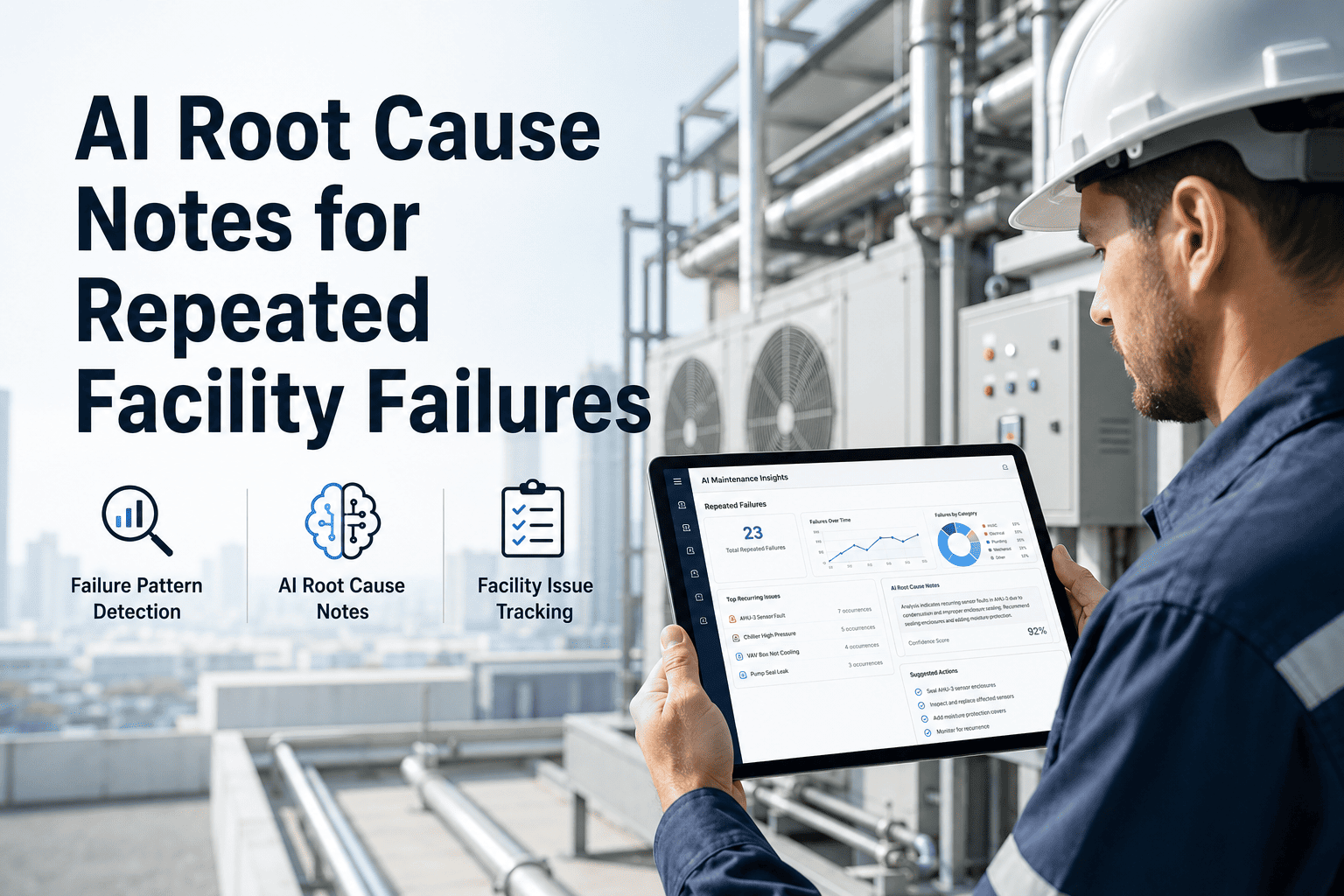
Oxmaint's AI analyzes work order history across the portfolio to identify assets with statistically similar failure signatures, failure timing patterns, and work order sequence similarities. When a recurring failure is identified, the AI surfaces the three most similar historical failure patterns from other assets in the portfolio and the root cause and corrective action that resolved each. This accelerates root cause hypothesis formation from weeks to hours and surfaces environmental correlations that human analysis of individual asset history misses entirely.
Environmental failures
Portfolio-scale patterns
Seasonal correlations
RCA Workflow: From Recurrence Detection to Corrective Action
01
Recurrence Detection and RCA Trigger
Oxmaint monitors work order history for each asset against configured recurrence thresholds. When a failure type on a specific asset reaches the threshold (default: 2 occurrences within a 90-day window), an RCA workflow is automatically opened and linked to the asset record. The recurrence threshold is configurable per asset criticality class: critical assets trigger at first recurrence, standard assets at second, non-critical assets at third.
Automated trigger at configured recurrence threshold
02
AI Failure Pattern Analysis and Historical Match
When the RCA is opened, Oxmaint's AI analyzes the asset's full work order history, failure timing, parts used across repairs, and operating environment data. The AI surfaces the three most statistically similar failure patterns from the portfolio's historical records and pre-populates the RCA with the failure category hypothesis most consistent with the pattern. The analyst can accept the hypothesis or override it with their assessment before beginning the structured questioning phase.
Pattern match across full portfolio work order history
03
Structured RCA Completion
The assigned analyst completes the structured RCA within the Oxmaint mobile or desktop interface. The RCA form presents the 5 Whys sequence or Fishbone category structure depending on the failure category pre-selected. Photo evidence, sensor readings, and related work order records are accessible within the RCA interface without context switching to a separate system. Completion is timestamped and linked to the originating asset record.
5 Whys or Fishbone completion within Oxmaint interface
04
Corrective Action Assignment and Tracking
The confirmed root cause generates one or more corrective actions: PM interval adjustment, part specification change, environmental control modification, or technician retraining. Each corrective action is assigned to a responsible team member with a due date, linked to a corrective work order if applicable, and tracked to completion within the RCA record. The RCA is not closeable until all corrective actions are documented as complete or formally deferred with justification.
Corrective actions tracked to close with accountability
Before and After: Maintenance Programs With and Without RCA
Without Structured RCA
XRecurring failures addressed by increasing service frequency. Same failure root cause persists at slightly reduced rate, consuming 2.3x more maintenance budget over 12 months than structured elimination
XNo distinction between failure types in work order system. All failures treated as random events without recognizing recurring patterns that indicate a systematic cause
XPortfolio-wide failure patterns invisible. An environmental root cause affecting 12 assets of the same type across 4 buildings is identified individually rather than as a fleet issue
XContractor accountability impossible without technician-level MTBF data. Installation defect root causes attributed to equipment rather than to the repair event that introduced the defect
With Oxmaint AI-Assisted RCA
VRoot cause identified and corrected at second occurrence. Repeat failure rate drops 72% within 6 months as systematic causes are eliminated rather than managed with increased service frequency
VFailure categorization distinguishes interval errors, specification errors, environmental factors, and installation defects. Correct RCA methodology applied to each category for accurate root cause identification
VAI pattern matching identifies portfolio-wide failure signatures across 12 similar assets simultaneously. Environmental root causes affecting multiple buildings identified in hours rather than being discovered individually over months
VTechnician-level MTBF data identifies installation defect patterns by contractor. Installation quality issues addressed through contractor training and audit before the next repair cycle reintroduces the defect
Frequently Asked Questions
QHow does Oxmaint determine when a failure qualifies as recurring and triggers an RCA workflow?
Recurrence is defined by failure type, asset ID, and a configurable time window. The default threshold is 2 occurrences of the same failure type on the same asset within 90 days. Critical assets can be configured to trigger at first recurrence.
Start free or
book a demo to configure recurrence thresholds for your asset criticality classes.
QCan Oxmaint identify failure patterns across assets of the same type at different buildings?
Yes. The AI pattern matching operates across the entire portfolio asset registry, not just individual buildings. Environmental and specification root causes affecting the same asset type across multiple sites are surfaced as portfolio-wide failure patterns rather than isolated incidents.
Book a demo to see portfolio-wide failure pattern detection for your specific asset types.
QHow much historical work order data is needed before AI failure pattern matching produces useful output?
Meaningful pattern matching begins with 6 months of structured work order data. Full predictive capability develops at 12-18 months. For new accounts, Oxmaint can import historical data from spreadsheets or previous CMMS systems to accelerate the baseline period.
Start free to begin building your failure pattern baseline from your first work order cycle.
QDoes the RCA workflow integrate with the PM scheduling module to implement corrective actions automatically?
Yes. When an RCA corrective action identifies a PM interval adjustment, Oxmaint updates the PM schedule for the affected asset class automatically on RCA approval. Part specification corrections update the approved parts list for the asset type.
Book a demo to see RCA-to-PM schedule integration for your asset types.
41% Lower Defect Volume. Recurring Failures Eliminated, Not Managed.
Oxmaint's AI-assisted RCA workflows trigger automatically from work order recurrence patterns, pre-populate with failure history and AI-matched similar failures, and track corrective actions to close with full accountability. Start your free trial or book a 30-minute demo to see automated RCA configured for your asset registry today.
Continue Reading
AI-Powered Quality Inspection for Facility Management Operations
First-pass yield tracking, defect root-cause analysis, and automated QC reports across your entire facility portfolio with AI-assisted inspection workflows.
Read the Article
Facility Condition Assessment Checklist: Building Systems Audit Guide 2026
Rate building systems, identify deferred maintenance, and prioritize capital expenditures with an FCI-scoring assessment checklist across 8 system categories.
Read the Checklist
Janitorial and Cleaning Quality Inspection Checklist for Commercial Facilities
Score restrooms, lobbies, and workspaces with a cleaning quality checklist for offices, hospitals, and retail with digital scoring and automated QC reports.
Read the Checklist
Robot Fleet Management for Facility Operations: Getting Started Guide
Deploy and manage cleaning, security, and delivery robots with fleet health monitoring, anomaly detection, and maintenance scheduling in your CMMS.
Read the Article
Stop Managing Recurring Failures. Start Eliminating Their Root Causes.
Oxmaint automatically detects recurring failure patterns, triggers structured RCA workflows with AI-matched similar failures, and tracks corrective actions to verified close with zero manual process setup. Book a 30-minute demo to see failure pattern detection configured for your asset registry today.