Facility Condition Assessment Checklist: Building Systems Audit Guide 2026
By John Polus on March 30, 2026
A facility condition assessment without a structured, system-by-system scoring methodology produces a document rather than a decision tool. Without FCI scores, condition ratings, and replacement cost estimates linked to specific assets and building systems, the assessment cannot support a capital budget request, justify a maintenance allocation increase, or prioritize which buildings receive attention in a constrained budget cycle. This checklist provides the scoring framework, the system-by-system audit items, and the FCI calculation methodology that converts a building walkthrough into an evidence-based capital planning instrument. Book a demo to see how Oxmaint converts this checklist into digital FCA work orders linked to your asset hierarchy with automated FCI calculation.
Quality Management12-14 min read
$176B
estimated deferred maintenance backlog across U.S. commercial and public building portfolios, growing 7% annually without FCA programs
88%
capital request approval rate for FCI-backed budget submissions versus 47% for estimate-based requests without condition assessment evidence
3.4x
higher emergency repair cost when deferred maintenance reaches critical threshold versus planned replacement identified through structured FCA
21 days
average time from FCA deployment to live FCI scoring across a multi-building portfolio using Oxmaint's digital assessment platform
Checklist Scope and Rating System
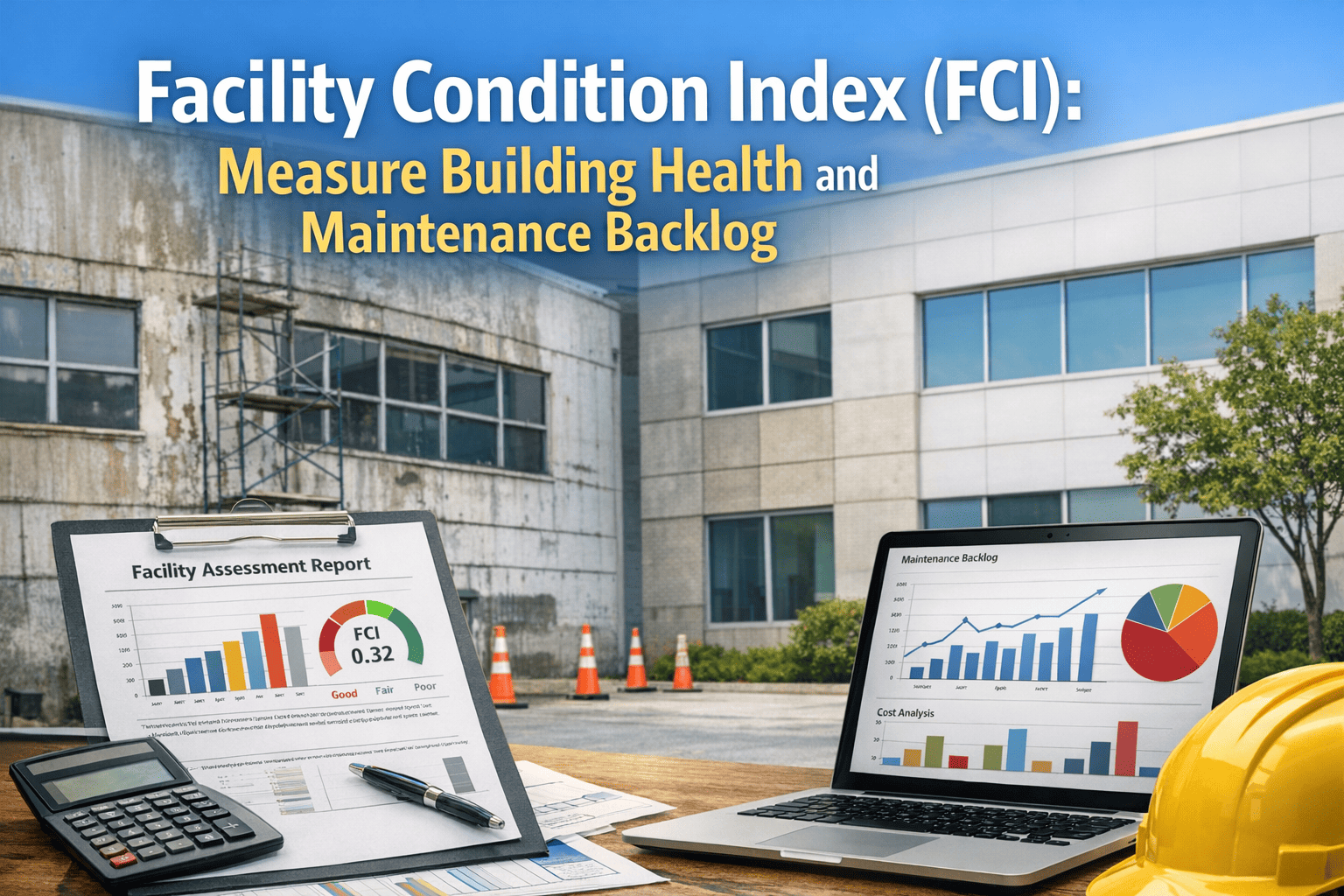
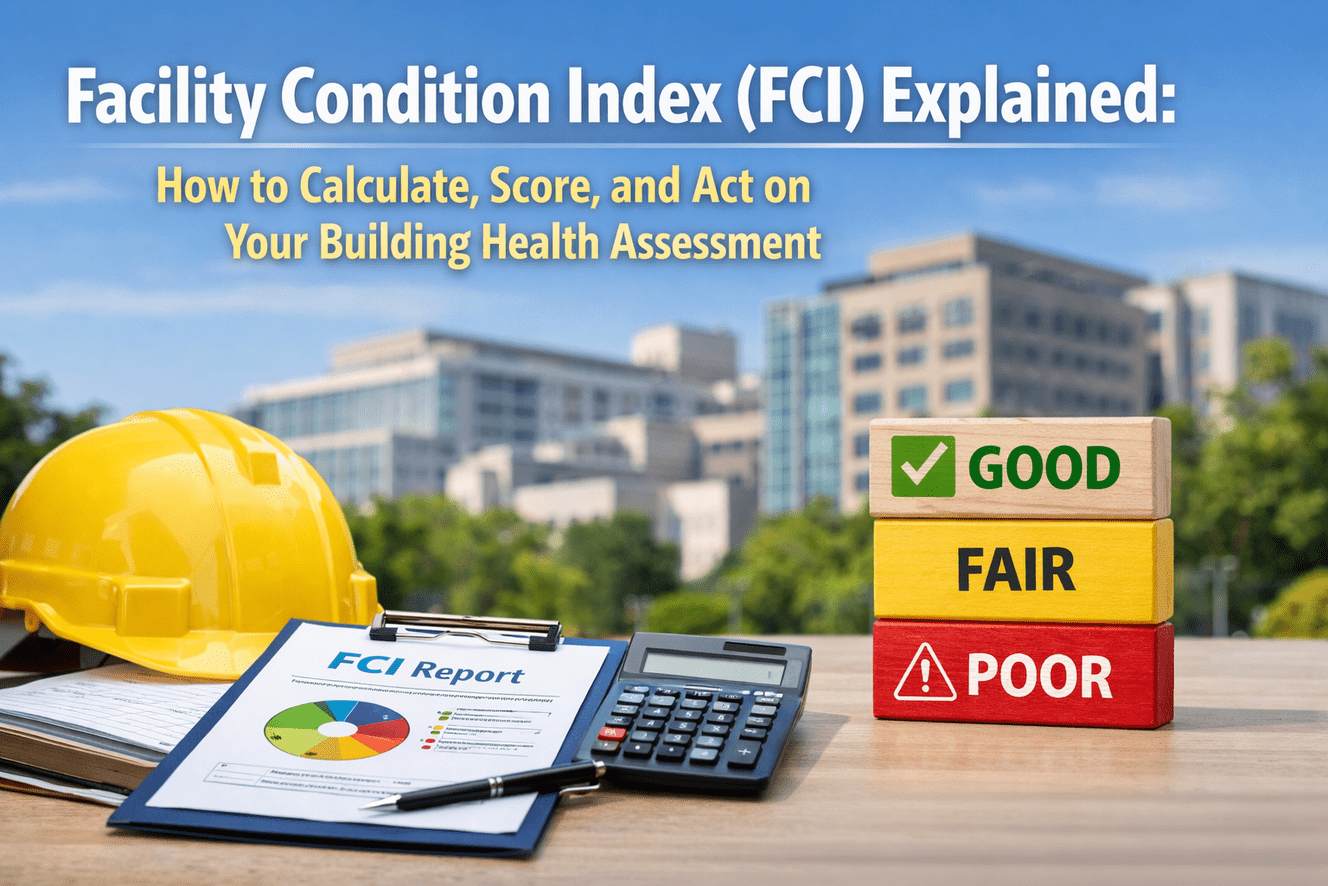
Eight building system categories with condition ratings per item. Critical (1): immediate corrective action required, safety or regulatory risk. Poor (2): significant deterioration, functional impact, capital request needed within 12 months. Fair (3): moderate deterioration, PM program adequate for 1-3 years. Good (4): minor wear, PM program sufficient for 3-5 years. Excellent (5): new or recently renovated condition. FCI score = Deferred Maintenance Cost divided by Current Replacement Value. FCI below 0.05 is good; 0.05-0.10 is fair; above 0.10 requires capital intervention.
Category 1: Structural Systems and Building Envelope
Structural and envelope deficiencies produce the highest deferred maintenance accumulation rates because deterioration is incremental and often invisible until water intrusion, foundation movement, or structural fatigue reaches a crisis threshold. Annual envelope inspection with condition scoring is the minimum standard for any building over 10 years old.
Foundation and Structural Frame
Roof System
Exterior Wall and Glazing
Convert This FCA into Digital Asset Records with FCI Scoring
Oxmaint links every assessment finding to a specific asset record, calculates FCI scores automatically, and generates capital planning forecasts from condition data. Start free or book a demo to see FCI calculation configured for your portfolio.
HVAC systems represent 35-45% of total building energy expenditure and account for the largest share of deferred maintenance in commercial buildings. Condition assessment must extend beyond visual inspection to include operational performance measurements at each major component.
Air Handling Units and Fans
Chillers and Cooling Towers
Category 3: Electrical Systems
Distribution and Panels
Category 4: Plumbing Systems
Domestic Water and Sanitary
Category 5: Fire Protection and Life Safety
Suppression and Detection
Category 6: Accessibility and ADA Compliance
Category 7: Interior Finishes and Spaces
Category 8: Site and Exterior Systems
FCA Summary Matrix: Condition by System Category
Building System
Typical Service Life
Checklist Items
Critical Triggers
FCI Weight
Structural and Envelope
40-60 years (frame), 15-25 years (roof)
14
Active cracking, water intrusion, membrane breach
High - highest replacement cost per system
Mechanical (HVAC)
15-25 years (chiller), 20-30 years (AHU)
9
Chiller efficiency failure, Legionella program absent
High - highest energy and maintenance cost share
Electrical Systems
25-40 years (switchgear), 15-20 years (panels)
5
Hot spots, emergency power failure, grounding faults
High - critical for safety and operations
Plumbing Systems
20-50 years (piping), 10-15 years (fixtures)
5
Active leaks, backflow certifications lapsed, Legionella
Medium - high cost when piping replacement needed
Fire and Life Safety
10-25 years by component
6
Uncertified inspections, active panel faults, expired heads
Critical - compliance and liability exposure
Accessibility (ADA)
Continuous compliance obligation
5
Any non-compliant accessible route or facility element
Legal - compliance obligation, not deferred
Interior Finishes
7-15 years by finish type
5
Mold, active water intrusion, trip hazards in egress paths
Low to Medium - significant at renovation threshold
Site and Exterior
20-30 years (pavement), 15-25 years (site lighting)
4
Pavement safety, drainage failure, security system gaps
Medium - high cost at pavement replacement
88%
Capital Approval Rate
FCI-backed budget submissions versus 47% for estimate-based requests without condition data
3.4x
Emergency Cost Premium
Cost of deferred maintenance reaching crisis versus planned replacement identified through regular FCA
21 days
To Live FCI Scoring
From FCA deployment to automated FCI calculation across a multi-building portfolio on Oxmaint
53
Total Checklist Items
Across 8 building system categories with Critical, Poor, Fair, Good, and Excellent rating criteria
Frequently Asked Questions
QHow frequently should a full facility condition assessment be conducted?
Full FCA should be conducted every 3-5 years for established facilities, annually for buildings over 20 years old or with known deferred maintenance backlogs, and immediately following any major weather event or facility incident. Start free to set up automated FCA scheduling tied to your asset ages in Oxmaint.
QWhat data is needed to calculate an accurate FCI score from this checklist?
FCI calculation requires Current Replacement Value (CRV) by system and Deferred Maintenance cost by finding. Oxmaint automatically calculates FCI from asset replacement values in the registry and maintenance cost data from work orders. Book a demo to see automated FCI calculation for your building portfolio.
QCan this checklist be used for council or investor capital budget submissions?
Yes. Oxmaint generates FCI-backed capital reports with system-level condition scores, replacement cost estimates, and 5-10 year capital forecasting directly from FCA data, in formats accepted by investment committees and municipal councils. Book a demo to see a sample capital report for your building count.
QHow does Oxmaint digitize this checklist for field completion?
Each checklist item becomes a digital inspection task linked to the specific asset or building system in Oxmaint's asset hierarchy. Assessors complete ratings on mobile with photo evidence, and FCI scores calculate automatically at assessment close. Start free to deploy your first digital FCA within 14 days.
Turn This FCA Checklist into a Live Capital Planning Tool
Oxmaint links every FCA finding to an asset record, calculates FCI scores automatically, and generates council-ready capital forecasts from condition data across every building in your portfolio. Start your free trial or book a 30-minute demo to see FCI-scoring configured for your buildings today.
Deploy Every FCA Item as a Digital Inspection. Generate FCI Scores Automatically.
Oxmaint converts this 53-item facility condition assessment into digital inspection tasks linked to your asset hierarchy, calculates FCI scores at assessment close, and generates capital planning forecasts accepted by investment committees and municipal councils. Book a 30-minute demo to see FCI scoring configured for your portfolio today.