ROS 2 Robots Revolutionizing Building Maintenance Operations
By shreen on February 18, 2026
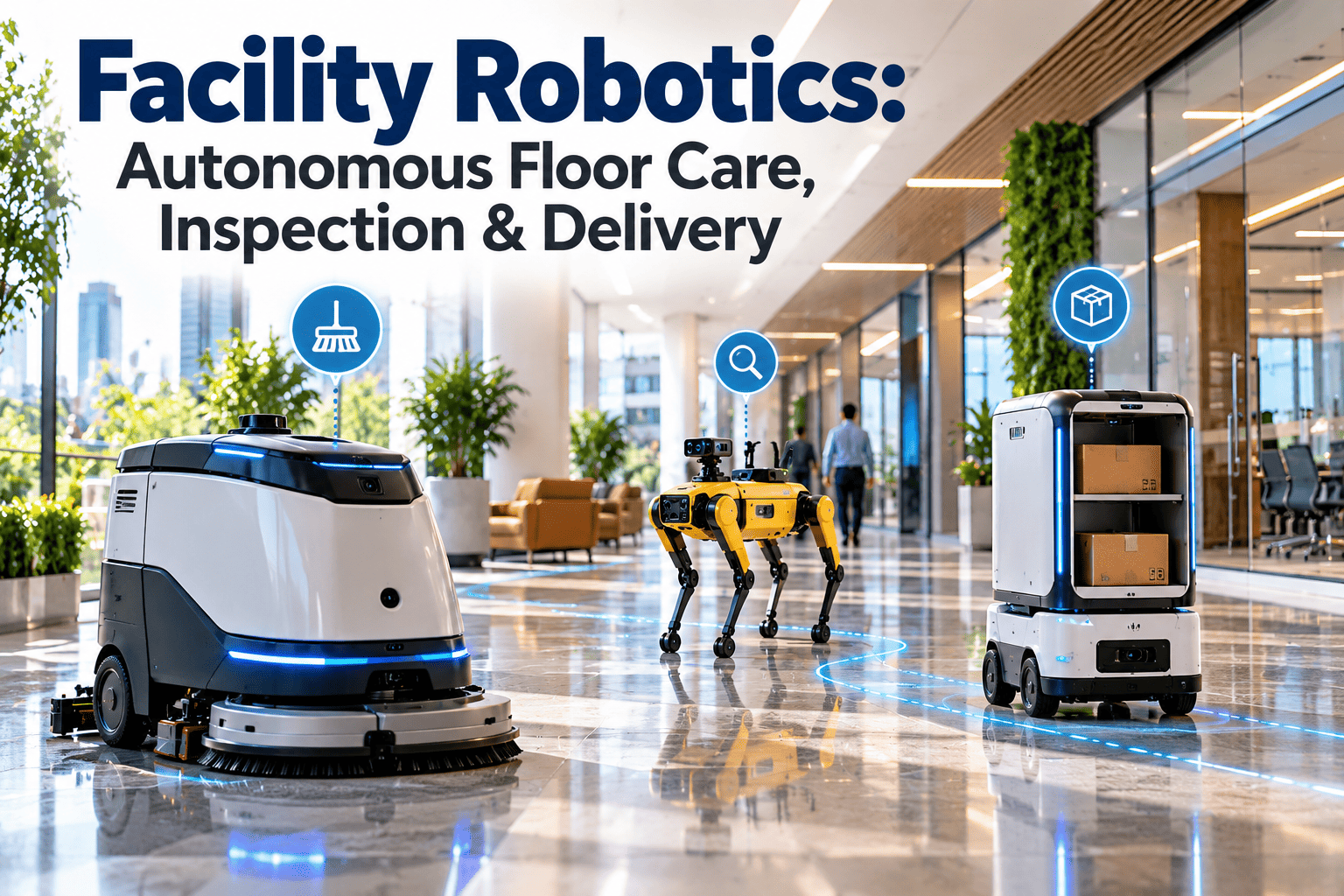
Building maintenance has always been a reactive discipline — waiting for tenant complaints, chasing HVAC failures after comfort is lost, discovering water leaks only when ceiling tiles collapse. ROS 2-powered robots are rewriting this equation entirely. Autonomous mobile robots now patrol corridors at 2 AM capturing thermal signatures of overheating electrical panels, ultrasonic sensors detect compressed air leaks behind walls that human technicians would never find, and quadruped platforms climb stairwells to inspect rooftop equipment without scaffolding or safety harnesses. When these robots connect directly to a CMMS like Oxmaint, every patrol becomes a closed-loop maintenance event — anomalies detected at 3 AM generate prioritised work orders waiting for the morning crew, complete with thermal images, GPS coordinates, and recommended actions. Schedule a demo to see how robotic inspection data flows into your maintenance workflows.
The Hidden Cost of Manual Building Inspections
Commercial buildings contain thousands of assets spread across multiple floors, mechanical rooms, rooftops, and underground parking structures. Manual inspection rounds miss critical defects, create documentation gaps, and expose technicians to hazards. Here's what the data reveals about traditional building maintenance inspection programs.
$1.8B
Annual losses from preventable equipment failures in commercial buildings that could have been detected through consistent inspection
42%
Of building assets in mechanical rooms and rooftops receive fewer than 4 inspections per year due to access constraints
6-12 hrs
Average delay between a manual inspection finding and the corresponding work order entry in most facility management systems
Ready to eliminate inspection gaps? Oxmaint connects robot patrol data directly to your asset records — defects trigger work orders automatically with zero manual entry.
Why ROS 2 is the Standard for Building Inspection Robotics
ROS 2 provides the real-time communication, modular architecture, and integration capabilities that building maintenance robotics demand. Here's why facility managers are standardising on ROS 2-based platforms for their inspection programs.
Real-Time Sensor Fusion
ROS 2's DDS middleware enables thermal, acoustic, visual, and environmental sensors to operate simultaneously with deterministic timing. Critical for capturing comprehensive asset condition data in a single patrol pass.
Modular Node Architecture
Each robot capability runs as an independent node. Add new sensors, upgrade navigation algorithms, or integrate CMMS connections without rebuilding the entire system. Failed components don't crash the robot.
Multi-Robot Fleet Control
Deploy AMRs on office floors, quadrupeds in mechanical rooms, and drones for exterior facade inspection — all coordinating through standard ROS 2 interfaces, sharing maps, and avoiding scheduling conflicts.
Safety-First Design
Built-in lifecycle management ensures robots enter safe states during communication loss or obstacle detection. QoS policies prioritise safety messages over data logging. Essential for operating in occupied buildings.
Direct CMMS Integration
ROS 2 nodes publish findings directly to REST APIs. When a thermal camera detects an overheating motor, the data flows through a bridge node into Oxmaint as a prioritised work order within seconds.
Vendor Agnostic Platform
Open-source framework avoids lock-in to any single robot manufacturer. Mix platforms from different vendors, add custom sensor payloads, and maintain full control over your inspection data and workflows.
Building Patrol Zones & Inspection Strategy
A
Mechanical Rooms & Plant Areas
HVAC unit thermal scanPump vibration analysisRefrigerant leak detectionElectrical panel hot spots
Dense equipment concentration with high failure consequence. Robots navigate between chillers, boilers, and air handling units. Quadruped platforms access elevated equipment without ladders. Patrol frequency: 2x daily for critical systems.
B
Rooftop Equipment & Exterior
RTU condition monitoringCooling tower inspectionSolar panel soilingDrainage system check
Weather-exposed assets requiring IP67-rated platforms. Thermal imaging detects failing compressors and blocked condensers. Visual AI identifies damaged insulation and corrosion. Seasonal patrol intensity: increased during extreme weather periods.
C
Parking Structures & Loading Docks
Lighting functionalityFire suppression integrityVentilation fan statusStructural crack detection
Large patrol areas with vehicle traffic hazards. AMRs operate during low-occupancy hours capturing concrete condition, drainage, and safety equipment status. CO sensors monitor ventilation effectiveness in enclosed areas.
Tenant-facing areas requiring quiet, non-intrusive robots. After-hours patrols capture comfort system performance, identify maintenance needs before tenant complaints, and document common area condition for lease compliance.
From Patrol to Work Order: The Data Pipeline
The value of robotic inspection isn't in the patrol itself — it's in what happens to the data afterward. Here's how ROS 2 robots and Oxmaint close the loop from detection to repair completion.
1
Robot Reaches Checkpoint
The robot navigates to pre-programmed waypoints using LiDAR SLAM, stabilises position, and orients sensors toward the target asset. Checkpoint coordinates are linked to specific equipment records in the CMMS.
2
Multi-Sensor Data Capture
Thermal, vibration, acoustic, and visual sensors execute the checkpoint protocol. Edge processing validates data quality and flags obvious anomalies for immediate attention before transmission.
3
API Push to Oxmaint
Structured JSON packets stream to Oxmaint's API via building Wi-Fi. Each packet includes asset ID, sensor type, timestamp, measurement values, and any attached media files.
4
Threshold Analysis & Alerting
Oxmaint compares readings against asset-specific baselines. Severity classification drives priority assignment, notification routing, and response deadlines based on configurable rules.
5
Work Order with Evidence
Threshold breaches generate work orders pre-loaded with thermal images, location data, trend history, and recommended actions. Orders route to assigned technicians based on skill and availability.
Every Robot Patrol Creates Maintenance Intelligence
Oxmaint transforms robotic inspection data into actionable work orders, trending analysis, and compliance documentation — automatically. No clipboards, no transcription, no delays.
The shift from clipboard-based inspections to sensor-equipped robot patrols changes every aspect of building maintenance operations. Here's what facility teams experience after deployment.
Traditional Inspections vs. Robot + CMMS Integration
Inspection Aspect
Manual Rounds
Robot + Oxmaint
Data Entry Speed
Paper forms transcribed hours or days later
Sensor data in asset records within seconds
Off-Hours Coverage
Limited to overtime or skeleton crews
24/7 autonomous patrols on schedule
Measurement Consistency
Subjective "looks OK" assessments
Quantitative, repeatable sensor readings
Trend Detection
No baselines, no historical comparison
Automatic trending with threshold alerts
Hazardous Access
Requires permits, PPE, and safety protocols
Robots access confined spaces safely
30-45%
of defects found reactively after complaints
80%+
of defects caught before tenant impact
Six Principles for Effective Building Patrol Routes
Route design determines whether your robotic inspection program catches failures early or misses them entirely. These principles, proven across commercial building deployments, maximise inspection value.
01
Prioritise by Business Impact
Rank checkpoints by the operational and tenant impact of each asset's failure. Chillers serving data centres get 4x daily visits; stairwell lighting gets weekly. Oxmaint's criticality scores automate this ranking.
02
Respect Occupancy Patterns
Schedule tenant-facing patrols during low-occupancy hours. Mechanical room inspections can run anytime. Coordinate with security and cleaning schedules to avoid conflicts and ensure clear pathways.
03
Map Every Vertical Transition
Identify elevator access points, ramps, and stairways. Program appropriate platform selection for each zone — AMRs for flat floors, quadrupeds for stairs and uneven surfaces, drones for high ceilings.
04
Build Wi-Fi Redundancy
Commercial buildings have RF dead zones in elevator shafts, mechanical rooms, and parking structures. Configure robots to buffer data locally during connectivity drops — Oxmaint syncs automatically when coverage returns.
05
Position Charging Strategically
Place docking stations at zone boundaries in protected alcoves. Size battery capacity for full patrol plus 20% reserve. Hot-swappable batteries enable continuous 24/7 coverage across shifts.
06
Integrate Seasonal Variations
Increase rooftop patrol frequency during extreme weather. Add condensation monitoring during humidity transitions. Adjust checkpoint thresholds seasonally to reduce false alarms and catch real degradation.
Measured Results After Deployment
Buildings that have completed at least six months of robotic inspection operations report consistent improvements across safety, efficiency, and maintenance effectiveness metrics.
Performance After 6+ Months of Robotic CMMS Patrols
70%Reduction in after-hours emergency callouts for equipment failures
60%Faster defect-to-work-order turnaround compared to manual rounds
4xMore data points captured per inspection cycle than human walk-arounds
50%Decrease in tenant comfort complaints related to HVAC and lighting
We used to find out about failing equipment when tenants complained. Now our robots catch problems at 2 AM and work orders are waiting when the morning crew arrives. The shift from reactive to predictive has transformed our tenant relationships.
— Facilities Director, Class A Office Portfolio
Transform Every Patrol into Maintenance Action
Your ROS 2 robots capture thermal scans, vibration data, and visual defects. Oxmaint turns every reading into an asset history entry, a trend line, or a prioritised work order — automatically. One platform connecting robotic patrols to maintenance outcomes.
Oxmaint integrates with any ROS 2-based robot that supports REST API data export. This includes Boston Dynamics Spot, ANYbotics ANYmal, Unitree platforms, and various AMR manufacturers. The integration is data-agnostic — structured JSON packets with asset IDs and sensor readings flow directly into your asset records. Sign up for Oxmaint to explore API documentation for your specific platform.
Can robots operate safely in occupied buildings?
Yes. ROS 2 platforms include sophisticated obstacle detection and avoidance using LiDAR, depth cameras, and ultrasonic sensors. Speed limits and safety zones are programmable per area. Most buildings schedule tenant-facing patrols during low-occupancy hours while mechanical room inspections run continuously. Safety-rated navigation stacks ensure the robot stops or reroutes when encountering unexpected obstacles.
How long does deployment take for a typical building?
A focused pilot covering priority mechanical rooms typically reaches autonomous operation within 8-10 weeks. This includes facility mapping, checkpoint programming, CMMS integration, and supervised test runs. Full building coverage across all zones usually completes within 4-6 months. Book a consultation for a deployment timeline tailored to your facility.
What happens when connectivity drops in mechanical rooms?
Robots buffer all inspection data locally when Wi-Fi connectivity drops. Once the robot moves back into coverage or returns to its docking station, Oxmaint's API automatically syncs buffered data to the correct asset records with original timestamps. No inspection data is lost during connectivity gaps.
How does Oxmaint handle urgent findings discovered mid-patrol?
Critical findings trigger an immediate response chain. Oxmaint pushes real-time alerts to designated maintenance supervisors via mobile notification and email. High-priority work orders are auto-generated with all sensor evidence attached. For safety-critical defects like gas leaks or electrical hazards, the system can interface with building management systems to initiate appropriate responses.