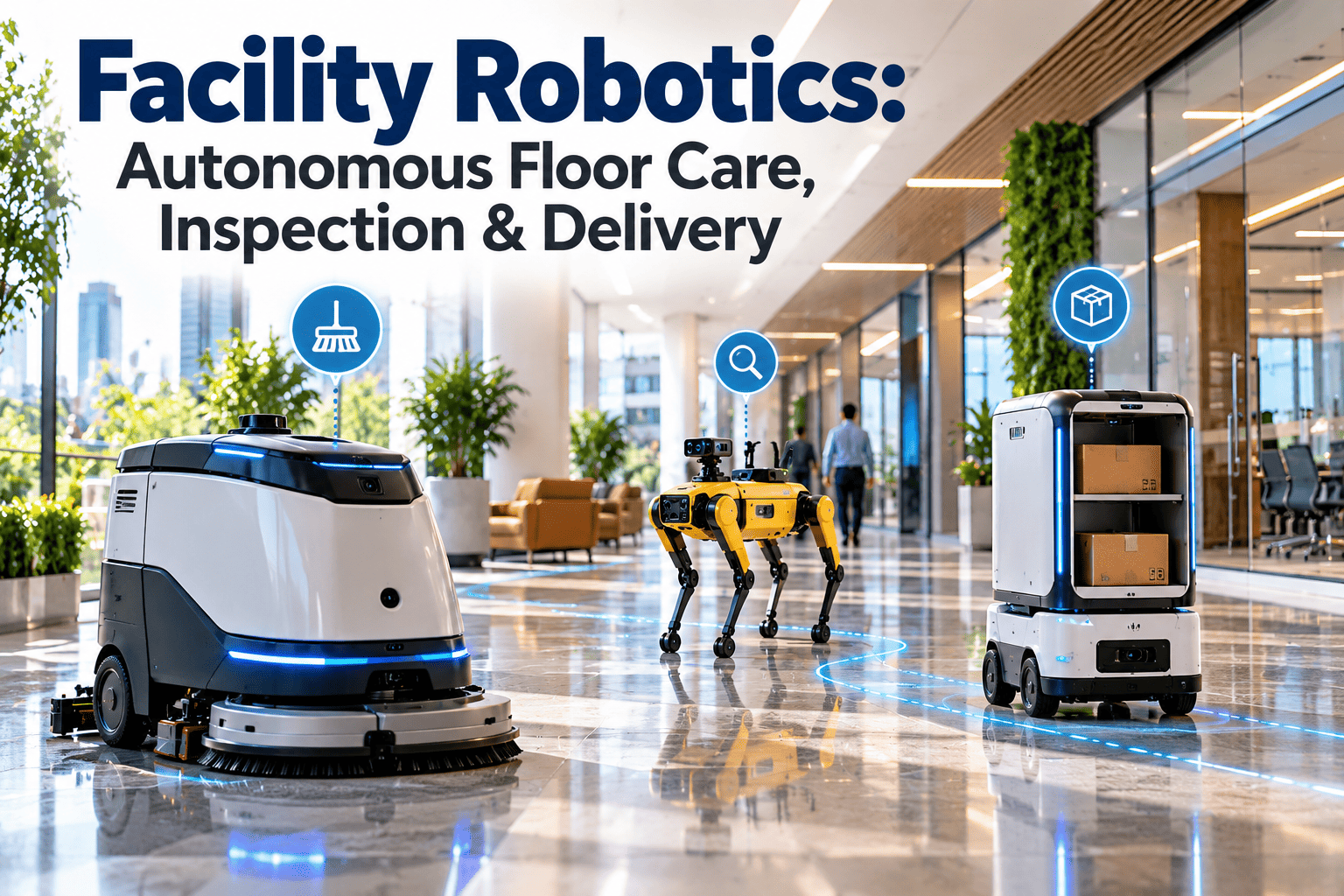
Facility managers still send technicians on 4-hour walkthrough routes every shift, checking the same gauges, snapping the same photos, and logging the same readings into clipboards that take days to reach the CMMS. Meanwhile, a bearing fails between rounds, a steam trap blows undetected for a week, and a hot spot on an electrical panel triggers a shutdown that costs more than a year of inspection labour. Autonomous inspection robots eliminate this gap entirely — patrolling continuously, capturing sensor-grade data at every checkpoint, and pushing findings directly into maintenance systems like Oxmaint where threshold breaches generate work orders in seconds, not days. Schedule a demo to see how robotic inspection data flows into your maintenance workflows.
Top Autonomous Robots Replacing Manual Facility Walkthroughs
Continuous patrols. Sensor-grade data. Automatic work orders. Zero missed defects.
Why Facilities Are Switching to Robotic Inspection
Manual walkthroughs were designed for an era when continuous monitoring was impossible. Today's autonomous robots change that equation fundamentally — not by replacing technicians, but by freeing them from repetitive data collection so they can focus on repairs, improvements, and complex problem-solving. When every inspection finding flows automatically into your CMMS, your maintenance team acts on intelligence instead of chasing paperwork.
Continuous Coverage
Robots patrol 24/7 on programmable schedules. No shift gaps, no weekend coverage holes, no holiday interruptions. Critical assets get inspected every 2-4 hours instead of once per shift.
Sensor-Grade Data
Thermal cameras, vibration sensors, acoustic microphones, and gas detectors capture quantitative readings humans cannot perceive. Bearing degradation shows up weeks before audible symptoms.
Automatic Documentation
Every reading is timestamped, geo-tagged, and linked to the specific asset ID. Inspection history builds automatically without manual data entry, transcription errors, or lost paperwork.
Hazard Zone Access
Robots enter confined spaces, high-temperature areas, and toxic atmospheres where human exposure is limited or prohibited. Critical infrastructure gets inspected more thoroughly and more safely.
Leading Autonomous Inspection Platforms for 2027
The autonomous inspection robot market has matured significantly, with platforms now purpose-built for industrial environments. Here are the leading systems facilities teams are deploying, each with distinct strengths for different operational contexts.
Boston Dynamics Spot
Industry-leading mobility across complex industrial environments. Climbs stairs, navigates debris, and recovers from falls. Extensive third-party sensor ecosystem and robust API for CMMS integration. Best for multi-level facilities with varied terrain.
ANYbotics ANYmal
Purpose-built for hazardous industrial environments with explosion-proof certification. Integrated thermal, visual, and acoustic sensors with edge AI processing. Strong in oil/gas, chemical, and power generation facilities where ATEX compliance is mandatory.
Clearpath Husky Observer
High payload capacity for comprehensive sensor suites. ROS 2 native platform with extensive customisation options. Lower cost than quadrupeds with excellent runtime. Best for large single-level facilities like warehouses, data centres, and manufacturing floors.
Flyability Elios 3
Cage-protected drone for confined space and overhead inspection where ground robots cannot reach. Enters tanks, ducts, boilers, and ceiling structures. LIDAR-based 3D mapping for structural assessment. Best paired with ground robots for complete facility coverage.
Connect Any Robot Platform to Your Maintenance Workflow
Oxmaint integrates with all major inspection robot platforms via REST API. Thermal anomalies, vibration alerts, and gas readings flow directly into asset records and trigger prioritised work orders automatically.
Sensor Capabilities That Matter
The value of robotic inspection comes from the sensors, not the mobility platform. Here is what each sensor type detects and how findings translate into maintenance actions when integrated with Oxmaint.
FLIR A700 / -40 to 2000°C
Tri-axial accelerometer / 0-20kHz
Ultrasonic 20-100kHz
Multi-species / 0.1ppm resolution
4K HDR with ML inference
Manual vs Robotic: The Operational Shift
The difference between clipboard walkthroughs and autonomous robot patrols shows up in every metric that matters to maintenance and operations teams.
Implementation Path: Pilot to Full Coverage
Successful robotic inspection deployments follow a phased approach — starting narrow, proving value fast, and expanding based on documented results. Book a consultation to get a deployment plan customised for your facility.
Facility Assessment
3D mapping of pilot zone terrain and obstacles. Register checkpoint assets in Oxmaint with inspection parameters. Identify Wi-Fi dead zones and plan communication infrastructure.
Route Programming
Configure waypoints, checkpoint sequences, and sensor protocols. Connect robot data pipeline to Oxmaint API. Set threshold alerts and auto-work-order rules.
Supervised Pilot
Execute monitored patrols in priority zone. Validate sensor accuracy against baseline readings. Tune alert thresholds to eliminate false positives while catching real defects.
Autonomous Expansion
Launch 24/7 unattended patrols in pilot zone. Expand routes to additional zones based on documented results. Add robots to fleet as coverage requirements grow.
We deployed our first inspection robot expecting incremental improvement. What we got was a fundamental shift in how we discover and respond to equipment problems. The robot found bearing degradation in a critical pump three weeks before our technicians would have noticed it — that single catch paid for the entire system.
Selecting the Right Platform for Your Facility
Different facility types demand different robot capabilities. Use this matrix to identify which platform category fits your operational environment.
Characteristics: Stairs, mezzanines, uneven floors, debris, outdoor areas
Best Platform: Quadruped (Spot, ANYmal)
Key Requirement: Stair climbing, fall recovery, terrain adaptability
Characteristics: Warehouses, data centres, manufacturing floors, clean rooms
Best Platform: Wheeled (Husky, Fetch)
Key Requirement: Long runtime, high payload, lower cost per square metre
Characteristics: Explosive atmospheres, chemical exposure, extreme temperatures
Best Platform: ATEX-certified quadruped (ANYmal X)
Key Requirement: Explosion-proof certification, thermal protection, gas-tight enclosure
Characteristics: Tanks, ducts, boilers, ceiling voids, pipe racks
Best Platform: Cage drone (Elios 3) + ground robot
Key Requirement: Collision tolerance, compact size, 3D mapping capability
From Robot Patrol to Completed Repair — One Connected Workflow
Oxmaint turns robotic inspection data into maintenance action. Every thermal anomaly, vibration alert, and gas reading becomes an asset history entry, a trend line, or a prioritised work order. Your team acts on sensor intelligence instead of paper forms.