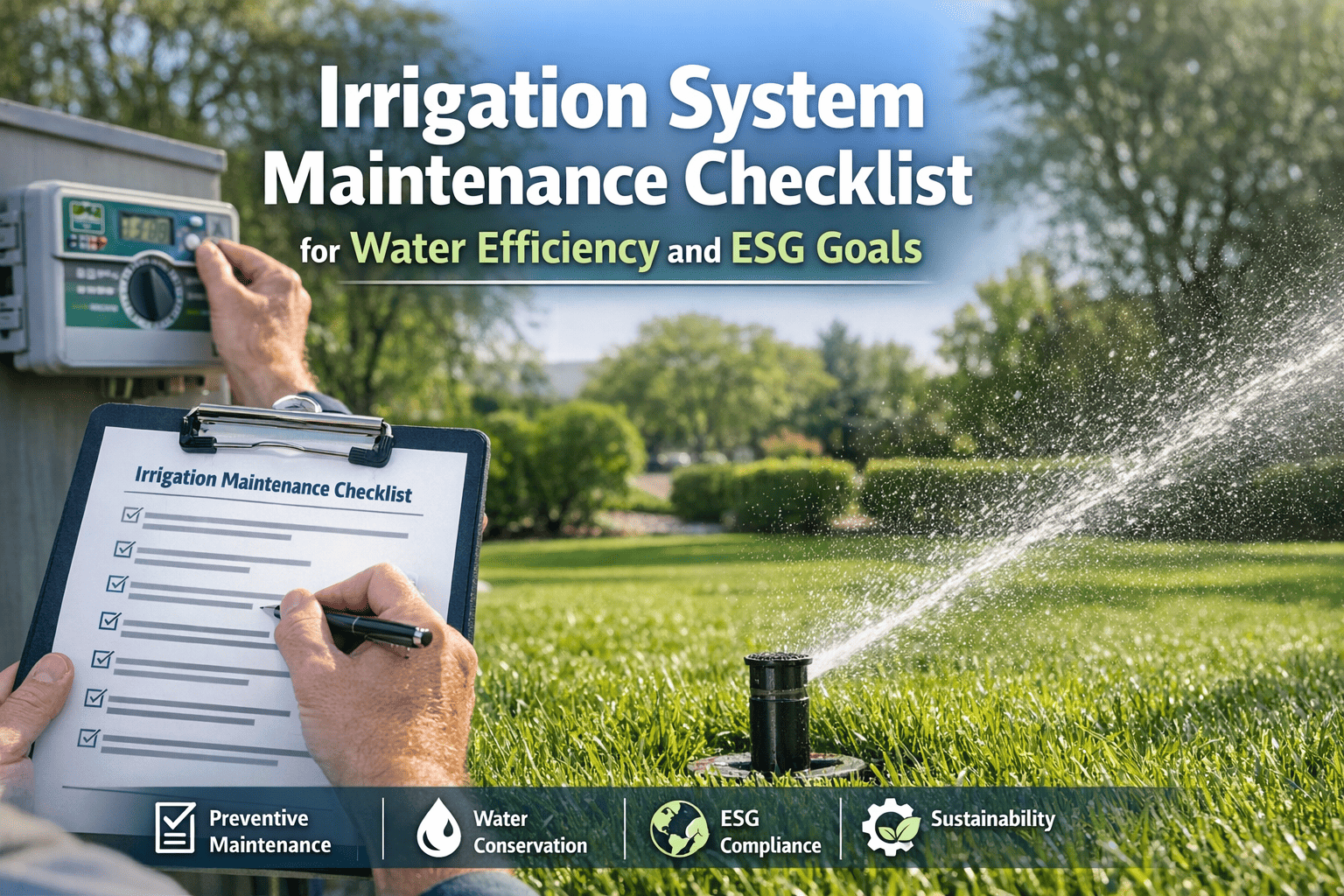
Grounds and landscaping are the first thing tenants, visitors, and inspectors see — and the last thing most maintenance teams have a structured programme for. A missed spring irrigation startup leads to a summer watering emergency, an unchecked fall drainage inspection turns into a winter ice-damage claim, and a snow removal plan that exists only in the supervisor's head fails the first morning there is a new crew on shift. OxMaint's preventive maintenance platform turns seasonal grounds tasks into scheduled, assigned, and trackable work orders — so every irrigation head, drainage channel, and exterior lighting fixture gets checked on the right schedule, by the right person, with a timestamped record your insurance carrier can rely on.
Equipment & Asset Management · Preventive Maintenance
Seasonal Grounds and Landscaping Maintenance Checklist for Facilities
Four complete seasonal checklists covering spring startup, summer operations, fall preparation, and winter management — irrigation, lawn care, drainage, snow removal, exterior lighting, and hardscape.
23%Fewer slip-and-fall incidents with structured grounds PM
$18KAverage cost of a winter slip-and-fall liability claim
40%Water savings with seasonally maintained irrigation
Spring — Startup & Renewal
Summer — Active Operations
Fall — Winterization Prep
Winter — Ice, Snow & Safety
Spring — March through May
Spring Startup: Irrigation, Turf Recovery, and Exterior Systems
Spring is the highest-density grounds maintenance season. A structured spring startup checklist is the single most cost-effective grounds PM investment of the year. Missed spring tasks are the direct cause of most summer irrigation failures and drainage incidents.
Irrigation System Startup
Irrigation controller powered on and programme reviewed — verify seasonal schedule is loadedAnnual · Role: Grounds Supervisor
Main irrigation shutoff valve opened slowly and system pressurised — check for winter freeze damageAnnual · Role: Irrigation Technician
Every sprinkler head and drip emitter manually activated — check broken heads, misaligned sprayAnnual + monthly · Role: Irrigation Technician
Backflow prevention device tested and certified — required by most municipal codesAnnual · Record: Backflow certificate
Turf and Landscape Recovery
Full turf survey — identify winter kill, frost heave, bare patches from de-icing saltAnnual · Record: Annotated site map
Ornamental planting beds inspected — remove mulch, clear debris, top-dressAnnual · Role: Grounds Crew
Drainage and Hardscape
All storm drains cleared of debris and silt — blocked drains cause parking lot floodingTwice yearly (spring and fall) · Role: Grounds Crew
Pavement and walkway inspection for winter freeze-thaw damage — mark trip hazardsAnnual · Immediate action: Cone hazards
Summer — June through August
Summer Operations: Irrigation Management, Turf, and Safety
Summer grounds maintenance is operations mode — irrigation running daily, mowing weekly, exterior wear accelerates with heat and foot traffic. The most costly summer grounds events are irrigation failures, turf stress from mowing height errors, and undetected pest pressure.
Weekly Irrigation and Turf Checks
Irrigation system operation verified weekly — walk all zones, identify broken or tilted headsWeekly · Role: Grounds Supervisor
Irrigation controller run times adjusted for actual evapotranspiration (ET) conditionsMonthly · Record: Controller adjustment log
Mowing height verified — maintain 3 to 4 inches during summer stress periodsWeekly · Role: Grounds Supervisor
Turf inspected for disease, pests, and heat stress — brown patch, grubs, drought stressBi-weekly · Record: Turf condition log with photos
Exterior Safety and Appearance
Entrance and walkway areas free of overgrown vegetation obstructing sightlinesMonthly · Role: Grounds Crew
Exterior lighting fully operational — walk property after dark to identify failed fixturesMonthly evening check · Role: Maintenance Technician
Refuse enclosures inspected — gates operational, no pest evidenceWeekly · Record: Enclosure inspection log
Turn seasonal grounds tasks into auto-scheduled work orders — photo evidence, digital records, and PM compliance tracking from your phone.
Fall — September through November
Fall Preparation: Irrigation Winterization, Drainage, and Winter Readiness
Fall is the highest-stakes grounds PM season in cold climates — mistakes in October cost ten times more in February. Irrigation systems not properly winterized split pipes. Drainage systems not cleared create ice hazards. Snow equipment not serviced fails on the first storm day.
Irrigation Winterization
Irrigation controller set to off — document shutdown dateAnnual (fall) · Complete: 2 weeks before first frost
Irrigation system blown out with compressed air — zone-by-zone purgeAnnual · Record: Winterization certificate
Main shutoff closed and section between shutoff and backflow drainedAnnual · Role: Irrigation Technician
Backflow prevention device drained and insulated or removed for storageAnnual · Record: Backflow winterization log
Drainage and Winter Readiness
All storm drains cleared of fall leaf accumulation — most time-sensitive fall taskTwice yearly · Role: Grounds Crew
Late-season turf aeration and overseeding completed before first frostAnnual · Role: Grounds Contractor
Snow Removal Equipment Readiness
All snow plows, snow blowers, spreaders inspected and serviced — complete 6 weeks before expected snowAnnual · Role: Grounds Supervisor
De-icing material inventory confirmed and stockpiled — maintain 4-event bufferAnnual · Role: Facility Manager
Snow removal route plan reviewed and updated — confirm contractor has current site planAnnual · Distribute to all crews
Winter — December through February
Winter Management: Snow Removal, Ice Control, and Safety Compliance
Winter grounds management is the highest-liability season. A single untreated icy walkway that causes a fall generates a claim averaging $18,000 — and insurance carriers require documented evidence of proactive ice treatment to defend those claims.
Storm Response Protocol
Storm monitoring confirmed — snow contractor notified when 1-inch or greater forecastNov–Mar · Record: Contractor notification log
Plowing completed within required timeframe — document with timestamped photoAfter each storm · Role: Grounds Contractor
De-icing treatment applied immediately after plowing — document material and quantityAfter each event · Record: De-icing application log
Daily Winter Safety Inspection
All building entrances and accessible routes inspected by 7:00 AM every business day — check for black iceDaily (7:00 AM) · Record: Exterior safety inspection log
ADA accessible spaces and routes confirmed clear — accessible routes must match entrance standardDaily · Record: ADA route clearance confirmation
Ongoing Winter Exterior Maintenance
Exterior lighting confirmed operational — inspect after storms when wind may dislodge fixturesWeekly winter check · Role: Maintenance Technician
Snow pile placement monitored — must not block sightlines, fire lanes, accessible parkingAfter each plowing · Role: Facility Manager
KPI Reference
Grounds Maintenance KPIs That Matter
| Metric | Target | Cadence |
|---|
| Seasonal Checklist Completion Rate | 100% | End of each season |
| Daily Winter Safety Inspection Completion | 100% | Weekly during winter |
| Storm Response Time (priority routes) | Less than 4 hours | After each storm |
| Irrigation System Efficiency | Within 110% of ET requirement | Monthly (summer) |
| Exterior Slip-and-Fall Incidents | Zero | Ongoing |
Expert Review
01
The most expensive grounds maintenance mistake is treating irrigation winterization as a low-priority fall task. Push it back, then a hard freeze arrives early and you file a $12,000 pipe repair claim.
Senior Facilities Manager, 1.2M sq ft portfolio02
After I started documenting every de-icing application with timestamps and photos, a slip-and-fall claim was dropped because we produced a complete treatment log. Digital records are your liability defence.
Facilities Operations Director, 18 years
Frequently Asked Questions
How does OxMaint schedule seasonal grounds tasks?
OxMaint's preventive maintenance engine schedules any recurring task — a spring irrigation startup, a fall drain clearing task, and a daily winter inspection are all configured the same way as an HVAC filter change. Each becomes a scheduled work order with an assigned technician, due date, digital checklist, and photo requirement.
Start a free trial to configure your grounds PM library.
What documentation should we retain after each winter storm?
For each storm, retain: contractor notification time, plow start/completion times, de-icing treatment details, and timestamped photos. OxMaint generates a work order for each storm event that captures all these data points. When a claim arrives months later, you export the work order and have complete documentation in under five minutes.
Book a demo to configure your storm response template.
How do we manage grounds maintenance when work is contracted?
OxMaint gives contractors limited portal access to submit work order completion records and upload photos — without accessing your full asset database. When a contractor completes a task, they close the work order from their device. The facility manager sees the completion record, photo, and timestamp instantly. Contractor performance data accumulates automatically.
Sign up free to set up contractor access.
Your Grounds Team Should Be Executing Seasonal Tasks — Not Remembering Them
OxMaint turns this seasonal checklist into auto-scheduled work orders, assigned to the right person on the right date — with photo documentation, digital sign-off, and compliance-ready records that protect your facility from liability and your equipment from deferred maintenance damage.