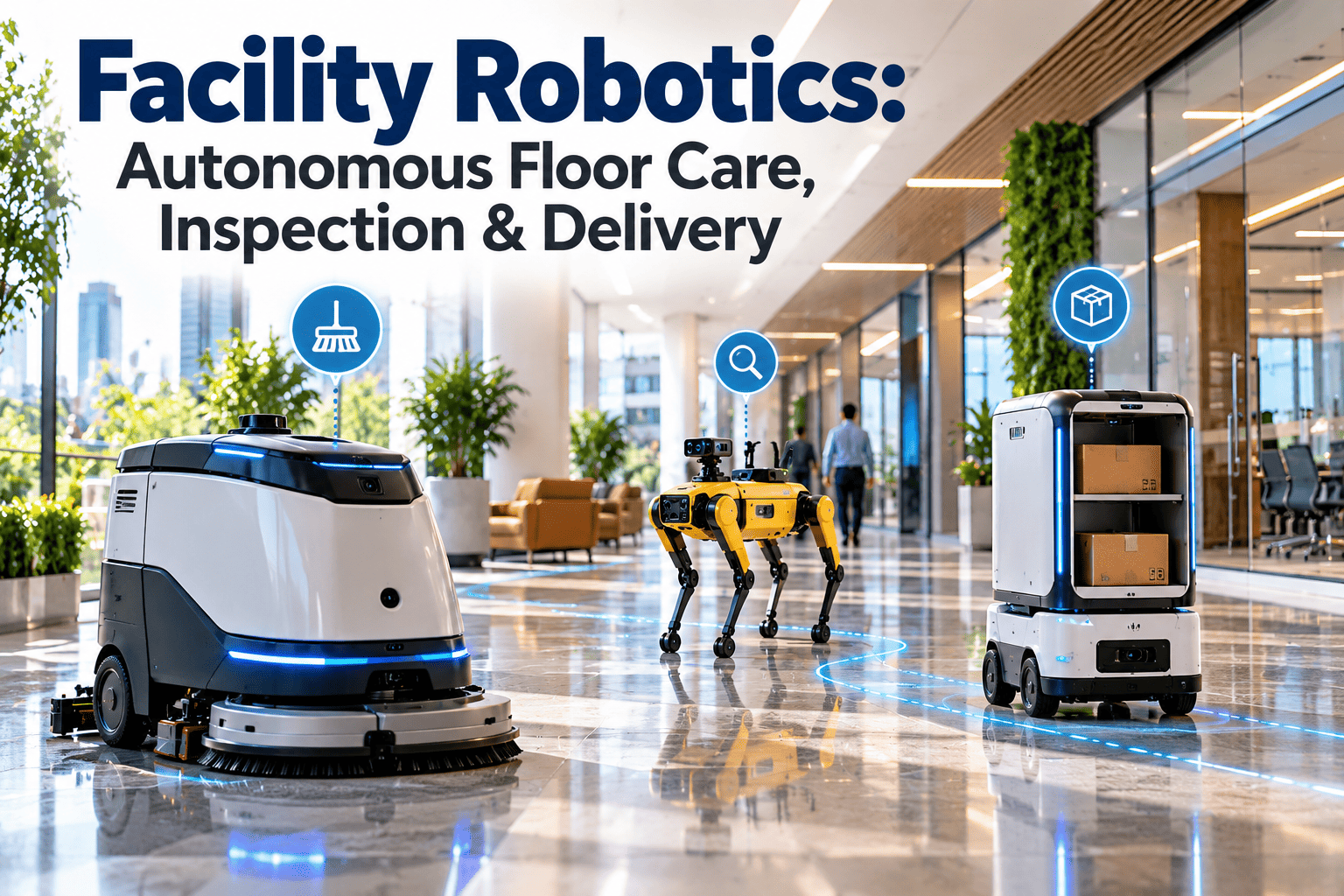
Facility maintenance is undergoing its most significant transformation in decades. Traditional scheduled inspections and reactive break-fix models are giving way to intelligent, sensor-driven systems where IoT devices continuously monitor asset health and autonomous robots physically verify anomalies before failures occur. In 2026, the most advanced operations teams are deploying integrated IoT-robotic platforms that detect early degradation signals, autonomously confirm findings with multi-sensor verification, and feed prioritised repair actions directly into CMMS platforms like Oxmaint—eliminating the guesswork, delays, and missed failures that plague conventional maintenance programmes.
Best IoT Robotics Solutions for Predictive Facility Maintenance
IoT sensors monitor asset health continuously. Autonomous robots verify anomalies on-site. CMMS platforms prioritise repairs by cost impact and urgency—creating a fully closed-loop predictive maintenance pipeline from detection to verified resolution without manual intervention.
Why Calendar-Based Maintenance Programmes Fail
Calendar-based preventive maintenance wastes resources servicing healthy equipment while missing the assets actually degrading. A 2025 study by the Plant Engineering Society found that 62% of scheduled PM tasks performed no corrective action because no fault existed—while 38% of actual failures occurred between scheduled intervals. This gap between fixed schedules and real-world degradation patterns is precisely what IoT-robotic predictive systems eliminate. Facilities using Oxmaint's predictive workflows report that maintenance labour is redirected from routine inspections to high-value repairs verified by sensor data and robotic confirmation.
Predictive Maintenance Architecture: Three Integrated Layers
The best IoT-robotic maintenance systems in 2026 operate across three coordinated layers: continuous IoT sensing for early anomaly detection, autonomous robotic verification for physical confirmation, and CMMS-driven repair orchestration for prioritised action. Each layer addresses a specific failure of traditional maintenance—and together they create a pipeline where no degrading asset escapes detection, no alert goes unverified, and no repair action is lost between teams.
How the Detection-to-Repair Pipeline Works
Core IoT-Robotic Solution Areas
Best IoT-Robotic Platforms Compared: 2026
We evaluated the leading IoT sensor platforms, autonomous robot systems, and CMMS integration capabilities for predictive facility maintenance. Here is the honest comparison to help operations teams select the right technology combination for their needs.
Calendar-Based PM vs. IoT-Robotic Predictive Maintenance
What Oxmaint Delivers for IoT-Robotic Maintenance
The gap between detecting an anomaly and completing a verified repair is where most predictive maintenance programmes lose value. Oxmaint bridges that gap with four integrated capabilities that turn raw sensor data into documented maintenance outcomes. Book a demo to see these capabilities configured for your facility's asset types.