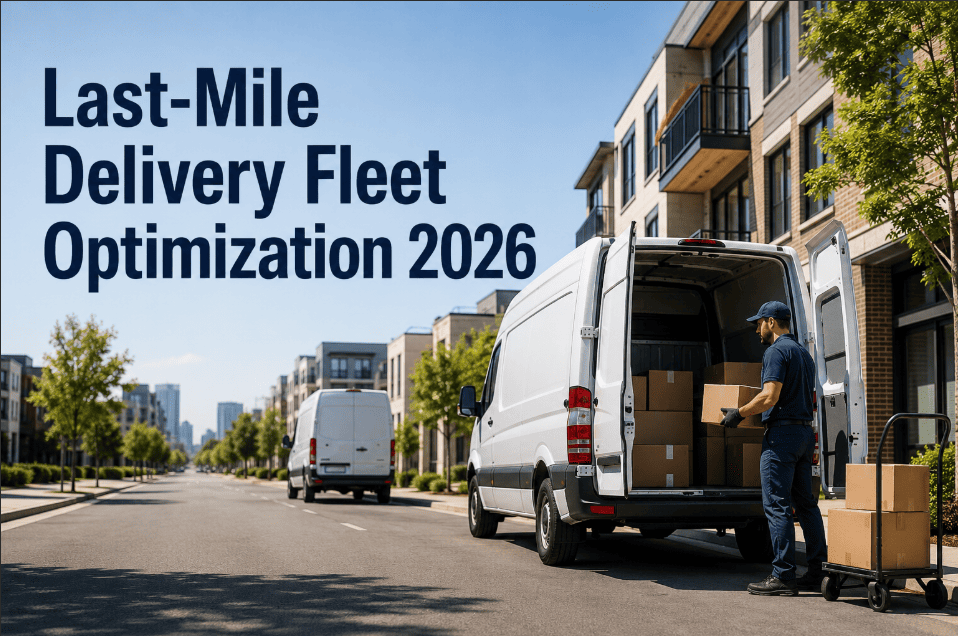
Last-mile delivery now represents 53% of total shipping costs for e-commerce and distribution operations — and that percentage is climbing as customer expectations for same-day and next-day delivery intensify. In 2026, the average failed delivery attempt costs $17.80 in rerouting, customer service, and redelivery expenses, while the average fleet operates at only 68% route efficiency due to static planning that cannot adapt to real-time conditions. The gap between planned routes and actual road conditions, customer availability, and traffic patterns is where delivery profit margins disappear. Fleets that have closed this gap through dynamic routing, real-time customer notifications, and electric last-mile vehicles report 22-31% lower cost-per-delivery and 94% first-attempt delivery success rates. Platforms like OxMaint ensure the vehicles making those deliveries stay on the road — with preventive maintenance scheduling, asset condition tracking, and mobile work orders that eliminate the vehicle breakdowns that destroy delivery schedules.
Last-Mile Delivery Fleet Optimization Guide for 2026
Dynamic routing, customer notification workflows, proof of delivery systems, electric last-mile vehicles, and the maintenance practices that keep your delivery fleet reliable — a complete operational playbook for fleet managers.
What Is Last-Mile Fleet Optimization?
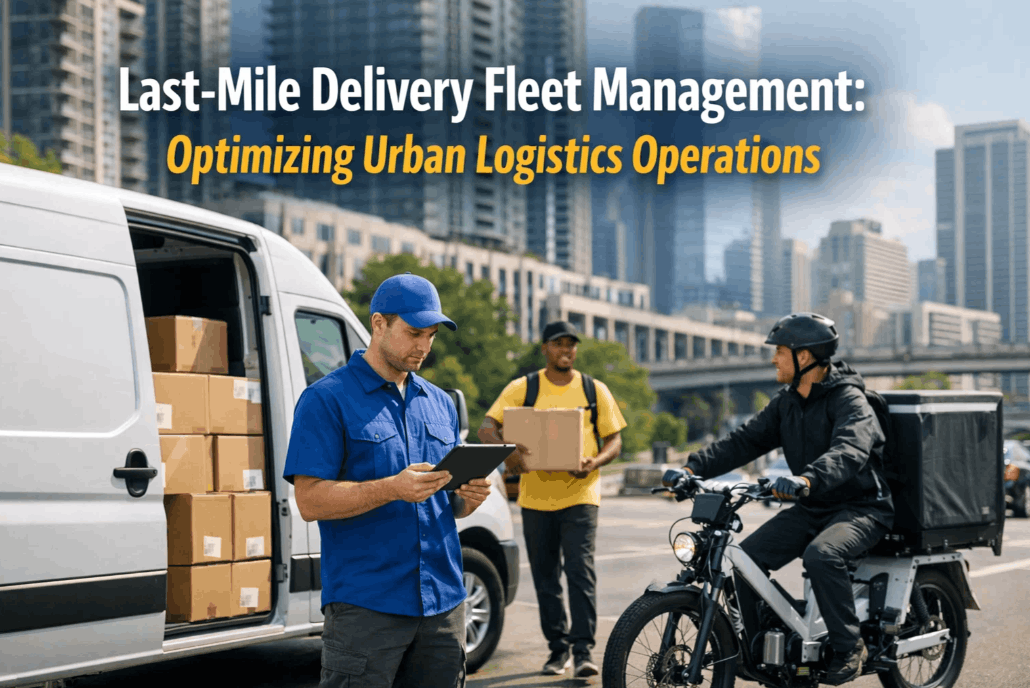
Last-mile fleet optimization is the systematic improvement of every operational variable between the distribution center and the customer's door — including route planning, vehicle loading sequence, driver dispatch, customer communication, delivery verification, and vehicle maintenance. The objective is to maximize deliveries per route while minimizing cost per stop and failed delivery attempts.
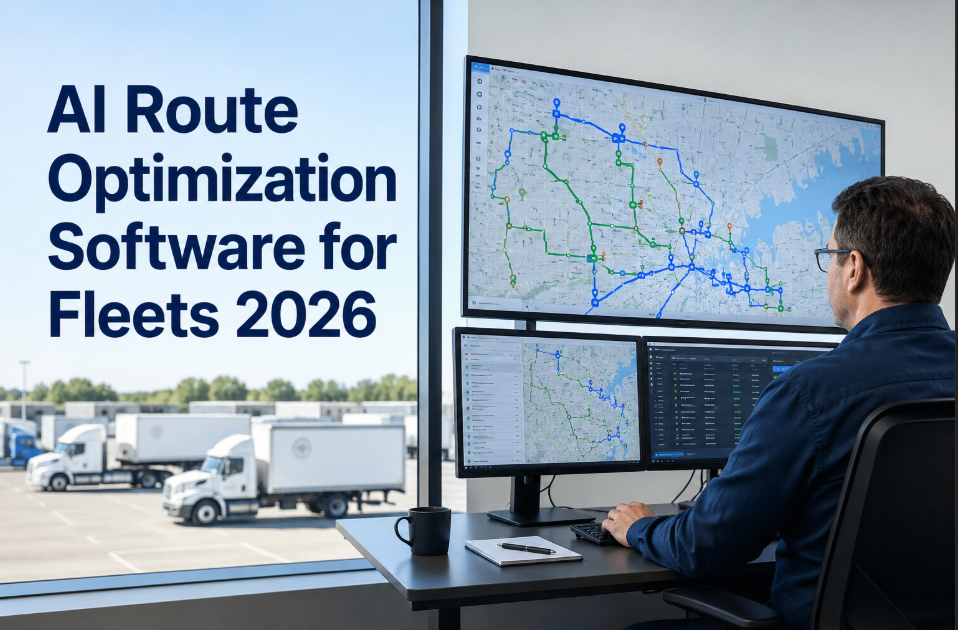
Real-time route adjustment based on traffic, weather, delivery window changes, and new order additions. Reduces average route distance by 15-22% compared to static morning-planned routes.
Automated customer notifications with real-time ETA updates reduce not-at-home failures by 40%. Customers who know their delivery window are 3.2x more likely to be available for receipt.
Photo capture, GPS-stamped delivery confirmation, and electronic signatures eliminate delivery disputes. Organizations using digital POD report 78% fewer customer complaints about missing deliveries.
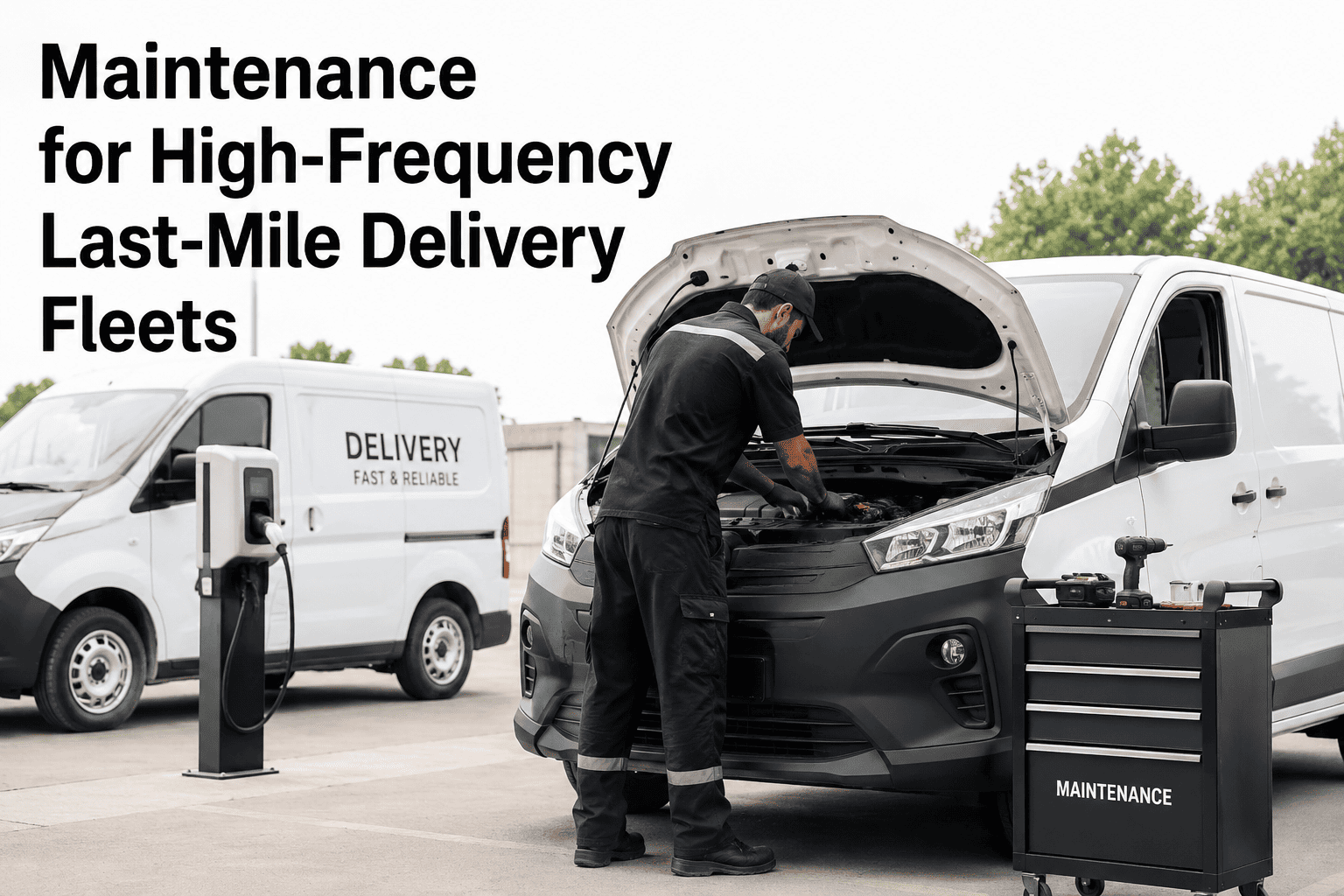
A single delivery vehicle breakdown disrupts 40-80 scheduled deliveries. Preventive maintenance and condition monitoring ensure 97%+ vehicle availability — the foundation all optimization depends on.
The Six Levers of Last-Mile Cost Reduction
Last-mile delivery costs are driven by six operational variables. Each lever can be independently optimized, but the compounding effect of improving all six simultaneously produces the 22-31% cost reduction that top-performing delivery fleets achieve.
Increasing from 18 to 24 stops per route reduces cost-per-delivery by 28%. Requires dynamic clustering algorithms that group nearby deliveries and sequence them for minimal drive time between stops.
Every failed delivery costs $17.80 in rerouting and redelivery. Moving from 82% to 94% first-attempt success across 1,000 daily deliveries saves $21,360 per month in avoided reattempts.
Most delivery fleets use 65-72% of available cargo capacity per route. Right-sizing vehicles to route demand and optimizing load sequencing improves utilization to 85-90%, reducing the number of vehicles needed.
Drivers spend 42% of their time driving between stops and only 28% completing deliveries. Reducing inter-stop drive time through better routing directly increases productive delivery hours per shift.
Each day a delivery vehicle is out of service costs $380-$620 in lost delivery capacity plus emergency rental costs. Preventive maintenance with OxMaint reduces unplanned downtime by 35%, keeping vehicles on routes.
Fuel represents 22-28% of last-mile delivery cost. Route optimization reduces total miles by 15-22%, and electric last-mile vehicles cut energy cost per mile by 60-70% compared to diesel equivalents.
Electric Vehicles in Last-Mile Delivery — 2026 Reality Check
Electric last-mile delivery vehicles have moved from pilot projects to fleet-scale deployments. In 2026, the economics favor electric for 73% of urban delivery routes — but the operational implications extend far beyond fuel savings. Here is what fleet managers need to know.
| Factor | Diesel/Gas Van | Electric Delivery Van | Impact |
|---|---|---|---|
| Energy Cost Per Mile | $0.28-$0.35 | $0.08-$0.12 | 60-70% reduction in energy cost |
| Maintenance Cost Per Mile | $0.12-$0.18 | $0.06-$0.09 | 50% fewer moving parts to maintain |
| Urban Range Requirement | Unlimited with refueling | 150-250 miles per charge | Sufficient for 92% of urban routes |
| Upfront Vehicle Cost | $35,000-$45,000 | $55,000-$75,000 | 30-60% premium, offset by TCO savings |
| Total Cost of Ownership (5yr) | $92,000-$115,000 | $78,000-$98,000 | 15-20% lower TCO over vehicle life |
| Noise and Emissions Zones | Restricted in growing number of cities | Full access to all urban zones | Critical for urban delivery compliance |
Whether your last-mile fleet is diesel, electric, or transitioning between both, OxMaint tracks maintenance requirements, condition scoring, and lifecycle costs at the individual vehicle level — giving you the data to make informed transition decisions and keep every vehicle on the road. Want to see how it works for mixed-fuel fleets? Start a free trial or book a demo with our fleet team.
Static Routes vs Dynamic Optimization — What Actually Changes
The difference between static morning-planned routes and real-time dynamic optimization is the difference between hope and control. Here is how each model plays out across a typical delivery day.
Frequently Asked Questions
How many delivery vehicles do I need before route optimization pays for itself?
Are electric delivery vans reliable enough for daily commercial routes?
What is the biggest cause of failed last-mile deliveries?
How does vehicle maintenance impact delivery fleet profitability?
Your Delivery Fleet's Revenue Depends on Vehicle Uptime
Every route optimization investment, every customer notification system, every driver efficiency program depends on one thing: vehicles that show up and run. OxMaint keeps your delivery fleet on the road with preventive maintenance scheduling, mobile work orders for drivers, condition-based monitoring, and the asset data that prevents the breakdowns your customers and margins cannot afford.




.png)