Fleet accident costs are the largest single uncontrolled liability item in commercial fleet operations. The average commercial vehicle accident costs $74,000 in direct and indirect expenses — and that figure doubles when the accident involves injury. Most of these costs are not the result of unavoidable incidents. They are the result of detectable, coachable driver behaviors — distraction, tailgating, lane drift, drowsiness, hard braking — that AI dashcam systems identify in real time and interrupt before they become collisions. Safety and risk directors who deploy AI dashcam programs consistently report 30–50% accident rate reductions within 12 months and insurance premium reductions of 10–30%. Connect your AI dashcam program to OxMaint to link driver behavior data with vehicle maintenance records in one platform — so safety alerts and overdue PM schedules are visible in the same dashboard. Book a demo to see OxMaint's driver behavior and fleet safety integration on live data.
Fleet Safety Intelligence
AI Dashcams + CMMS. Safety and Maintenance in One Platform.
OxMaint connects AI dashcam behavior events to vehicle maintenance records — so a hard-braking alert and an overdue brake PM show up in the same workflow, and nothing falls through the cracks.
$74K
average cost per commercial fleet accident including indirect costs
40%
average accident rate reduction in year 1 of AI dashcam deployment
30%
insurance premium reduction achievable with documented AI safety program
What AI Dashcams Detect — and How They Intervene
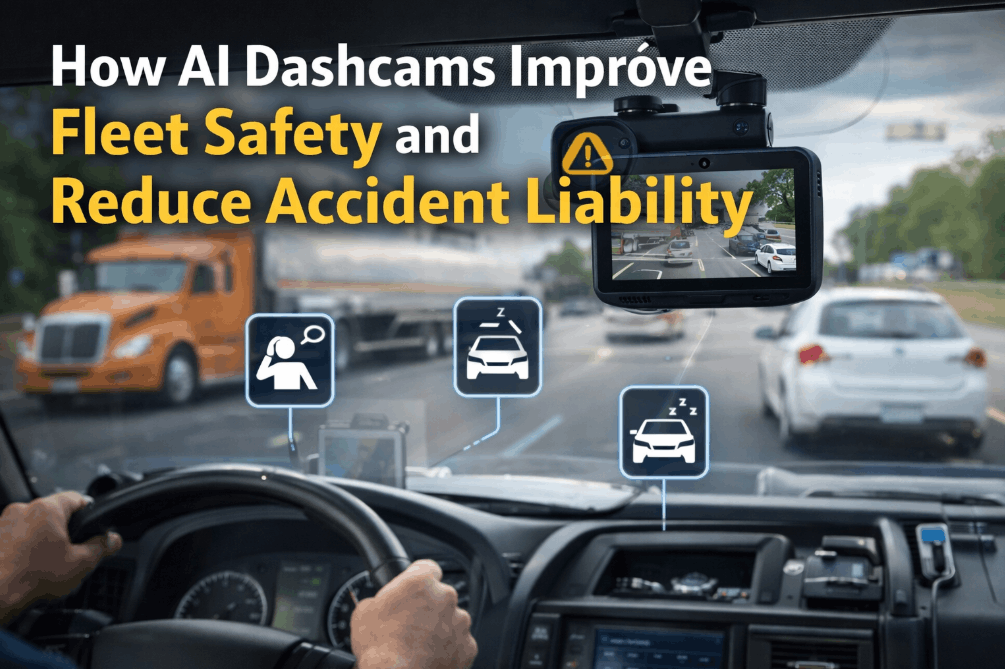
First-generation dashcams recorded video. AI dashcams do something fundamentally different: they analyze video in real time using computer vision models trained on millions of driving events, and they intervene before incidents occur. The system does not wait for an accident to happen and then provide footage — it detects the behavioral precursor, alerts the driver through in-cab audio, and logs the event for manager review. The distinction matters enormously for liability: a fleet that demonstrates systematic real-time intervention has a fundamentally different legal exposure than a fleet with passive recording.
Distracted driving
Records incident after the fact
Detects phone use / eye-off-road in real time, alerts driver instantly
Drowsiness / fatigue
No detection capability
Detects eye closure patterns, head drop — triggers in-cab alert
Tailgating
Records collision outcome
Measures headway continuously — alerts when following distance unsafe
Lane departure
Records lane change leading to incident
Detects unintentional drift — alerts before departure completes
Accident liability
Footage only — no behavioral record
Full behavioral log + footage = documented due diligence
The 7 Behaviors AI Dashcams Detect and Coach
Modern AI dashcam systems detect a specific set of high-risk behaviors that research consistently links to commercial vehicle accident causation. Understanding what is detectable — and the intervention mechanism for each — allows safety directors to build driver coaching programs around objective, timestamped data rather than observation and self-reporting.
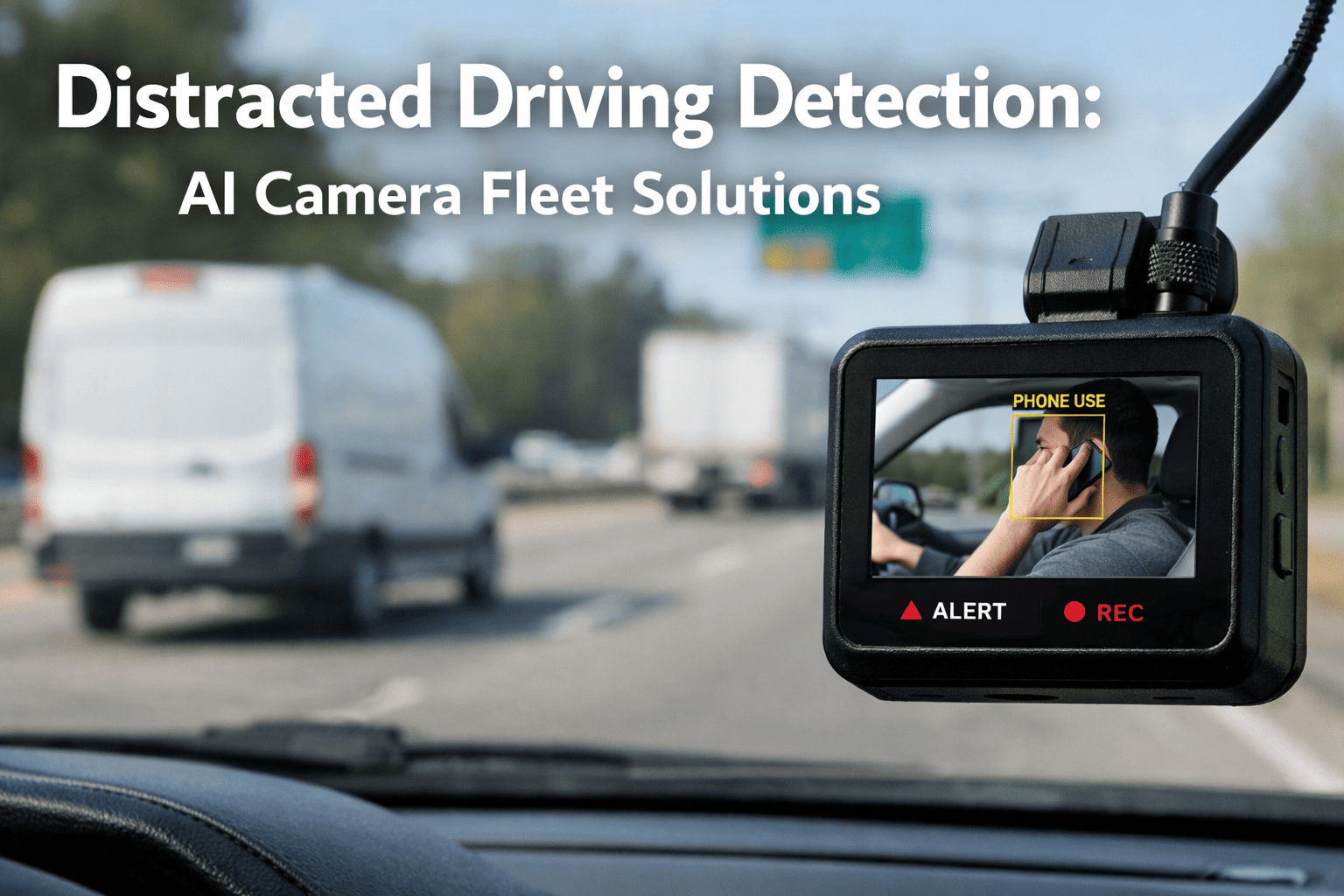
Distracted Driving — Phone Use and Eye Deviation
Computer vision: hand-to-ear/screen detection + gaze tracking off-road duration
InterventionAudible in-cab alert within 1–2 seconds of detection
Accident correlationCauses 26% of all commercial vehicle crashes
Systems distinguish between deliberate glances (mirrors, navigation) and sustained eye-off-road events. Threshold typically 2+ seconds gaze deviation. Logs event video clip with GPS, speed, and timestamp for manager review.
2s threshold
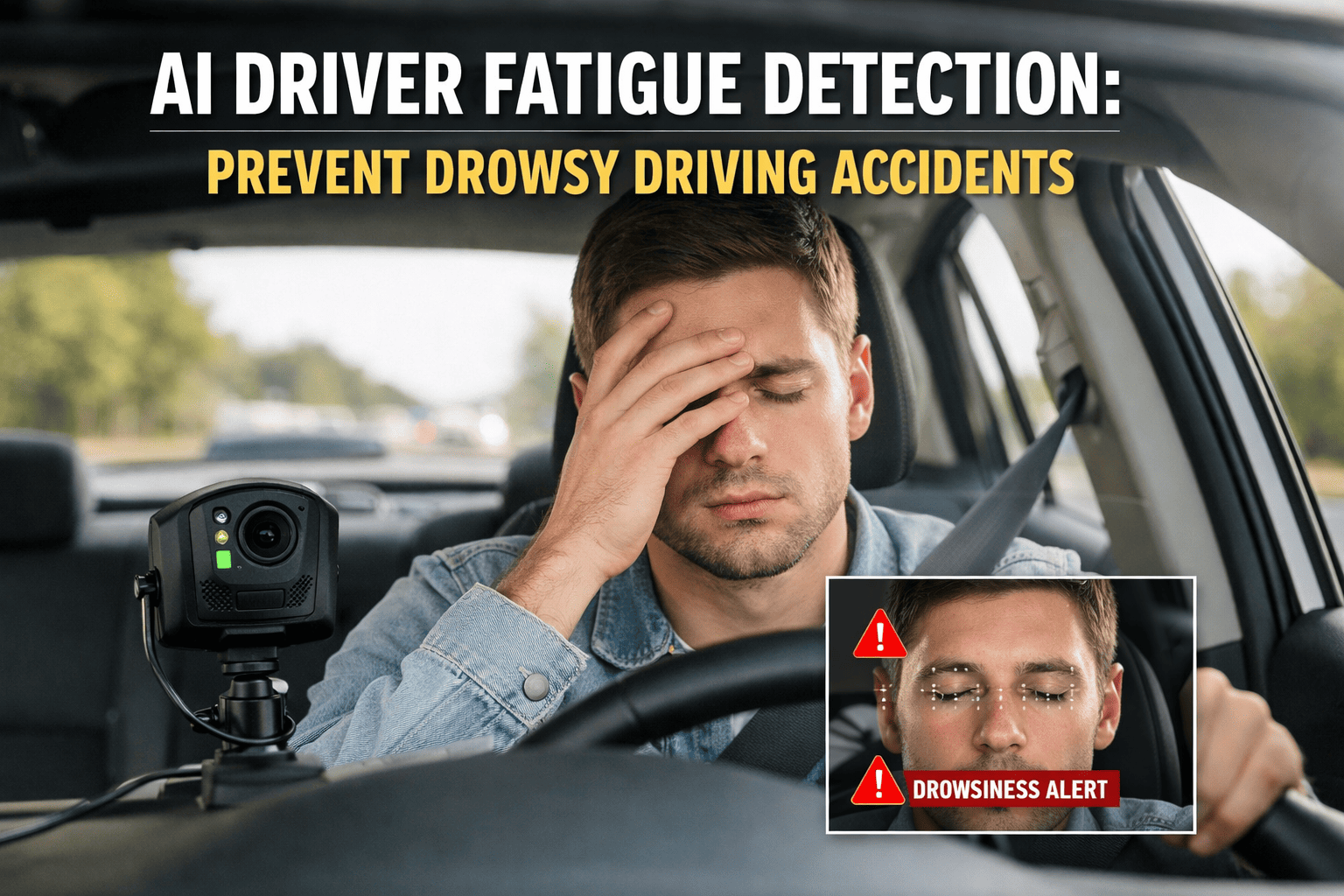
Drowsiness and Microsleep Detection
Infrared facial tracking: PERCLOS (eye closure %) + head pose deviation
InterventionEscalating in-cab alert + manager real-time notification
Accident correlationFatigue involved in 13% of commercial truck crashes
PERCLOS measures the percentage of time eyes are 80%+ closed over a rolling window. Above 15% PERCLOS triggers drowsiness alert. Works in darkness via IR illumination. Highest-severity event category — many systems notify dispatch in real time for driver welfare check.
IR tracking
Tailgating — Unsafe Following Distance
Forward-facing camera: vehicle detection + headway time calculation at current speed
InterventionIn-cab alert when headway drops below 2-second threshold
Accident correlationRear-end collisions: 22% of all commercial fleet accidents
Headway time is calculated as gap distance ÷ current speed. Industry standard alert threshold is below 2.0 seconds at highway speed, 1.5 seconds in urban settings. High-tailgating-frequency drivers show 3.5× higher rear-end collision rates than low-frequency drivers.
2s headway
Unintentional Lane Departure
Forward camera: lane marking detection + vehicle trajectory vector relative to lane center
InterventionAlert on unintentional drift (suppressed when turn signal active)
Accident correlationLane departure: 33% of fatal commercial vehicle crashes
Systems suppress alerts when the turn signal is active — distinguishing intentional lane changes from unintentional drift. Unintentional departure at highway speed is strongly correlated with fatigue, distraction, and impairment. Lane departure patterns often precede drowsiness detection events by 5–10 minutes.
Signal-aware
Harsh Braking, Acceleration, and Cornering
Accelerometer / IMU: g-force threshold events (typically 0.35g braking, 0.25g cornering)
InterventionPost-event alert + coaching clip flagged for review
Cost impactHarsh driving increases fuel cost 15–30% and brake wear 40%
G-force events are the most directly measurable link between driver behavior and vehicle maintenance cost. A driver averaging 3+ harsh braking events per 100 miles accelerates brake component wear by 40% relative to smooth drivers. Connecting harsh braking events to brake PM records in a CMMS directly validates the maintenance cost impact of individual drivers.
0.35g trigger
Seatbelt Non-Compliance Detection
Interior camera: shoulder strap detection via computer vision — cross-body strap visible/absent
InterventionImmediate in-cab alert + event logged for manager review
Liability impactUnbelted driver in at-fault accident increases employer liability
Seatbelt detection is both a safety function and a liability protection function. In jurisdictions where employers carry responsibility for driver safety compliance, documented seatbelt non-compliance that was not addressed exposes the fleet operator to additional negligence claims. Automated detection creates the documented monitoring record.
Instant alert
Speed Limit Violation Detection
GPS speed vs. posted limit database — real-time comparison with configurable overage threshold
InterventionIn-cab alert at configurable threshold (e.g. 8 mph over posted limit)
Accident correlationSpeed involved in 23% of fatal commercial vehicle crashes
Speed limit databases are updated via cloud and are accurate to road segment level — including variable speed zones, school zones, and work zones. Configurable thresholds allow safety managers to set tighter limits than posted (e.g., alert at 5 mph over in school zones) or match company policy rather than statutory limits.
GPS-matched
Accident Reconstruction: How AI Dashcam Footage Changes Liability Outcomes
The liability value of AI dashcam footage in disputed accidents is substantial and well-documented. In the absence of dashcam footage, commercial fleet accidents default to he-said/she-said adjudication — and commercial operators are disproportionately found liable in those scenarios because juries and adjusters apply a higher duty-of-care standard to professional drivers. With high-definition footage capturing the 60 seconds before impact, the point of contact, and the driver's behavior throughout, the liability equation changes fundamentally.
At-fault determination
65% fleet liable (no footage)
28% fleet liable (with footage)
Fraudulent claim rate
15–20% of claims disputed
Fraudulent claims drop 85%
Claim resolution time
14–18 months avg resolution
3–5 months with clear footage
No AI Dashcam
With AI Dashcam
Safety + Maintenance Integration
Connect Driver Behavior Events to Vehicle PM Records.
Hard braking event logged by dashcam → brake PM status checked in OxMaint → work order generated if brake service is overdue. One connection that closes the gap between safety and maintenance.
Insurance Benefits: How AI Dashcam Programs Reduce Premiums
Commercial fleet insurance premiums are risk-priced — and AI dashcam programs directly and demonstrably reduce the risk factors that drive those premiums. Carriers that work with fleet operators on telematics-based pricing programs offer documented premium reductions tied to specific safety metrics: accident frequency rates, driver behavior scores, and program compliance rates. The documentation trail created by AI dashcam systems — behavioral event logs, coaching completion records, driver score trends — provides the carrier with the evidence they need to justify rate reductions that would otherwise require years of claims history to earn.
Accident Frequency Reduction
10–20% premium cut
Carriers apply frequency discounts when documented accident rate drops below fleet category average
Telematics Safety Program
8–15% premium cut
Usage-based insurance (UBI) programs reward documented AI monitoring deployment with immediate rate adjustment
Driver Score Improvement
5–12% premium cut
Average fleet driver score trending above 85/100 qualifies for preferred risk pricing on most commercial auto programs
Fraud / Claim Defense
$22K avg saved per claim
Per-claim savings from footage-supported defense of disputed or fraudulent claims — not reflected in premium but in total cost of risk
Avoided Nuclear Verdict
$2M–$50M+ exposure avoided
Documented AI safety program is the primary defense against nuclear verdicts in commercial fleet litigation — proof of systematic due diligence
Fuel and Maintenance Savings
$800–$1,400/vehicle/yr
Reduced harsh braking and acceleration cuts fuel 8–15% and brake/tire wear costs 20–40% per vehicle annually
Total Risk Reduction Value: $1.8M–$4.2M per year for a 50-vehicle commercial fleet with active AI dashcam program
Driver Coaching: Turning Data Into Behavior Change
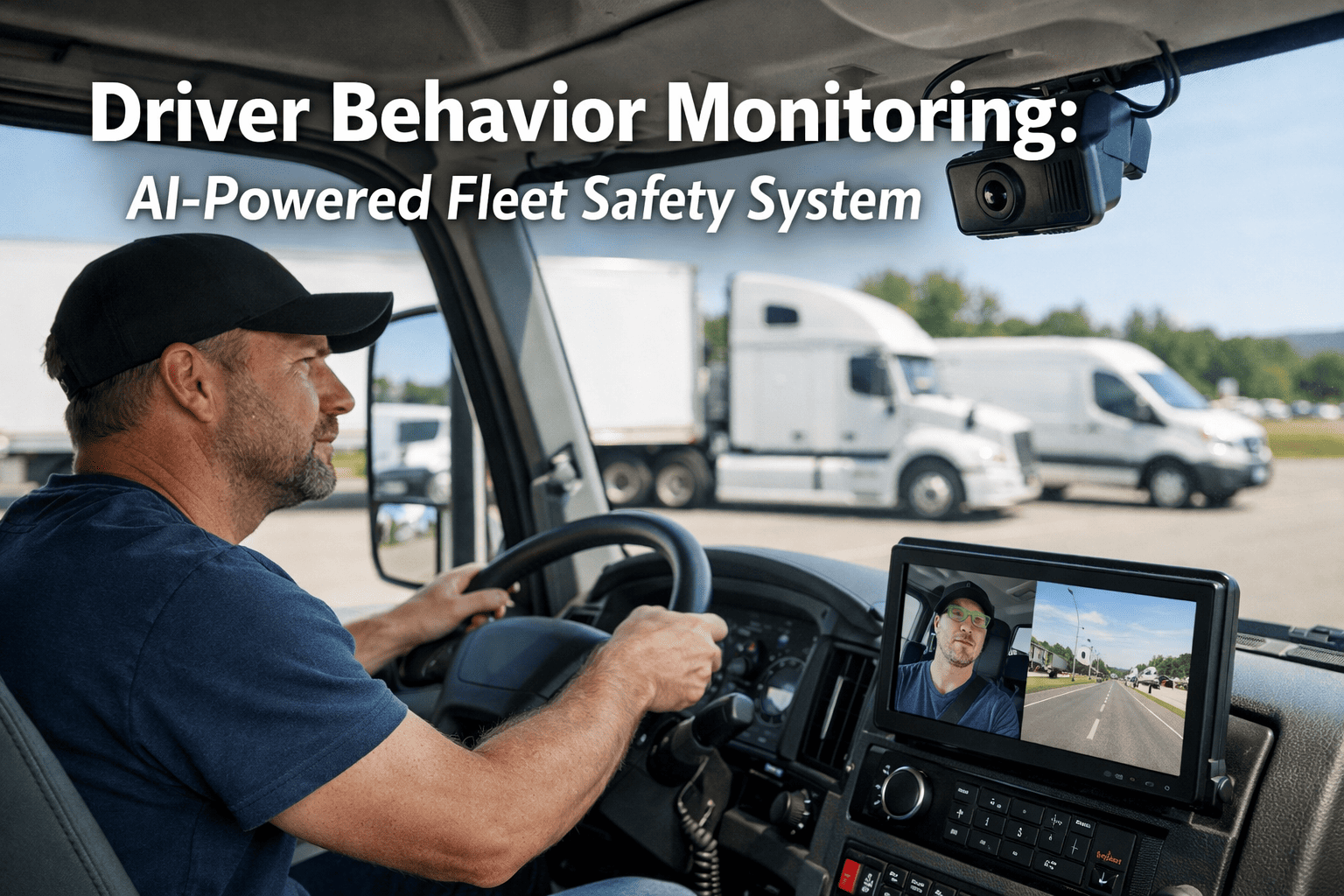
AI dashcam data is only valuable if it drives behavior change — and behavior change only happens through consistent, specific, and non-punitive coaching. The most effective fleet safety programs use dashcam data in a structured weekly coaching model: the system auto-flags the top 3 behavioral events per driver per week, the safety manager reviews the video clips, and a 10-minute coaching session is held that shows the driver their own footage and discusses the specific behavior. Research from fleets using this model shows 65–80% behavior improvement within 30–60 days — significantly faster than any other coaching intervention.
Weekly top-3 event coaching per driver
→
65–80% behavior improvement in 30–60 days
Driver sees own footage in coaching
→
4x more effective than verbal coaching alone
Driver score public leaderboard
→
Peer accountability reduces events fleet-wide 25–35%
Gamification / safety bonus program
→
High-risk driver turnover drops — safer drivers self-select to stay
Coaching documented in CMMS driver record
→
Litigation defense: documented progressive corrective action chain
AI Dashcam Maturity: Where Does Your Fleet Stand?
Fleet AI dashcam programs operate at different maturity levels — from basic passive recording through to fully integrated predictive safety programs. Understanding where you are on this scale identifies the highest-value next step for your specific operation.
Detection
None
Post-accident only
Real-time, 7 behaviors
Predictive + real-time
Driver Coaching
None / anecdotal
Incident-triggered only
Weekly data-driven sessions
Automated + in-cab coaching
Liability Protection
No documentation
Footage only
Footage + behavioral log
Full due-diligence record
Insurance Impact
Standard rate
Minimal
10–20% reduction
20–30%+ reduction
Maintenance Link
None
None
Manual correlation
CMMS auto-integration
How to Launch: The 30-Day AI Dashcam Deployment Plan
Week 1
Establish Your Baseline Metrics
Before installing cameras, document your current accident frequency rate, average claim cost, insurance premium, and fuel cost per vehicle. This baseline is what you measure the program against — and what you present to your insurance carrier to request rate renegotiation 12 months in.
Week 2
Pilot on Highest-Risk Vehicles First
Identify your top 10–15% of vehicles by accident and incident frequency. Deploy cameras on these vehicles first. This generates the highest immediate ROI, provides proof-of-concept data within 30 days, and avoids the change management complexity of fleet-wide rollout before the program is proven internally.
Week 3
Communicate the Program to Drivers
Transparent programs outperform surveillance programs. Explain what is recorded, what triggers an event, how scores are calculated, and how coaching works. Drivers who understand the system are more receptive to coaching. Address the privacy concern directly: cameras record driving behavior, not personal conversations, and footage is reviewed only for flagged events.
Week 4
Run First Weekly Coaching Cycle
Hold the first round of coaching sessions using real footage. Start with the top 3 events per driver — not a comprehensive review. Keep sessions under 15 minutes and focus on specific behavior improvement, not reprimand. Establish the weekly rhythm that turns data into behavioral change. The first four weeks set the program culture for the entire fleet.
Frequently Asked Questions
Do AI dashcam alerts distract drivers more than the behaviors they prevent?
No — in-cab alerts are 1–2 second audio tones that interrupt risky behavior far earlier than a collision would. Properly calibrated systems alert infrequently enough to avoid fatigue. Studies consistently show AI dashcam fleets have lower accident rates, not higher.
Connect OxMaint to link alert events to maintenance workflows.
How long does footage need to be retained for liability protection?
Retain incident footage for 3–5 years — matching the statute of limitations for personal injury in most US jurisdictions. Non-incident continuous footage is typically purged on a 30–90 day rolling cycle. Most fleet legal teams recommend keeping all incident footage for the full limitation period.
Book a demo to see how OxMaint retains safety documentation.
Can AI dashcam data be used against the fleet operator in litigation?
Yes, if risky behavior patterns go unaddressed. A driver with 200 tailgating events and no coaching action is a liability. The answer is active program management — documented coaching records and corrective action history demonstrate due diligence and are the primary defense against negligent entrustment claims.
What is the typical ROI timeline for an AI dashcam program?
Most fleets see positive ROI within 4–8 months. One prevented accident saves $30K–$150K immediately. Insurance premium renegotiation follows at 6–12 months with behavioral data. A 50-vehicle fleet typically sees $300K–$800K in year-one savings — a 6–15× ROI.
Start free to connect safety data to maintenance workflows.
How does OxMaint integrate with AI dashcam systems?
OxMaint connects to major dashcam and telematics providers. A harsh braking event automatically triggers a brake PM check — if service is overdue, a work order is generated. Driver scores sit alongside maintenance cost data in one dashboard.
Book a demo to see the integration on live fleet data.
Fleet Safety Intelligence
Stop Paying for Accidents That AI Could Have Prevented.
40%
accident reduction year 1
30%
insurance premium cut



.png)