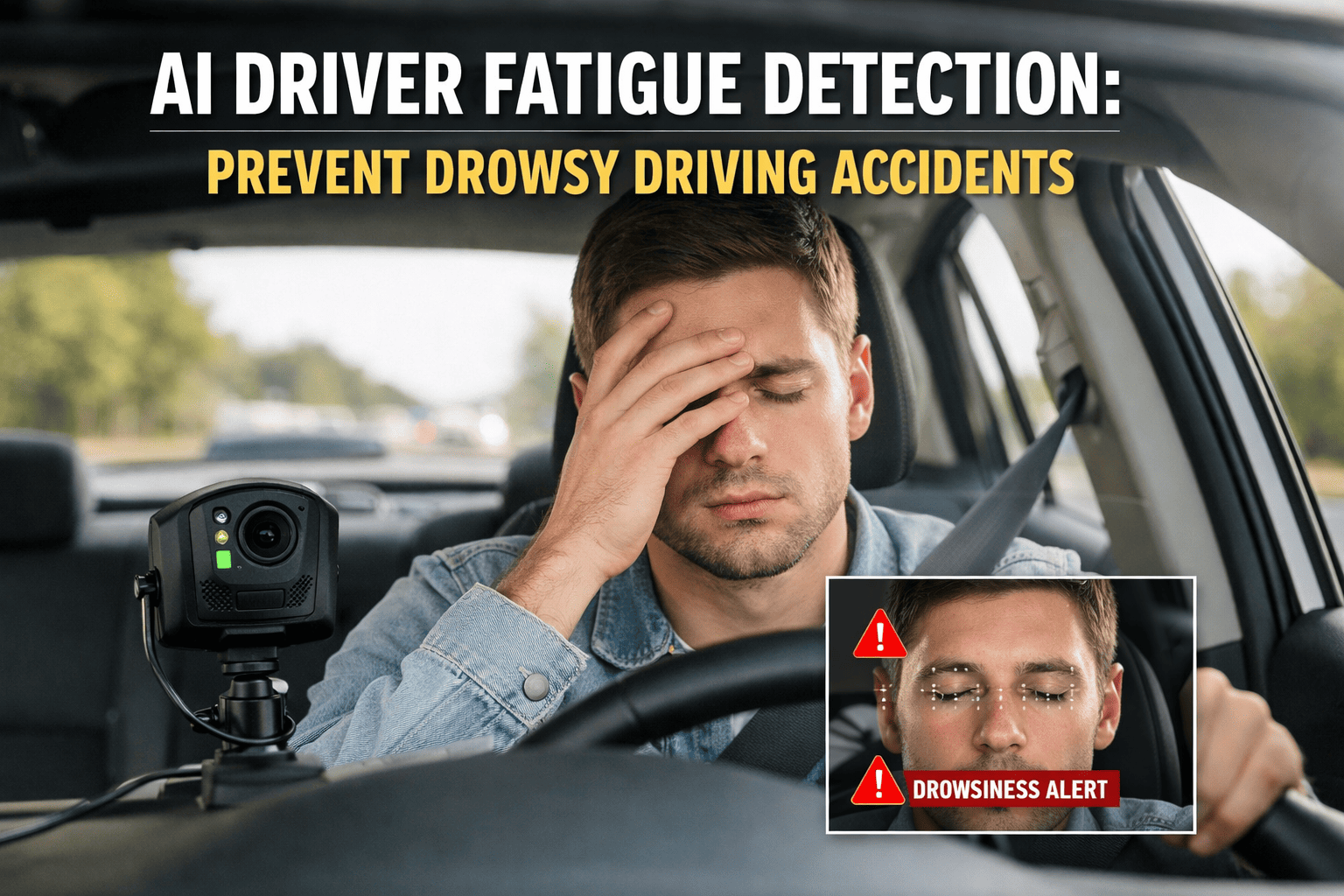
AI Driver Fatigue Detection: Prevent Drowsy Driving Accidents
By Jack Miller on April 11, 2026
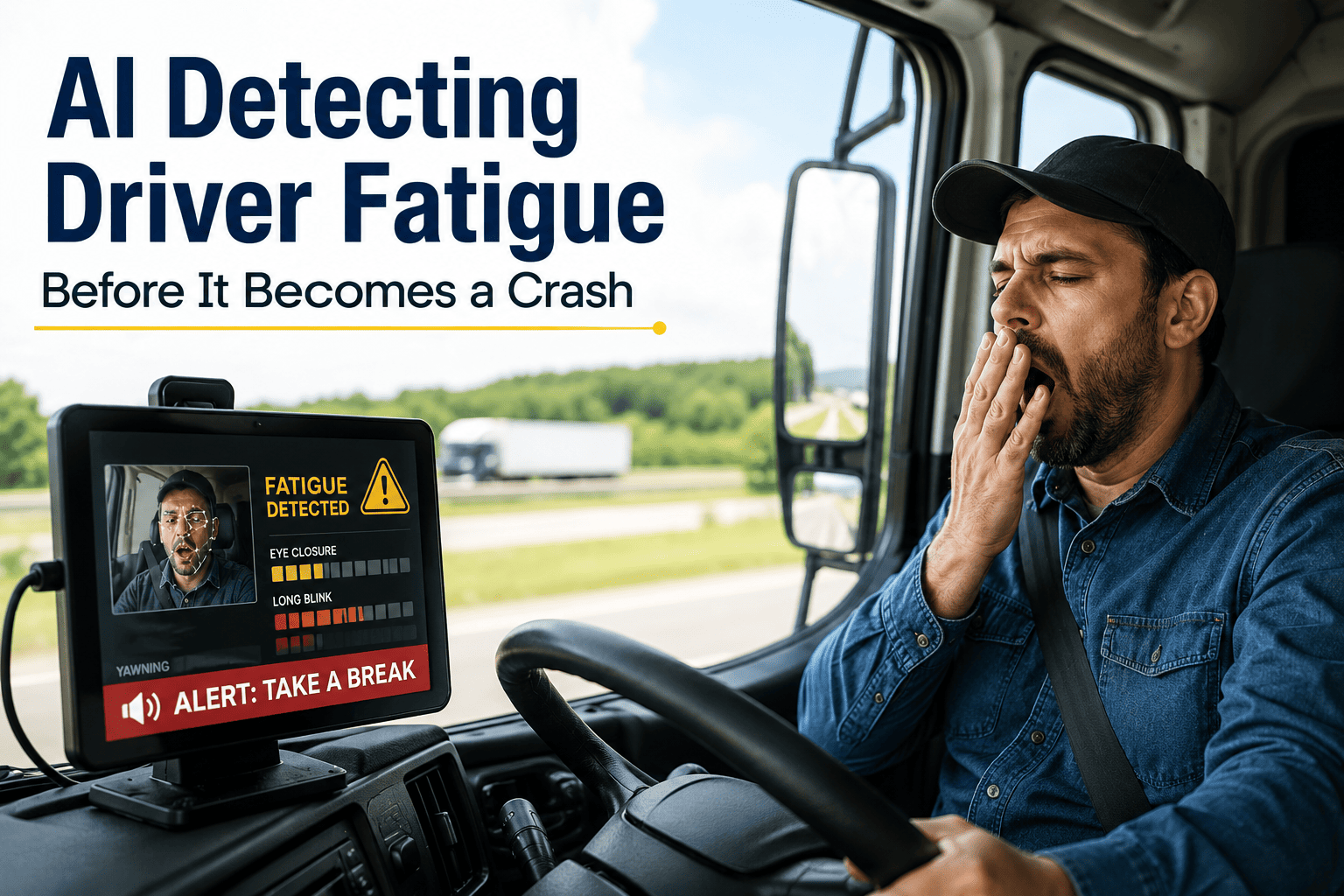
A long-haul trucking company in Tennessee lost a driver and a $240,000 load in a single accident in 2023. The FMCSA investigation found the driver had been awake for 19 hours, had logged 71,000 hours of continuous driving in the prior 6 months without a fatigue-related alert being triggered, and had three prior single-vehicle incidents in 24 months that — in hindsight — all occurred in the late hours of long shifts. No technology was watching for fatigue. The ELD showed compliant hours. The body showed something different. Fatigue is responsible for approximately 13% of large truck crashes in the US annually — representing 168,000 truck crashes and over $30 billion in economic costs. OxMaint's AI fatigue detection system monitors eye closure rate, blink frequency, head position, and yawning in real time using in-cab cameras — generating a driver alert within seconds of detecting fatigue indicators and notifying fleet managers before the driver covers another 10 miles. Book a demo to see AI fatigue detection configured for your fleet.
Detect Fatigue Before the Driver Closes Their Eyes for the Last Time.
Eye tracking · head drop · yawn detection · real-time alert · manager notification — OxMaint AI
Of all large truck crashes in the US involve driver fatigue — 168,000 accidents annually
$30B
Annual economic cost of fatigue-related truck crashes in the US — direct and indirect losses combined
4 sec
OxMaint AI alert time from fatigue indicator detection to in-cab driver alert and manager notification
How AI Detects Fatigue Before the Driver Knows They Are Impaired
Fatigue impairment begins before subjective sleepiness is felt — drivers are significantly impaired 20–30 minutes before they report feeling tired. AI physiological monitoring detects the biological signals of fatigue that precede subjective awareness. OxMaint's fatigue detection AI monitors four simultaneous indicators in real time.
Primary indicator
Eye Closure Rate (PERCLOS)
% of time eyes are more than 80% closed — monitored continuously
PERCLOS above 15% indicates significant impairment equivalent to 0.08% blood alcohol. OxMaint AI camera tracks eye opening percentage at 30 frames/second — alert fires when PERCLOS exceeds the threshold for 3 consecutive seconds.
Early warning
Blink Frequency Change
Normal: 15–20 blinks/min — fatigue slows this significantly
Blink rate dropping below 8/minute is a reliable early fatigue indicator — detectable 15–20 minutes before the driver reports feeling sleepy. OxMaint uses blink frequency decline as a pre-alert trigger to increase monitoring sensitivity before PERCLOS threshold is reached.
Physical indicator
Head Position & Nodding
Forward head drop below 15° from neutral — microsleep indicator
Forward head drop is a direct microsleep indicator — the body falling asleep for 1–5 seconds at highway speed. OxMaint AI detects the angular velocity of head movement, distinguishing a road check from a fatigue-related drop, and fires an immediate Level 1 alert.
Confirmation signal
Yawning Detection
Wide mouth opening with duration >1.5 seconds — strong fatigue signal
A single yawn is not significant. Three yawns in a 10-minute window is a strong fatigue signal. OxMaint tracks yawn frequency and correlates with PERCLOS and blink data to produce a composite fatigue risk score that reduces false positives while catching genuine fatigue events.
Risk factor
Time-of-Day Risk Scoring
2–5 AM and 2–4 PM windows — circadian low-alertness periods
Human alertness follows a circadian pattern with troughs at 2–5 AM and 2–4 PM. OxMaint elevates fatigue detection sensitivity automatically during these windows — lower PERCLOS and blink thresholds trigger alerts earlier when the driver is physiologically at highest risk regardless of how long they have been driving.
Compliance
HOS Fatigue Risk Overlay
Hours-on-duty data overlaid with physiological indicators
OxMaint combines ELD hours data with camera-detected fatigue indicators to produce a compound fatigue risk score. A driver at 9 hours of duty with clear PERCLOS readings is less concerning than a driver at 6 hours with declining blink rate and a circadian trough ahead.
AI Fatigue Detection — OxMaint
4 Seconds From Fatigue Signal to Driver Alert.
OxMaint AI detects fatigue before the driver is aware they are impaired — and alerts them before the next mile becomes critical.
Alert Levels — OxMaint's Three-Tier Fatigue Response System
Not all fatigue signals require the same response. OxMaint's three-tier alert system escalates proportionally — from an in-cab nudge for early signals to an emergency fleet manager notification and mandatory stop protocol for confirmed microsleep events.
Level 1 — Early Warning
Gentle In-Cab Alert
Triggered by blink rate decline or single yawn cluster
Audible chime and screen prompt in cab only
Recommends hydration or window air break
Logged to driver record — no manager notification yet
Level 2 — Elevated Risk
Active Driver Alert
Triggered by PERCLOS >15% or confirmed yawn pattern
Loud alarm + vibration + bright screen flash in cab
Manager receives push notification with location
Driver prompted to confirm alertness or pull over
Level 3 — Critical Event
Mandatory Stop Protocol
Triggered by head drop or confirmed microsleep event
Maximum alarm + mandatory pull-over instruction in cab
Event logged with photo, GPS, and timestamp for FMCSA
Post-Shift
Fatigue Trend Review
Daily fatigue event summary per driver
Shift-pattern analysis — identifies recurring risk windows
Coaching trigger if Level 2+ events exceed threshold
Monthly fatigue report for safety committee review
Fatigue Detection Technology — What Powers OxMaint AI Cameras
OxMaint fatigue detection is built on four integrated technology layers — AI computer vision that actually detects fatigue, telematics that provides context, HOS data that adds compliance risk scoring, and AI analytics that identifies shift patterns before they produce Level 3 events.
FMCSA HOS rules checked in real time — violations pre-alerted
Predicted remaining safe drive time shown to manager dashboard
Continuous · Compound score
AI Pattern Analysis — Shift Schedule Optimisation
Identifies drivers with recurring fatigue events on specific shift patterns
Flags shift schedules that consistently produce Level 2+ events
Monthly fatigue trend report for safety committee and insurer
Daily analysis · Monthly report
After our accident we installed OxMaint AI fatigue cameras on all 38 long-haul units. In the first 90 days we had 14 Level 2 alerts and 2 Level 3 events — drivers who pulled over as instructed and were discovered to have been driving on severely restricted sleep. Both of those 2 Level 3 events would have been accidents without the system. One of them would have been fatal based on the road section and speed involved.
— Safety Director, Long-Haul Carrier, Nashville TN · 38 units · OxMaint customer since 2024
Frequently Asked Questions
OxMaint integrates with major in-cab dual-facing camera systems including Samsara, Lytx, Motive, and Nauto. For fleets without cameras, OxMaint can recommend compatible IR camera options that mount to the windscreen without any cab wiring modification.
OxMaint uses infrared-equipped cameras that function reliably in night driving, tunnel, and dawn/dusk conditions — the exact scenarios where fatigue risk is highest. IR illumination is built into all OxMaint-recommended camera hardware.
OxMaint's compound detection model (PERCLOS + blink + head + yawn + HOS context) achieves a false positive rate below 3% on calibrated installations — significantly lower than single-indicator systems. Level 3 (mandatory stop) alerts have a false positive rate below 0.5%.
Yes — OxMaint fatigue events are timestamped, GPS-located, and stored with facial detection frame captures. Level 3 events generate a complete evidence package — camera timestamp, alert trigger data, driver response, and GPS location — that demonstrates proactive safety management in FMCSA investigations.
Yes — documented AI fatigue monitoring programmes qualify for 5–12% commercial vehicle insurance premium discounts with major US carriers. OxMaint generates a fatigue management summary report for insurer submission formatted to the underwriting data requirements of the major commercial truck insurers.



.png)