
Reactive maintenance is the most expensive strategy a fleet can run — and in 2026, it is no longer defensible. With the global predictive maintenance market projected to reach $98 billion by 2033 and AI now predicting vehicle failures 2–3 weeks in advance with 94% accuracy, fleet managers who still rely on scheduled intervals and breakdown response are competing with one hand tied behind their back. AI fleet maintenance software eliminates the guesswork, the wasted labor, and the unpredictable costs that define reactive operations — replacing them with automated intelligence that acts before failures happen. Sign up for OxMaint free and put AI maintenance intelligence to work on your fleet today.
AI Fleet Maintenance Software: Revolutionizing Fleet Operations in 2026
65% of maintenance teams plan to use AI by end of 2026. The 32% already deployed are cutting unplanned downtime by 45%, reducing maintenance costs by 20–40%, and outperforming reactive competitors on every financial metric that matters. This guide explains how — and how OxMaint delivers it.
What Is AI Fleet Maintenance Software — And Why 2026 Is the Tipping Point
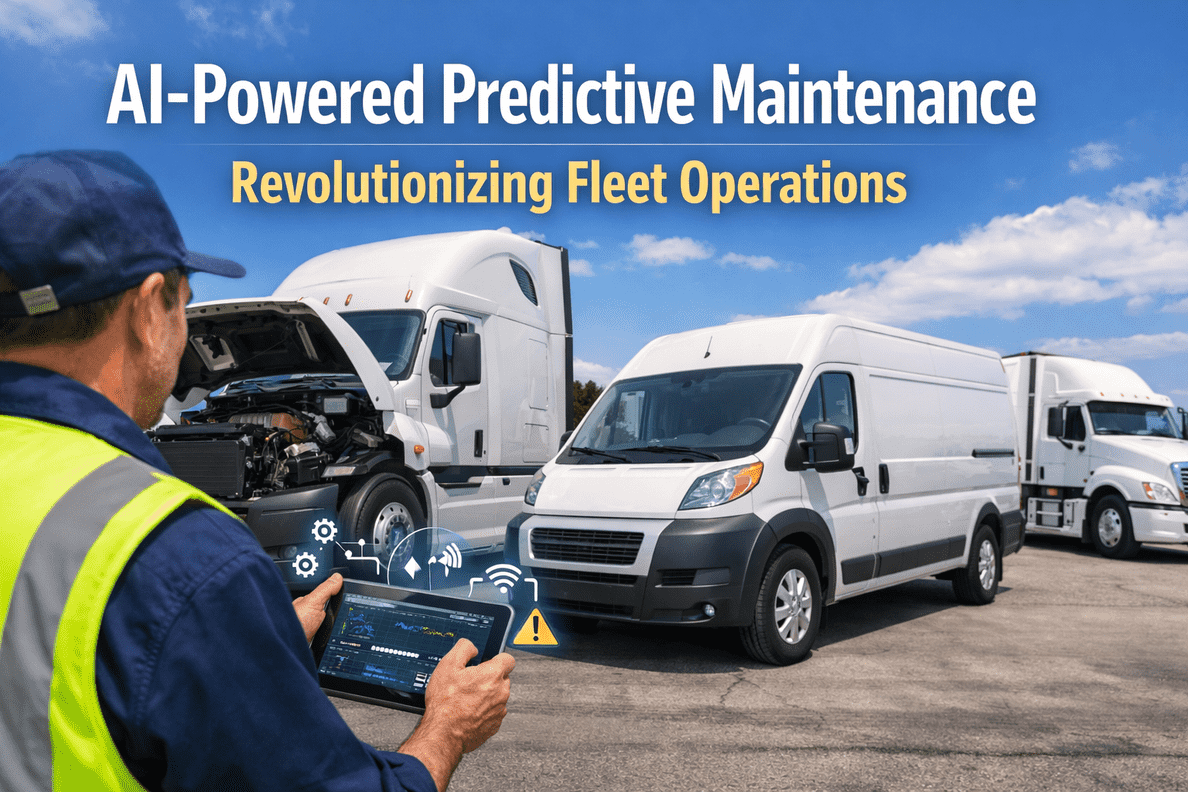
AI fleet maintenance software uses machine learning, IoT sensor data, and predictive analytics to shift fleet maintenance from time-based schedules and reactive repair to condition-based, failure-predicting intelligence. The system continuously monitors vehicle health across hundreds of parameters — engine diagnostics, oil quality, brake wear, tire pressure, battery voltage, transmission temperature — and calculates remaining useful life for each component. When a threshold is crossed, the system automatically generates a maintenance work order, schedules the intervention during planned downtime, and ensures parts are available before the technician arrives. In 2026, this is not emerging technology. It is operational necessity.
The 4-Stage AI Maintenance Intelligence Loop — From Sensor Signal to Prevented Failure
OxMaint's AI maintenance engine operates as a closed-loop system — data flows continuously from vehicle to platform to work order to technician, with every intervention feeding back into the model to improve future predictions. Here is each stage.





.png)