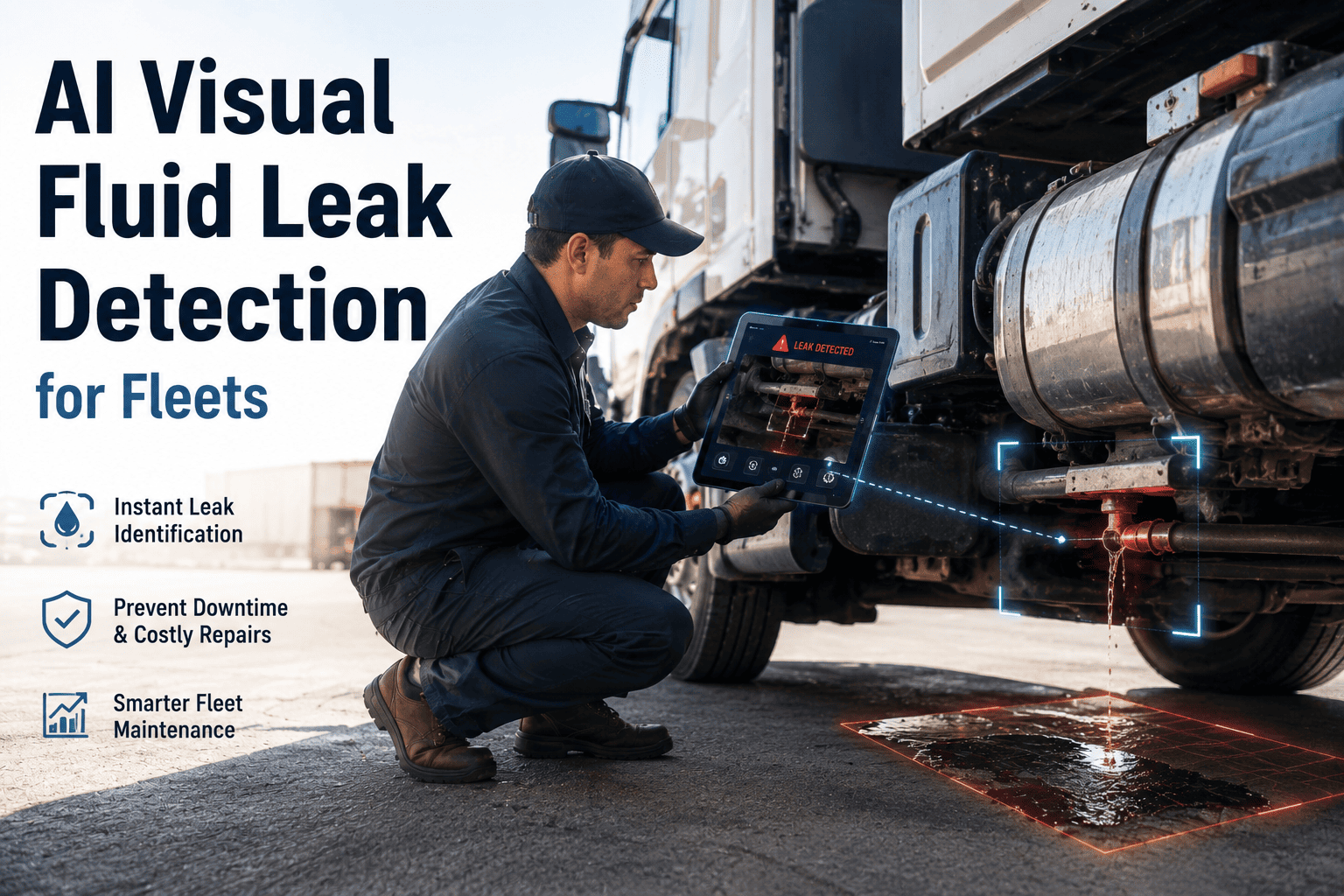
A refrigerated transport company in Georgia lost a $380,000 diesel engine to a catastrophic oil failure — not from a sudden blowout, but from a slow seep at a rear main seal that had been leaking for approximately six weeks before the oil pressure dropped to the point of engine shutdown on the highway. The vehicle had passed seven visual walkaround inspections in those six weeks. The leak had been present during every one of them, leaving a light oil staining pattern on the underside that was invisible on a quick underneath glance in normal depot lighting. AI fluid leak detection changes the detection physics entirely — cameras calibrated to identify fluid staining patterns, droplet formations, and puddle signatures under vehicles detect the kinds of developing leaks that produce catastrophic failures weeks later, while the repair is still a $200 seal replacement rather than a $380,000 engine. Sign in to OxMaint to activate AI fluid leak detection for your fleet, or book a demo to see how OxMaint identifies oil, coolant, hydraulic, and transmission fluid leaks at depot entry — before a slow seep becomes a catastrophic failure.
AI Fluid Leak Detection · Oil Leak · Coolant · Hydraulic · Fleet Inspection · OxMaint
Oil Seeps. Coolant Drips. Hydraulic Weeps. Transmission Leaks. AI Vision Detects Every Fluid Leak Your Walkaround Inspection Misses — While They Are Still Cheap to Fix.
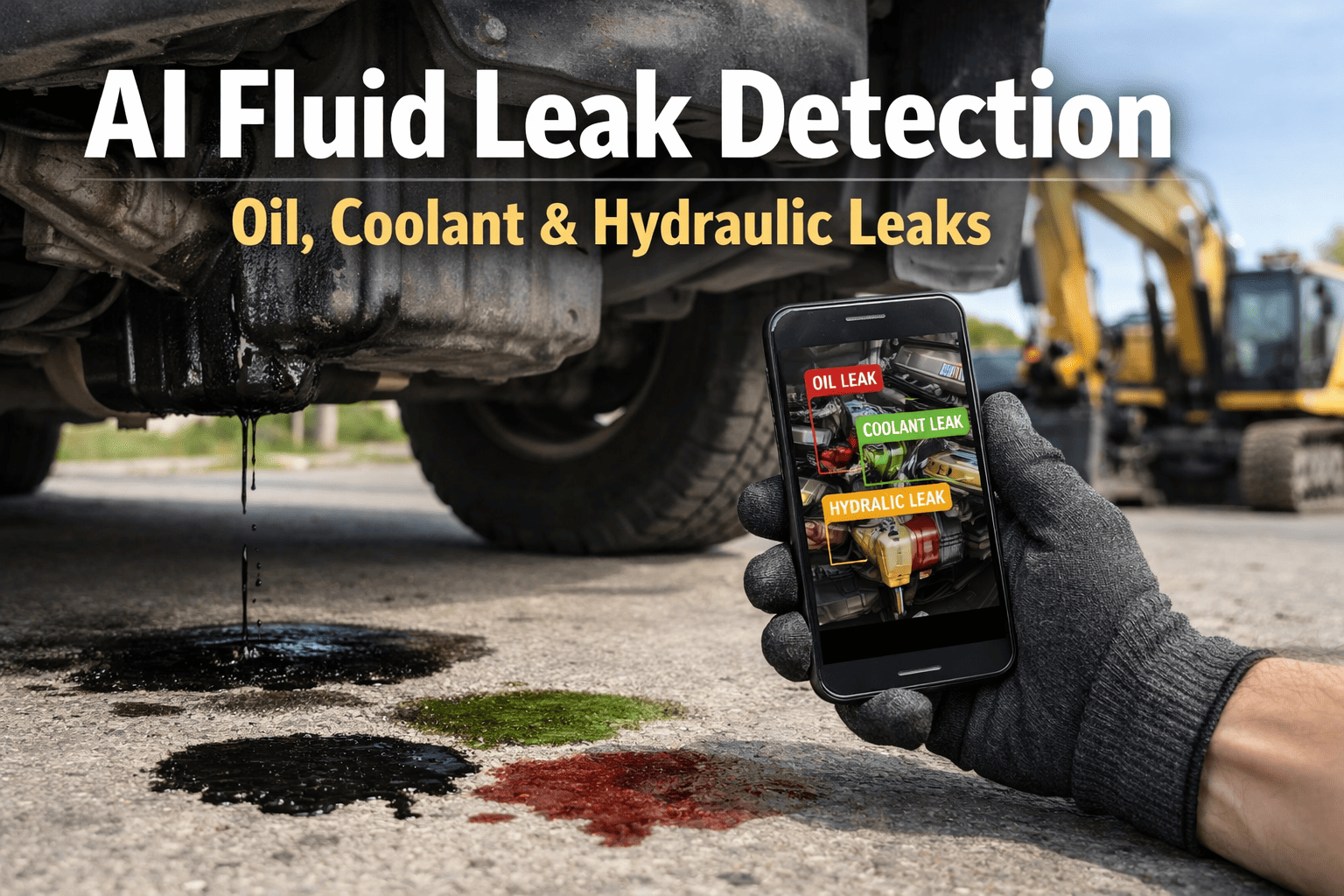
OxMaint's AI fluid leak detection cameras identify oil, coolant, hydraulic, and transmission fluid staining, drip patterns, and active leaks at depot entry — classifying leak type, estimating source location, and generating OxMaint work orders before slow seeps become engine failures, brake failures, or environmental violations.
68%
of fleet engine failures involving oil loss had a detectable slow leak present for more than 21 days before the failure event
$8,400
average cost difference between a seal replacement detected early vs. an engine failure caused by undetected oil loss — before towing and downtime
4 types
of fleet fluids AI vision classifies separately — oil, coolant, hydraulic, and transmission — each with distinct staining patterns the AI identifies by fluid signature
72%
of hydraulic fluid leaks in fleet vehicles are detected first by AI underbody cameras — invisible on top-down walkaround inspection
68%
The majority of fleet engine failures involving oil loss have a detectable slow leak present for 21 days or more before the failure — meaning the failure window for early intervention is wide open and routinely missed. Human walkaround inspections miss early-stage fluid leaks because the staining is faint, the vehicle underbody is dark and dirty, depot lighting is inconsistent, and inspectors have 3 minutes per vehicle, not 30. OxMaint AI cameras are calibrated to the specific optical signatures of oil, coolant, hydraulic, and transmission fluid staining on metal surfaces under depot lighting conditions — detecting leak evidence that a human inspector standing upright cannot see, at every depot entry for every vehicle in the fleet.
The Six Fluid Leak Failures That Are Costing Your Fleet the Most Right Now
Slow Oil Seeps Missed Until Engine Failure
Rear main seals, valve cover gaskets, and oil pan gaskets develop slow seeps that lose half a quart per week — below the driver's notice, above the repair threshold. AI detects the staining pattern before oil level drops to the warning stage.
Coolant Leaks Causing Overtemperature Events
Radiator hose weep points, water pump seals, and head gasket seepage lose coolant slowly — causing progressive overtemperature events that damage cylinder head surfaces before any warning light fires. AI detects coolant staining 3–4 weeks before the overtemperature event.
Hydraulic Leaks Creating Brake and Steering Risk
Brake hydraulic fluid leaks and power steering fluid seeps create immediate safety risks that develop invisibly on the underbody. A brake fluid weep that has been present for two weeks can become a partial brake failure under emergency braking load.
Transmission Fluid Leaks Causing Clutch Failure
Transmission pan gasket and output shaft seal leaks lose automatic transmission fluid slowly — damaging clutch packs and valve bodies before fluid level warning systems trigger. AI identifies ATF staining signature distinct from engine oil to direct the right repair.
Environmental Violation from Undetected Leaks
Vehicles with active fluid leaks drip at customer sites, public roads, and loading docks — creating EPA spill liability, customer relationship damage, and in regulated industries, potential compliance violations that a single AI leak detection programme prevents entirely.
Fuel Leak Safety Risk — Fire and Regulatory
Diesel fuel seeps from injector return lines, fuel filter housings, and tank vents create fire risk in the engine bay and regulatory violation risk under DOT fuel system inspection requirements. AI detects fuel staining signatures distinct from lubricant leaks to generate immediate safety alerts.
How OxMaint AI Identifies and Classifies Fleet Fluid Leaks
OxMaint Fluid Leak Detection Flow — Stain Detection to Work Order in Under 60 Seconds
Step 1 · Scan
Underbody Capture
Underbody cameras capture full underside as vehicle drives through — fluid staining, drip patterns, and active leak zones identified at depot speed
→
Step 2 · Classify
Fluid Type Identified
AI classifies staining by optical signature — oil, coolant, hydraulic, transmission, or fuel — and estimates source location from staining pattern geometry
→
Step 3 · Alert
Work Order + Severity
OxMaint generates a work order with leak type, estimated source, severity rating, and photographic evidence — with P1 safety alerts for hydraulic and fuel leaks
OxMaint AI Vision · Fleet Fluid Leak Detection
The Slow Seep That Will Destroy Your Next Engine Is Already Staining Your Vehicle's Underbody. OxMaint AI Sees It Today.
AI fluid leak detection at depot entry — oil, coolant, hydraulic, fuel — classified by type and source before the leak becomes a failure.
OxMaint AI Fluid Leak Detection — What the System Identifies and Tracks
Engine Oil Leak Classification — Source Estimation from Staining Pattern
Engine oil staining has a characteristic optical signature at specific lighting wavelengths — dark amber-brown coloration with surface tension spread patterns that AI identifies as distinct from transmission fluid and coolant. OxMaint's AI uses staining location geometry to estimate source — rear main seal, valve cover, oil pan gasket, or oil cooler — narrowing the repair scope before the vehicle reaches the workshop for confirmation.
Coolant Leak Detection — Pink, Green, and OAT Fluid Signatures
Coolant leaves a characteristic crystalline residue at the leak source and a distinct spreading pattern different from petroleum-based fluids. OxMaint AI identifies green, pink, and OAT coolant signatures separately — detecting water pump seep residue, radiator hose weep point staining, and head gasket seepage patterns that indicate different repair urgencies and are easily misidentified as water contamination in manual inspection.
Hydraulic and Brake Fluid Detection — P1 Safety Alert Generation
Hydraulic brake fluid and power steering fluid leaks generate immediate P1 priority alerts in OxMaint — bypassing normal work order queue to notify the fleet manager directly. The AI differentiates hydraulic fluid from engine oil by staining colour, spread pattern, and location geometry. Brake hydraulic leaks at any wheel cylinder or caliper area generate an immediate out-of-service recommendation until inspection is completed.
Transmission Fluid Leak Identification — ATF vs. Gear Oil Distinction
Automatic transmission fluid and manual gearbox oil have distinct viscosity, colour, and spread characteristics that OxMaint AI differentiates — directing the work order to the correct repair category rather than generating a generic "oil leak" finding that leaves technicians guessing. ATF leaks at the transmission pan suggest gasket failure; output shaft seal staining suggests a different repair and indicates potential axle involvement if the leak has migrated.
Fuel System Leak Detection — Immediate Safety Response
Diesel and gasoline fuel leaks generate distinctive evaporative patterns and optical signatures that OxMaint AI classifies separately from lubricant leaks — triggering immediate safety alerts that flag the vehicle for out-of-service inspection before it re-enters traffic. Fuel leak detection at a hot engine area generates an immediate priority escalation — these are not work order items, they are vehicle stops.
Leak Trend Tracking — Volume and Progression Monitoring
OxMaint records the leak staining extent at each inspection and tracks progression — a minor seep that grows by 20% per week generates an escalating alert as the leak rate accelerates. Trend tracking allows maintenance engineers to prioritise leak repairs by progression rate — a fast-growing minor coolant seep may jump the queue ahead of a stable small oil drip that has not changed in three inspection cycles.
Fluid Leak Risk by Type — Severity Classification and OxMaint Response
Risk Level · P1
Hydraulic & Brake Fluid
Any brake hydraulic or steering fluid leak generates an immediate out-of-service recommendation. OxMaint alerts the fleet manager directly — no queue, no delay.
Risk Level · P1
Fuel System Leaks
Fuel staining near hot engine components generates fire risk classification. OxMaint generates a P1 safety alert and out-of-service flag before the vehicle receives dispatch clearance.
Risk Level · P2
Engine Oil & Coolant
Engine oil and coolant leaks are classified P2 — scheduled for same-day or next-day repair based on progression rate. Vehicles operate with monitoring until repair window, not immediate out-of-service.
Trended
progression tracked
AI Fluid Leak Detection — Coverage by Fluid Type and OxMaint Response
68%
of fleet engine failures involving oil loss had detectable early leaks — all preventable with AI depot inspection identifying seeps 21+ days before failure
$8,400
average repair cost difference between AI-detected early seal replacement and undetected-leak-to-engine-failure — before towing and downtime costs
100%
of hydraulic and fuel leaks detected by OxMaint AI generate immediate P1 alerts — zero safety-critical leaks waiting for the next scheduled inspection
The engine failure that will cost you $380,000 next quarter started as a $200 seal replacement six weeks ago. The leak is already there — the only question is whether your inspection system is seeing it.
OxMaint AI fluid leak detection catches every seep, drip, and stain at every depot entry — classified by type, trended over time, and converted into work orders before the cheap fix becomes a catastrophic repair.
We used to lose two or three engines a year to oil loss failures that nobody caught in inspection. After installing OxMaint AI leak cameras at our two main depots, we've had zero engine oil failures in 14 months. The AI caught eleven developing seal leaks in the first quarter alone — every single one a repair we did on the weekend before the truck went out Monday. Every repair was under $600. We used to budget $90,000 a year for oil-loss engine damage. That budget line is gone.
— Director of Fleet Maintenance, Refrigerated Carrier · Georgia · 215-vehicle fleet · OxMaint user since 2023
Frequently Asked Questions — AI Fluid Leak Detection for Fleet Maintenance
How does OxMaint AI distinguish between different fluid types — oil vs. coolant vs. hydraulic?
OxMaint AI uses multispectral optical analysis — different fluids have distinct reflectance signatures, spread patterns, and crystalline residue characteristics at specific imaging wavelengths. Engine oil, coolant, ATF, and hydraulic fluid each produce distinct staining signatures that AI classifies correctly at depot inspection lighting levels without requiring fluid sampling.
Sign in to OxMaint to configure fluid classification thresholds for your fleet.
Can OxMaint AI detect leaks on vehicles with heavy underbody contamination from road grime and grease?
Yes. OxMaint uses calibrated lighting at specific wavelengths that penetrate surface grime layers to identify fluid staining beneath contamination — detecting early-stage leaks on vehicles that have not been washed, which is the reality for most commercial fleet vehicles between scheduled wash cycles. High-contamination vehicles are flagged for confirmation inspection if AI confidence score is below threshold.
How does OxMaint handle a hydraulic brake fluid leak detection — what happens immediately?
Hydraulic brake fluid and fuel leak detections generate P1 safety alerts that bypass the normal work order queue — notifying the fleet manager and dispatcher simultaneously that the specific vehicle requires inspection before it receives dispatch clearance. The alert includes the photographic evidence, estimated leak source, and a recommended out-of-service flag that the manager confirms or overrides with reason noted.
Does OxMaint track whether a repaired leak is resolved at the next inspection?
Yes. OxMaint AI compares the leak staining pattern at each post-repair inspection against the pre-repair baseline — confirming whether the staining has resolved, reduced, or persisted. Persistent staining after a repair generates a follow-up work order automatically, preventing the common outcome where a "repaired" seal continues to seep because the repair was incomplete.
What hardware does OxMaint AI fluid leak detection require at a depot?
OxMaint fluid leak detection requires underbody cameras installed in a floor-mounted array at the depot entry point — vehicles drive through at normal speed and the full underbody is captured without stopping. Installation is a one-time depot infrastructure project requiring approximately 4–6 hours for a standard two-lane entry configuration.
Book a demo to review hardware requirements for your depot layout.
The Leak That Will Destroy Your Next Engine Is Already There. OxMaint Sees It Today.
AI fluid type classification. Underbody staining pattern analysis. P1 safety alerts for hydraulic and fuel leaks. OxMaint turns every depot entry into a complete fluid health check — so no seep gets 21 days to become a failure.