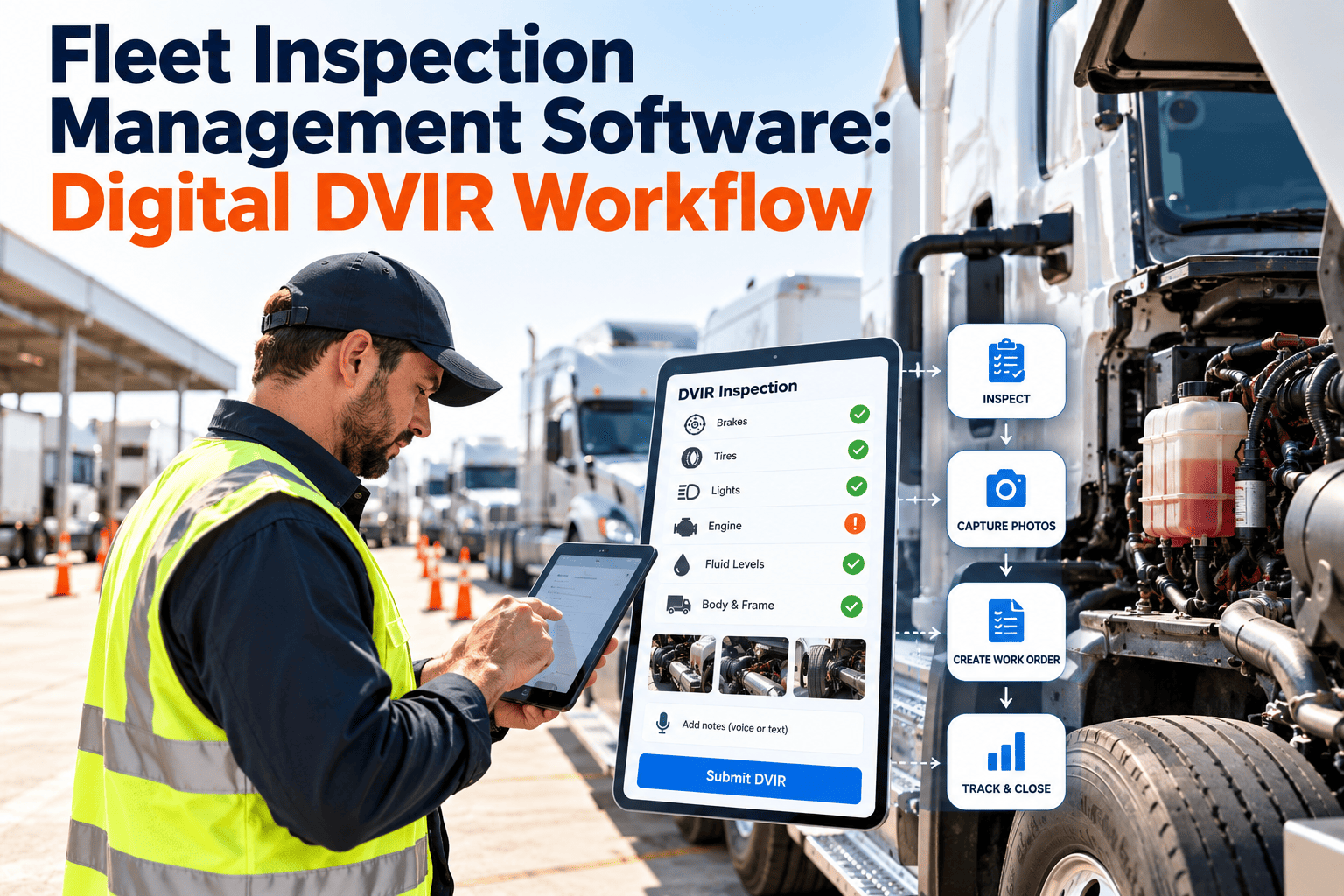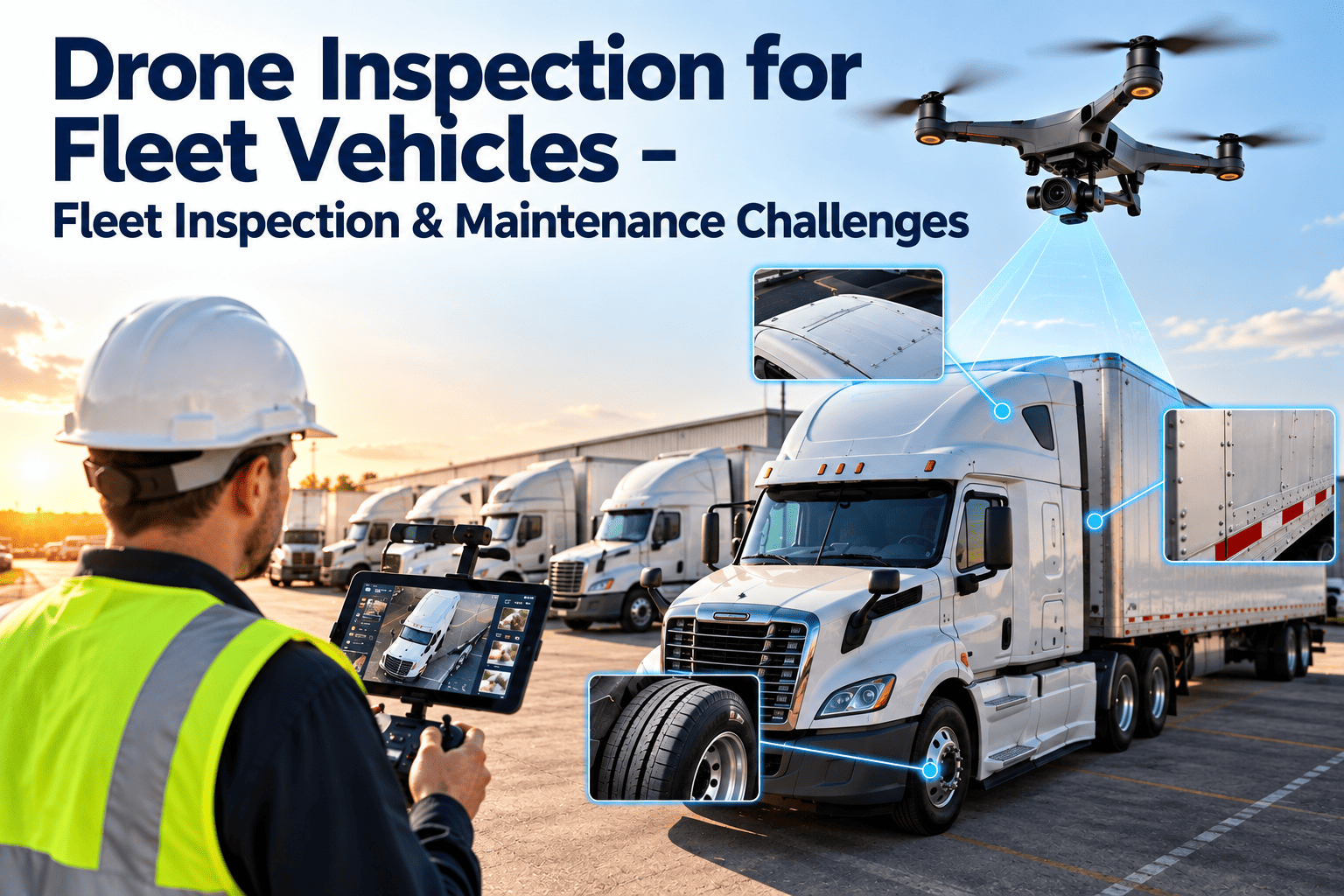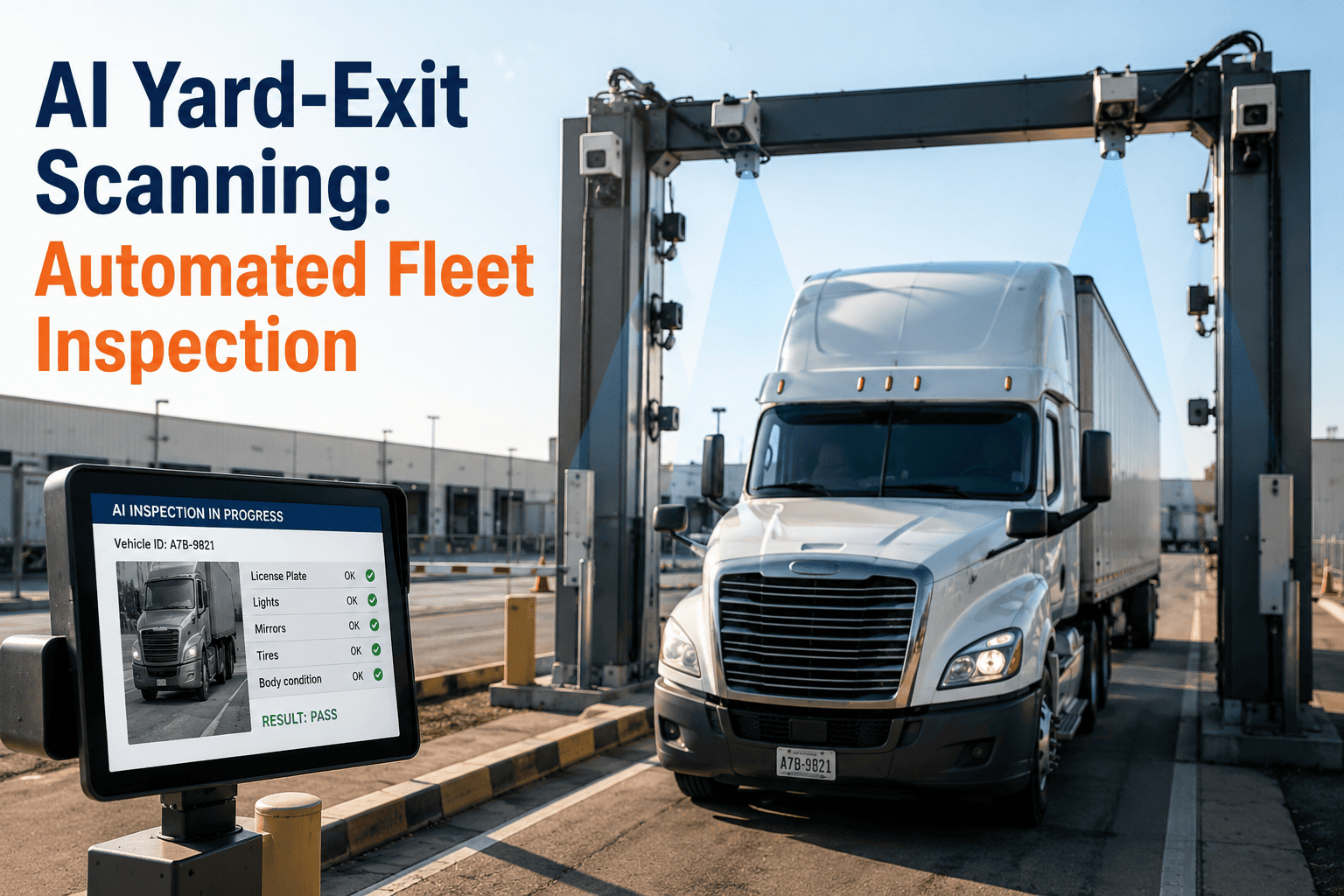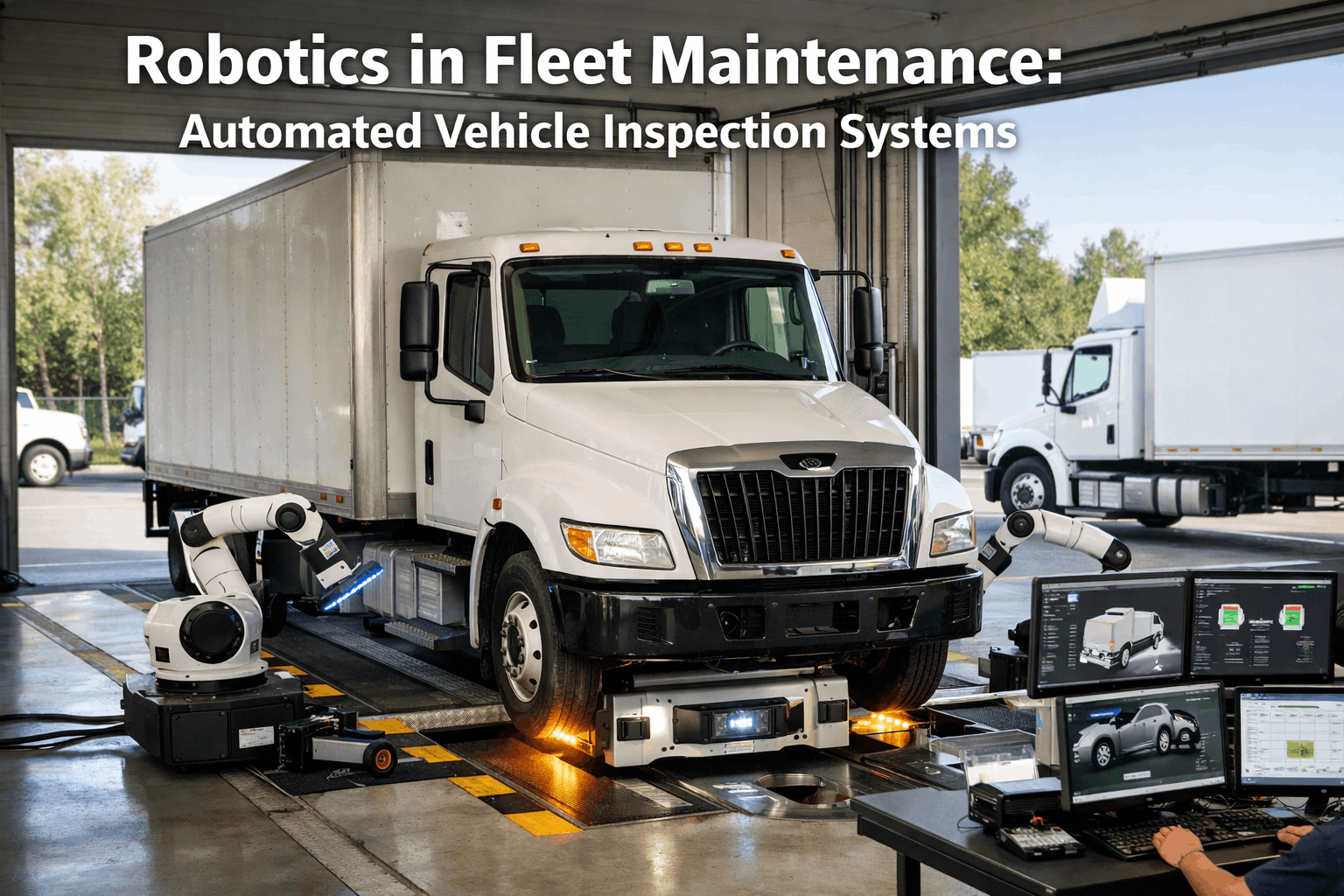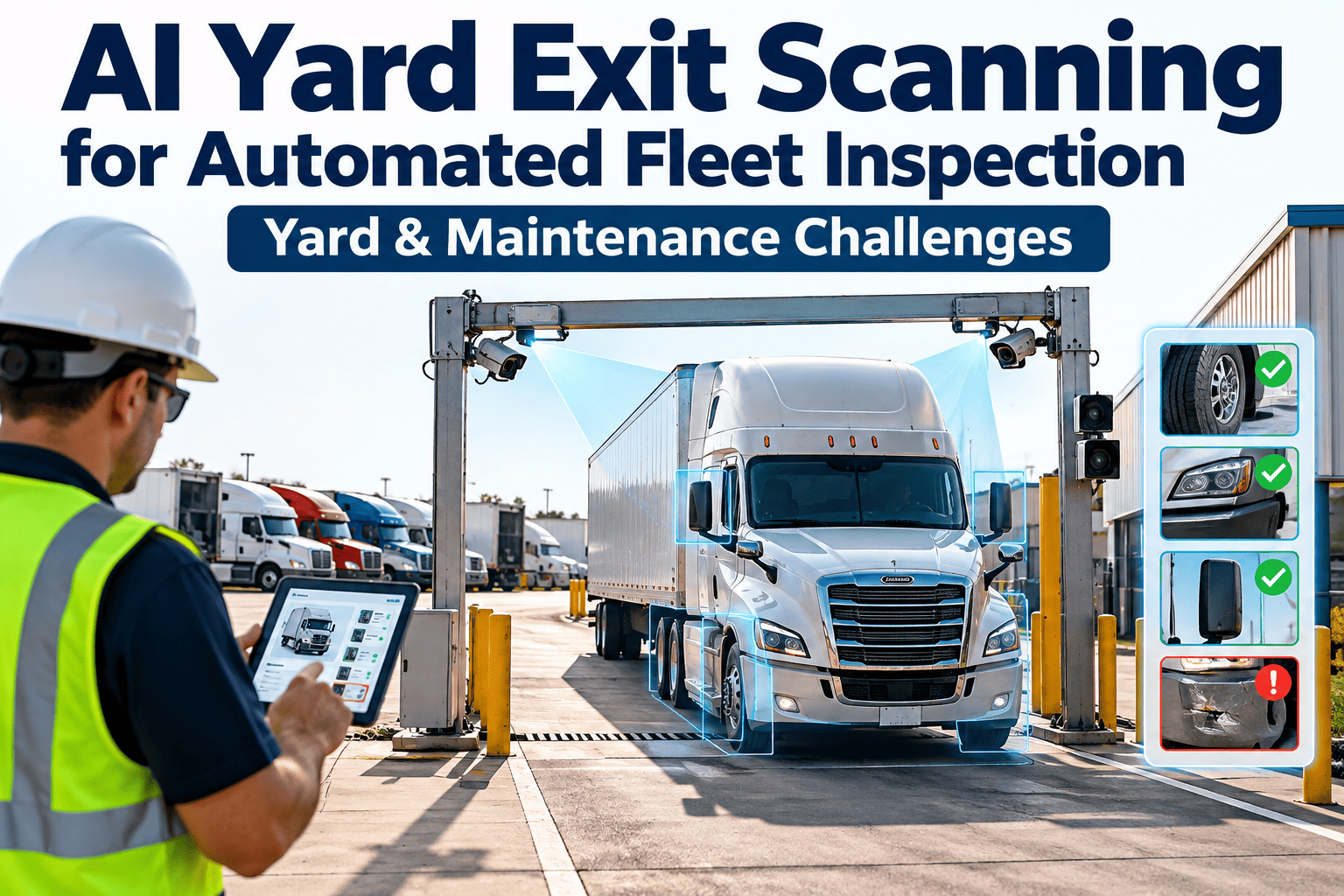
Every truck, van, or trailer that rolls out of a yard gate carries an invisible question: is it actually fit to be on the road right now, or is a cracked light lens, a leaking hydraulic line, or a worn tire about to turn into a roadside incident three hours into the route? For decades the answer depended on how thorough a driver's walkaround happened to be at 5 a.m. AI yard exit scanning changes that equation by putting a camera-based inspection checkpoint at the gate itself, and pairing it with maintenance software that can act on what the cameras find.
AI Yard Exit Scanning for Automated Fleet Inspection
Every vehicle scanned at the gate, every defect logged before dispatch, every finding routed straight into a maintenance work order — without adding a single minute to gate throughput.
Why the Yard Gate Is the Weakest Point in Fleet Inspection
Manual gate checks depend entirely on the person doing them. A rushed driver, poor lighting, or a queue of trucks waiting behind them all push inspection quality down at the exact moment a vehicle needs the closest look.
Undocumented Damage Liability
Tire scuffs, panel dents, and undercarriage damage that occur inside the yard or at a third-party dock often go unrecorded at exit. When the vehicle returns days later with the same damage, there is no timestamp proving where or when it happened, so the fleet absorbs a repair cost that was never theirs to begin with.
Inspection Time vs. Dispatch Pressure
A thorough manual walkaround takes eight to fifteen minutes. Dispatch teams measured on on-time departures create constant pressure to shorten that check, and the checks that get shortened first are the ones underneath the vehicle and around the tires — precisely the areas most likely to hide a defect.
Inconsistent Human Judgment
Two inspectors rarely apply the same standard to a borderline tire tread or a hairline body crack. Over hundreds of exits a week, that inconsistency means some defects that should stop a vehicle from leaving are waved through, while healthy vehicles occasionally get flagged unnecessarily.
No Link Between Finding and Fix
Even when a defect is written on a paper form, it frequently sits in a clipboard or an inbox before a technician sees it. The gap between "someone noticed a problem" and "a work order exists to fix it" is where preventable breakdowns are born.
How AI Yard Exit Scanning Works
Camera arrays mounted at the gate or drive-through lane capture every vehicle surface as it passes at normal speed, without requiring the driver to stop and pose for photos the way older inspection kiosks demanded.
Manual Gate Inspection vs. AI Yard Exit Scanning
| Factor | Manual Walkaround | AI Yard Exit Scanning |
|---|---|---|
| Time per vehicle | 8–15 minutes, longer at shift change | Seconds, vehicle keeps moving through the lane |
| Consistency | Varies by inspector, fatigue, and lighting | Same defect model applied to every vehicle, every time |
| Documentation | Paper form or memory, easy to dispute later | Timestamped, photo-backed, VIN-linked record |
| Path to repair | Manual handoff, often delayed by shift or location | Automatic work order routed to the shop instantly |
| Liability at handoff | Ambiguous — damage origin hard to prove | Clear — condition is recorded the moment the vehicle exits |
See what an automated exit scan would have caught last month
Most fleets are surprised by how much damage was already happening at the gate before they started measuring it.
Where Yard-Exit Damage Actually Comes From
Understanding root causes matters as much as detecting the damage itself, because it tells a maintenance team where to focus preventive effort rather than just reacting to findings one at a time.
- Third-party dock handling. Vehicles loaded or unloaded by outside crews take curb strikes, forklift contact, and dock-plate scrapes that never appear on the fleet's own paperwork.
- Yard congestion and tight turns. Dense yards with narrow lanes between trailers create repeated low-speed contact events that individually seem minor but accumulate into structural wear.
- Weather exposure during dwell time. Vehicles sitting for extended periods pick up corrosion, seal degradation, and tire flat-spotting that a rushed exit check is unlikely to notice.
- Driver handoffs between shifts. A defect that appears mid-route under one driver may not be reported until the vehicle changes hands, by which point its origin is impossible to trace.
Turning Exit Scans Into a Maintenance Program, Not Just a Camera Feed
A camera system that only produces alerts nobody acts on is not an inspection program — it is a liability archive. The value of yard exit scanning comes from what happens in the seconds after a defect is flagged.
Automatic Work Order Generation
When the scan detects a hold-for-repair defect, Oxmaint creates a work order immediately, attaching the flagged images, the VIN, the timestamp, and the specific component involved so a technician can start diagnosing before the vehicle even reaches the bay.
Asset History and Condition Trends
Every scan updates the vehicle's asset record, so a fleet manager can see whether a particular tire position or component keeps recurring across multiple exits — a pattern that a single inspection would never reveal on its own.
Mobile Technician Workflow
Technicians receive the flagged work order on a mobile device with photos already attached, cutting the diagnostic guesswork that normally comes from a vague paper description like "noise from rear."
Compliance-Ready Records
Because every scan is timestamped and stored against the vehicle record, DOT and insurance documentation is generated as a byproduct of normal operations rather than a scramble before an audit.
What Changes for a Fleet After Implementation
- Damage discovered days or weeks after it occurred
- Inspection quality drops during peak dispatch hours
- Disputes with third-party facilities go unresolved for lack of evidence
- Work orders created manually, often after a defect has already caused a failure
- Damage documented and attributed the moment the vehicle exits the gate
- Inspection quality is identical whether it is the first vehicle of the day or the two-hundredth
- Photo evidence settles liability disputes in minutes, not weeks
- Work orders exist before the vehicle reaches the shop, cutting diagnostic time
Frequently Asked Questions
Does AI yard exit scanning slow down gate throughput?
No. Vehicles pass through the scanning lane at normal low speed without stopping, which is faster than a manual walkaround that requires the vehicle to be parked and circled on foot.
What happens when a defect is flagged?
The finding is scored by severity and, if it meets the repair threshold, a work order is created automatically in the CMMS with attached photos so the maintenance team can act before the vehicle re-enters service.
Can exit scans replace driver walkaround inspections?
Exit scanning complements a driver's pre-trip inspection rather than replacing it — it adds an objective, camera-based layer that catches what a rushed or fatigued check can miss.
How does this data connect to preventive maintenance scheduling?
Recurring findings on the same vehicle or component feed into the asset's condition history, which a CMMS like Oxmaint can use to adjust preventive maintenance intervals rather than waiting for a fixed calendar date.
Is the damage evidence useful for third-party liability disputes?
Yes. Timestamped, VIN-linked photo evidence establishes exactly when a vehicle left the yard in a given condition, which is often the deciding factor in disputes with docks, drivers, or subcontractors.
Stop losing visibility at the gate
Connect yard-exit findings directly to your maintenance workflow and see every defect become a tracked work order instead of a forgotten note.