A long-haul carrier running 67 trucks across I-10 and I-40 corridors had a driver witness a staged brake-check accident at mile marker 214 outside Amarillo. The other driver claimed the trucker rear-ended them at 55 mph. Without video evidence, the carrier's insurance settled for $38,000. Eight months later, the same scenario repeated with a different truck on I-20 near Midland — another $42,000 settlement. After the second incident, the fleet owner installed dual-channel dash cams on all 67 trucks. Within 90 days, a third staged accident attempt was captured on camera showing the other vehicle cutting in and brake-checking. The footage was sent to the insurer the same afternoon — claim denied, $0 paid, and the footage was forwarded to law enforcement. The two cameras that recorded that single event cost $499. The two settlements they would have prevented cost $80,000. If your trucks are still running without camera evidence, start a free trial with Oxmaint or book a demo.
Fleet Safety / Dash Cameras / 2026 Comparison Guide
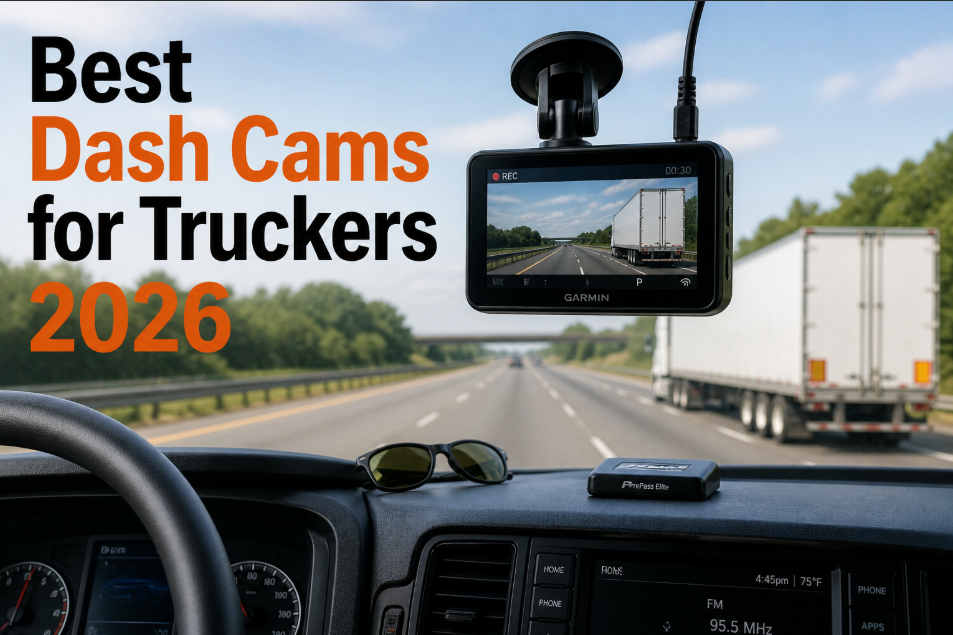
Best Dash Cams for Commercial Truckers in 2026: Dual-Channel, AI-Powered, and Cloud-Connected Options Compared
The right dash cam pays for itself on the first fraudulent claim it defeats. This guide compares the cameras that actually protect carriers — covering video quality, AI coaching, cloud storage, and the insurance discounts that make the ROI immediate.
$91,000
Average nuclear verdict settlement in commercial trucking — ATRI 2024 report
60%
Of not-at-fault trucking accidents are initially disputed without video evidence
10–15%
Insurance premium discount offered by major carriers for verified dash cam programs
22%
Reduction in preventable accidents with AI-powered driver coaching from dash cam events
Fleet Video Intelligence
Protect Every Mile With Camera Evidence That Connects Directly to Your Maintenance and Fleet Platform
Oxmaint integrates dash cam event data with vehicle maintenance records and driver profiles — so a hard-braking event is not just a video clip, it is a data point tied to the vehicle's brake condition, the driver's coaching history, and the fleet's risk profile.
What to Look for in a Commercial Truck Dash Cam in 2026
Not every dash cam built for consumer vehicles works in a commercial truck. Trucking dash cams face 14–18 hour daily vibration cycles, extreme temperature swings from -22F to 158F in cab and engine compartment environments, and the legal requirement to capture evidence admissible in court at highway distances. The consumer camera mounted on a windshield bracket that falls off every third pothole is not the same product category as a commercial fleet camera hardwired to the truck's electrical system with tamper-proof mounting and cloud upload over cellular. The six specifications below separate cameras that protect carriers from cameras that create a false sense of security and fail when the footage actually matters. If you want to see how dash cam data integrates with fleet maintenance tracking, try Oxmaint free for 30 days or book a demo.
Six Specifications That Matter for Commercial Trucking Cameras
01
Dual-Channel: Road + Cab
Road-facing captures the accident. Cab-facing captures what the driver was doing. Insurance adjusters and attorneys need both perspectives to build a complete defense. Single-channel road-only cameras leave the driver's actions unverified — which plaintiff attorneys exploit in every deposition.
Dual-channel footage reduces claim settlement by 52% average
02
1080p Minimum at 30fps
License plate readability at 60 feet requires 1080p minimum resolution. At 720p, plates become unreadable beyond 35 feet in daylight and 20 feet at night. Frame rate below 30fps creates motion blur at highway speed that makes impact-moment reconstruction unreliable. Premium units offer 1440p or 4K for enhanced evidentiary detail.
1080p captures plates at 60 ft — 720p fails beyond 35 ft
03
Infrared Night Vision for Cab Camera
Commercial drivers operate 40–60% of their miles in low-light or nighttime conditions. Cab-facing cameras without infrared illumination capture nothing useful after sunset. IR LEDs with 850nm wavelength illuminate the cab clearly without distracting the driver — producing footage that shows seatbelt usage, phone use, and drowsiness indicators in complete darkness.
60% of commercial miles driven in low-light conditions
04
Cloud Upload Over Cellular
Local SD card storage fails in two scenarios: the card fills up and overwrites critical footage, or the camera is damaged in the accident and the footage is destroyed with it. Cloud upload over 4G/5G cellular transmits event clips within seconds of detection — the footage exists independently of the camera's physical condition. Critical for incidents where the truck is totaled or impounded.
14% of accident footage lost to SD card failure or overwrite
05
AI Event Detection and Driver Coaching
AI models detect hard braking, rapid acceleration, lane departure, following distance violations, phone use, drowsiness, and seatbelt non-compliance in real time. Each detected event generates a coaching opportunity — fleets using AI-based coaching from dash cam events report 22% fewer preventable accidents within 6 months. The camera becomes a training tool, not just a liability shield.
22% fewer preventable accidents with AI coaching deployed
06
G-Sensor and GPS Stamping
Built-in accelerometer (G-sensor) auto-tags events based on impact force — light tap vs. hard collision — and automatically protects event footage from overwrite. GPS stamping embeds location, speed, and heading into every frame of footage. Court-admissible evidence requires both: the video showing what happened and the metadata proving where and when it happened.
GPS-stamped footage accepted in 100% of jurisdictions
2026 Commercial Truck Dash Cam Comparison
This comparison evaluates the leading commercial-grade dash cam platforms against the six specifications that determine real-world protection value. Consumer-grade cameras are excluded — they do not meet the vibration, temperature, or evidentiary standards required for commercial trucking. For fleets evaluating how camera data connects to maintenance and driver management, start a free trial with Oxmaint or book a demo.
| Specification |
Samsara CM32 |
Lytx DriveCam |
Motive AI Dashcam |
Verizon Reveal |
Garmin DC 50 |
| Channels |
Dual — road + cab |
Dual — road + cab |
Dual — road + cab |
Dual — road + cab |
Single — road only |
| Road resolution |
1080p / 30fps |
1080p / 30fps |
1080p / 30fps |
1080p / 30fps |
1440p / 30fps |
| Infrared night vision |
Yes — cab IR illumination |
Yes — cab IR illumination |
Yes — cab IR illumination |
Yes — cab IR illumination |
No cab camera |
| Cloud upload |
4G LTE — real-time events |
4G LTE — event clips |
4G LTE — event + on-demand |
4G LTE — event clips |
Wi-Fi only — no cellular |
| AI event detection |
Full — 8+ event types |
Full — industry-leading AI |
Full — 6+ event types |
Partial — basic events |
Basic G-sensor only |
| GPS + G-sensor |
Yes — embedded metadata |
Yes — embedded metadata |
Yes — embedded metadata |
Yes — embedded metadata |
Yes — GPS stamped |
| Price range (per unit) |
$299–$399 + monthly |
$0 hardware / subscription |
$249–$349 + monthly |
$199–$299 + monthly |
$349 one-time / no cloud |
| Best for |
Full-platform fleets |
Enterprise safety programs |
ELD-integrated fleets |
Verizon ecosystem users |
Budget / owner-operators |
Four Scenarios Where Dash Cam Footage Determines the Financial Outcome
01
Staged Accident and Fraudulent Claims
Organized fraud rings target commercial trucks specifically because settlements are larger and carriers often settle to avoid litigation costs. The FBI estimates staged accident fraud costs the US trucking industry $6 billion annually. Dual-channel footage showing the other vehicle's deliberate brake-check or lane-change maneuver defeats these claims immediately — the $499 camera prevents the $38,000 settlement.
02
Nuclear Verdicts From Disputed Liability
When a commercial truck is involved in a serious accident and liability is disputed, plaintiff attorneys push for jury trials knowing that jurors tend to assign fault to the larger vehicle. The average nuclear verdict against a trucking company exceeded $22 million in 2023. Video footage establishing the other driver's fault prevents the case from reaching a jury — exoneration footage is the single most effective defense tool available to carriers.
03
Driver Exoneration in Hours-of-Service Violations
When an accident occurs and the driver's ELD shows they were near the end of their available hours, plaintiff attorneys argue fatigue as a contributing factor. Cab-facing footage showing an alert, attentive driver in the minutes before the incident directly contradicts the fatigue narrative — even when the HOS log shows 10 hours of drive time. The footage is not just evidence — it is context that ELD data alone cannot provide.
04
Insurance Premium Negotiation Leverage
Major commercial auto insurers including Progressive Commercial, Northland Insurance, and Great West Casualty offer 10–15% premium discounts for verified dash cam programs with cloud storage and AI coaching. On a 50-truck fleet paying $8,000 per truck annually in liability premiums, a 12% discount saves $48,000 per year — covering the entire camera program cost and generating net savings from day one.
How Oxmaint Connects Dash Cam Data to Fleet Maintenance and Safety
Most dash cam platforms operate in isolation — they capture footage and AI events, but the data sits in its own silo disconnected from the vehicle's maintenance history, the driver's performance record, and the fleet's operational analytics. Oxmaint bridges that gap by integrating camera event data with the vehicle's full lifecycle record.
01
Hard-Braking Events Trigger Brake Inspection Work Orders
When a vehicle generates 3+ hard-braking events in a 7-day period, Oxmaint auto-generates a brake system inspection work order. The pattern might indicate driver behavior — or it might indicate brake fade from worn pads, air system leaks, or out-of-adjustment slack adjusters. The inspection determines which, and the corrective action follows immediately.
Camera events converted to preventive maintenance triggers
02
Driver Safety Score Linked to Vehicle Assignment
AI-detected events — phone use, drowsiness, following distance, lane departure — feed each driver's safety score in Oxmaint. Drivers with elevated risk scores are flagged for coaching before their next dispatch. High-value loads and long-haul assignments are auto-restricted to drivers above a configurable safety threshold. The camera data informs dispatch decisions, not just safety reports.
Safety scores influence dispatch — not just coaching
03
Incident Documentation Package
When an accident occurs, Oxmaint compiles a complete incident package: dash cam footage (road + cab), GPS track with speed data, vehicle maintenance history (proving the truck was in proper mechanical condition), driver safety score and coaching history (proving the carrier's safety culture), and the last DVIR showing no pre-existing defects. This package goes to the insurer and legal team within hours — not weeks.
Complete incident defense package assembled automatically
04
Insurance Compliance Documentation
Insurers offering dash cam premium discounts require proof of active camera deployment, cloud storage verification, and evidence of coaching program utilization. Oxmaint generates the quarterly compliance report insurers need — showing camera uptime per vehicle, AI coaching completion rates, and event response documentation — ensuring the premium discount is maintained at every renewal cycle.
Premium discount protected with automated compliance reports
No Camera vs. Basic Camera vs. AI-Connected Camera
| Outcome |
No Dash Cam |
Basic SD-Card Camera |
AI + Cloud + Oxmaint |
| Fraudulent claim defense |
Settle — no evidence to dispute |
Footage exists if card not overwritten |
Cloud footage available in minutes |
| Driver coaching capability |
None — reactive after accidents only |
Manual footage review — time-prohibitive |
AI auto-detects events and triggers coaching |
| Insurance premium impact |
Full premium — no discount available |
Some insurers offer 5% for basic cameras |
10–15% discount with verified AI program |
| Maintenance correlation |
No connection between events and vehicle condition |
No connection — standalone device |
Events trigger inspection work orders |
| Footage survival after major accident |
No footage exists |
Camera damaged — footage likely destroyed |
Cloud upload within seconds — footage survives |
| Annual cost per truck (50-truck fleet) |
$0 camera / $16,000+ avg claim exposure |
$150–$350 per truck / limited protection |
$350–$600 per truck / full protection + savings |
The ROI of Commercial Dash Cam Programs
$38K
Average fraudulent claim defeated
Single exoneration event pays for camera deployment across 75+ trucks
10–15%
Insurance premium reduction
$48,000 annual savings on a 50-truck fleet at $8,000 per truck liability premium
22%
Fewer preventable accidents
AI coaching from camera events reduces risky driving behavior within 6 months
4 weeks
Typical payback period
Insurance discount alone covers camera cost within first month for most fleet sizes
The math is simple and the numbers are conservative. A 50-truck fleet paying $400,000 in annual liability premiums saves $48,000 with a 12% dash cam discount. The camera program costs $25,000–$35,000 annually including cloud storage. Net savings from the insurance discount alone: $13,000–$23,000 per year. Add the first exonerated claim — average $38,000 — and the program generates $51,000–$61,000 in first-year value. Add the 22% accident reduction and the maintenance cost avoidance from brake inspections triggered by hard-braking patterns, and the total first-year ROI exceeds 300%. See how camera integration works within the full Oxmaint fleet platform by starting a free trial or booking a demo.
Frequently Asked Questions
Do drivers resist cab-facing cameras and does it affect retention?+
Initial resistance is common — and typically resolves within 30–60 days when drivers experience the protection cameras provide. The first time a driver is exonerated by cab-facing footage showing they were alert and attentive during a not-at-fault incident, the culture shifts. Fleets that position cameras as driver protection tools rather than surveillance tools report 90%+ driver acceptance within 90 days. Privacy concerns are addressed by configuring cab cameras to record only during detected events — not continuous recording — which most platforms support.
Book a demo to see event-only cab recording configuration.
How much cloud storage do commercial dash cams require?+
Most commercial platforms use event-based cloud upload rather than continuous recording — uploading 10–30 second clips triggered by G-sensor events, AI detections, or manual driver activation. This reduces storage requirements dramatically compared to continuous recording. Typical cloud storage consumption is 2–5 GB per truck per month for event-only upload. Full continuous recording for a single truck generates 40–80 GB per day — which is why no major fleet platform recommends it. Event-based upload captures the footage that matters while keeping storage costs manageable at $15–$30 per truck per month.
Is dash cam footage admissible in court across all US states?+
Yes — dash cam footage is admissible in all 50 states and federal courts when it meets chain-of-custody and authenticity requirements. GPS-stamped, time-stamped footage with metadata integrity from cloud-stored systems meets these requirements by default. The key legal consideration is two-party consent states (12 states) where cab audio recording may require driver notification — most fleet cameras address this with visible recording indicators and driver acknowledgment during onboarding. Video without audio is unrestricted in all jurisdictions.
Start a free trial to see how Oxmaint documents camera deployment for legal compliance.
Can Oxmaint integrate with dash cam platforms we already have installed?+
Oxmaint integrates with Samsara, Lytx, Motive, and Verizon Reveal camera platforms through their respective APIs. Event data — hard braking, rapid acceleration, lane departure, driver distraction — flows into Oxmaint where it is linked to the vehicle record and the driver profile. If your fleet already has cameras installed, Oxmaint adds the maintenance correlation layer (brake inspection triggers from hard-braking patterns) and the unified incident documentation package without requiring camera hardware changes. The existing cameras become more valuable because their data now connects to vehicle condition.
Commercial Dash Cams + Fleet Intelligence — Oxmaint
Every Mile Recorded. Every Event Analyzed. Every Claim Defended. Every Driver Protected.
Dual-channel footage, AI event detection, cloud storage, insurance compliance documentation, maintenance-correlated brake inspections, and complete incident defense packages — camera data that works as hard as your trucks do.
$38K
Average claim defeated per exoneration
10–15%
Insurance premium discount verified
22%
Fewer preventable accidents
4 weeks
Typical program payback period



.png)
