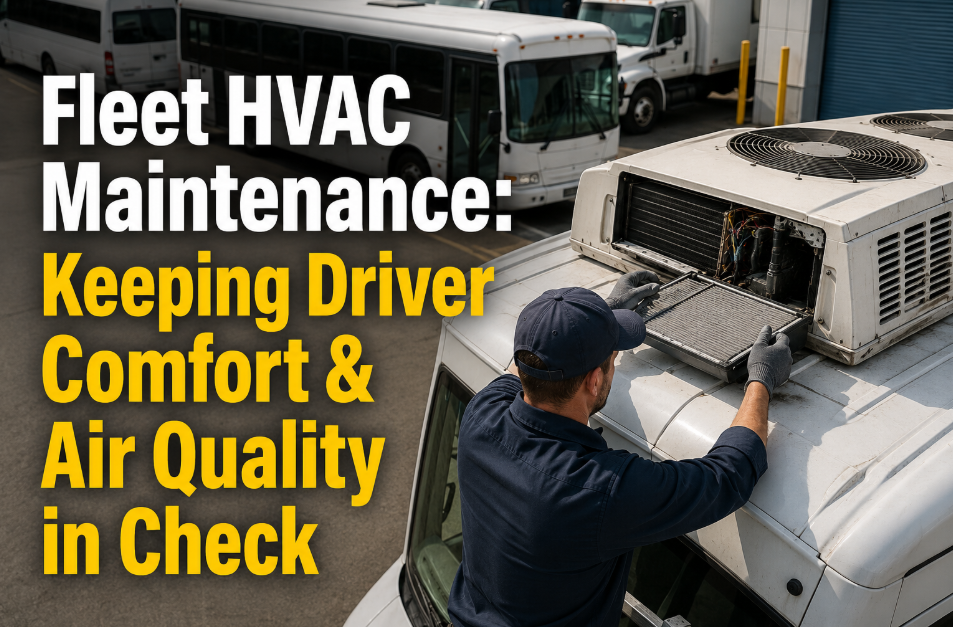
Fleet HVAC failures cost an average of $680 per repair — but the real damage is measured in driver turnover, not repair invoices. Drivers operating commercial vehicles with failed air conditioning during summer heat experience a 23% productivity drop, elevated fatigue-related accident risk, and dramatically higher quit rates. Replacing one experienced commercial driver costs $8,200-$12,400 when factoring in recruiting, onboarding, training, and the productivity ramp. With the professional driver shortage reaching 80,000 unfilled positions in the US alone, HVAC reliability has evolved from a comfort amenity into a strategic retention metric that directly affects fleet profitability. EPA Section 608 compliance adds another dimension — fines for uncertified refrigerant handling reach $44,539 per day per violation. Ready to automate HVAC scheduling, filter tracking, and EPA compliance documentation? Start a free trial with Oxmaint to deploy HVAC maintenance workflows across your fleet, or book a demo to see fleet climate system management in action.
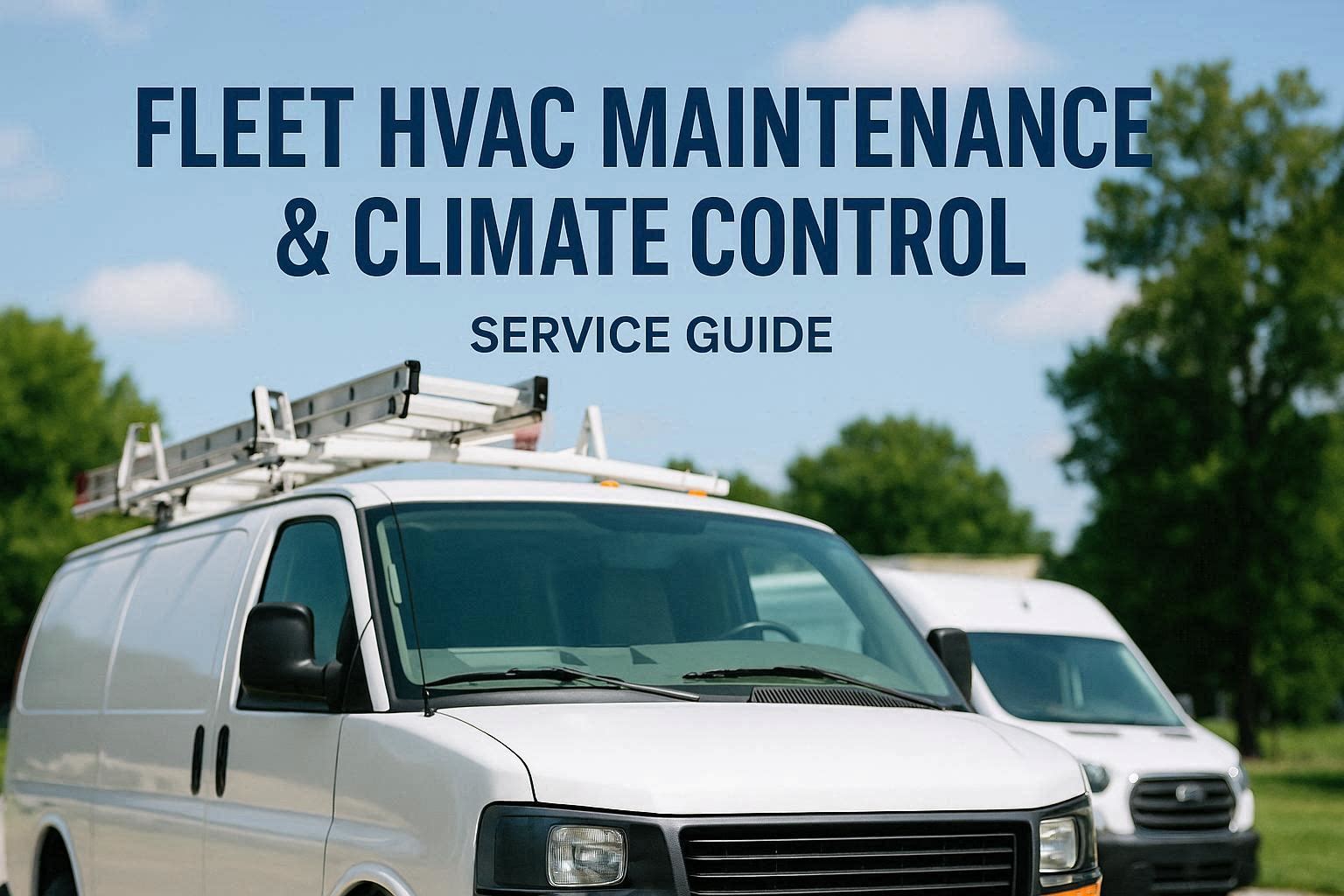
Fleet HVAC Maintenance: Keeping Driver Comfort and Air Quality in Check
HVAC service intervals, filter replacement schedules, refrigerant compliance, and CMMS automation strategies that protect driver retention, productivity, and EPA compliance.
Why HVAC Maintenance Is a Revenue and Retention Decision, Not Just a Comfort Issue
The driver shortage has fundamentally changed the economics of fleet HVAC. When experienced drivers can choose between employers based on equipment quality, a failed A/C system during a July highway run is not an inconvenience — it is a resignation catalyst. Surveys consistently show that 34% of drivers cite equipment condition as a primary factor in choosing an employer, and HVAC ranks as the number one comfort system that influences retention decisions.
Beyond retention, HVAC directly impacts safety. Heat stress contributes to 14% of trucking-related fatalities during summer months. Cold cab conditions in winter increase driver fatigue and slow reaction times. OSHA views preventable heat exposure as an employer liability — and a documented history of deferred HVAC repairs strengthens that case. The fleets with the best safety records and lowest turnover treat HVAC maintenance with the same discipline as brakes and tires. Oxmaint makes this achievable by automating seasonal HVAC PMs, tracking EPA 608 compliance, and ensuring no driver complaint goes unresolved — start a free trial to deploy HVAC tracking, or book a demo for a walkthrough.
HVAC Service Intervals by Component
| Component | Inspection Interval | Replacement Interval | Compliance Notes |
|---|---|---|---|
| Cabin Air Filter | Every PM cycle | 15,000-25,000 miles | Accelerate in dusty environments |
| Refrigerant Charge | Annually (pre-summer) | As needed per leak test | EPA 608 cert required to handle |
| A/C Compressor | Annually | 150,000-250,000 miles | Listen for clutch noise and bearing |
| Condenser | Quarterly fin cleaning | As needed (damage) | 30% blockage = 20°F+ temp rise |
| Blower Motor | Annually | As needed | Test all speed settings |
| Heater Core | Annually | 10+ year service life | Check for coolant leak under dash |
| Full HVAC PM | Spring + Fall | Bi-annual seasonal | Catches issues before peak demand |
6 HVAC Maintenance Points That Drive Reliability and Compliance
Replace filters at OEM intervals — sooner in dusty or construction environments. Clogged filters reduce airflow by 40%, overstress blower motors, and degrade in-cab air quality. Cost: $18-$45 per filter. Prevents $400+ blower motor failures.
Test clutch engagement, listen for bearing noise, and check shaft seal for refrigerant leaks. Compressor replacement runs $850-$1,800 plus labor and refrigerant recovery charges. Early detection of clutch wear prevents complete in-season failure.
Use electronic leak detection annually. EPA Section 608 mandates leak repair within 30 days for systems exceeding 125% annual leak rate. Only EPA-certified technicians may handle refrigerant — fines reach $44,539 per day per violation.
Clean condenser fins quarterly with low-pressure water. Bug carcasses and road debris block 30-50% of cooling capacity during summer. Inspect for bent fins from stone damage — straighten or replace damaged sections to maintain proper airflow.
Test all blower speed settings. Failed speed resistors are the number one HVAC repair on light-duty fleet vehicles. Listen for bearing wear in the blower motor — replace before complete failure leaves driver without any ventilation capability.
Inspect for coolant leaks under the dash — sweet smell indicates active leak. Heater core failure introduces steam into the cabin and depletes engine coolant, risking engine overheat. Test heater output temperature at full hot setting annually.
Reactive vs. Proactive HVAC Management
Automate HVAC Compliance, Protect Driver Retention, Eliminate EPA Risk
Oxmaint schedules seasonal HVAC PMs automatically, logs every refrigerant transaction with EPA-certified tech IDs, and escalates critical driver climate complaints before they become resignation events.
How Oxmaint Manages Fleet HVAC Maintenance End-to-End
Pre-summer A/C inspections and pre-winter heater checks fire automatically across the fleet at your configured seasonal dates. No driver complaints, no surprise failures during peak weather — proactive readiness every season.
Every refrigerant transaction logs the EPA-certified technician ID, amount recovered or charged, refrigerant type, and date. Records meet EPA 3-year retention requirements automatically and produce audit-ready reports on demand.
Cabin air filter replacements trigger on mileage and time intervals. Vehicles operating in dusty construction environments get accelerated schedules automatically. No more skipped filter changes that destroy blower motors.
Track recharge frequency per vehicle. Systems requiring multiple recharges per year flag for professional leak detection — preventing both ongoing EPA violations and performance degradation throughout the cooling season.
Drivers report HVAC issues through pre-trip DVIR forms with severity rating and photo evidence. Critical climate failures during extreme weather escalate immediately — preventing heat-related safety incidents before they happen.
Only technicians with active EPA Section 608 certification can be assigned refrigerant work orders. Expired certifications block assignment and trigger renewal alerts — eliminating compliance exposure entirely at the system level.
Measurable Results from Proactive HVAC Programs
Frequently Asked Questions
Does Oxmaint support EPA Section 608 recordkeeping requirements?
Yes. Every refrigerant transaction is logged with the EPA-certified technician ID, refrigerant type and amount, vehicle ID, and timestamp. Records meet EPA 3-year retention requirements automatically and export in audit-ready format on demand. Start a free trial to configure refrigerant compliance tracking.
Can we restrict refrigerant work to EPA-certified technicians only?
Yes. The platform validates EPA Section 608 certification status before assigning refrigerant work orders. Expired certifications block assignment and trigger renewal alerts automatically — eliminating the risk of uncertified handling that generates $44,539/day fines. Book a demo to see certification enforcement in action.
How does the platform handle seasonal HVAC PM scheduling?
Pre-summer and pre-winter HVAC PMs trigger automatically across the entire fleet at configurable calendar dates. Spring A/C inspections and fall heater checks deploy without manual scheduling effort — preventing the surprise mid-season failures that destroy driver satisfaction and productivity.
Can drivers report HVAC issues directly from their mobile device?
Yes. Pre-trip DVIR forms include HVAC defect reporting with photo evidence and severity ratings. Critical climate failures during extreme weather conditions escalate immediately to dispatch and shop teams — protecting driver safety and preventing equipment reliability from becoming a turnover driver.
Protect Driver Comfort, EPA Compliance, and Fleet Retention — Automate HVAC Today
Oxmaint automates seasonal HVAC PMs, enforces EPA 608 certification, and escalates driver climate complaints before they become resignation events. Join fleet operations teams across 40+ countries — free trial, no credit card required.