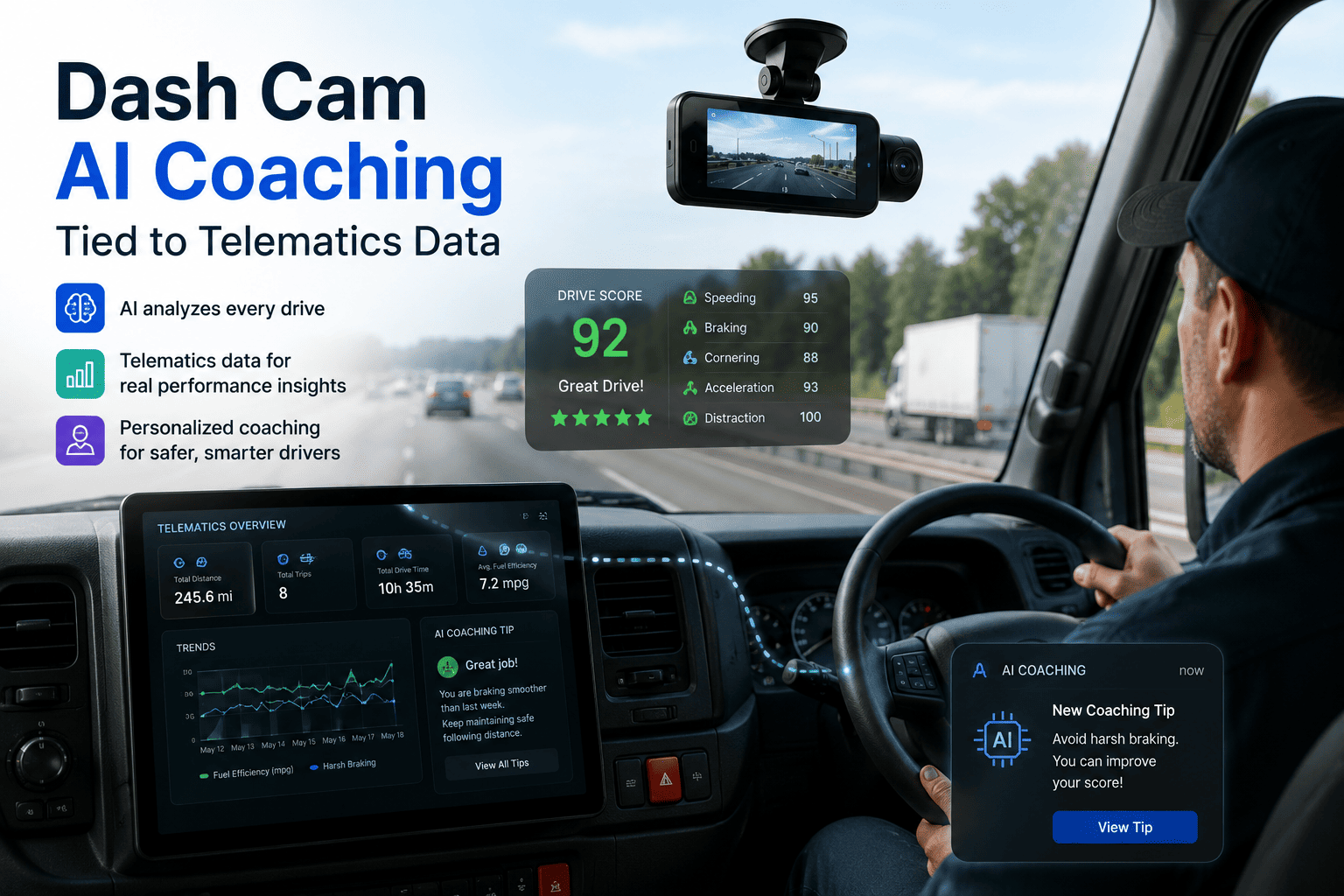
A dash cam sitting on a windshield is, by itself, an insurance artifact — it records what happened. Pair that same camera with AI that reads telematics data in real time and it becomes something else entirely: a behavior-change engine that quietly retrains every driver on your roster. The model is well documented now, with Start Free Trial fleets reporting 50–70% drops in risky-event frequency inside six months, and underwriters cutting premiums 5–15% for verified AI deployments. This guide walks through the deployment sequence, the coaching loop, and the carrier conversations that turn the hardware into a measurable line-item reduction.
DASH CAM TELEMATICS GUIDE 2026
Is your dash cam still just an insurance recorder — or is it actively coaching your drivers?
A camera watches. AI paired with telematics intervenes — detecting hard brakes, following-too-close, distracted driving and rolling stops within milliseconds, clipping 20–30 seconds of context, and routing each event into a coaching queue your supervisors can actually act on.
THE COACHING LOOP
How a 20-second clip becomes a measurable change in driver behavior
The loop is mechanical: detect, clip, score, route, review, coach. Each step removes a layer of ambiguity that used to turn coaching conversations into arguments about whose fault it was.
AI computer vision flags a risky event — hard brake, tailgating, phone use, lane departure, rolling stop — using telematics sensor data fused with the video feed.
The system isolates 20–30 seconds of video around the event and scores severity on a 0–100 scale, weighting g-force, duration, and object proximity.
The scored clip lands in a supervisor coaching queue, tagged by driver, vehicle, location, time, and event type — ready for triage.
Supervisor categorizes each clip: coachable event, one-off anomaly, or false positive. Pattern repeats get escalated; false positives tune the model.
An in-app message goes to the driver for first offenses; repeat patterns trigger a face-to-face conversation with the actual clip playing.
The driver sees their own clip in the app — converting a defensive argument into a factual 30-second review. Behavior shifts within weeks.
CAMERA vs. AI-COACHED CAMERA
Two deployments, two outcomes: the before-and-after
Most fleets already own cameras. The question is whether those cameras are doing anything between crashes. Here is the operational delta.
- Records continuously; reviewed only after a crash
- Insurance defense tool — proves what happened
- Zero behavior signal between incidents
- Coaching happens reactively, if at all
- Storage cost with no operational return
- No carrier premium credit available
- AI flags events in real time, clips automatically
- Behavior-change tool — prevents the crash
- Continuous risk signal per driver and vehicle
- Coaching is data-led, specific, and timely
- 50–70% event-frequency drop in 6 months
- 5–15% premium reduction from participating carriers
ROI BREAKDOWN
The compounding math of a verified AI dash cam deployment
Take a 120-vehicle fleet running regional routes. Average at-fault crash cost (including claim, downtime, and cargo) sits near $24,000. Here is what changes when AI coaching goes live.
A 180-truck regional fleet spending $42K/year on AI dash cam hardware and subscriptions documented 11 fewer at-fault crashes in year one, a 9% premium reduction from their carrier, and a 6% drop in fuel spend from reduced harsh braking. Net first-year savings: $231K against $42K cost — a 5.5× return. The coaching queue, staffed by one safety supervisor for 90 minutes a day, was the entire operational lift.
DEPLOYMENT SEQUENCE
A 90-day rollout that avoids the false-positive trap
The single biggest deployment failure is buying cheap cameras that flood the coaching queue with false positives until supervisors stop looking. This sequence prevents that.
Mount AI dash cams across the fleet, integrate with telematics, and run silent for 2–3 weeks. Collect baseline event frequency per driver without coaching — this becomes your benchmark.
Safety supervisor reviews every clipped event, marks false positives, and adjusts AI sensitivity thresholds. Goal: fewer than 15% false positives in the queue before coaching begins.
Launch in-app coaching messages for first offenses and face-to-face reviews for repeats. Measure event-frequency delta against the Month 1 baseline. Most fleets see a 25–35% drop by week 12.
PLATFORM LEADERS
The three AI dash cams worth deploying in 2026
Computer-vision quality is the difference between a usable coaching queue and one your supervisors ignore. These three platforms consistently produce false-positive rates under 12%.
| Platform | Strength | False-positive rate | Best fit |
|---|---|---|---|
| Samsara AI Dash Cam | Unified telematics + camera platform, strong fleet-wide analytics | ~8% | Mid-to-large fleets wanting one vendor |
| Motive AI Dashcam | Aggressive pricing, fast install, solid driver app | ~10% | Growth fleets and owner-operators |
| Lytx DriveCam | Decade of machine-learning data, deepest event library | ~7% | Enterprise fleets with dedicated safety teams |
| Generic / budget cameras | Low hardware cost | 30–45% | Not recommended — coaching queue becomes unusable |
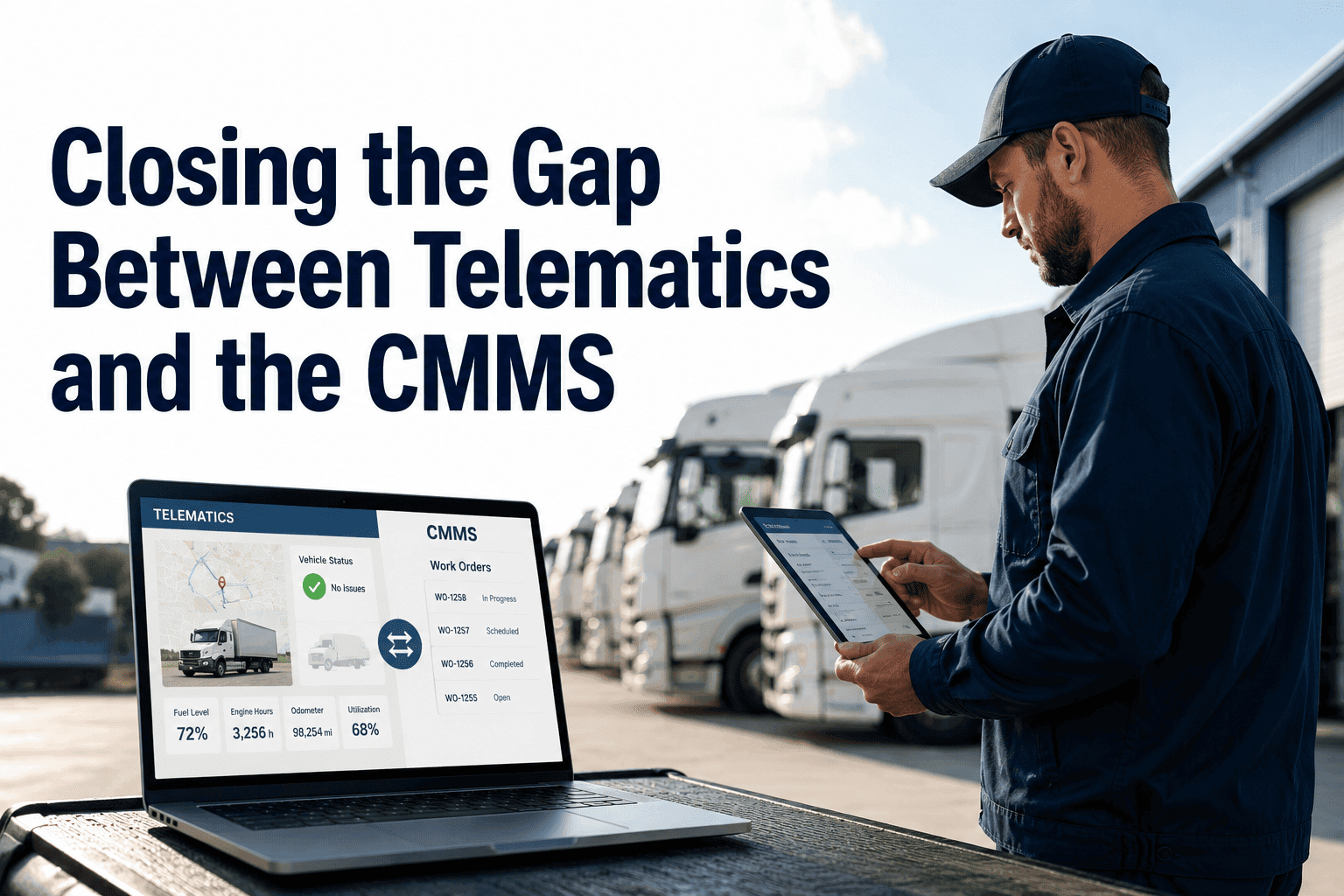
In Oxmaint, dash cam events attach to both the driver record and the vehicle record — so you can coach the individual and spot the truck with a worn brake sensor at the same time.
Turn your dash cams into a coaching system your underwriter will recognize.
Deploy AI dash cam coaching inside Oxmaint and attach every event to the driver and vehicle records that already power your maintenance workflow.
FREQUENTLY ASKED
What fleet managers ask before deploying AI dash cam coaching
Most fleets see a 25–35% reduction within the first 90 days of active coaching, with the full 50–70% drop materializing around month six as drivers internalize the feedback loop. The steepest decline happens in weeks 4–8, when drivers first realize the camera is coaching, not just recording.
Not if you buy the right platform. Quality AI dash cams from Samsara, Motive, or Lytx produce false-positive rates of 7–10%, meaning a 120-vehicle fleet generates roughly 30–50 reviewable clips per week. A single supervisor can triage that in 60–90 minutes daily. Budget cameras producing 30–45% false positives will flood the queue and should be avoided. You can Start Free Trial to see the Oxmaint triage workflow first.
Carriers require verified deployment — meaning active AI coaching, not just installed hardware. You will need to share event-frequency reports, coaching completion rates, and a per-driver risk score over a 3–6 month baseline. Most participating carriers want to see a documented coaching workflow and a measurable reduction trend before issuing the credit.
Initial resistance is normal and drops sharply once drivers see the app shows their own clips. The conversation shifts from a supervisor's opinion to a 20-second factual replay. Fleets that frame the program as crash-prevention and protection from false claims — rather than surveillance — see adoption rates above 90% within the first month.
Every AI-flagged event attaches to both the driver record and the vehicle record in Oxmaint. If a specific truck keeps triggering hard-brake events while other drivers in the same vehicle do not, that is a maintenance signal — worn brake pads, a sticking caliper, or a tire-pressure issue — not a coaching issue. To see this in action, Book a Demo and we will walk through a live vehicle-trend report.
Stop recording crashes. Start preventing them.
Deploy AI dash cam coaching in Oxmaint and turn every camera in your fleet into a behavior-change engine with a measurable payback period.
Free 14-day trial · No credit card



.png)