A fleet delivery driver approaches an intersection at 11:43 AM. The light turns yellow at 60 feet. The driver commits to the intersection — standard decision-making under time pressure. A vehicle runs the red light from the left, T-boning the delivery van. The other driver claims green light. No witnesses step forward. Without video evidence, the fleet's insurance carrier pays $180,000 in liability claims plus a 23% premium increase over three years — total cost: $310,000. Now imagine the same collision with an AI dash cam that captures 4K forward video, driver-facing footage showing attention on the road, and GPS speed data proving the delivery driver entered on yellow. The claim settles in 14 days with zero liability. That's the shift happening in fleet safety right now. Operators deploying AI-powered camera systems reduce at-fault accidents 40-60%, exonerate drivers in 70-85% of contested claims, and slash insurance costs 25-40% through documented safe driving behavior. Fleets ready to Sign Up connect camera events directly to driver coaching workflows that prevent accidents before they happen.
Accident Reduction
40-60%
Lower at-fault collision rates with AI-powered camera and driver monitoring systems
Driver Exoneration Rate
70-85%
Drivers cleared in contested claims with multi-angle video evidence
Insurance Cost Reduction
25-40%
Premium savings through documented safety performance and reduced liability
The Four Camera Deployment Gaps AI Vision Closes
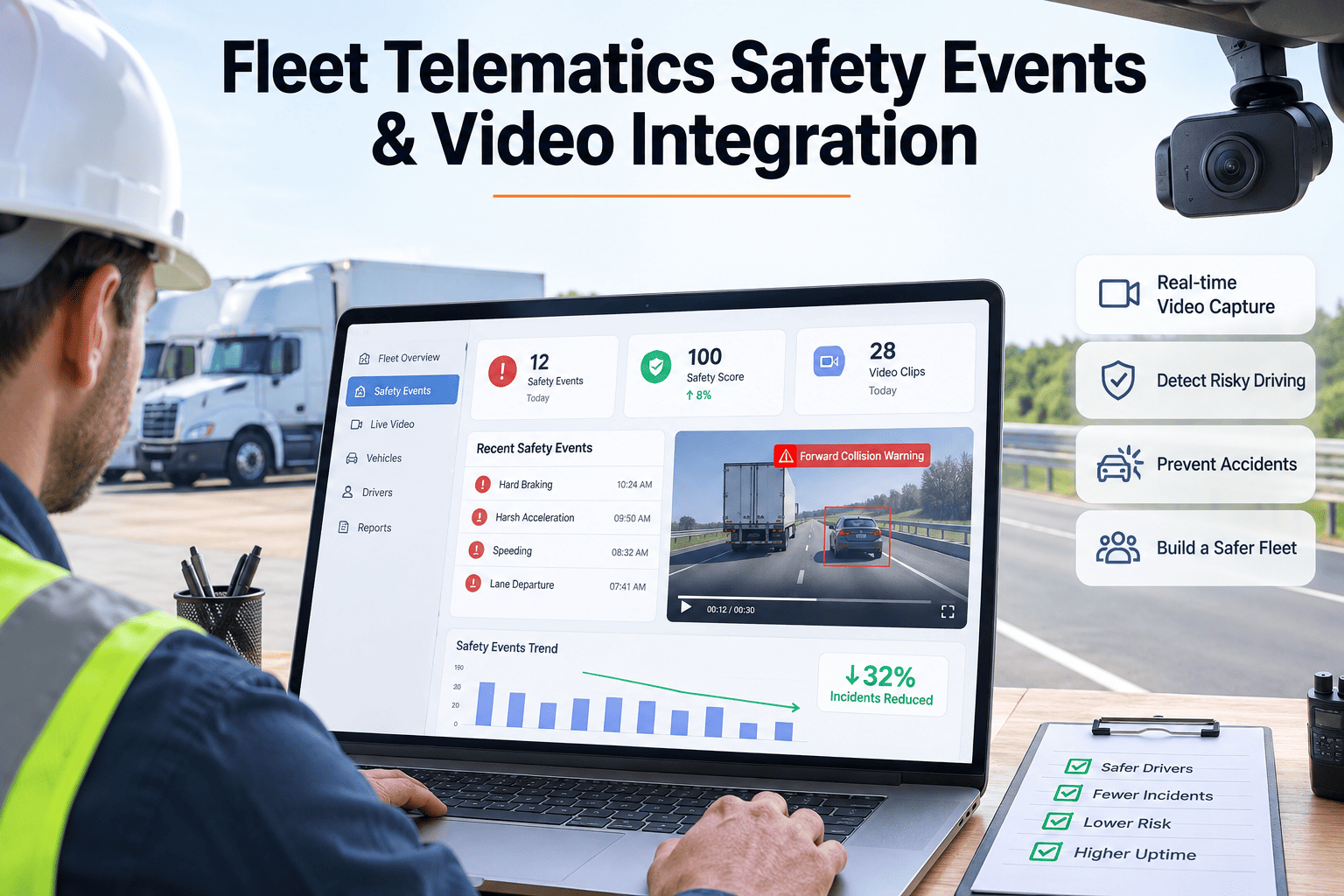
Traditional dash cams record continuously but require hours of manual review to find relevant events. They capture what happened but don't prevent incidents or provide real-time intervention. AI-powered camera systems don't just record — they detect, analyze, alert, and coach drivers in real-time while building the evidence library that protects fleets from fraudulent claims and liability exposure. Fleet managers using Book a Demo with Oxmaint's camera-integrated platform typically discover 5-8x more actionable safety events than manual video review captured.
1
Driver Behavior and Distraction
80% of preventable accidents
What AI Cameras Detect:
• Cell phone use (handheld, lap-looking, texting while driving)
• Drowsiness and fatigue indicators (eye closure, yawning, head nodding)
• Smoking, eating, drinking that indicates divided attention
• Seat belt non-compliance while vehicle in motion
CMMS Action: Oxmaint receives distraction alerts with video clip, auto-generates coaching assignment for fleet manager, tracks driver improvement over time for performance reviews.
2
Collision and Near-Miss Events
$75K avg. commercial accident cost
What AI Cameras Detect:
• Hard braking events indicating following too close or inattention
• Collision impact with automatic video preservation (30 sec before + after)
• Forward collision warnings when closing speed exceeds safe threshold
• Lane departure without signal indicating drowsiness or distraction
CMMS Action: Oxmaint preserves collision footage automatically, dispatches incident investigation workflow, integrates video with insurance claim documentation for rapid resolution.
3
Fraudulent Claims and Nuclear Verdicts
$1M+ nuclear verdict risk
What AI Cameras Detect:
• Pre-collision vehicle speeds, positions, and driver attentiveness
• Staged accident indicators (sudden braking, intentional swerving)
• Post-collision behavior (aggression, injury exaggeration, witness tampering)
• Road conditions, weather, visibility at time of incident
CMMS Action: Oxmaint creates instant evidence packages with GPS, speed, video clips, and driver behavior data — delivered to insurance and legal within 30 minutes of incident.
4
Driver Coaching and Retention
$8K-$12K per driver turnover
What AI Cameras Detect:
• Positive driving behaviors (smooth braking, safe following distance)
• Improvement trends showing training effectiveness and skill development
• Consistent performance allowing recognition and rewards programs
• Context for events (weather, traffic, time pressure) enabling fair coaching
CMMS Action: Oxmaint generates balanced scorecards showing positive and negative events, automates coaching workflows, tracks safety gamification programs for driver engagement.
Turn Road-Facing Cameras Into Proactive Safety Systems
Oxmaint connects AI camera detections to driver coaching workflows — so distracted driving, harsh events, and near-misses generate coaching assignments automatically instead of waiting for accidents to happen.
The Manual Review Gap: What Traditional Cameras Miss
Most fleet camera systems record continuously but require safety managers to manually review footage after incidents occur. Hours of video stored for every vehicle every day. Finding the relevant 30-second clip among 10 hours of driving takes 45-90 minutes per incident. AI cameras eliminate manual review by detecting events automatically, preserving only relevant footage, and generating instant coaching opportunities. Fleets implementing camera systems integrated with Oxmaint typically discover 8-12x more coachable events than manual review captured — because AI never gets tired, never misses subtle indicators, and monitors every driver every minute.
Manual Video Review vs. AI Event Detection
100-vehicle fleet • 8 hours avg daily operation • Safety manager 1 FTE
Daily footage generated (100 vehicles)
800 hrs
Impossible to review manually
Safety manager review capacity (per day)
3-4 hrs
0.5% of footage viewed
Time to find 30-sec event in 8-hr recording
45-90 min
Manual scrubbing, no search
AI automatic event detection and tagging
Real-time
100% coverage, instant access
Coachable events captured (manual review)
5-8/week
Only obvious incidents reviewed
Coachable events captured (AI detection)
40-90/week
Proactive safety improvement
AI Camera Technologies for Commercial Fleets
Not all camera systems are equal — and commercial fleet operations have specific requirements around driver privacy, cellular data usage, legal defensibility, and integration with fleet management platforms. The camera systems best suited for fleet deployment combine road-facing and driver-facing cameras, edge AI processing for real-time detection, and seamless integration with safety management workflows rather than isolated video archives.
Dual-Facing Dash Cameras with Edge AI
Forward and driver-facing cameras with onboard AI processing
✓ Road-facing 4K camera captures forward collisions, lane departures, traffic signals, pedestrians
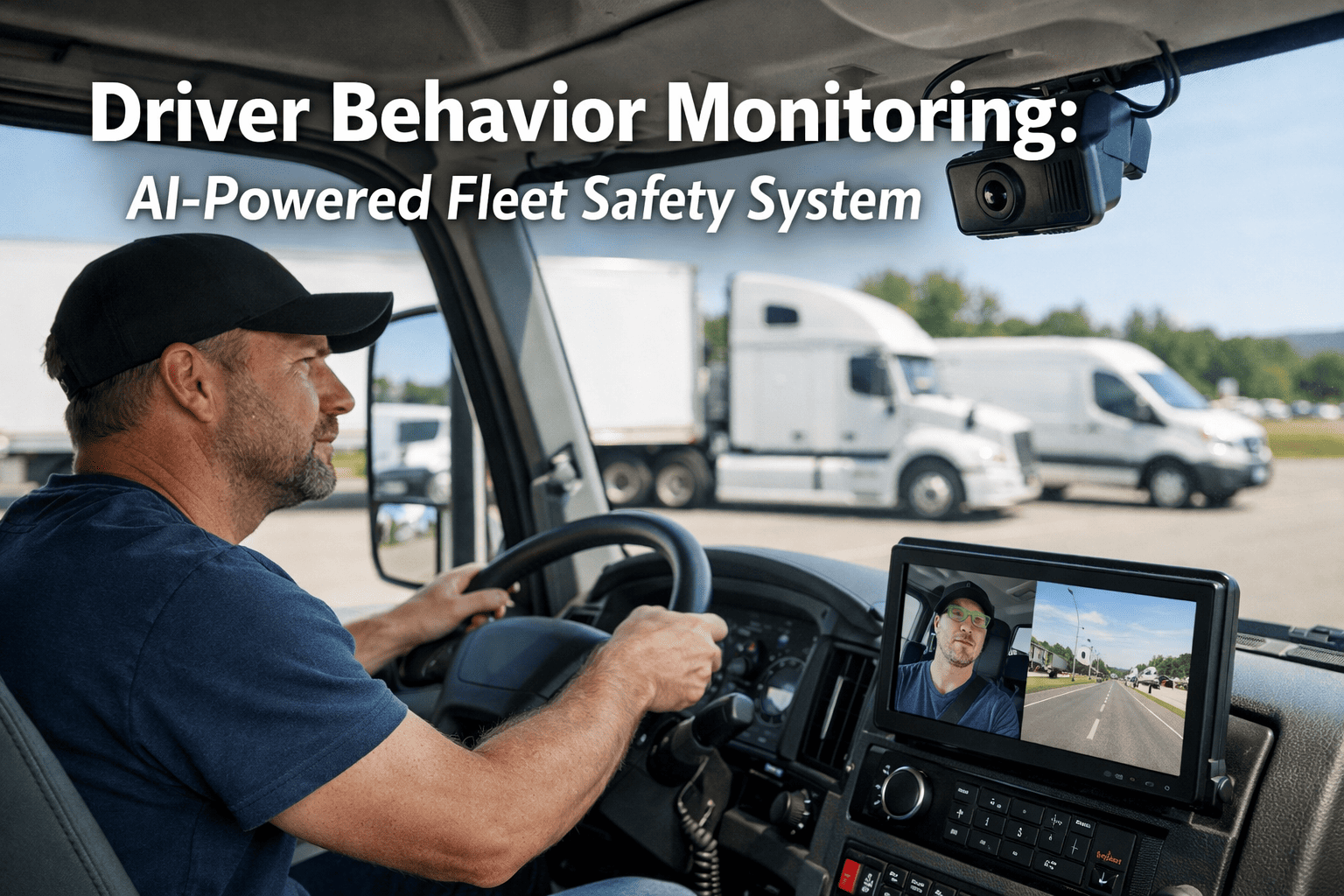
✓ Driver-facing IR camera detects distraction, drowsiness, cell phone use, smoking, seatbelt status
✓ Edge AI processing on-device — only event clips uploaded (saves cellular data 90-95%)
✓ Cost: $300-$600 per vehicle hardware + $15-$30/month cloud platform + $50-$100 installation
Best for: Light and medium-duty fleets seeking comprehensive driver behavior and incident documentation
Multi-Camera 360° Systems
Four-camera setup covering forward, rear, sides, and driver
✓ Forward + rear + left/right side cameras eliminate blind spots entirely
✓ Parking and low-speed maneuvering protection (backup collisions, sideswipes, loading dock)
✓ Synchronized recording across all angles with GPS, speed, g-force data overlay
✓ Cost: $800-$1,500 per vehicle hardware + $25-$50/month cloud + $150-$300 installation
Best for: Large trucks, buses, and high-value cargo vehicles requiring complete incident documentation
Advanced Driver Monitoring Systems (DMS)
AI-powered gaze tracking, fatigue detection, real-time alerting
✓ Gaze tracking monitors where driver is looking — detects looking at lap (phone), side window, mirror fixation
✓ Fatigue algorithms track blink rate, eye closure duration, head position for drowsiness prediction
✓ In-cab audio and visual alerts warn driver in real-time before incidents occur (not just after)
✓ Cost: $400-$900 per vehicle hardware + $20-$40/month platform + FMCSA Hours of Service integration
Best for: Long-haul trucking and overnight operations where driver fatigue risk is highest priority
Integrated Platform with CMMS Connection
End-to-end AI detection → coaching workflow → safety metrics → insurance reporting
✓ Camera events flow directly into Oxmaint as driver coaching assignments with video clip attached
✓ Safety managers review, coach, and document driver sessions within the CMMS workflow
✓ Automated safety scorecards, trend analysis, and insurance compliance reporting from unified data
Best for: Fleets seeking complete automation from event detection to driver improvement with audit-ready documentation
Implementation Roadmap: From Pilot to Fleet-Wide
Fleet camera deployments achieve fastest ROI by starting with highest-risk vehicles (newest drivers, worst safety scores, highest-value routes), proving the detection-to-coaching workflow, and expanding based on documented collision reduction. A 10-20 vehicle pilot typically costs $8,000-$15,000 and generates measurable accident reduction data within 90 days justifying fleet-wide rollout. Fleet safety managers ready to plan their camera deployment can Book a Demo to map AI camera systems to their specific fleet composition and safety priorities.
Phase 1: Weeks 1-4
Vehicle Selection and Pilot Planning
✓ Analyze accident history — identify vehicles/drivers with highest incident rates, worst safety scores
✓ Select 10-20 pilot vehicles representing fleet diversity (vehicle types, routes, driver experience)
✓ Choose camera system category matching primary risk profile (driver behavior vs collision documentation)
✓ Configure driver privacy policy and communicate deployment transparently to avoid resistance
Deliverable: Pilot deployment plan with camera specifications, vehicle assignments, and CMMS integration requirements
Phase 2: Weeks 4-8
Camera Installation and CMMS Configuration
✓ Install cameras on pilot vehicles — professional installation ensures proper positioning and power connection
✓ Connect camera events to
Sign Up for Oxmaint — map event types to coaching workflows and safety metrics
✓ Configure alert thresholds — balance detection sensitivity vs false positives for driver acceptance
✓ Train safety managers on event review, driver coaching workflows, and incident investigation procedures
Deliverable: Live AI camera monitoring with automated coaching workflow integration in Oxmaint for all pilot vehicles
Phase 3: Weeks 8-20
Pilot Operation and Threshold Refinement
✓ Run pilot for 90 days — collect event data, measure accident reduction, track coaching effectiveness
✓ Refine detection thresholds based on false positive feedback and driver acceptance surveys
✓ Document results: collision reduction percentage, exoneration success rate, insurance claim impact
✓ Build business case for fleet-wide expansion with quantified safety and cost benefits
Deliverable: Pilot ROI report with documented accident reduction and recommendation for expansion timeline
Phase 4: Quarter 2+
Fleet-Wide Expansion and Insurance Integration
✓ Roll out cameras to remaining vehicles using proven system configuration and threshold settings
✓ Integrate camera data with insurance carrier telematics programs for premium reduction eligibility
✓ Establish safety recognition programs rewarding drivers with best camera-verified performance
✓ Generate quarterly safety reports from consolidated camera event data for executive and board review
Deliverable: Fleet-wide AI camera monitoring with insurance integration and comprehensive safety analytics
Your Drivers Already Have Cameras. Let AI Make Them Proactive.
Oxmaint connects AI camera detections to the safety workflows that prevent accidents — auto-generating coaching assignments from distracted driving, harsh events, and near-misses, tracking driver improvement over time, and building the evidence library that protects your fleet from liability exposure and fraudulent claims.
Frequently Asked Questions
Do AI dash cams violate driver privacy rights?
No — when implemented correctly with transparent policies. Driver-facing cameras in commercial vehicles are legal in all 50 states when used for safety and training purposes. Best practice includes: (1) Clear written policy explaining camera purpose, data retention, and access limitations. (2) Driver acknowledgment and training on camera function and privacy protections. (3) Video reviewed only for safety events (collisions, harsh driving, distraction alerts) — not continuous surveillance. (4) Driver-facing camera activates only during safety events (not continuous recording of driver). (5) Video data stored securely with access limited to safety managers and legal/insurance as needed. Most driver resistance disappears within 2-4 weeks once drivers realize cameras protect them by exonerating them in false claims.
How much cellular data do AI cameras consume?
Modern edge AI cameras dramatically reduce data usage compared to continuous cloud streaming. Edge processing analyzes video on-device and uploads only detected events — typically 10-30 short clips per vehicle per day totaling 100-300 MB. Continuous streaming would consume 2-5 GB per vehicle per day (20-50x higher). Most fleets pay $15-$30 per vehicle per month for cellular data plans. Systems without edge AI that continuously stream video require $80-$150 per vehicle per month in data costs — economically infeasible for fleets beyond 10-20 vehicles.
Book a Demo and our team will calculate data costs for your specific deployment.
What does a fleet camera pilot typically cost?
A 10-20 vehicle pilot runs $8,000-$15,000 total depending on camera system complexity. Breakdown: Hardware $300-$600 per vehicle ($3,000-$12,000 for 10-20 units), Installation $50-$100 per vehicle ($500-$2,000 labor), Cloud platform $15-$30 per vehicle per month x 3 months pilot ($450-$1,800), CMMS integration setup (one-time $1,000-$2,000). Most fleets recover pilot costs within 60-90 days through avoided accident costs. One prevented $50,000 collision pays for an entire 20-vehicle deployment. Fleet-wide expansion costs decrease per-vehicle due to installation efficiency and no duplicate integration work.
How do AI cameras connect to Oxmaint CMMS for coaching workflows?
When the camera detects a safety event (distraction, harsh braking, collision, near-miss), it sends structured data to Oxmaint via API containing: event type, confidence score, timestamp, GPS location, vehicle/driver ID, and video clip URL. Oxmaint auto-creates a coaching work order assigned to the driver's safety manager containing the event details and video clip. The safety manager reviews the event, conducts coaching session with the driver, documents the conversation, and closes the work order. All coaching history, event trends, and safety improvements are tracked in the driver's Oxmaint profile for performance reviews and continuous improvement measurement.
Sign Up to start building the integration.
How do we prevent driver resistance to cameras?
Driver acceptance requires transparent communication and balanced usage. Proven strategies include: (1) Communicate cameras protect drivers by exonerating them in false claims — emphasize benefit to drivers, not surveillance. (2) Show positive events too — recognize safe driving, smooth braking, defensive maneuvers. (3) Use coaching model, not punishment — first distraction event gets warning and education, not termination. (4) Driver-facing camera activates only during safety events — not continuously recording driver behavior unrelated to safety. (5) Involve drivers in pilot selection — volunteer drivers report better experiences and become advocates. (6) Share exoneration success stories — when cameras save a driver from false liability, publicize it to entire fleet. Most fleets report 80-90% driver acceptance within 30-60 days using these approaches.



-(1).png)
.png)
.png)