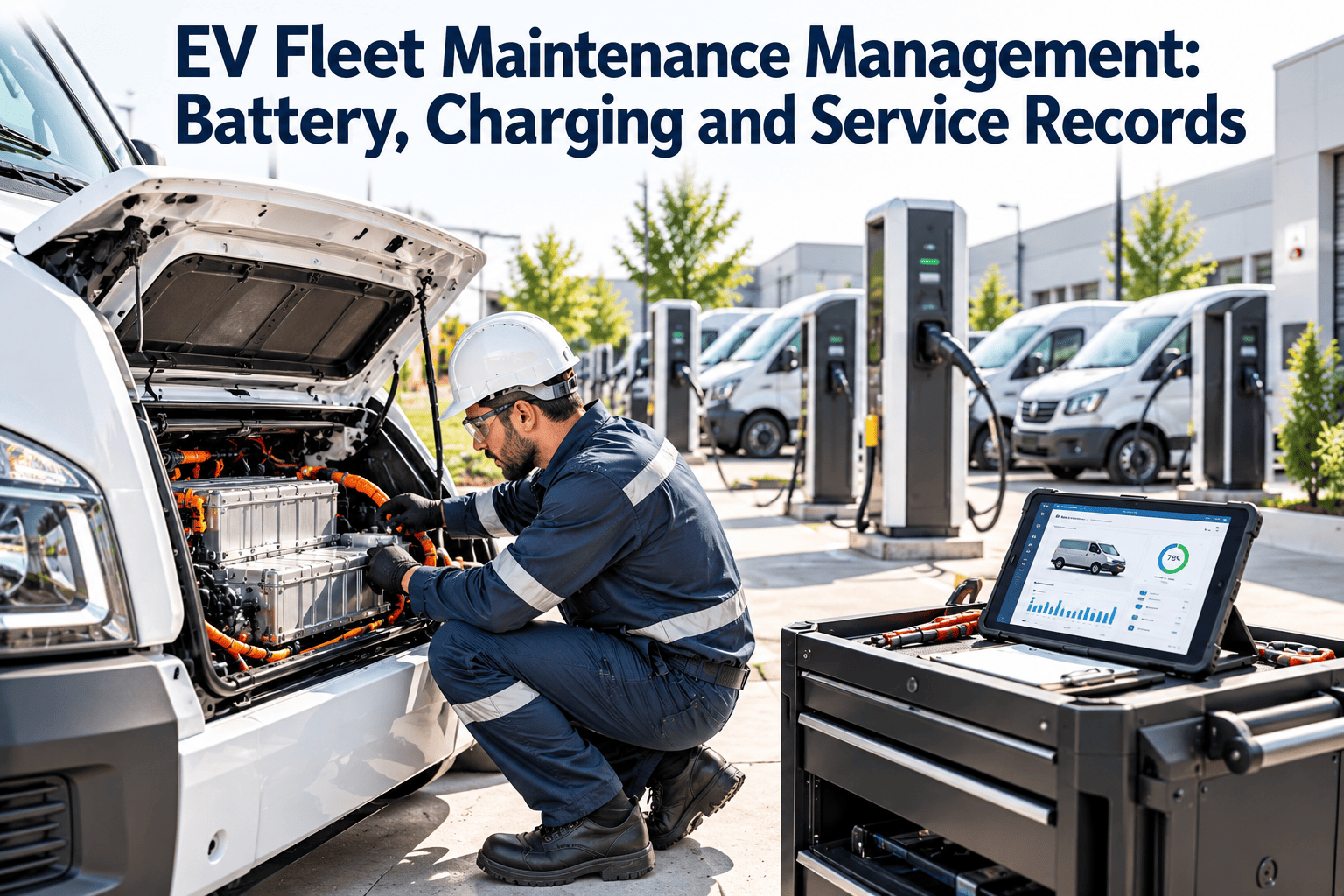
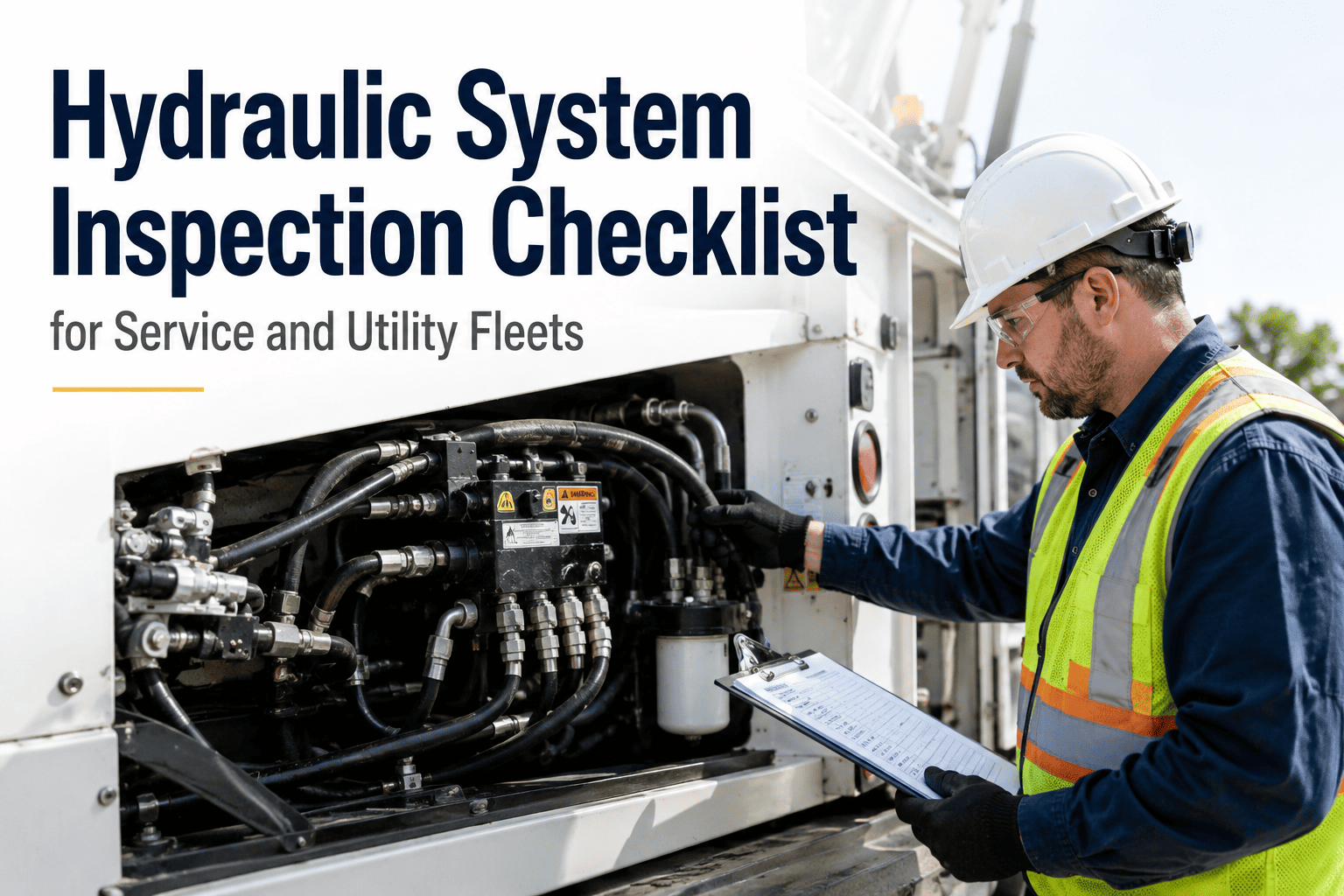
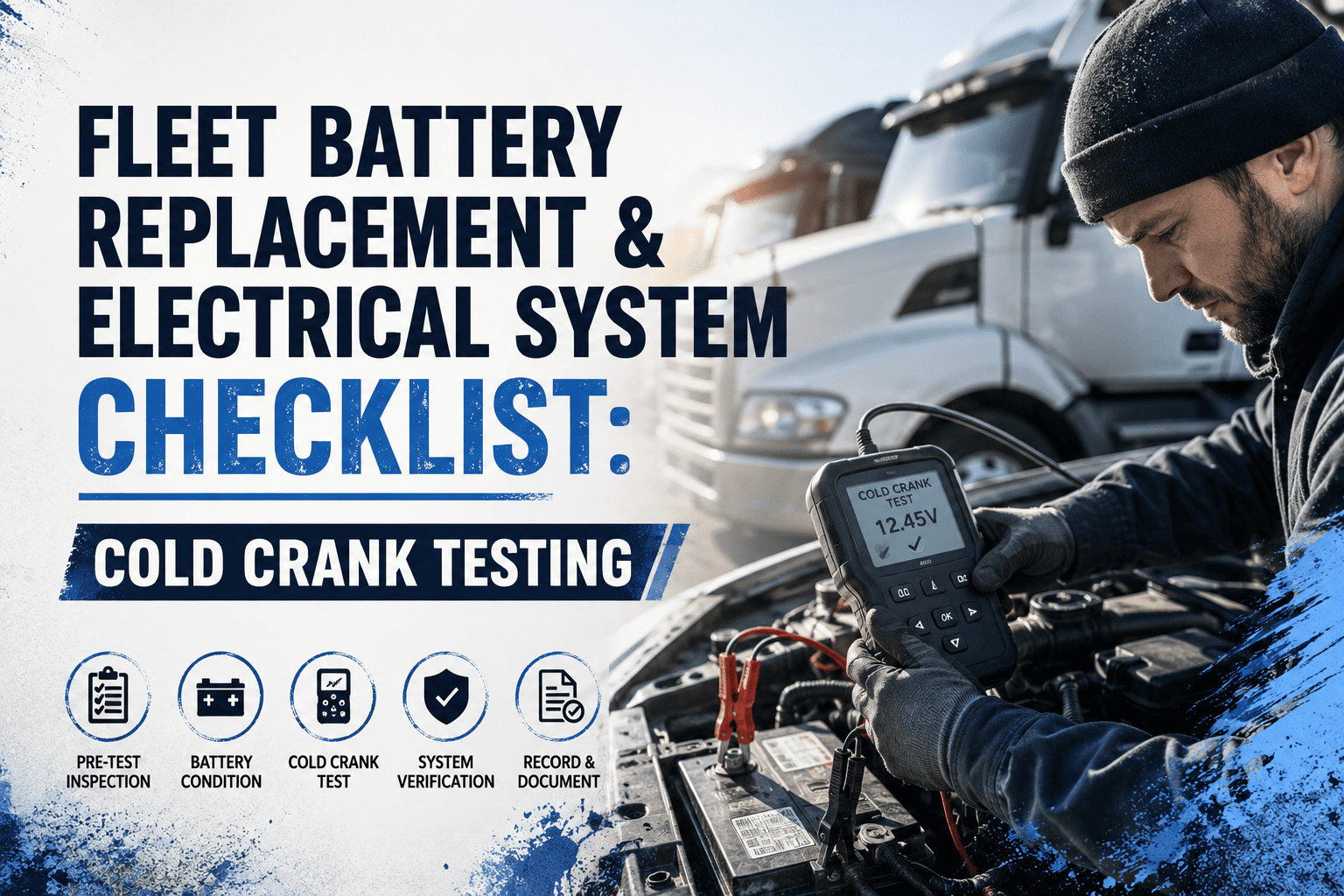
Electric vehicle fleets don't need less maintenance — they need different maintenance. Battery health monitoring, HV system inspection, thermal management, and software validation replace oil changes, exhaust, and fuel system tasks. Applying ICE logic to EVs misses the failures that actually bring vehicles off the road. Oxmaint's EV module schedules every EV-specific PM task automatically from cycle count and OBD data.
EV vs. ICE Fleet Maintenance — What Changes and What Stays
The shift from ICE to EV doesn't eliminate fleet PM — it restructures it. Understanding which tasks disappear, which new tasks appear, and which stay the same is the foundation of every effective EV fleet maintenance programme. Applying the wrong mental model wastes technician time and misses the failures that actually bring EVs off the road.
How Technology Elevates EV Fleet Maintenance
EV maintenance is inherently more data-dependent than ICE maintenance — you cannot see a battery degrading, you cannot hear a thermal management pump failing, and you cannot smell an insulation fault. The four technologies below close that visibility gap, turning invisible EV failure modes into detectable, trackable, and preventable events. Oxmaint integrates all four into a single EV fleet maintenance workflow.
1. Battery Health and Thermal Management Checklist
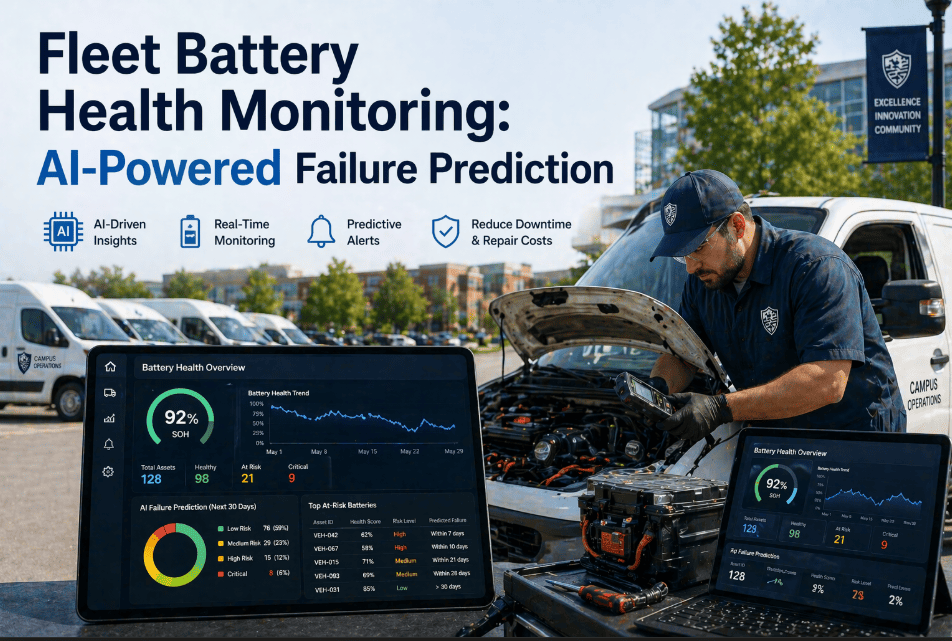
The traction battery is the highest-value component in any electric vehicle — and the one most directly affected by the quality of the maintenance programme. Battery degradation is irreversible; it cannot be repaired once it occurs. Proactive monitoring, thermal management servicing, and correct charging practice management are the only tools available to maximise battery life. Track battery state-of-health trends per vehicle with Oxmaint's EV health dashboard.
Battery state-of-health (SoH) — measured and recorded
Connect the manufacturer's diagnostic tool or compatible third-party EV diagnostics and record the battery SoH percentage. Flag any pack below 80% SoH for warranty assessment or replacement evaluation. Record cell voltage variance — any cell deviating more than 50mV from pack average indicates a developing cell fault requiring further investigation before the variance widens to balance-consuming levels. Critical — below 80% SoH
Battery thermal management coolant — level, concentration, and pH
Check battery coolant level in the thermal management reservoir. Test freeze protection — battery coolant typically requires protection to -40°F year-round regardless of climate because the battery may need active cooling in summer and active heating in winter. Test pH — battery coolant must be non-conductive; standard engine coolant with conductive additives must never be used in an EV battery thermal circuit. Critical — wrong coolant type
Battery thermal management pump — flow rate and noise check
Verify coolant pump operation — check for abnormal noise, vibration, or reduced flow rate indicated by higher-than-normal battery temperature at equivalent charge/discharge loads. A failing thermal management pump reduces battery cooling efficiency, accelerating cell degradation in summer and reducing cold-weather charging speed in winter. Defect — reduced flow
Battery enclosure — physical damage and seal integrity
Inspect the underside of the battery enclosure for impact damage, scraping, or penetration from road debris. Any dent or deformation in the battery floor must be assessed by an HV-certified technician before the vehicle returns to service. Check enclosure seals for water ingress evidence — moisture inside a battery enclosure creates internal short-circuit risk that can progress to thermal runaway. Critical — penetration/ingress
Charging behaviour review — deep discharge events and DC fast charge frequency
Review OBD/API charging history for excessive deep discharge cycles (below 10% SoC), frequent DC fast charging (above 80% of total charge sessions), or repeated charging to 100% SoC for vehicles not immediately dispatching. All three accelerate battery degradation. Document and address charging practice issues — battery replacement caused by preventable misuse may void warranty coverage. Defect — abusive charge pattern
AI Digital Twin tip: An EV vehicle's digital twin models the cumulative effect of charging behaviour, thermal events, and cycle count on battery degradation rate — forecasting the month each vehicle will reach 80% SoH under current operating patterns, so fleet managers can plan replacement procurement 6–12 months in advance. See Oxmaint's EV battery health forecasting.
2. High-Voltage System and Charging Infrastructure Checklist
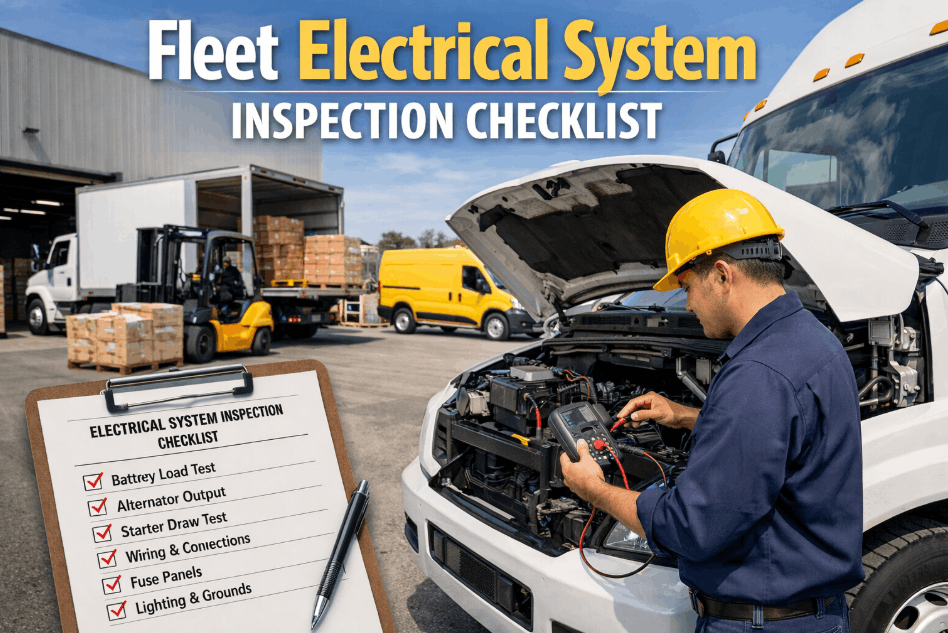
High-voltage system inspection requires HV-certified technicians, insulated Class 0 or Class 1 gloves, and insulated tools rated above the system voltage. No technician should work on or near HV components without confirmed HV system isolation and confirmation the service disconnect is locked out. This is not a precaution — it is a life safety requirement. Manage HV inspection sign-off and technician certification records on Oxmaint.
HV system isolation resistance test — annual minimum
Perform an insulation resistance test between all HV conductors and the vehicle chassis using a calibrated megohmmeter. Minimum acceptable resistance: 100 ohms/volt of system voltage (100kΩ for a 1000V system). Any reading below this threshold indicates insulation degradation requiring immediate investigation — a fault current path between HV and chassis creates an electrocution risk from chassis contact. Critical — below isolation limit
HV cable and connector visual inspection
Inspect all accessible HV cables (typically orange-sheathed) for chafing, crushing, or heat damage. Check HV connector locking mechanisms are fully engaged and connector housings show no signs of arcing, discolouration, or melting at the mating face. Verify HV connector torque specifications on any connector that has been disconnected since the last inspection — loose HV connections generate resistance heat that can cause connector failure at full charge current. Critical — arcing/damage visible
Charging port condition — inlet, seals, and lock mechanism
Inspect the AC charge inlet (Type 2/J1772) and DC fast charge inlet (CCS/CHAdeMO) for bent pins, corrosion, or damaged retention clips. Check inlet seal condition — a deteriorated seal allows moisture ingress during charging in rain or washing, potentially causing a Charging System Fault code. Verify the charge port lock mechanism engages and releases correctly. Defect — bent pin/damaged seal
On-board charger and DC-DC converter — fault code check
Scan the on-board charger (OBC) and DC-DC converter modules for stored fault codes. OBC faults that have been auto-cleared may not appear as active dashboard warnings but can indicate intermittent charging failures that leave vehicles under-charged at morning dispatch. DC-DC converter faults affect 12V system charging — a failing DC-DC converter drains the 12V auxiliary battery, causing complete vehicle shutdown despite a full HV pack. Defect — stored OBC fault
12V auxiliary battery — load test and charging verification
EV auxiliary batteries are often undersized relative to ICE batteries and charged via the DC-DC converter rather than an alternator. Load test annually. A failed 12V battery prevents the HV system from powering up regardless of HV battery charge level — the most common cause of an EV that "won't start" at morning dispatch with a full charge. Critical — prevents HV startup
3. Regenerative Brakes, Tyres and HVAC Checklist
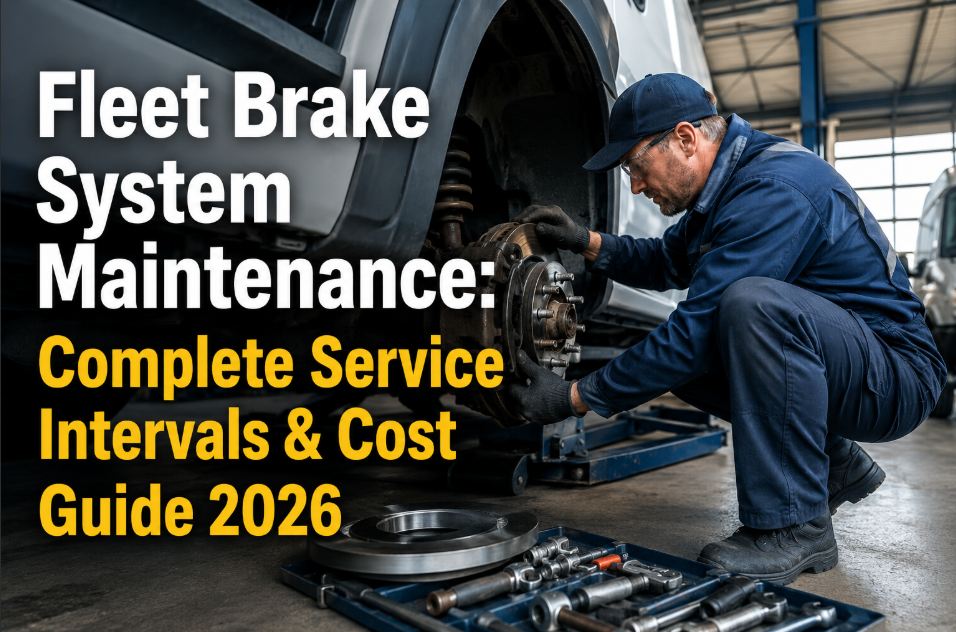
EV brake systems behave fundamentally differently from ICE brakes — regenerative braking handles 70–90% of all deceleration events in normal urban driving, which means friction brakes are used far less frequently. Less use sounds like lower maintenance need, but the reality is the opposite: infrequently used brake calipers seize, rotors corrode, and brake fluid absorbs moisture because the system never generates the heat that ICE vehicles use to evaporate it.
Regenerative brake blend calibration — verify via diagnostic tool
Read the regenerative/friction brake blend ratio from the ABS/brake control module. Any deviation from manufacturer specification indicates a brake system calibration drift that reduces regenerative efficiency and increases friction brake wear. Verify the blend adapts correctly under ABS activation — a system that defaults to full friction braking during ABS events rather than blending correctly is losing energy recovery and stressing friction components unnecessarily. Defect — blend out of spec
Brake caliper slide pins — lubrication with EV-rated grease
Apply EV-rated caliper slide lubricant at every PM — the longer intervals between friction brake activations means caliper slides dry out faster than in ICE vehicles. A seized slide causes uneven pad wear, rotor corrosion on the unused portion of the braking surface, and brake drag that reduces EV range by 3–8% continuously. Defect — seized slide
Brake fluid moisture content — test every 12 months regardless of mileage
EV brake fluid rarely heats above 80°C in normal operation — insufficient to drive off moisture through normal use. Test moisture content at every annual inspection regardless of mileage. Moisture-saturated brake fluid creates a vapour lock risk in the rare but high-severity situations when full friction braking is demanded — such as an emergency stop at highway speed. Defect — above 3% moisture
Tyre inspection — EV load rating and rolling resistance spec verification
Verify all tyres carry the correct EV-rated load index — EVs are typically 15–20% heavier than equivalent ICE vehicles due to battery mass, requiring tyres with higher load ratings. Check rolling resistance rating — fitting standard replacement tyres in place of EV-optimised low-rolling-resistance tyres reduces range by 4–8% per charge cycle. Record tread depth per position — heavier EVs wear tyres 20% faster than ICE equivalents. Defect — wrong load rating
HVAC heat pump system — efficiency and refrigerant check
EV HVAC draws directly from the HV battery — an inefficient heat pump system can reduce winter range by 30–50% in cold climates. Check heat pump refrigerant charge and efficiency rating via diagnostic tool. Replace cabin air filter on schedule — a blocked cabin filter forces the HVAC blower motor to work harder, increasing HV battery draw and reducing range. Defect — below efficiency spec
OBD / Vehicle API tip: EV regenerative brake efficiency data is logged per drive cycle in the vehicle's OBD/API stream — declining regen efficiency across successive sessions is an early indicator of inverter degradation or brake blend calibration drift that can be caught 6–8 weeks before a driver notices reduced one-pedal driving capability. Book a demo to see EV regen efficiency monitoring on Oxmaint.
4. Software Updates, Documentation and Safety Systems Checklist
Software is a maintenance item in EVs in a way it never was for ICE vehicles. Battery management system firmware, inverter control software, and charging protocol updates directly affect vehicle range, safety, and compliance with evolving charging infrastructure standards. A fleet that does not manage EV software as part of its PM programme will encounter compatibility failures, warranty voidance, and in some cases, safety recall non-compliance.
BMS firmware version — check and update to current stable release
Connect to the manufacturer portal and verify the Battery Management System firmware is on the current approved release. Outdated BMS firmware may prevent access to newer battery protection algorithms, reduce fast charging speed due to conservative thermal limits, or create incompatibility with updated public charging infrastructure. Document the firmware version in each vehicle's maintenance record. Defect — behind critical update
Open recall and service campaign status — verify all completed
Check the manufacturer's portal and the NHTSA/DVSA recall database for any open safety recalls or service campaigns affecting the vehicle. EV recalls disproportionately involve battery and software safety issues — an open battery-related recall that has not been actioned creates direct liability in any incident investigation. Document recall completion with the campaign number and completion date. Critical — open safety recall
HV system warning indicators and safety interlock function test
Verify all HV warning indicators illuminate correctly on power-up and extinguish after self-test. Test the manual service disconnect — it must de-energise the HV system within the time specified by the manufacturer. Verify crash sensor safety interlocks are not triggered and the HV system powers down correctly on simulated crash input. A safety interlock that does not function creates first-responder electrocution risk in an accident. Critical — interlock failure
Technician HV certification — current for all personnel working on vehicle
Confirm all technicians who will work on or near the vehicle's HV system hold current HV safety certification (IMI Level 3 in UK; OEM-specific in USA/Germany; equivalent nationally recognised qualification elsewhere). Document certification expiry dates — most HV certifications require renewal every 3–5 years. A single incident involving an uncertified technician working on an HV system creates both criminal and civil liability for the carrier. Critical — uncertified technician
We transitioned 45 vans to EV and initially tried applying our ICE PM schedule with minor modifications. Within six months we had four vehicles with seized brake calipers, two 12V auxiliary battery failures causing complete no-start events, and one thermal management pump failure that the driver described as "just a range problem" for three weeks before we caught it. Oxmaint's EV module gave us a structured checklist that actually addressed the failure modes that matter in electric vehicles.
EV Fleet Maintenance — Impact Metrics
BEV powertrains have 30% fewer moving parts than ICE — but EV-specific failure modes require specialised PM skills that ICE programmes do not cover.
A failing heat pump system reduces EV range by up to 50% in cold climates — the most impactful undetected EV maintenance failure for winter commercial operations.
Most commercial EV battery warranties trigger replacement evaluation at 80% remaining capacity — tracked and forecast per vehicle by Oxmaint's EV health module.
Modern commercial EVs operate at up to 800V — requiring HV-certified technicians, insulated tools, and documented safety isolation procedures at every inspection.
Frequently Asked Questions
The most common questions from EV fleet technicians and fleet managers transitioning from ICE to electric vehicle maintenance programmes.
Annually at minimum, and at every 50,000 km or 30,000 miles for high-utilisation fleet vehicles. Battery state-of-health should also be assessed after any significant thermal event, collision near the battery enclosure, or following a deep discharge below 5% SoC. Record SoH at each assessment to build the trend data needed to predict replacement timing.
Only for non-HV work — tyres, wipers, cabin filters, and exterior lighting. Any work that involves the HV system, battery pack, charging system, or DC-DC converter requires HV-certified technicians. Most national automotive bodies (IMI, ASE, VDA) offer EV-specific certifications that include safe HV work procedures and emergency first aid for electrical injury.
Infrequent friction brake use allows caliper slides to seize, rotors to corrode across the unused portion of the braking surface, and brake fluid to absorb moisture without the thermal evaporation that occurs in ICE vehicles. EVs typically need caliper slide lubrication every 12 months regardless of mileage, and brake fluid moisture testing annually regardless of brake usage frequency.
EV software updates are issued by manufacturers via OTA (over-the-air) or dealer-only channels. Fleet operators must track the current firmware version per vehicle, verify safety-critical recalls are applied promptly, and document software versions in the maintenance record — both for warranty compliance and to ensure compatibility with evolving charging infrastructure protocols.
Yes. Oxmaint manages mixed fleets with ICE, hybrid, and BEV vehicles on the same platform — applying the correct PM schedule per vehicle type automatically. EV-specific tasks (battery health, HV inspection, thermal service) are triggered based on cycle count, mileage, or calendar interval per vehicle, while ICE PM continues on its own schedule alongside the EV programme.
Most commercial EV manufacturers require documented evidence of scheduled maintenance compliance to approve battery warranty claims. A claim for battery replacement at 78% SoH that cannot be supported by maintenance records showing thermal system servicing, correct charging behaviour management, and regular SoH monitoring may be denied — shifting a £30,000–£80,000 battery replacement cost entirely to the fleet operator.