Electric vehicle fleet management in 2026 is no longer a pilot program decision — it is a strategic planning obligation. With over 4.2 million commercial EVs operating in North American fleets and average fleet electrification commitments of 40–60% by 2030 from Fortune 500 logistics operators, the question has shifted from "whether to electrify" to "how to manage EVs at scale without the institutional knowledge, maintenance tooling, or CMMS infrastructure built around internal combustion engines for decades." EV maintenance is not simply less maintenance — it is different maintenance. Battery health monitoring, thermal management, regenerative braking system servicing, high-voltage system safety, and charging infrastructure management each require protocols that have no direct ICE equivalent. OxMaint's CMMS platform includes native EV fleet management modules — battery health tracking, charging infrastructure management, EV-specific PM schedules, and ICE vs. EV TCO analytics — giving fleet directors the operational foundation to manage mixed and fully-electric fleets from a single platform.
Electric Vehicle Fleet Management: Maintenance, Charging, and TCO Considerations
Complete guide to EV fleet management in 2026 — battery health monitoring, regenerative brake servicing, thermal management, charging infrastructure planning, EV vs. ICE TCO analysis, and CMMS adaptation for electric vehicle PM schedules.
EV vs. ICE: What Actually Changes in Fleet Maintenance
The most common misconception about electric vehicle fleet maintenance is that it is simply less maintenance — fewer moving parts, no oil changes, no transmission service. This is partially true: EVs eliminate 15–20 ICE-specific maintenance items entirely. But they introduce 8–12 EV-specific maintenance requirements that have no ICE equivalent, require different diagnostic tools, different technician certification, and different CMMS tracking logic. Fleet directors who assume their existing PM program transfers to EVs without modification will systematically miss critical battery and electrical system maintenance events.
Battery Health Monitoring: The Most Critical EV Fleet Management Function
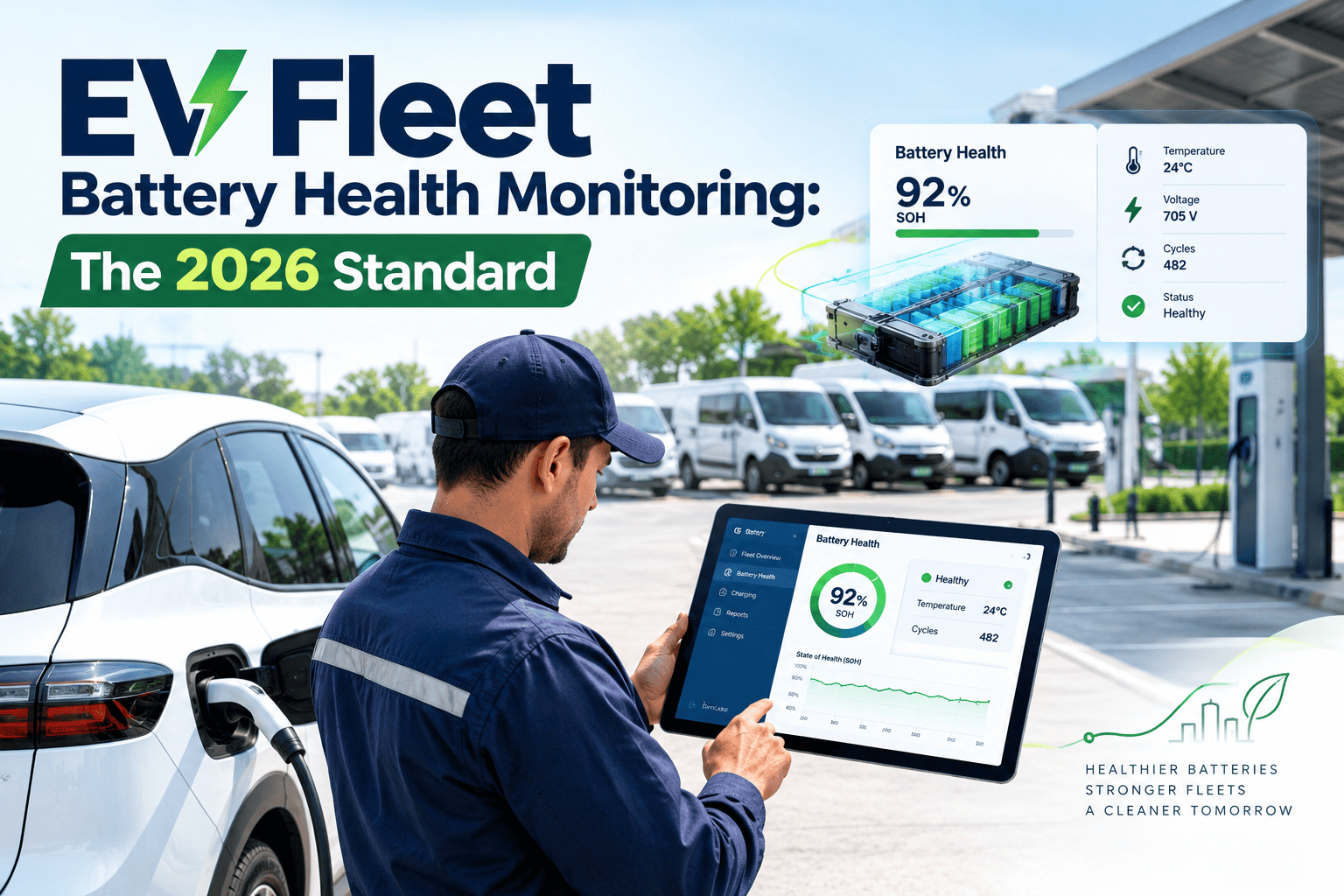
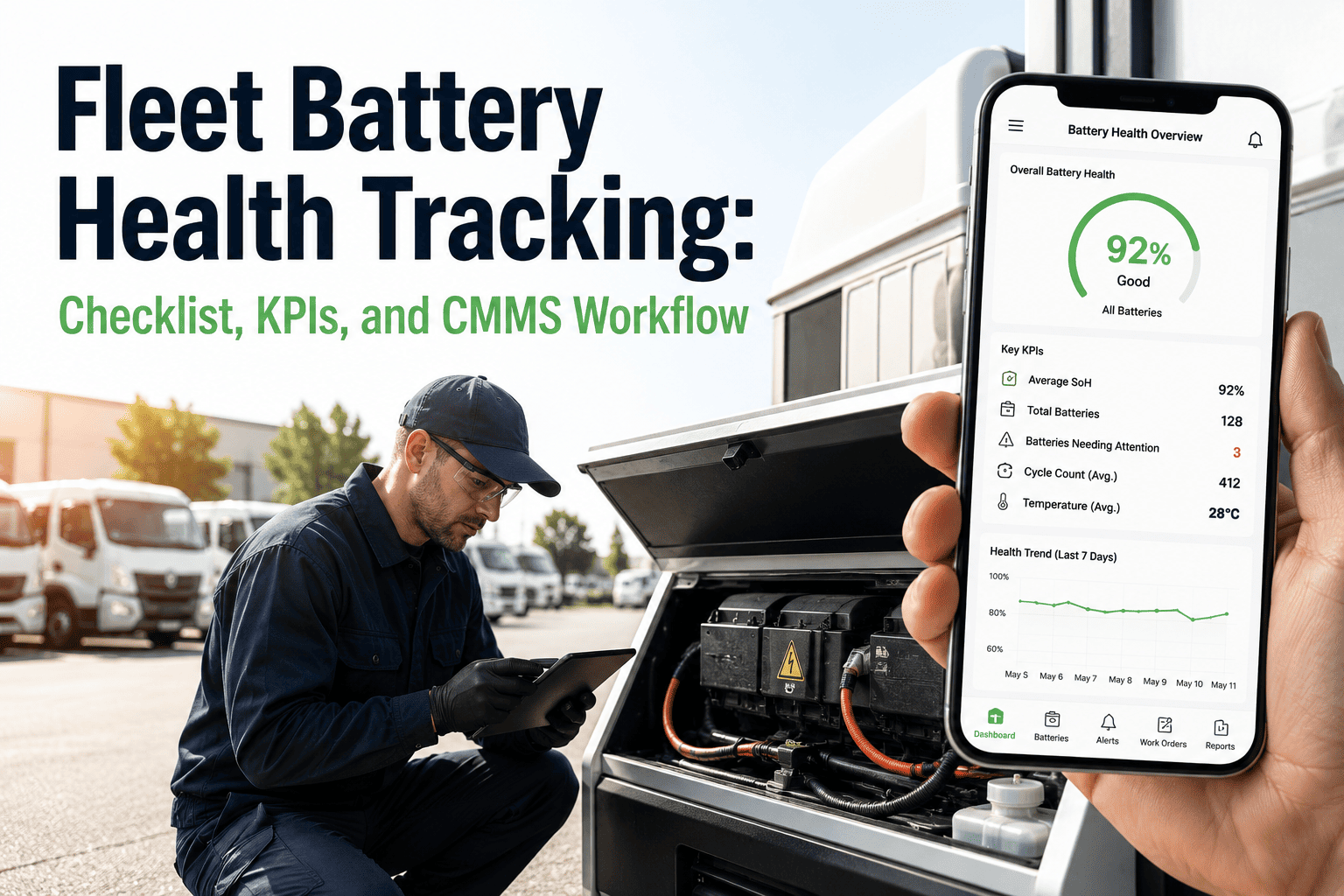
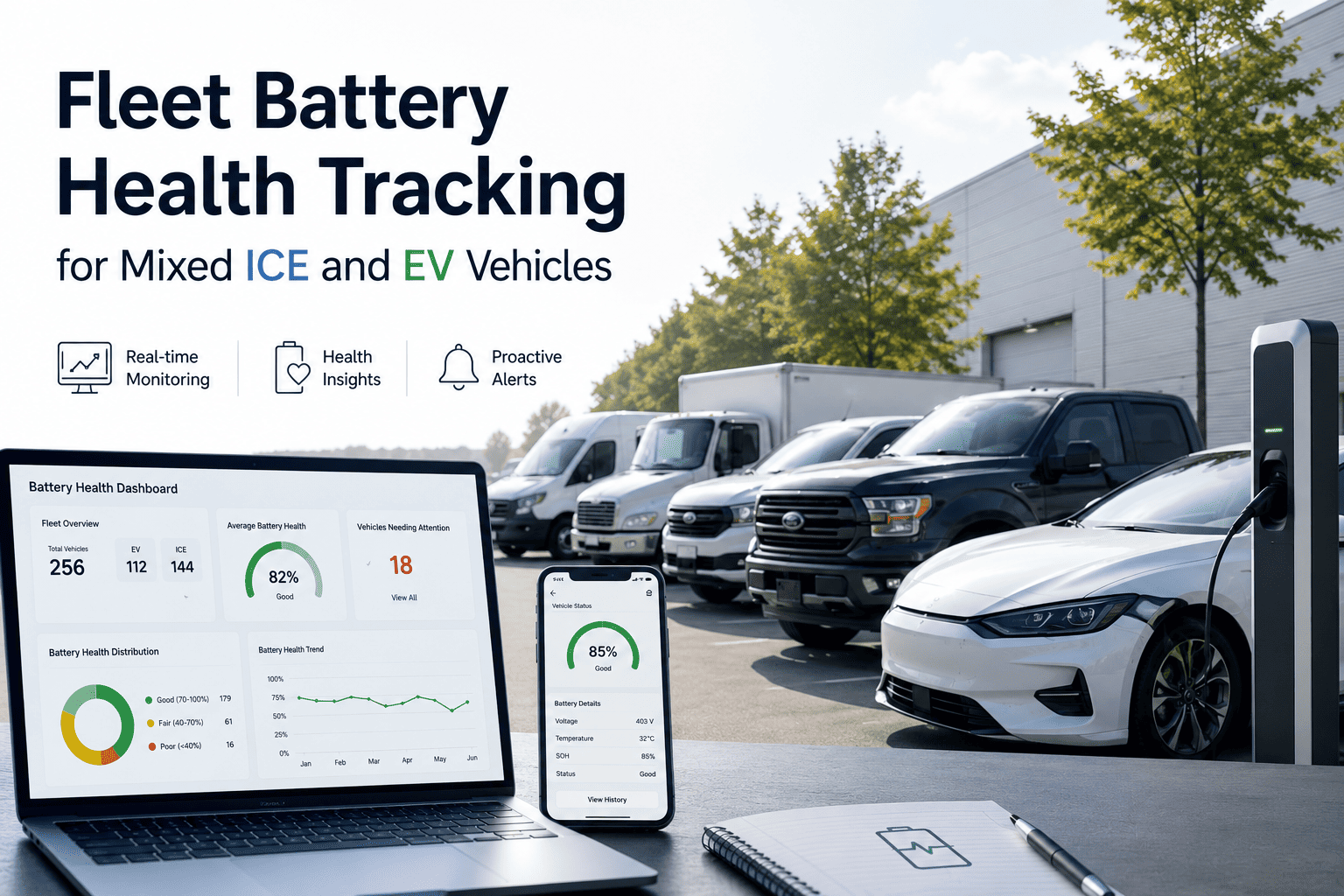
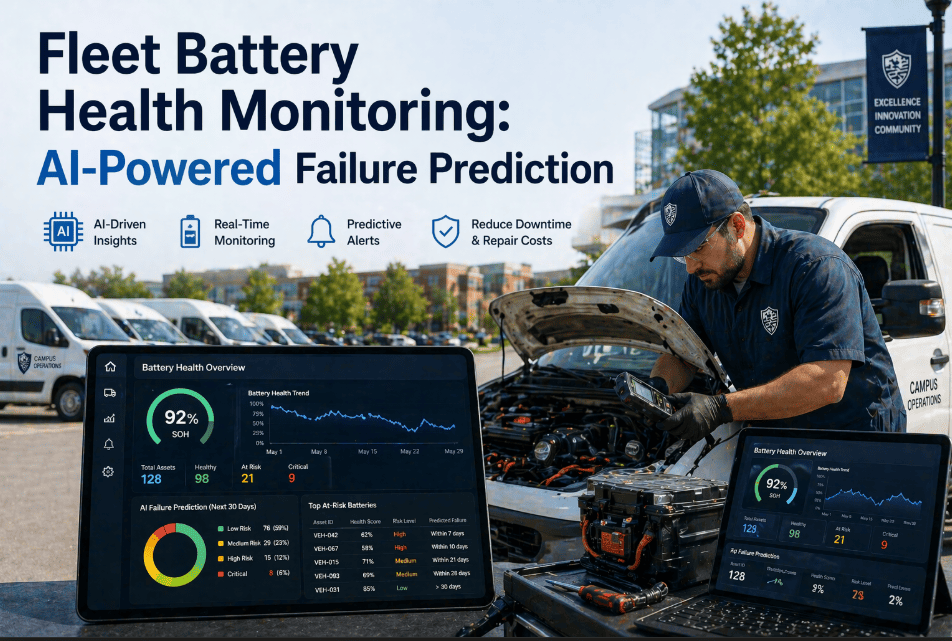
Battery pack health is to an electric vehicle what engine health is to an ICE vehicle — the primary determinant of operational availability, residual value, and total cost of ownership. Unlike engine health, which degrades gradually and generates predictable symptom patterns, battery degradation follows non-linear patterns influenced by charge cycles, depth of discharge, temperature exposure, and charge rate history. A battery pack that consistently charges to 100% in high-ambient temperatures with frequent DC fast charging will lose 15–20% capacity within 3 years; the same pack managed to 80% charge ceiling and primarily Level 2 charging may retain 90%+ capacity at 5 years. CMMS platforms with battery health tracking monitor State of Health (SoH) per vehicle over time, flag accelerating degradation patterns, and generate maintenance recommendations when charge acceptance rate or usable capacity falls below fleet-defined thresholds.
Regenerative Braking: Different Wear Profile, Different PM Requirements
Regenerative braking is one of the most misunderstood maintenance implications of fleet electrification. Because EV regenerative braking captures kinetic energy electrically rather than dissipating it through friction pads, brake pad wear in an EV is dramatically lower than in a comparable ICE vehicle — typically 60–70% less wear per mile. However, this reduced wear creates a counterintuitive maintenance risk: brake pad and rotor corrosion from infrequent contact. When pads are rarely used, they can develop surface rust or seize partially — reducing brake effectiveness even when pads have substantial remaining material. EV-adapted CMMS PM schedules in OxMaint shift brake inspection from a wear-based trigger to a calendar-based trigger with shorter intervals than the equivalent ICE vehicle, adding a corrosion check that has no ICE equivalent.
Thermal Management: The Hidden Maintenance Priority
Battery thermal management is the EV maintenance function with the highest consequence of neglect and the lowest visibility in standard fleet reporting. The lithium-ion chemistry used in commercial EV batteries operates optimally between 15°C and 35°C — outside this window, both charging efficiency and discharge performance degrade, and sustained operation outside the range accelerates permanent capacity loss. Thermal management systems — liquid cooling loops, heat pumps, and battery heating elements — require the same inspection and fluid service discipline as an ICE cooling system, but on different intervals and with different failure signatures. A coolant loop leak in an EV battery pack is a gradual degradation event that silently accelerates battery aging over weeks before any operational symptom appears.
Charging Infrastructure Management: The Fleet Operation Nobody Plans For
Charging infrastructure management is consistently the most underplanned component of fleet electrification — because most fleet directors approach EV adoption as a vehicle procurement decision and discover post-deployment that the charging network is a parallel maintenance operation with its own equipment inventory, failure modes, uptime requirements, and energy cost management complexity. A 30-vehicle EV fleet requires 15–20 Level 2 chargers at minimum for overnight replenishment. Each charging unit is a piece of electrical infrastructure that can fail, requires periodic inspection, and affects vehicle availability directly when it malfunctions. OxMaint's charging infrastructure management module tracks each charging unit as an asset in the CMMS — with its own maintenance schedule, failure ticket history, uptime record, and energy throughput data integrated into fleet cost analytics.
EV vs. ICE Fleet TCO: A Realistic 2026 Analysis
The total cost of ownership comparison between electric and ICE commercial vehicles in 2026 is more nuanced than most advocacy positions acknowledge. EVs have higher acquisition cost, lower fuel cost, and lower routine maintenance cost — but charging infrastructure capital, battery replacement risk, and residual value uncertainty introduce TCO variables that narrow the advantage significantly in specific fleet applications. Fleets operating high-mileage urban routes with favorable electricity pricing typically reach TCO parity or advantage within 3–4 years. Low-mileage, cold-climate, or heavy-load fleets may not reach parity within the vehicle's first lifecycle.
CMMS Adaptation for EV Fleet PM Schedules
Adapting a CMMS for EV fleet management requires building PM templates that reflect EV-specific maintenance logic — not simply removing ICE items and leaving the rest. The trigger logic changes: where ICE PM uses mileage as the primary trigger for most services, EV PM uses a combination of mileage, charge cycle count, calendar time, and battery health thresholds simultaneously. A battery coolant service might be triggered by 3 years or 60,000 miles or SoH dropping below 85% — whichever occurs first. Software update management introduces a new PM category with no ICE equivalent: tracking available OTA firmware updates per vehicle model, scheduling update installations during off-route hours, and documenting each update in the vehicle's asset record.
Manage Your EV Fleet From the Same CMMS as Your ICE Fleet
OxMaint's EV fleet management modules handle battery health tracking, EV-specific PM schedules, charging infrastructure assets, and ICE vs. EV TCO analytics in a single platform. Free to start.
Frequently Asked Questions
Your Fleet Is Electrifying. Your CMMS Needs to Keep Up.
OxMaint's EV fleet management platform tracks battery health, thermal system PM, regenerative brake intervals, charging infrastructure assets, and ICE vs. EV TCO analytics — giving fleet strategy directors the operational foundation to manage mixed and fully-electric fleets from a single platform. Native EV PM templates. Battery SoH alerts. Charging unit asset tracking. Technician certification management. Free to start. No hardware required.