EV Fleet Charging Infrastructure: Planning & Optimization
By Jack Miller on April 8, 2026
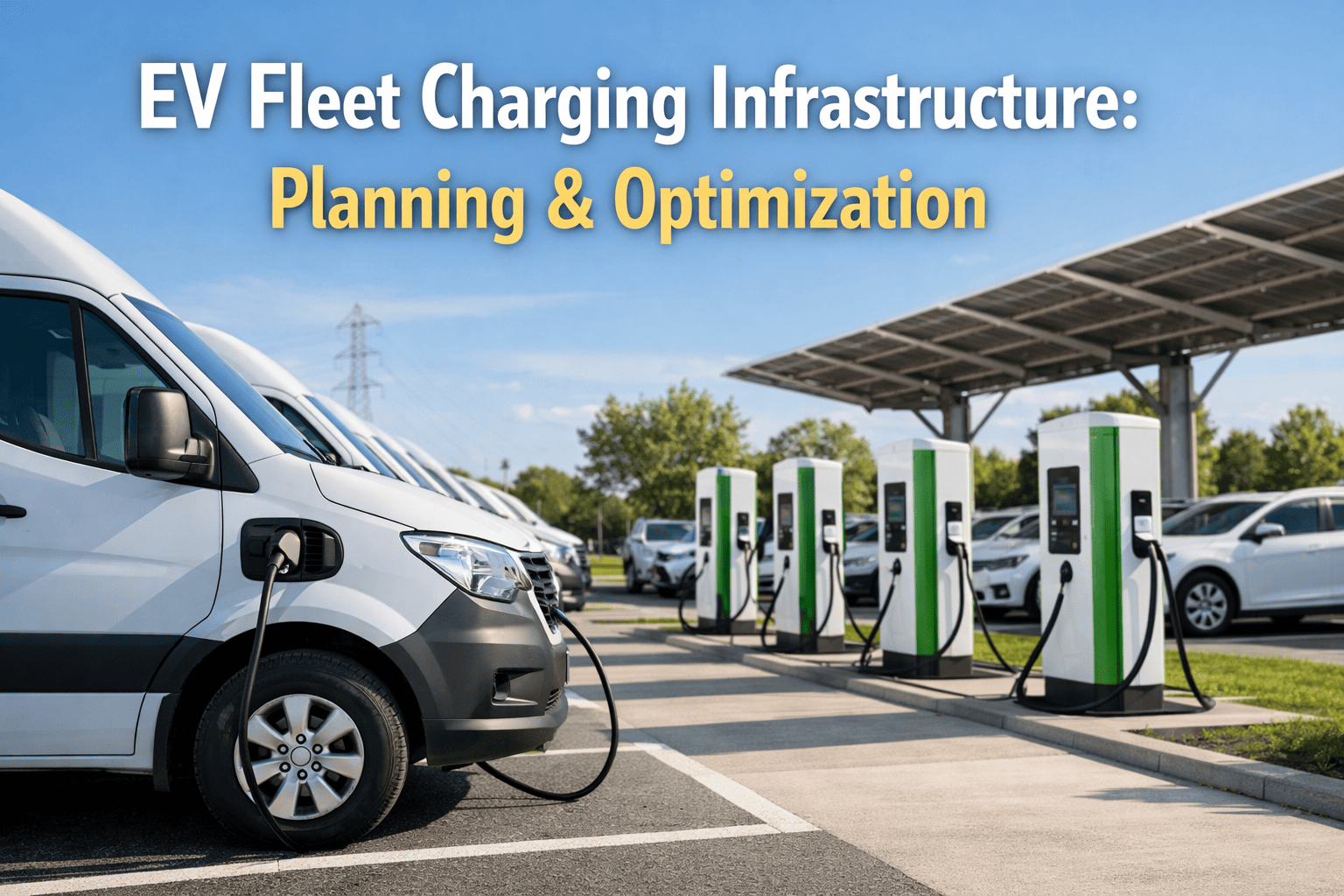
A logistics company in Phoenix, Arizona added 40 electric vans to their last-mile delivery fleet in 2023. By month three, they had a charging crisis: drivers were returning to the depot at 4 PM, 11 vans needed simultaneous charging for a 7 AM departure, and the facility's electrical panel had capacity for seven. The utility bill had spiked $18,000 in one month from unmanaged demand charges triggered by uncoordinated charging events. Nobody had planned the charging infrastructure before the vehicles arrived. This scenario is now repeating across American commercial fleets wherever EV adoption outpaces infrastructure planning. The vehicles are only half the transition — the charging depot, the utility capacity, the route charging strategy, and the maintenance scheduling for the infrastructure itself are the other half. OxMaint integrates EV charging infrastructure management with fleet operations — so charging schedules align with route demands, demand charges are managed, and charging equipment PM is tracked alongside vehicle PM. Book a demo to see how.
Plan EV Charging Infrastructure Before the Vehicles Arrive
Depot optimization · Demand charge management · Route charger mapping · Charging equipment PM — all in OxMaint
Single-month demand charge spike from unmanaged simultaneous charging at a 40-van depot
40%
Demand charge reduction achievable with optimized charging schedules in off-peak utility windows
3×
Infrastructure cost savings when charging deployment is planned before vehicle arrival vs reactive install
Four Charging Infrastructure Decisions That Determine Fleet Economics
EV fleet economics are not determined by vehicle purchase price — they are determined by four infrastructure decisions made before the first vehicle is ordered. Getting any one of these wrong compounds the others. OxMaint models all four against your specific route profiles, depot configuration, and utility tariff structure.
Plan first
Charger Level Selection
Level 2 (7–22 kW) for overnight depot charging. DC Fast (50–150 kW) for en-route range recovery. Wrong level = either wasted capital or vehicles not ready for departure.
Impact: Capital cost and grid capacity requirement
Utility critical
Charging Schedule Optimization
Time-of-use tariffs vary by up to 4× between peak and off-peak. Unmanaged simultaneous charging at shift-end creates demand spikes that trigger permanent tariff reclassification.
Impact: $15K–$50K annual energy cost delta per 50 vehicles
Grid readiness
Depot Electrical Upgrade
A 50-vehicle depot charging simultaneously requires 350–750 kW of panel capacity. Most commercial facilities require a utility upgrade that takes 6–18 months to permit and install — ordered after the vehicles arrive.
Impact: 6–18 month delay if not ordered in advance
Route coverage
En-Route Charging Strategy
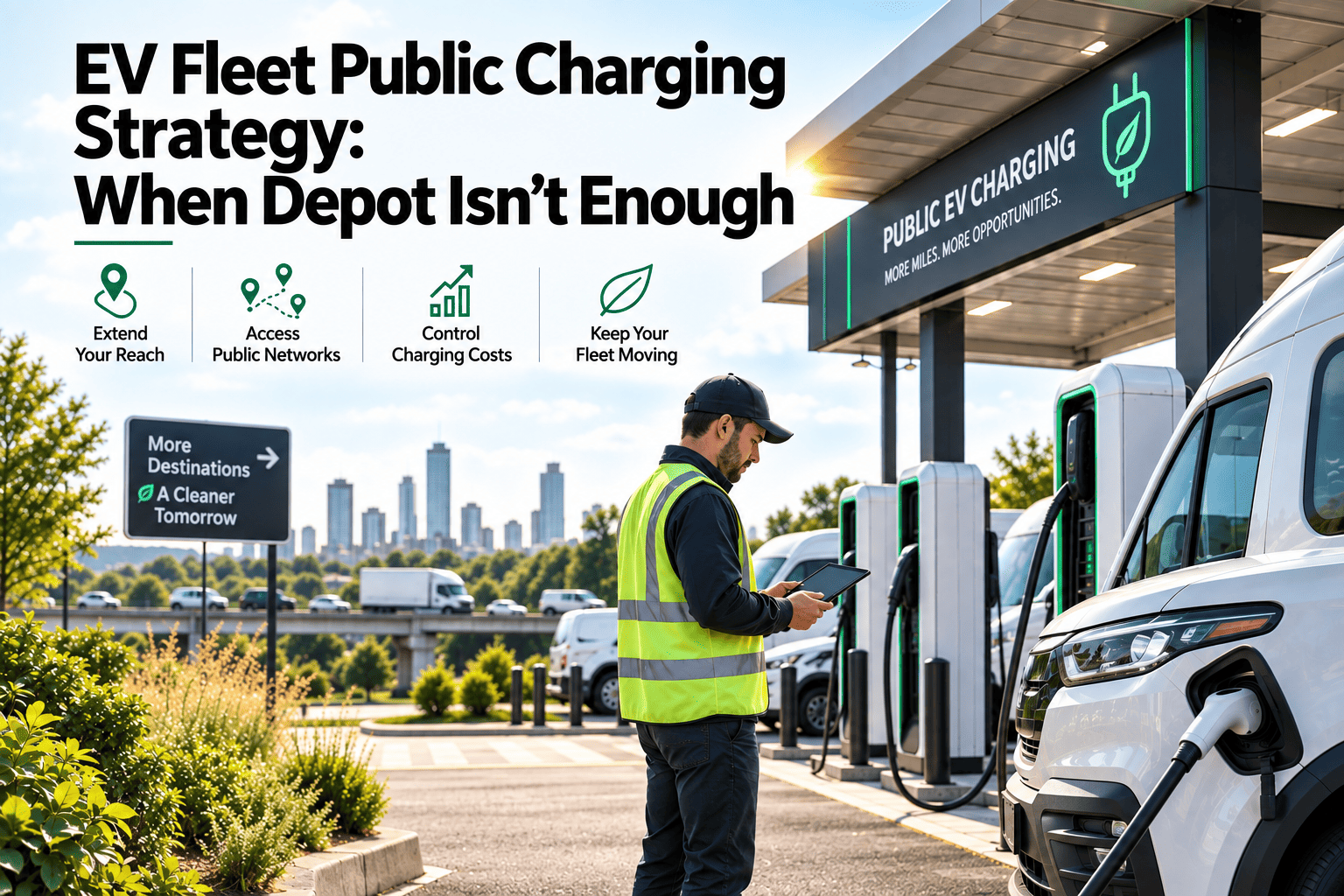
Long-haul and multi-stop routes require public DC fast charger waypoints mapped against vehicle range. Charging stops must be integrated into dispatch routing — not discovered by drivers mid-route when the battery hits 15%.
Impact: Driver confidence, route reliability, and range anxiety
Depot Charging Layout — OxMaint Zone Planning
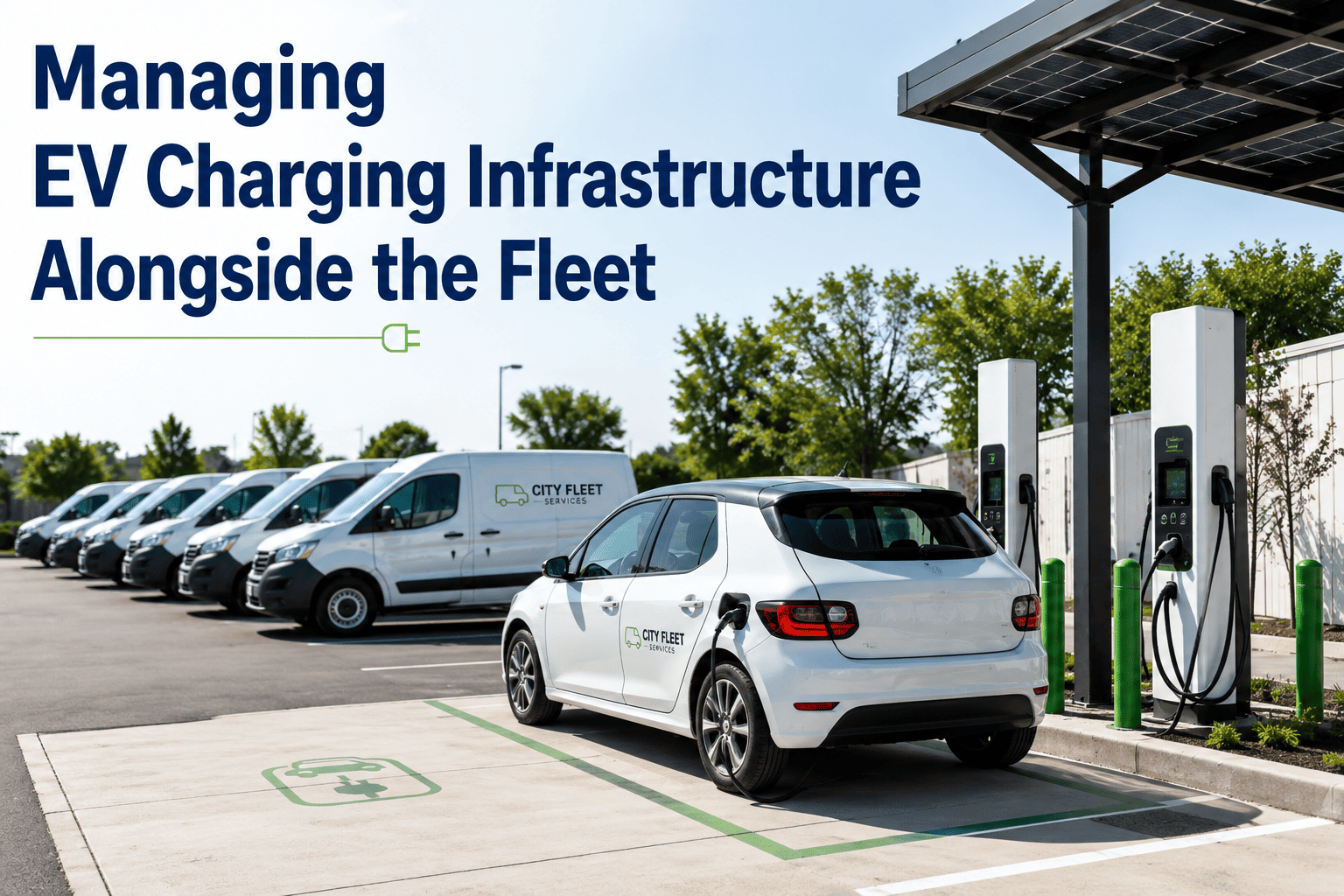
A well-planned depot divides charging assets into zones aligned with shift return times, vehicle range requirements, and utility load management. OxMaint manages charging zone assignments and equipment PM across all zones from one dashboard.
Sample 60-Vehicle Depot — Charging Zone Layout
Zone A — Priority
12 × DC Fast 50kW
Vehicles returning <30% SoC. Active overnight.
Zone B — Standard
24 × Level 2 22kW
Regular overnight top-up. Off-peak scheduled.
Zone C — Slow Charge
16 × Level 1 7kW
Long-dwell vehicles. 12+ hour window overnight.
Zone D — Spare / Future
8 conduit runs pre-wired
Fleet expansion capacity. No charger installed yet.
Zone E — Fleet Ops
4 × Level 2 (supervisor vehicles)
Always-available. Separate circuit breaker.
Zone F — Workshop
2 × DC Fast (maintenance charge)
Vehicles in shop. Isolated from demand management.
Charging equipment in all zones tracked as assets in OxMaint — PM scheduled, fault alerts integrated, energy consumption monitored per zone.
Demand Charge Management: The Biggest Hidden EV Fleet Cost
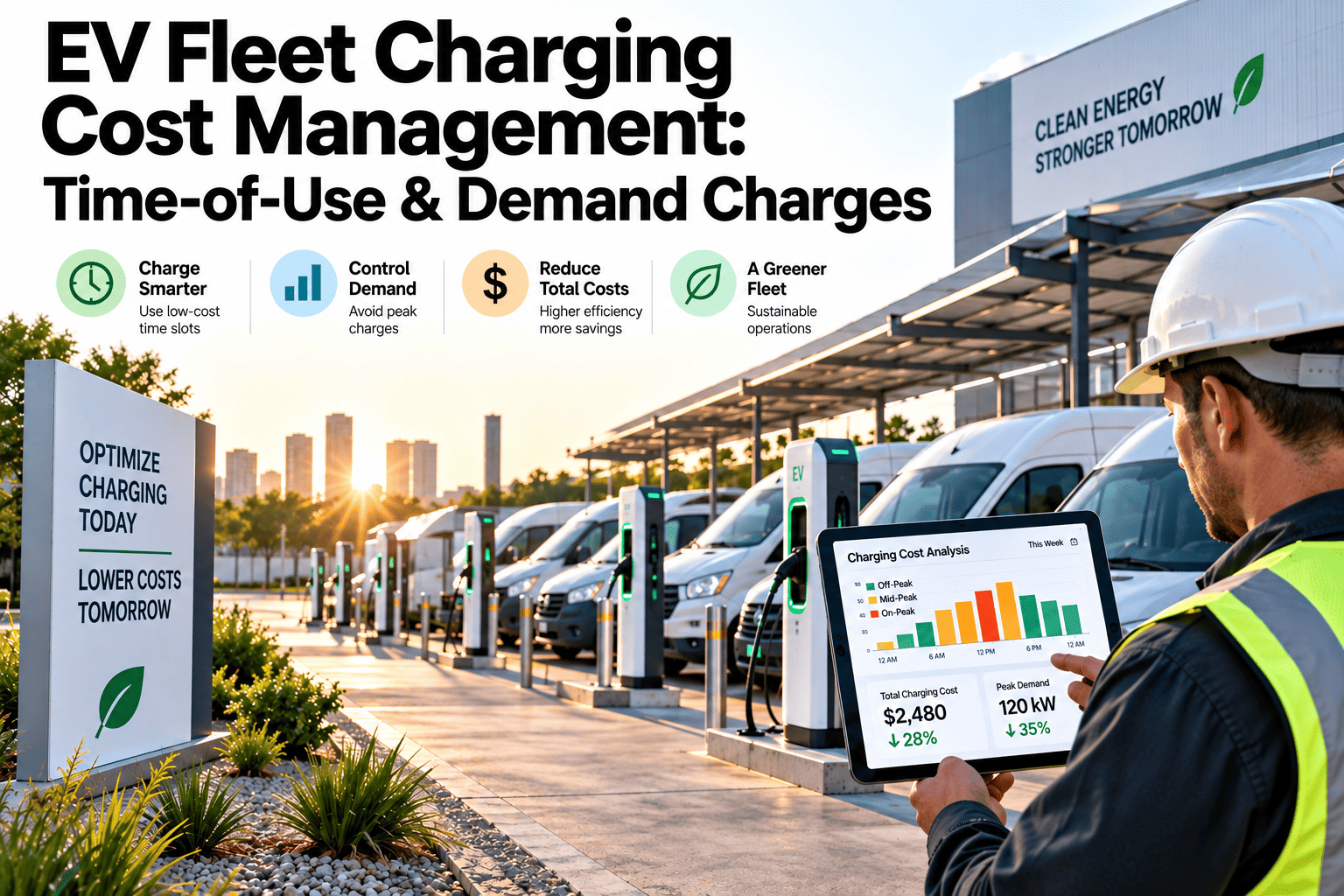
Demand charges are billed on peak 15-minute electricity consumption in a billing period — not total energy used. A fleet where 20 vehicles plug in simultaneously at 4:30 PM creates a demand peak that drives the entire month's demand charge. OxMaint's charging schedule optimization staggers vehicle charging across off-peak windows — reducing demand peaks by 35–45% without reducing vehicle readiness for morning dispatch.
Depot Load Profile — Unmanaged vs OxMaint Optimized Charging
High
Med
Low
6AM8AM10AM12PM2PM4PM6PM8PM10PM12AM2AM4AM
Unmanaged charging (demand peak at shift-end)OxMaint optimized (off-peak distribution)
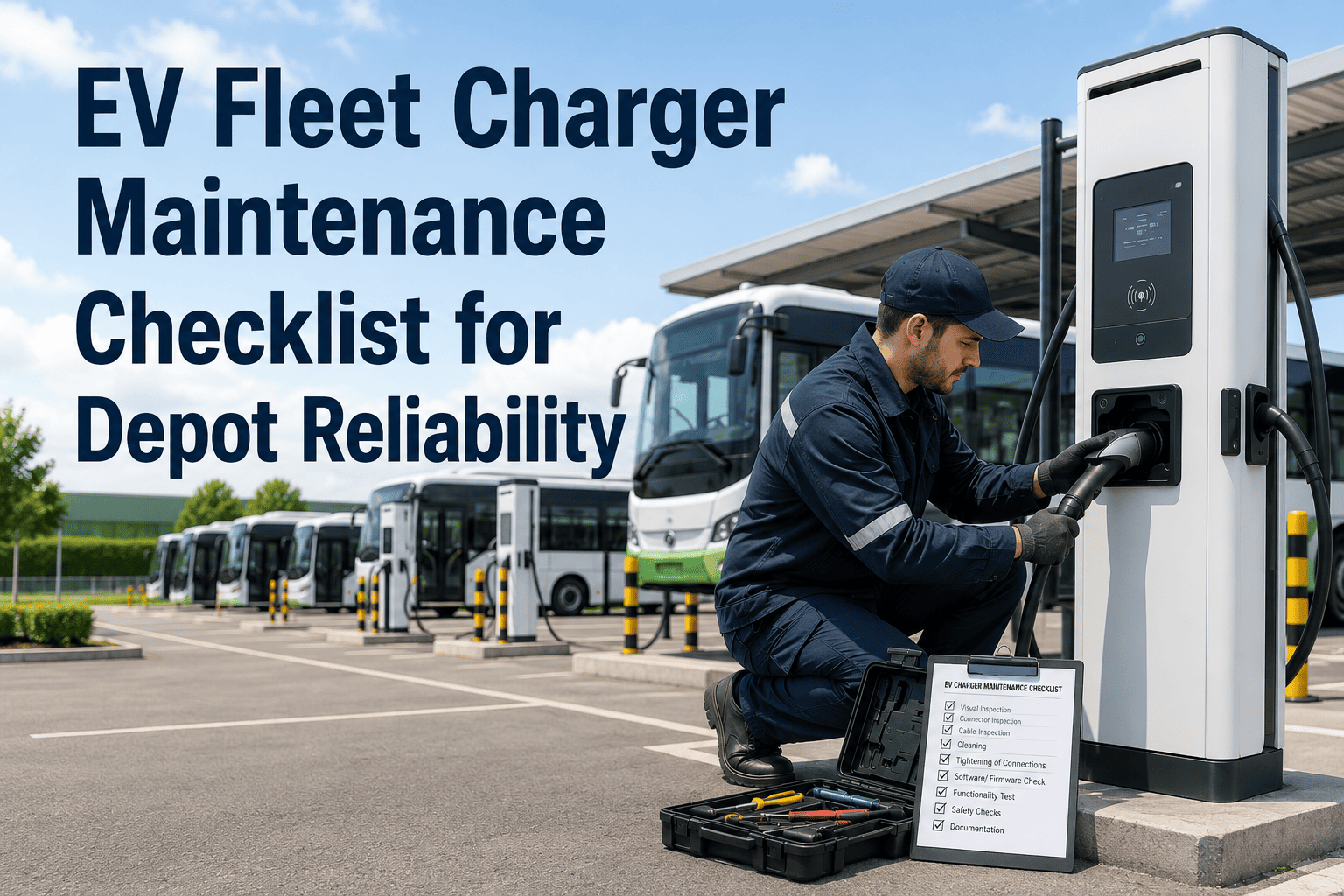
Charging equipment has its own maintenance requirements — connectors degrade, firmware requires updates, power electronics need inspection, and cable management systems wear. OxMaint schedules charging infrastructure PM alongside vehicle PM — one platform, one schedule, one compliance record.
Connector Inspection
Monthly
CCS / CHAdeMO pin condition
Cable jacket — no cracking or abrasion
Locking mechanism function
Firmware Updates
Quarterly
OCPP protocol version check
OEM firmware update deployment
Network connectivity verification
Power Electronics
Annual
Thermal scan — hot connections
Output voltage and current accuracy
Ground fault protection test
Energy Metering
Annual
kWh meter calibration check
Per-vehicle session billing accuracy
OCMF reporting compliance
AI and Technology Integration for EV Charging Management
Forward-looking fleet operators in the US, UK, and Germany are combining OxMaint with AI optimization models and smart grid APIs to make EV charging infrastructure self-managing. The goal is zero manual intervention in charging schedules — and zero surprise utility bills.
AI Digital Twin — Charging Optimization
AI models each vehicle's expected return SoC from telematics route data, calculates required charge volume for next-day routes, and assigns each vehicle to the optimal charger and start time. Demand peak reduction of 40–45% achieved without any manual scheduling input from the fleet manager.
OCPP / Telematics Integration
Open Charge Point Protocol (OCPP 2.0.1) connects OxMaint to all major charger networks — ChargePoint, EVSE, Blink, and fleet-owned hardware. Real-time SoC data from vehicle BMS via OBD or CAN bus feeds charging schedule decisions without driver input.
Utility API — Real-Time TOU Pricing
OxMaint integrates with utility smart meter APIs to receive real-time time-of-use pricing. Charging schedules adjust dynamically when grid conditions cause pricing changes — vehicles always charge at the lowest available rate without fleet manager intervention.
SAP / ERP — Energy Cost Allocation
Per-vehicle kWh consumption data from OxMaint posts to SAP cost centres — giving fleet operators accurate energy cost per mile for each vehicle. Enables direct comparison of EV operating economics against ICE equivalents in the same fleet cost reporting.
40%
Demand charge reduction with optimized charging schedules
98%
Vehicle departure readiness with optimized overnight charging
30%
Charger downtime reduction with scheduled PM vs reactive repair
3×
Lower infrastructure cost with advance planning vs reactive install
"We had a $43,000 surprise on our first utility bill after the EVs arrived. OxMaint's charging schedule optimization cut our demand peak by 42% within 30 days. We also put all the chargers into OxMaint as assets — the PM schedule means we haven't had an unplanned charger outage in 14 months."
OxMaint analyses each vehicle's return SoC, next-day route requirements, and the depot's time-of-use tariff to assign start times that spread load across off-peak windows. Demand peaks are typically reduced by 35–45% without affecting vehicle availability for morning dispatch.
OxMaint integrates with OCPP 1.6 and 2.0.1 compatible chargers — covering ChargePoint, Blink, ABB Terra, and most fleet-grade hardware. CCS, CHAdeMO, and J1772 connector types all supported. Integration with vehicle BMS via OBD/CAN for real-time SoC data.
Yes — OxMaint captures kWh consumed per vehicle per charging session and calculates energy cost per mile using the active utility tariff. Direct EV vs ICE cost-per-mile comparison is available in the fleet cost reporting dashboard.
Plan for 1.2–1.5 charger circuits per vehicle, with Level 2 for overnight fleets and DC Fast for high-utilization or short-dwell operations. Size panel capacity for 70% simultaneous charging peak — not 100%. Order utility infrastructure upgrade at least 12 months before first vehicle delivery.
Monthly connector inspection, quarterly firmware updates, and annual power electronics inspection including thermal scanning and meter calibration. OxMaint schedules all three automatically for every charger asset in the depot — work orders generated without manual input.
EV Charging Infrastructure — OxMaint
Plan the Depot Right. Manage Charging Costs. Keep Every Charger Running.