A national HVAC service company in Phoenix running 94 technician vans was spending $218,000 per year on brake replacements — nearly double the industry benchmark for a fleet of that size. The maintenance manager assumed it was the terrain and stop-and-go urban routes. When OxMaint harsh event analytics were deployed across the fleet, the first 30-day report showed something different: 11 drivers were generating 74% of all harsh braking events, with event rates 4.8× the fleet average. The routes were not the problem. The drivers were. Within 60 days of targeted coaching triggered by OxMaint's harsh event data, fleet-wide brake event rates fell 41% and the annualised brake replacement forecast dropped $88,000. Sign in to OxMaint to activate harsh event analytics for your fleet and see your first per-driver event breakdown within 24 hours, or book a demo to see the full harsh event dashboard configured for your vehicle types and routes.
Harsh Event Detection · Fleet Safety Analytics · OxMaint AI
Hard Braking. Rapid Acceleration. Sharp Turns. Near-Miss Events. One Dashboard That Shows Which Drivers Are Generating Them and How Often.
OxMaint's harsh event detection engine captures every kinematic event above configured thresholds — timestamped, GPS-located, and scored against driver history. AI analytics identify patterns, rank drivers by risk, and trigger coaching automatically before events become accidents.
$88K
Annual brake replacement forecast reduction within 60 days of harsh event coaching at the Phoenix HVAC fleet
41%
Fleet-wide harsh braking event rate reduction after targeted coaching from OxMaint event analytics
74%
Of all harsh events generated by just 11 of 94 drivers — invisible without per-driver event breakdown
3.1×
Accident probability multiplier for drivers in the top quartile of harsh braking events — FMCSA crash causation data
11
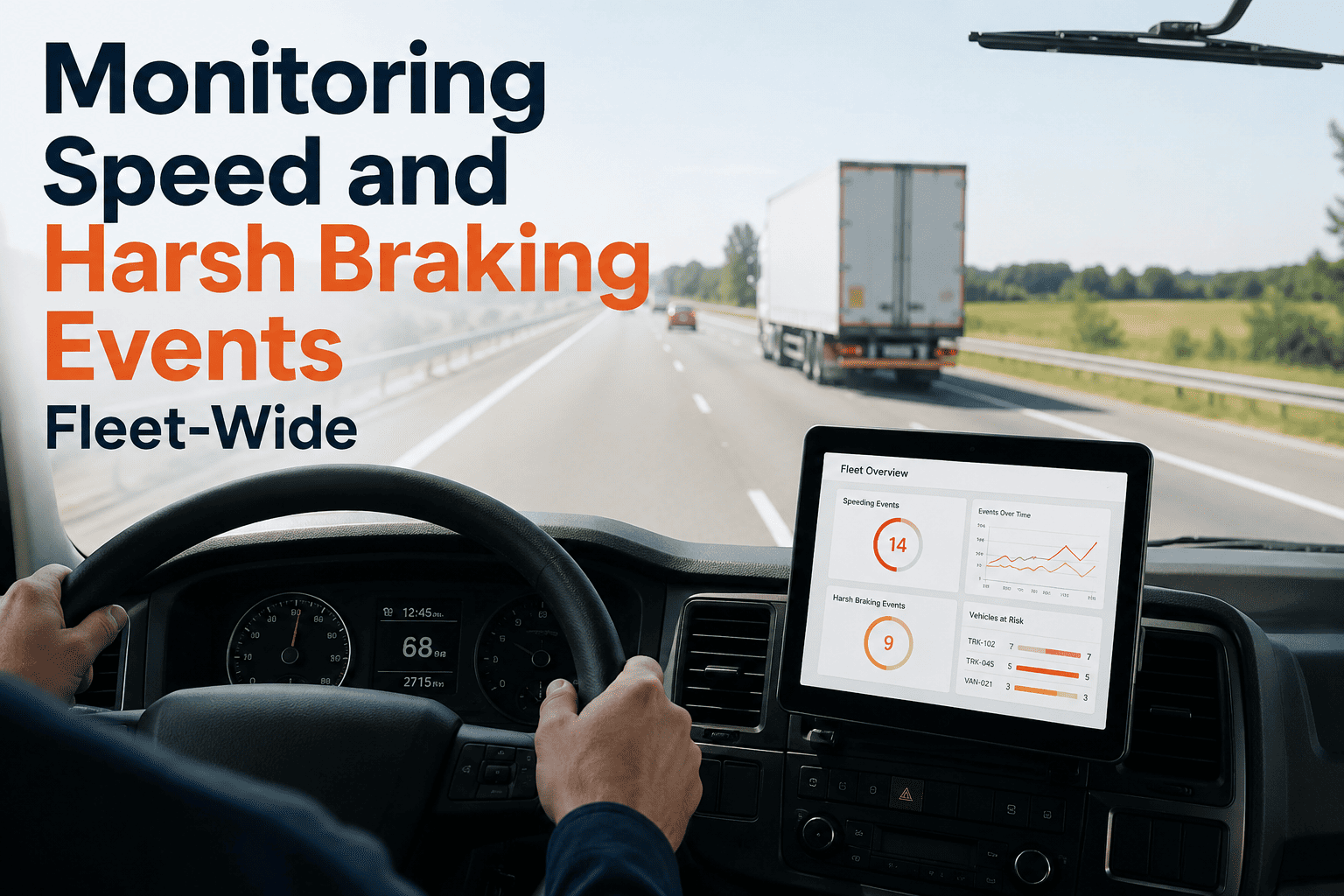
Drivers generated 74% of all harsh events in a 94-vehicle fleet — and none of them knew they were the problem. Fleet averages hide the real picture. A fleet average of 6 harsh braking events per 100 miles looks acceptable — until you separate the 80 drivers averaging 3.2 events from the 11 averaging 15.4. Those 11 drivers are generating excess brake wear, fuel burn, and accident risk that their colleagues are not. OxMaint's harsh event analytics surface this split in the first report, so coaching is targeted at the drivers who need it — not spread across the entire fleet.
Sign in to OxMaint to see your fleet's harsh event distribution broken out by driver today.
Four Harsh Event Types OxMaint Tracks — With the Physics Behind Each One
HBR — Hard Braking
Hard Braking Detection — The Highest-Consequence Harsh Event
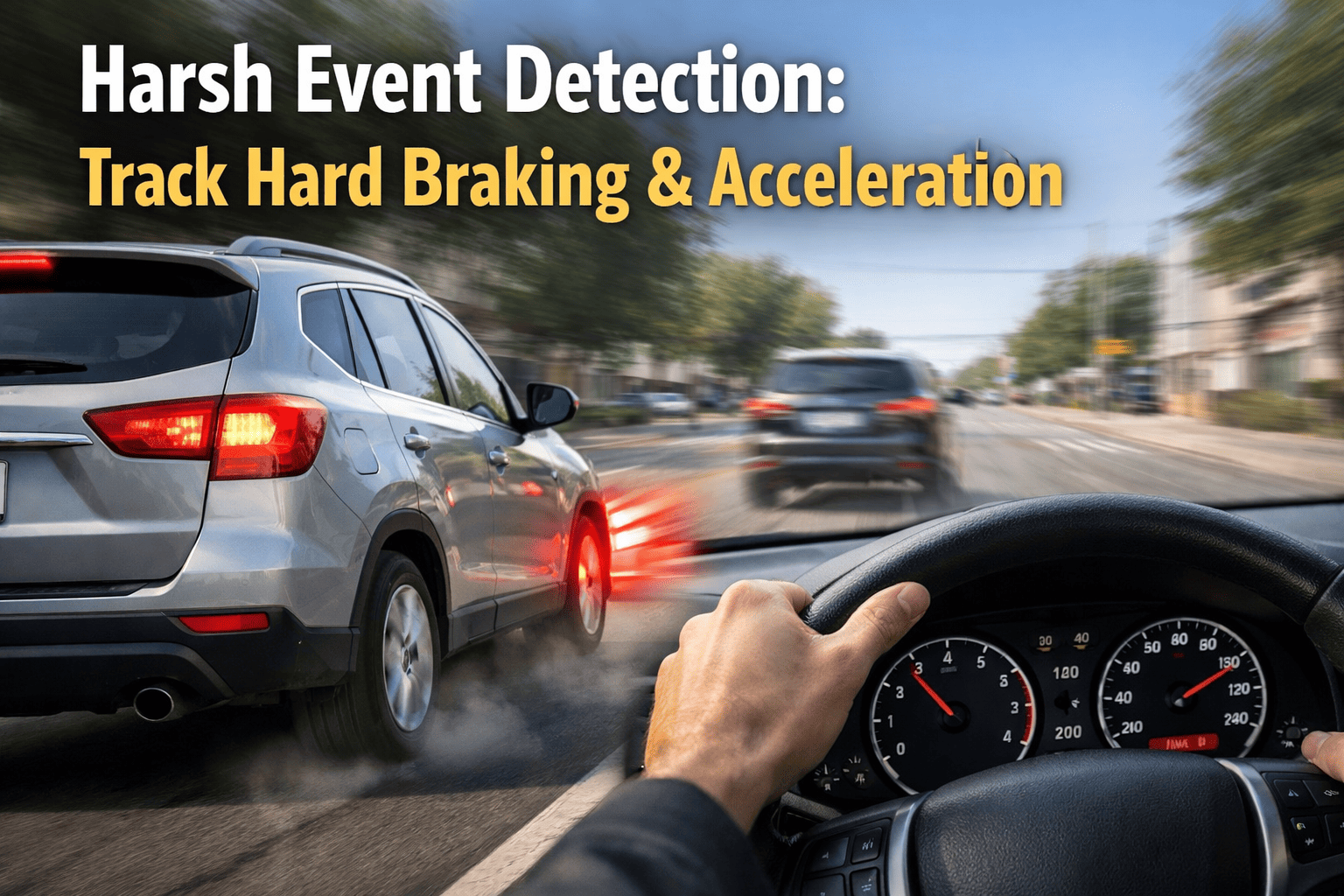
Hard braking events above 0.4g deceleration are the single strongest predictor of rear-end collision involvement in FMCSA crash causation studies. A driver generating more than 8 hard braking events per 100 miles is 3.1× more likely to be in a rear-end collision in the following 12 months than a driver averaging 2 events. Beyond accident risk, hard braking events are direct brake wear accelerators — each hard stop puts more thermal stress on brake components than 3–4 normal stops, shortening pad and rotor life significantly. OxMaint captures every hard braking event above threshold — timestamped, GPS-located, speed at event, and magnitude in g-force — linked to the driver profile.
Sign in to OxMaint to configure hard braking threshold and driver alert settings for your fleet.
Hard Braking Parameters Tracked Per Event
Deceleration magnitude — g-force at peak deceleration
Speed at event start — higher speed events weighted more heavily
Duration — brief vs sustained deceleration event classification
Location — GPS coordinates for route hotspot analysis
Consequences OxMaint Hard Braking Data Prevents
Rear-end collision risk — 3.1× multiplier at >8 events/100 mi
Brake component wear — excess pad and rotor degradation
Cargo damage — unsecured load movement at hard brake events
RAC — Rapid Acceleration
Rapid Acceleration Analytics — Fuel, Drivetrain, and Following Distance
Rapid acceleration events above 0.35g are the second most impactful harsh event type for fleet operating cost — each aggressive acceleration event burns 15–22% more fuel than a smooth throttle application from the same speed, and the pattern of aggressive acceleration followed by hard braking (the "jackrabbit" pattern) is the highest fuel-waste behaviour profile in commercial fleets. OxMaint identifies jackrabbit pattern drivers — those whose rapid acceleration and hard braking events are temporally correlated — as a distinct coaching category, since the intervention required is different from isolated event correction.
Book a demo to see jackrabbit pattern identification in OxMaint's harsh event analytics.
Rapid Acceleration Parameters Tracked
Acceleration magnitude — g-force at peak acceleration
Jackrabbit score — correlation with subsequent hard braking
Fuel excess per event — estimated against smooth-acceleration baseline
Time of day — late shift jackrabbit patterns indicate fatigue
Cost Consequences OxMaint Acceleration Data Quantifies
Fuel waste — 15–22% excess per aggressive acceleration event
Drivetrain stress — transmission and driveshaft load spikes
SCT — Sharp Cornering
Sharp Cornering Events — Rollover Risk and Tyre Wear Indicators
Sharp cornering events above 0.4g lateral acceleration are the primary rollover precursor for high-centre-of-gravity vehicles — vans, box trucks, tankers, and flatbeds. A single cornering event above 0.6g lateral acceleration in a fully loaded box truck takes the vehicle to within 15% of its rollover threshold. Beyond rollover risk, lateral acceleration events above 0.4g produce measurable tyre sidewall stress that shortens tyre life by 8–12% per event cycle and concentrates wear on the inner shoulder — the least visible part of the tyre in routine inspections. OxMaint links sharp cornering event frequency to tyre replacement scheduling — flagging vehicles for tyre inspection when event rates indicate accelerated sidewall degradation.
Sign in to OxMaint to configure cornering threshold alerts for your van or truck fleet.
Cornering Event Parameters Tracked
Lateral G-force magnitude — threshold differs by vehicle class
Turn radius vs speed — vehicle-specific rollover proximity calculation
Load state if known — loaded vs unloaded cornering risk differs
Location — intersection or curve type identification
Consequences Cornering Data Prevents
Rollover events — tipping threshold proximity alerts for HGVs
Tyre sidewall damage — early replacement trigger from event data
NMI — Near-Miss Events
Near-Miss Detection — The Events That Predict the Next Accident
Near-miss events — detected through the combined signature of hard braking + sudden swerve + speed above threshold occurring within a 3-second window — are the most valuable predictive signal in fleet safety analytics. Insurance actuarial data consistently shows that drivers who generate 2+ near-miss events in a 30-day window are 6.8× more likely to be involved in a reportable accident within the following 90 days. OxMaint's near-miss detection model fuses OBD kinematic data with AI camera vision — combining acceleration signature with driver eye-tracking data to confirm the driver was actively responding to an external hazard rather than simply generating a coincident kinematic pattern.
Book a demo to see near-miss detection configured on your fleet's camera and telematics hardware.
Near-Miss Detection Parameters
Compound kinematic signature — HBR + swerve within 3-second window
Camera vision confirmation — driver gaze and steering input correlated
Speed at event — near-miss at 65 mph weighted vs 25 mph urban
30-day frequency — 2+ events triggers immediate P1 coaching alert
Predictive Value of Near-Miss Data
6.8× accident probability within 90 days of 2+ near-miss events
P1 coaching trigger fires automatically — no manager action required
OxMaint Harsh Event Analytics · Fleet Safety Intelligence
Every Hard Brake. Every Hard Corner. Every Near-Miss. Scored, Ranked, and Coached Automatically.
OxMaint harsh event analytics turn raw telematics data into the coaching intelligence that prevents your next $200K accident.
How OxMaint AI Turns Harsh Events Into Coaching Intelligence
Three AI Analytics Layers That Convert Raw Events Into Actionable Fleet Safety Data
Layer 1 · Pattern Recognition
Driver Behaviour Pattern Analysis
OxMaint AI identifies whether a driver's harsh events are random (equipment or route-related) or patterned (time-of-day clusters, route-specific hotspots, end-of-shift fatigue patterns). Pattern-identified events target the coaching intervention at the correct cause — not just the event count.
Output: Pattern type — random, time-clustered, fatigue-associated, or route-specific
Layer 2 · Predictive Risk
Accident Probability Scoring
OxMaint's predictive model combines harsh event frequency, type, magnitude, and driver history to calculate accident probability over the next 30 and 90 days. Drivers in the top risk decile are flagged to managers with a plain-language risk summary — not just a score — enabling evidence-based coaching conversations.
Output: 30-day and 90-day accident probability score per driver — updated weekly
Layer 3 · Fleet Intelligence
Route Hotspot and Vehicle Analysis
Harsh events generated by multiple drivers at the same GPS location indicate a route or road design issue, not a driver behaviour issue. OxMaint identifies these hotspot segments and flags them to dispatch for route review — preventing a coaching programme from trying to change driver behaviour at a location where no amount of coaching will eliminate the events.
Output: Weekly route hotspot report — top 10 high-event segments across fleet
Harsh Event Benchmarks — US Commercial Fleet Data by Vehicle Type
Harsh Event Severity — Risk Classification by Type and Magnitude
P1 — Immediate Action
Near-Miss or Extreme Event
Near-miss compound event, hard braking above 0.7g, or cornering above 0.6g in a loaded HGV. Manager notification fires immediately. Video clip retrieved from in-cab camera. Coaching session scheduled within 24 hours — no delay, no queue.
P2 — Coaching Priority
Sustained Pattern Above Threshold
Hard braking or acceleration events above fleet threshold sustained over 3 consecutive shifts. OxMaint generates a coaching plan with the driver's specific event data pre-loaded. Manager review recommended within 5 business days — automated follow-up if not actioned.
P3 — Monitor and Review
Isolated or Borderline Events
Single events near threshold or isolated spikes without pattern. Logged to driver history, visible in weekly report. No immediate coaching trigger — but tracked for pattern emergence. Three P3 events in 14 days automatically escalate to P2 classification.
41%
fleet-wide harsh braking event reduction within 60 days of OxMaint coaching deployment — Phoenix HVAC fleet, 94 vehicles
$0.07
per-mile fuel saving from reducing harsh acceleration events — measured across OxMaint customer fleet data 2024
28%
tyre and brake component lifecycle extension at fleets that reduced cornering and braking events below top-quartile benchmarks
3.1×
accident probability for drivers in harsh event top quartile vs bottom quartile
6.8×
90-day accident probability increase following 2+ near-miss events in a 30-day window
24h
time to first per-driver harsh event report after OxMaint telematics integration
74%
of fleet harsh events typically generated by the bottom 10–15% of drivers — the coaching target
Your fleet's hard braking events are already in your telematics data. The question is whether anyone is using them — or whether they are waiting for an accident to make the pattern visible.
OxMaint harsh event analytics make every event count — surfacing the patterns before the claims arrive.
Frequently Asked Questions — Harsh Event Detection Analytics
What g-force thresholds does OxMaint use for harsh event detection?
OxMaint default thresholds are 0.4g for hard braking and cornering, and 0.35g for rapid acceleration — configurable per vehicle class. Class 8 trucks use tighter thresholds than vans, and tanker fleets use the most restrictive settings due to load surge risk. All thresholds are adjustable per fleet and vehicle type.
Does OxMaint differentiate between driver-caused events and road-condition events?
Yes — OxMaint's AI cross-references event GPS location against route hotspot data. Events that occur at a location where 60%+ of drivers generate events are flagged as route-related rather than driver-caused, and excluded from that driver's coaching score. This prevents coaching drivers for environmental conditions they cannot control.
How quickly does harsh event data appear in OxMaint after a telematics integration?
OxMaint telematics API integrations (Samsara, Geotab, Verizon, Motive) begin ingesting harsh event data within hours of connection. First per-driver event reports are available within 24 hours of integration for fleets with existing telematics installed. Historical data can be imported from most platforms for up to 12 months of baseline analysis.
Can OxMaint link harsh events to specific vehicle maintenance outcomes?
Yes — OxMaint's CMMS integration links harsh event frequency per vehicle to brake and tyre maintenance records. Vehicles with high event rates on specific drivers are flagged for accelerated inspection intervals, and the correlation between event frequency and component replacement frequency is reported monthly for fleet cost analysis.
How does OxMaint near-miss detection differ from standard harsh event detection?
Near-miss detection requires a compound kinematic signature — hard braking plus lateral movement within a 3-second window — rather than a single threshold breach. Where AI camera vision is available, OxMaint also confirms driver eye movement and steering input to distinguish a genuine near-miss from a coincident kinematic pattern such as a speed bump plus normal steering.
The Events That Predict Your Next Accident Are Already in Your Data. Is Anyone Reading Them?
OxMaint harsh event analytics surface the drivers, patterns, and locations that matter — automatically, from your existing telematics data, with coaching plans ready to deploy.