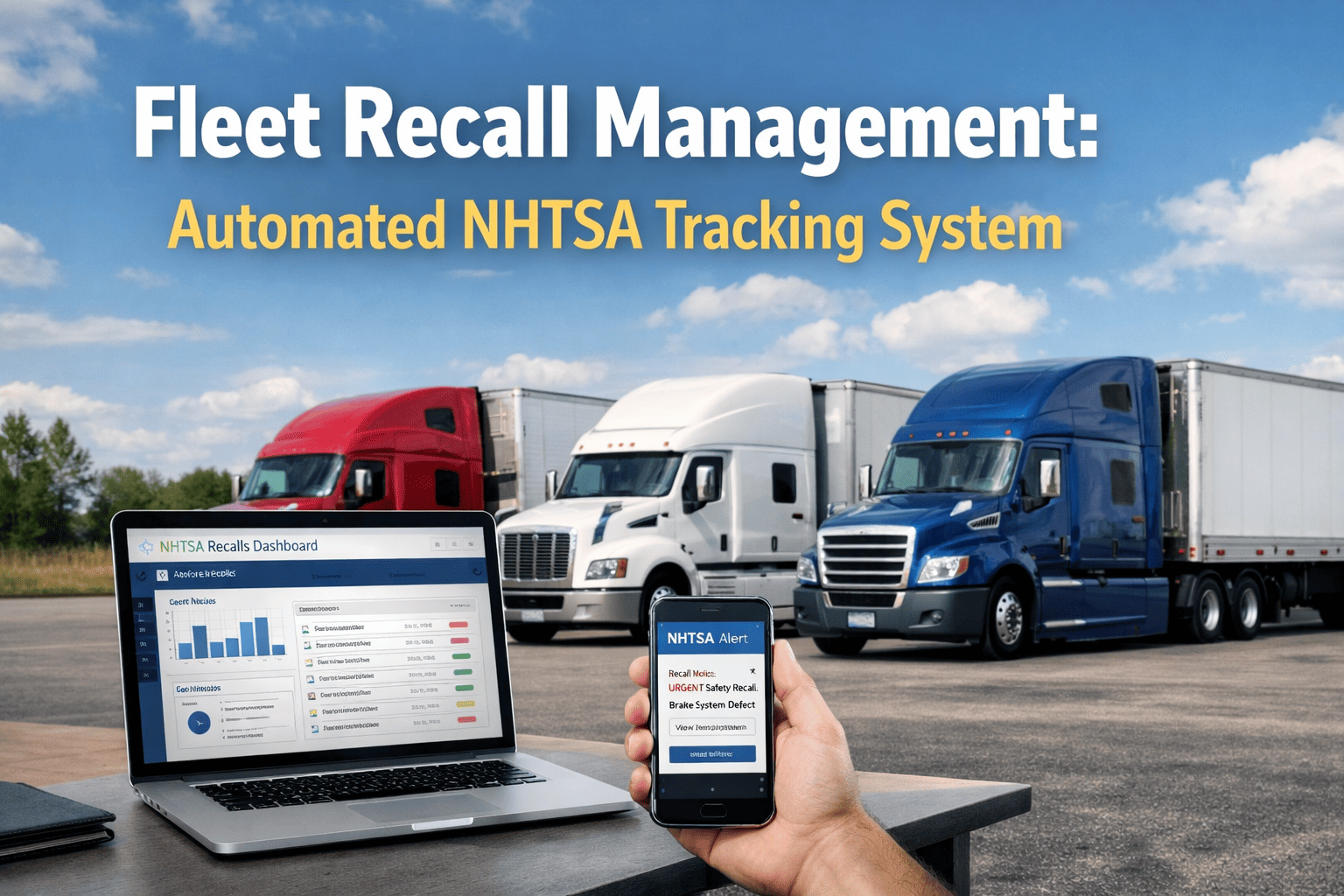
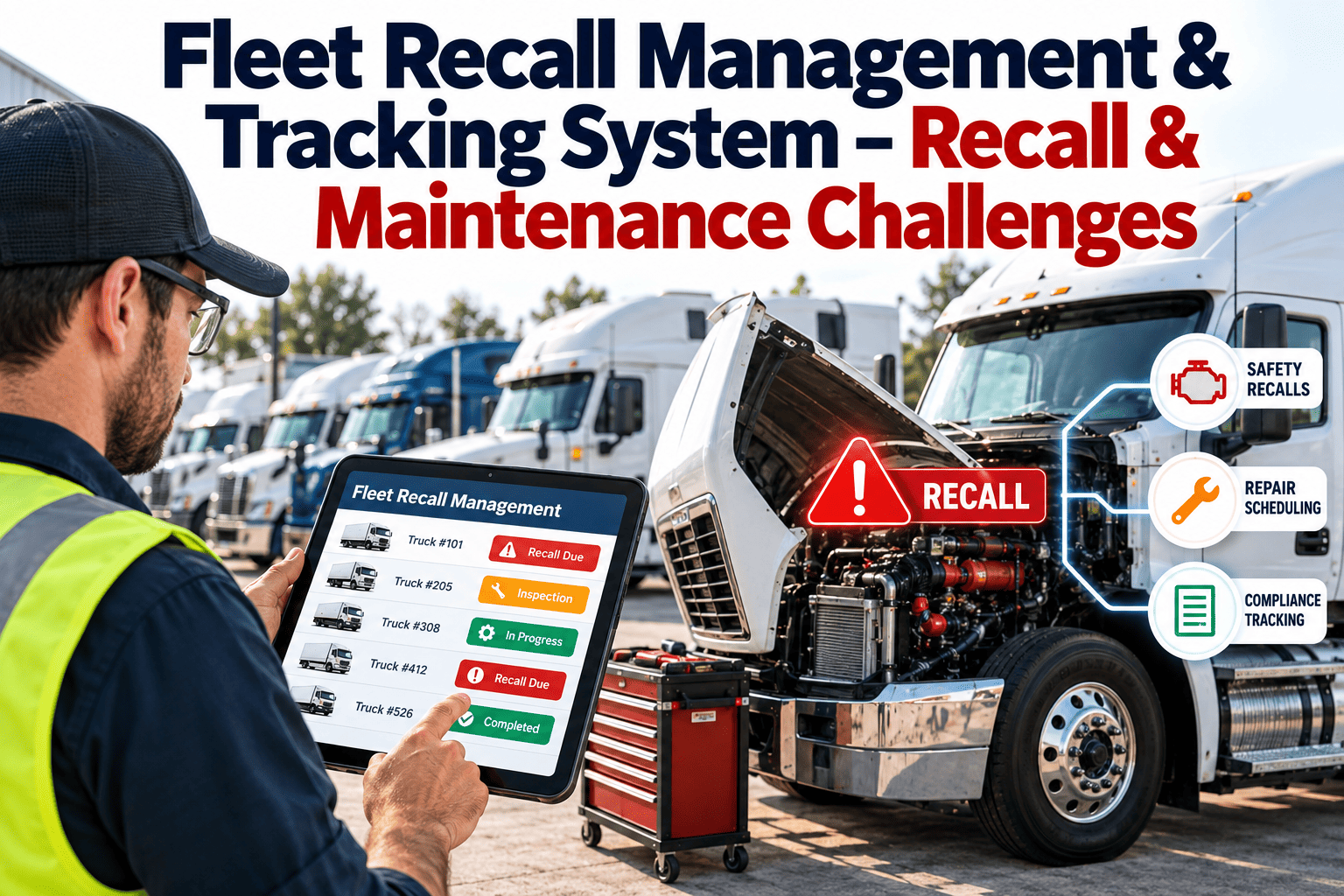
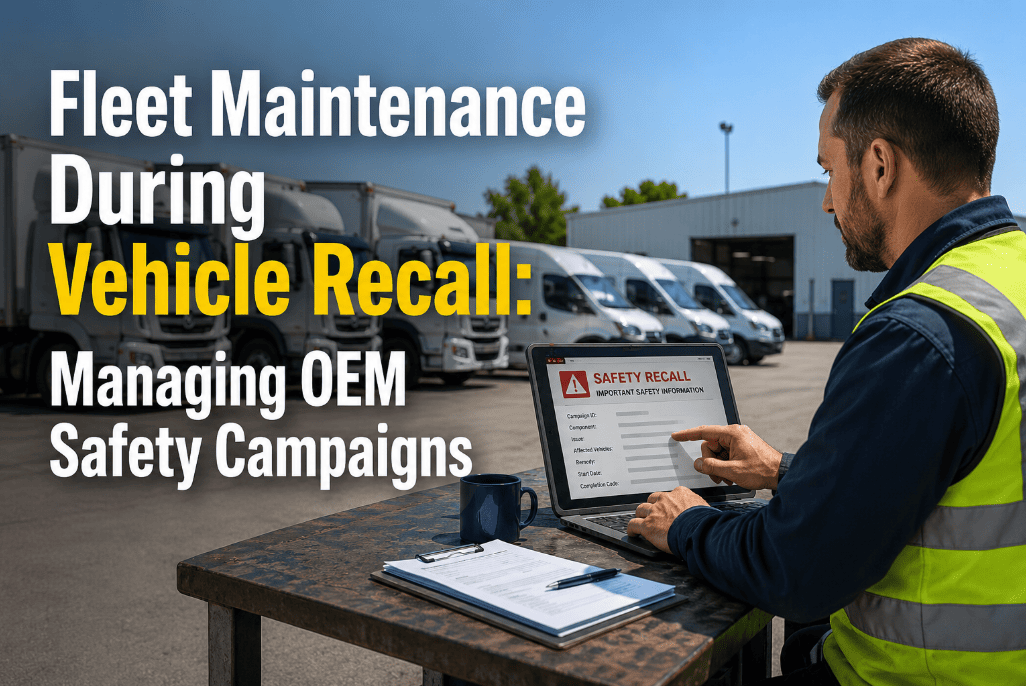
A national refrigerated carrier discovered during a DOT compliance review that 11 vehicles in its 280-unit fleet had open NHTSA safety recalls that had been unaddressed for between 8 and 22 months — not because the safety manager had ignored them, but because NHTSA's recall notifications had arrived in a generic inbox that nobody monitored systematically, the VINs on the notices had never been matched against the fleet roster, and there was no process that connected an NHTSA notification to a scheduled repair appointment. The recalls involved brake system defects. Three of the vehicles had been dispatched more than 400 times since the recall was issued. The carrier faced a proposed civil penalty of $22,000 per recalled vehicle per day the vehicle continued to operate after the carrier knew or should have known about the recall — and "should have known" is a standard that a properly managed fleet safety programme is presumed to meet. Fleet recall management is not a passive compliance obligation — it is an active monitoring, tracking, and remediation programme that requires systematic VIN-level recall detection, repair scheduling, and documentation. Sign in to OxMaint to activate automated NHTSA recall monitoring for your fleet, or book a demo to see how OxMaint matches every VIN in your fleet against the NHTSA recall database daily and manages every open recall from notification to documented repair completion.
Fleet Recall Management · NHTSA Recall Tracking · VIN Matching · Automated Recall Alerts · OxMaint
Every VIN in Your Fleet Matched Against the NHTSA Recall Database Daily. Open Recalls Identified Before Your Drivers Are. Repair Scheduling Automated. Compliance Documentation Instant.
OxMaint fleet recall management monitors every vehicle in your fleet against NHTSA recall data daily — generating immediate alerts when any vehicle matches an open recall, automating repair scheduling with authorized dealers, tracking remediation to documented completion, and maintaining the recall compliance record that protects your fleet from the per-vehicle, per-day civil penalty exposure that open recalls create.
$22K
per-vehicle per-day proposed civil penalty for knowingly operating a recalled commercial vehicle — exposure that accumulates from the date the carrier knew or should have known
Daily
OxMaint NHTSA database match frequency — every vehicle VIN compared to every open NHTSA recall every day, with immediate alert on first match
22 mo
longest unaddressed recall duration found during the carrier audit described above — 22 months of per-day penalty exposure on a brake system defect recall
$22K
The $22,000 per-vehicle per-day civil penalty for knowingly operating a recalled commercial vehicle applies from the date the carrier knew or should have known about the recall — and regulators take the position that a properly managed fleet safety programme should know within days of NHTSA issuance. A brake system recall that sits unaddressed for 22 months across 11 vehicles represents exposure of over $165 million in theoretical maximum civil penalties — before any accident involving the recalled defect. OxMaint daily VIN-level recall monitoring eliminates the "should have known" argument entirely — every new NHTSA recall is matched against every vehicle in the fleet the day it is issued, and the recall is in the repair scheduling queue before the driver completes the first post-recall dispatch.
Four Fleet Recall Management Domains OxMaint Automates
VIN — VIN Recall Matching
Daily Automated VIN Match Against NHTSA Recall Database
NHTSA issues recalls against specific VIN ranges — and identifying which vehicles in a fleet are affected requires matching every fleet VIN against every open recall campaign, a process that must be repeated continuously as new recalls are issued. OxMaint automated VIN matching runs every fleet vehicle's VIN against the complete NHTSA recall database daily — identifying new recall matches within 24 hours of NHTSA issuance and generating immediate alerts to the fleet safety manager, the vehicle's assigned driver, and the maintenance coordinator simultaneously. The match is run against the fleet roster that is maintained in OxMaint — meaning every vehicle in the fleet is monitored, not just those whose VINs were manually entered into a separate recall tracking system that may not be current.
Sign in to OxMaint to activate automated NHTSA recall matching for your fleet.
Key VIN Matching Data OxMaint Monitors
NHTSA recall campaign ID — unique recall identifier per safety defect campaign
VIN range match — specific VINs included in each recall campaign
Recall component — brake systems, steering, fuel system, electrical per campaign
Safety risk level — NHTSA severity rating per recall campaign
Recall status — open, remedy available, recall complete per vehicle-campaign pair
Recall Matching Failures OxMaint Prevents
Unmonitored inbox — NHTSA notification received but not matched to fleet VINs
Stale fleet roster — recalled vehicle not matched because roster was not current
24-hour+ detection lag — new recall not identified until manual periodic check
ALRT — Recall Alert Management
Multi-Stakeholder Recall Alert Distribution and Escalation
A recall notification that reaches one person's inbox and sits unacknowledged is not materially different from no notification at all. OxMaint recall alerts are distributed simultaneously to every stakeholder with a role in the response — the fleet safety manager receives the compliance notification with risk assessment, the maintenance coordinator receives the repair scheduling task with dealer contact information, and the vehicle's assigned driver receives a notification of the open recall status with instructions on whether continued operation is permitted pending repair. For recalls classified as imminent safety hazards, OxMaint generates an immediate out-of-service recommendation with escalation to the fleet director that requires acknowledgement before the vehicle's next dispatch assignment is permitted in the system.
Book a demo to see multi-stakeholder recall alert distribution in OxMaint.
Key Alert Distribution OxMaint Manages
Safety manager compliance alert — recall details with risk assessment and regulatory exposure
Maintenance coordinator repair task — dealer contact and scheduling requirement
Driver vehicle notice — open recall status with operation guidance
Fleet director escalation — imminent hazard recalls requiring director acknowledgement
Alert Distribution Failures OxMaint Prevents
Single inbox dependency — recall notification siloed with one person on vacation
Driver uninformed — recalled vehicle operated by driver with no recall notification
Hazard operated without escalation — imminent safety recall not escalated to director
SCHED — Repair Scheduling
Authorized Dealer Recall Repair Scheduling and Status Tracking
NHTSA safety recall repairs are completed at the manufacturer's authorized dealers at no cost to the vehicle owner — but scheduling and tracking the repairs across a multi-vehicle fleet requires coordination between the fleet maintenance operation and multiple dealer service departments that may have varying appointment availability. OxMaint recall repair scheduling creates a repair work order for each recall-vehicle pair immediately on recall identification — with the authorized dealer's contact information, the recall campaign number for the dealer reference, and the scheduling priority based on the recall's safety classification. High-priority safety recalls generate automatic appointment follow-up alerts if no repair appointment is confirmed within 48 hours of the initial recall notification. The repair scheduling track in OxMaint shows which recalled vehicles have confirmed appointments, which are awaiting scheduling, and which repairs have been completed and documented.
Sign in to OxMaint to configure recall repair scheduling workflows for your fleet.
Key Repair Scheduling Data OxMaint Tracks
Authorized dealer assignment — nearest authorized dealer for the vehicle's make per recall
Appointment confirmation — scheduled repair date and dealer confirmation number
Scheduling priority — recall severity rating driving appointment urgency
Open recall age — days since recall identification without confirmed appointment
Scheduling Failures OxMaint Prevents
No scheduling action — recall identified but no repair work order created
Extended open status — recalled vehicle operating for weeks without appointment
Priority inversion — critical safety recall scheduled after lower-severity recall
DOC — Compliance Documentation
Recall Completion Documentation and Compliance Record Retention
Documenting that a recall repair was completed is as important as completing the repair — because the documentation is the only evidence that the fleet can produce in an enforcement action, accident investigation, or insurance claim to demonstrate that the recalled defect was remediated before any incident occurred. OxMaint recall documentation workflow requires dealer repair order capture at recall completion — with the dealer's repair order number, the technician's certification that the recall campaign work was completed, and the vehicle's post-repair inspection result stored against the vehicle's recall record. Completed recalls are automatically marked as closed in OxMaint's compliance record, and the recall completion documentation is retained for the vehicle's operational life plus the applicable statute of limitations period.
Book a demo to see recall completion documentation management in OxMaint.
Key Documentation OxMaint Captures at Completion
Dealer repair order — dealer-issued repair order confirming recall campaign work performed
Technician certification — dealer technician attestation that recall remedy was applied
Completion date — date recall remedy was completed per dealer records
Recall campaign closed — NHTSA campaign marked complete per vehicle VIN in OxMaint
Documentation Failures OxMaint Prevents
No completion record — repair done but no documentation in fleet safety record
Recall still open in system — completed recall not closed in compliance tracking
Lost repair order — dealer documentation not captured before paper copy is misplaced
OxMaint AI · Fleet Recall Management System
Every VIN Monitored Daily. Every Recall Flagged Within 24 Hours. Every Repair Scheduled and Tracked. Every Completion Documented. No Recalled Vehicle Operates Undetected in Your Fleet.
OxMaint automated recall management closes the $22,000-per-vehicle-per-day liability gap that exists in every fleet that tracks recalls through email inboxes and periodic manual checks.
Three Technologies That Make OxMaint Recall Management Systematic
How OxMaint AI Closes Every Gap Between NHTSA Recall Issuance and Fleet Remediation
Technology · NHTSA Integration
Real-Time NHTSA Recall Database API Integration
OxMaint connects directly to the NHTSA recall database via API — receiving recall campaign data as it is published rather than relying on email notifications or periodic manual database checks. The daily VIN match against current recall data ensures that every new campaign is evaluated against the fleet roster within 24 hours of NHTSA publication, regardless of whether a notification email was sent or received.
Detection speed: New recall matched to fleet VINs within 24 hours of NHTSA issuance
Technology · Risk Classification
AI Recall Risk Scoring and Priority Response Assignment
OxMaint AI classifies each recall by safety risk level — applying NHTSA severity classification, affected component criticality (brake, steering, fuel vs. non-safety systems), and the number of affected vehicles in the fleet to produce a priority score that determines scheduling urgency and escalation requirements. Critical safety recalls affecting brake or steering systems generate immediate director-level escalation with a 24-hour repair scheduling requirement.
Classification: Brake/steering/fuel recalls flagged Critical — 24-hour scheduling requirement
Technology · Fleet Registry Sync
Automatic Fleet Roster Sync — Acquisitions and Disposals Covered
OxMaint fleet recall monitoring runs against the current fleet roster that is maintained in the platform — meaning vehicles added through acquisition, lease, or purchase are automatically included in recall monitoring from the date they enter the fleet record. Vehicles removed from the fleet are automatically excluded. Fleet roster changes are not a manual step in the recall monitoring process.
Coverage: 100% of current fleet VINs monitored — no manual roster update required for recall match
Recall Risk Register — Where Open Recalls Carry the Highest Consequence
Critical — Immediate OOS
Brake System Safety Recalls
Brake defect recalls require immediate out-of-service consideration — a vehicle with an active brake system recall involved in an accident has its entire maintenance history subject to discovery. OxMaint flags brake recalls as Critical Priority with director escalation and out-of-service recommendation until appointment is confirmed.
Critical — 24-Hour Schedule
Steering Component Recalls
Steering system recalls carry the same consequence profile as brake recalls — catastrophic failure potential that makes continued operation without repair a negligence exposure as well as a regulatory violation. OxMaint assigns steering recalls the same Critical Priority classification with mandatory 24-hour scheduling initiation.
Critical — Penalty Exposure
Recalls Older Than 30 Days Unscheduled
Any safety recall that has been open for more than 30 days without a confirmed repair appointment is in active penalty exposure territory. OxMaint generates escalating fleet director alerts at 7, 14, and 30 days after recall identification without confirmed appointment — with the per-day civil penalty exposure displayed in the alert.
Elevated — Schedule Within Week
Fuel System and Electrical Recalls
Fuel system and electrical recalls carry fire risk — a different risk profile from brake and steering failures but with comparable catastrophic consequence potential. OxMaint classifies these as High Priority with 7-day scheduling requirement and escalation if not scheduled within that window.
Elevated — Schedule Within Month
Non-Safety-Critical Component Recalls
Recalls for non-safety-critical components — seat mechanisms, window regulators, infotainment systems — carry lower immediate safety risk but still represent open NHTSA defect campaigns that must be remediated. OxMaint assigns Standard Priority with 30-day scheduling requirement and standard follow-up alerts.
Elevated — Documentation
Recalls With Completed Repairs Not Documented
A recall repair that was performed but not documented in OxMaint leaves the fleet unable to demonstrate remediation in an enforcement action. OxMaint recall closure workflow requires dealer repair order capture before the recall is marked complete — preventing the "we did the repair but can't prove it" situation.
Fleet Recall Management Coverage — OxMaint Tracking by Vehicle Type and Recall Category
Documented Outcomes — Fleets Using OxMaint Automated Recall Management
<24h
average time from NHTSA recall issuance to fleet notification and repair scheduling initiation — at fleets using OxMaint automated VIN matching vs. weeks with manual processes
Zero
open brake and steering system recalls beyond 30 days at fleets using OxMaint critical recall scheduling — every critical recall has a confirmed dealer appointment within the priority window
100%
recall completion documentation rate at fleets using OxMaint closure workflow — every completed recall has dealer repair order captured and retained before the vehicle returns to service
$22K
per-vehicle per-day maximum civil penalty for knowingly operating a recalled vehicle — accumulating from the date the fleet knew or should have known
Daily
OxMaint NHTSA database match frequency — every VIN in the fleet checked against every open recall every day, not once a month or when someone remembers to check
4 hrs
average time from NHTSA issuance to OxMaint fleet alert on any VIN match — the fastest recall detection available without real-time database integration
Lifetime
recall documentation retention in OxMaint — repair records maintained for the vehicle's operational life plus the applicable statute of limitations period
Those 11 vehicles with unaddressed brake recalls had been dispatched more than 400 times since the recall was issued. The question is not why the carrier didn't act — it is how they were supposed to know. OxMaint makes sure they know within 24 hours of NHTSA issuance.
Daily VIN matching. Multi-stakeholder alerts. Priority-based repair scheduling. Completion documentation. 100% fleet roster coverage. OxMaint closes every recall management gap before the DOT inspector opens the compliance review.
Before OxMaint, our recall tracking was a quarterly manual VIN check on the NHTSA website — which means we had a 90-day detection gap for any recall issued between checks. We discovered during a safety audit that we had four vehicles with open recalls we didn't know about. After OxMaint, I get an alert the same day any vehicle in our fleet has a VIN match. We had a recall come out on a Wednesday morning and had all three affected vehicles scheduled for dealer repair by Thursday afternoon. That response time is what keeps you out of the DOT enforcement conversation.
— Director of Fleet Safety, Truckload Carrier · 190 Units · OxMaint recall management user since 2023
Frequently Asked Questions — Fleet Recall Management and NHTSA Tracking with OxMaint
How does OxMaint match fleet VINs against NHTSA recall data?
OxMaint connects to the NHTSA recall database via API and runs every VIN in the current fleet roster against all open recall campaigns daily — comparing vehicle year, make, model, and specific VIN sequences to identify exact matches. Match results are processed within hours of the daily database sync, and alerts are generated immediately for any new match identified.
Sign in to OxMaint to activate daily NHTSA recall monitoring for your fleet.
How does OxMaint handle vehicles added to the fleet after the initial setup?
Vehicles are added to OxMaint's recall monitoring automatically when they are added to the fleet roster in the platform — whether through manual entry, fleet management system integration, or ELD system sync. Every newly added vehicle's VIN is run against the current open recall database at the next daily match cycle, identifying any recalls that were issued before the vehicle was added to the fleet.
Does OxMaint differentiate between safety-critical and non-safety recalls for scheduling priority?
Yes. OxMaint applies a recall priority classification based on NHTSA's risk assessment and the affected component — brake, steering, and fuel system recalls receive Critical or High priority with 24-hour or 7-day scheduling requirements and director escalation, while non-safety component recalls receive Standard priority with 30-day scheduling windows. Priority classification drives both the alert distribution and the scheduling urgency tracker.
Book a demo to see recall priority classification in OxMaint.
How does OxMaint document completed recall repairs for compliance purposes?
OxMaint recall closure workflow requires the maintenance coordinator to upload the dealer's repair order confirming the recall campaign work was performed before the recall is marked as closed in the vehicle's compliance record. The repair order number, completion date, and dealer technician certification are stored against the vehicle's recall record and retained for the vehicle's operational life plus the applicable statute of limitations period.
Can OxMaint produce a recall compliance status report for a DOT safety audit?
Yes. OxMaint generates a recall compliance status report showing every recall that has affected any vehicle in the fleet — the date each recall was identified, the date each repair appointment was scheduled, the date each repair was completed, and the dealer repair order documentation for each closed recall. The report is formatted for DOT safety review and can be produced within minutes for any audit period.
Your Fleet Has Vehicles With Open NHTSA Recalls You Don't Know About. OxMaint Finds Them Every Morning — Before the DOT Inspector Finds Them for You.
Daily VIN matching against NHTSA data. Immediate multi-stakeholder alerts. Priority-based repair scheduling. Dealer repair order documentation. Lifetime compliance record retention. OxMaint manages every recall from first NHTSA notification to documented completion — automatically, for every vehicle in your fleet.