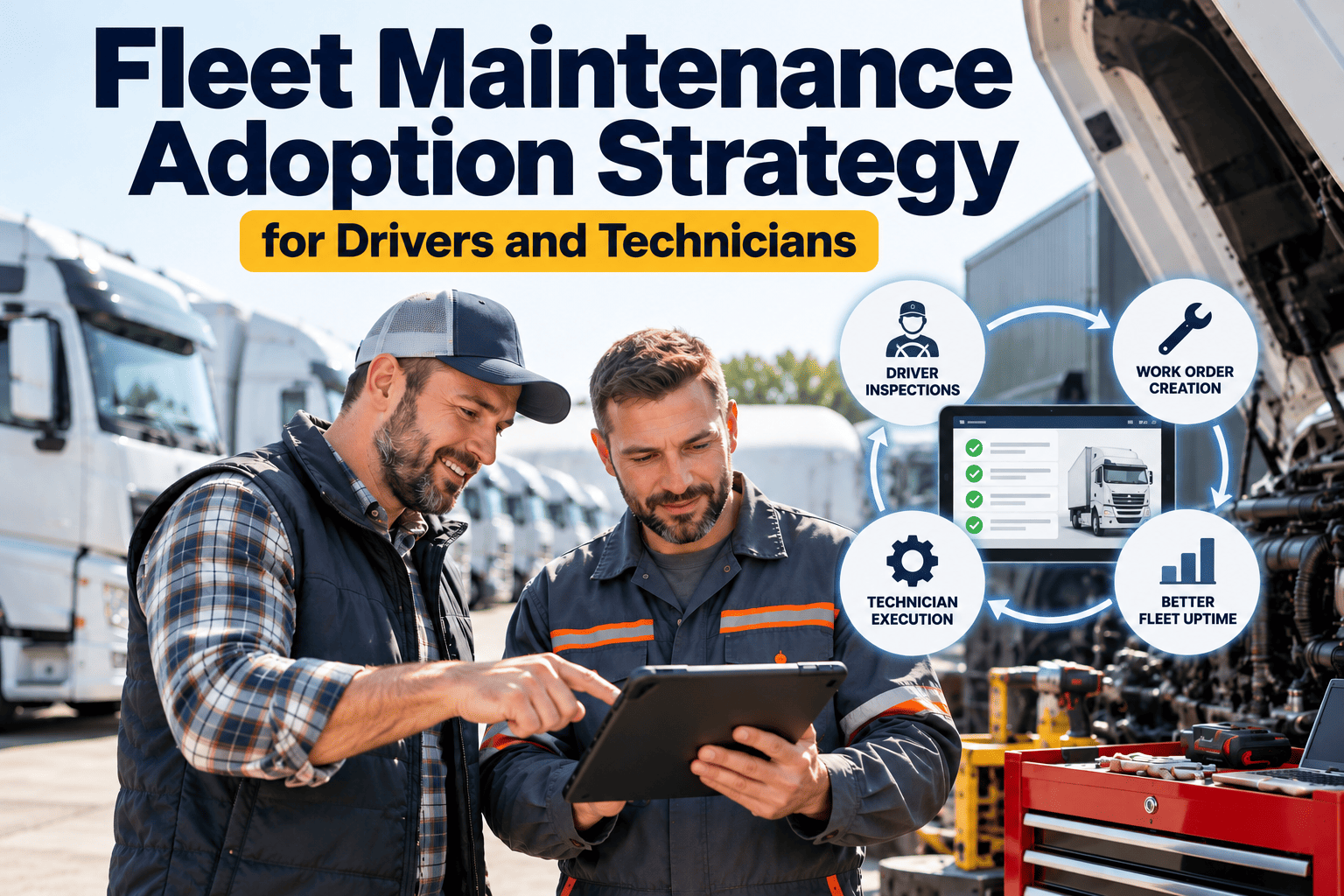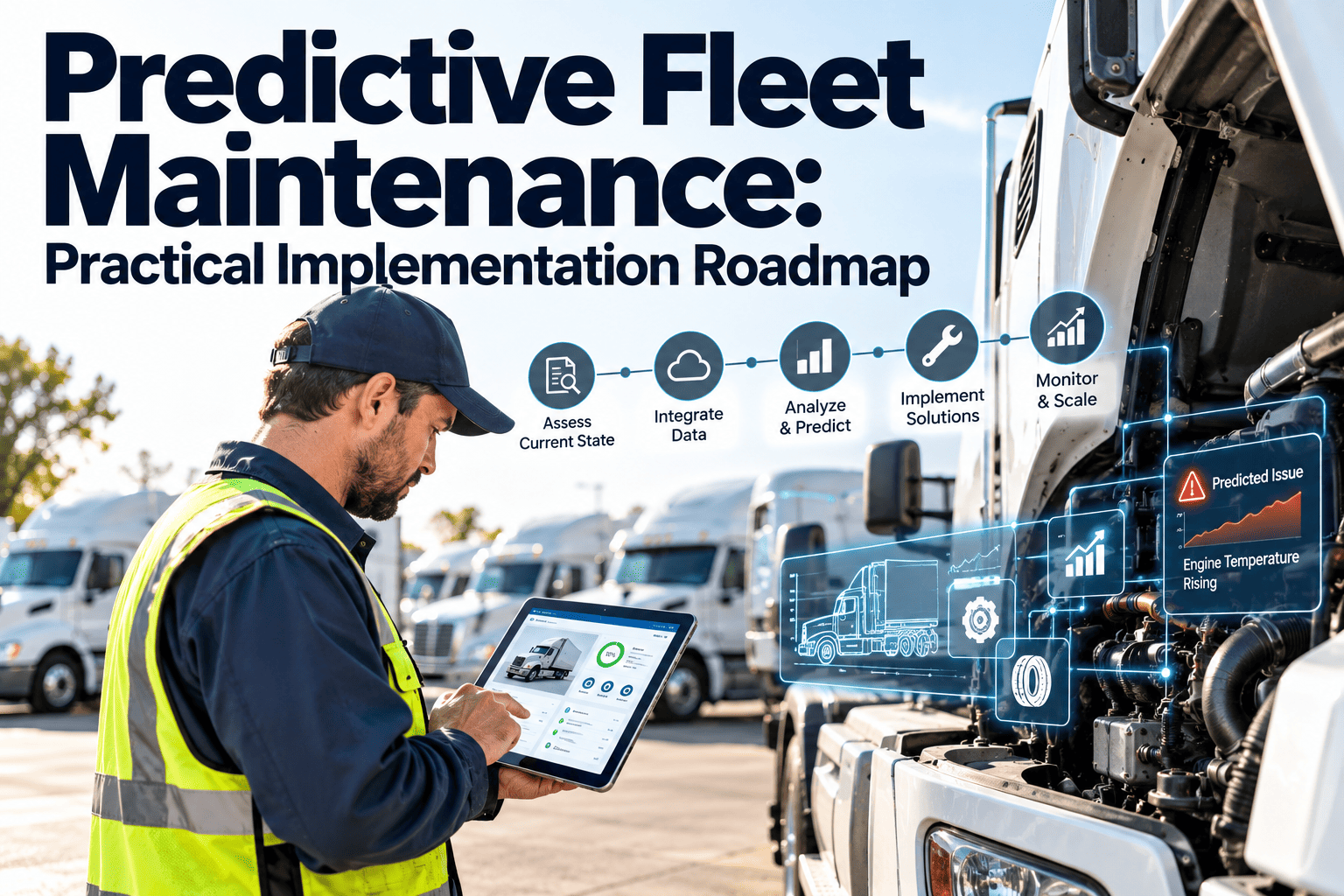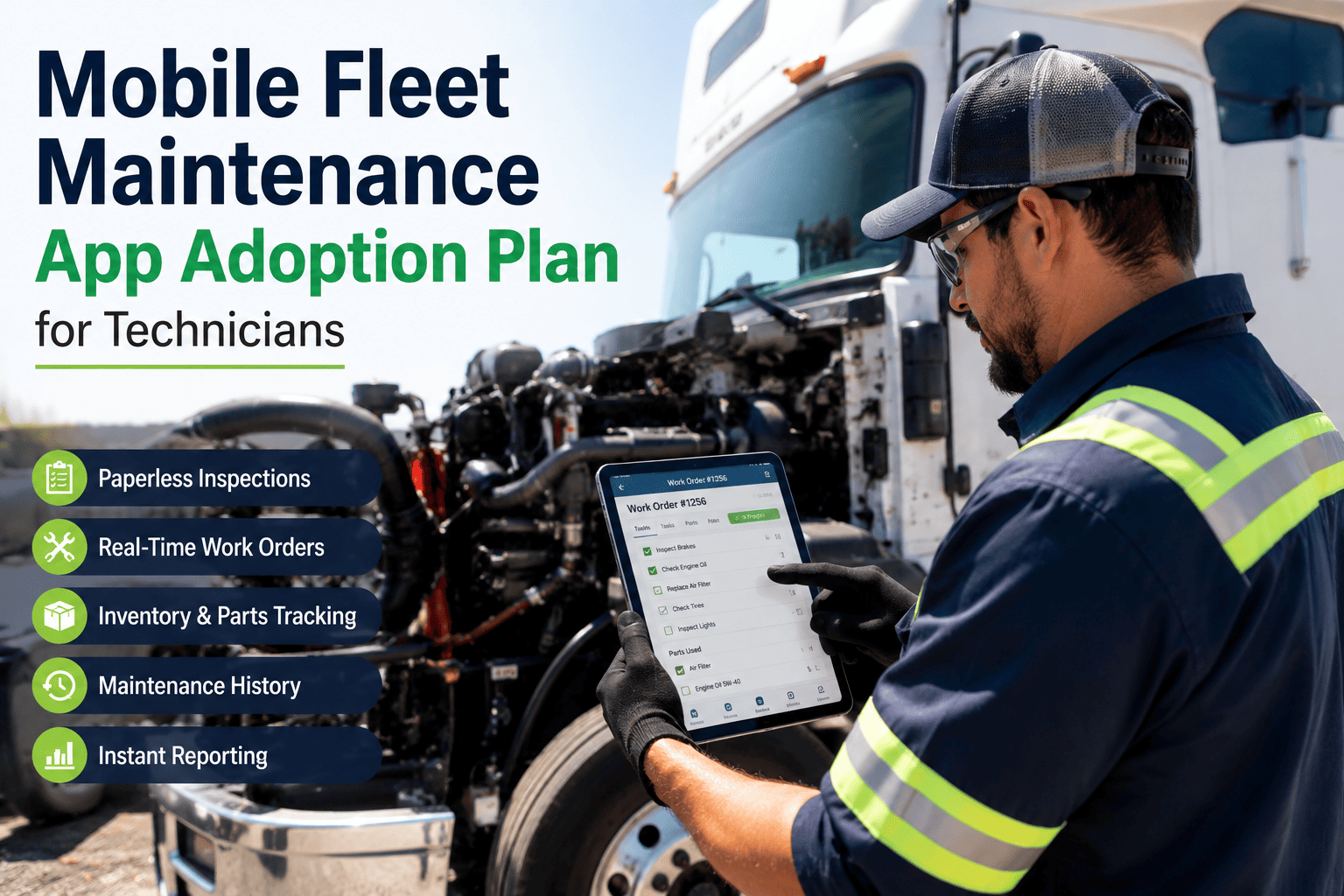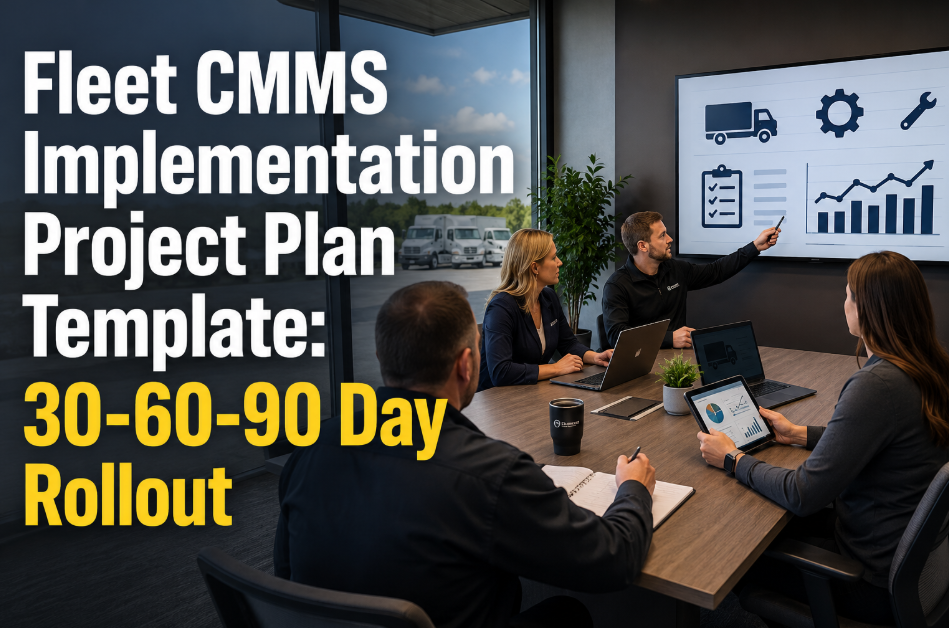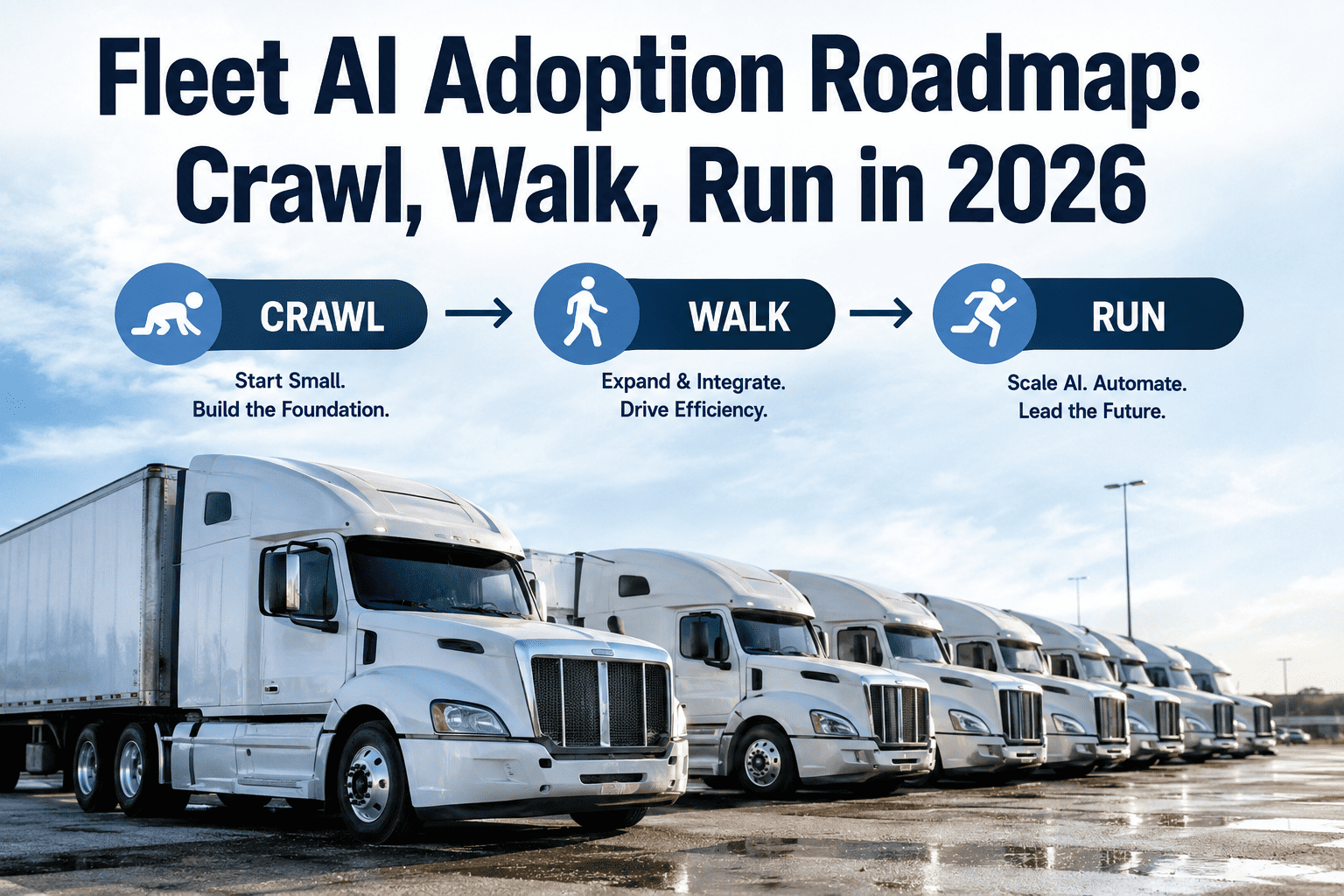
A fleet AI adoption roadmap built on the crawl-walk-run model is what separates organizations that capture real operational value from those that stall on disconnected pilots. Rather than attempting to leap directly into advanced predictive algorithms, a staged fleet AI implementation roadmap builds data maturity, technician trust, and measurable ROI over defined phases. OxMaint provides the AI-powered CMMS and EAM foundation that supports fleet leaders across every stage of this journey, from baseline preventive maintenance to fully autonomous predictive workflows. You can Start Free Trial today to map your baseline assets and work orders into a system designed for long-term AI progression.
Why do 70% of fleet AI pilots stall — and how does staged adoption guarantee ROI?
Jumping straight into advanced predictive maintenance without clean work-order data, asset hierarchies, and technician buy-in is the #1 reason fleet AI initiatives fail. A structured fleet AI crawl-walk-run approach delivers compounding value — reducing unplanned downtime by up to 50% and cutting maintenance costs by 15-25% within the first 18 months.
The hidden cost of skipping your fleet AI adoption phases
Fleets losing the AI battle aren't lacking ambition — they lack a fleet AI adoption framework. When organizations bypass foundational CMMS digitization and jump into machine learning models built on messy, incomplete data, the algorithms simply codify bad habits.
Consider a regional fleet of 180 assets spending roughly $42,000 annually on emergency roadside repairs and expedited parts. By attempting to deploy advanced AI predictive models while still running maintenance on spreadsheets, they achieve zero predictive accuracy because the underlying failure history is unstructured. A fleet AI adoption plan reverses this by enforcing data discipline first, capturing clean work-order histories, and then layering intelligence on top of a verified baseline.
Fleet AI crawl walk run: A staged implementation timeline
The fleet AI progression relies on three distinct stages. Each phase builds the technical and cultural foundation required for the next, ensuring AI delivers tangible value rather than becoming a shelfware experiment.
Digitize and standardize maintenance data
Establish a single source of truth. Migrate from paper and spreadsheets into a centralized CMMS. Build complete asset hierarchies, standardize failure codes, and enforce PM compliance. Target: 95% digital work-order capture and zero paper routes.
Optimize PMs and connect telemetry data
Integrate vehicle telemetry (mileage, engine hours, fault codes) directly into work-order triggers. Refine preventive maintenance schedules based on actual asset usage rather than static calendar dates. Target: 30% reduction in unnecessary PMs and 20% boost in fleet availability.
Deploy AI predictive maintenance at scale
Activate machine learning algorithms that analyze historical failures, real-time telemetry, and parts inventory to predict asset failure before it happens. Automatically generate predictive work orders and pre-stage spare parts. Target: 40-50% drop in unplanned downtime.
Fleet AI maturity roadmap: Assess your current stage
Before executing your fleet AI adoption strategy, you must benchmark your current capabilities. Use this comparison matrix to identify exactly where your maintenance operations sit today and what is required to advance.
| Capability Dimension | Crawl (Reactive/Digital) | Walk (Preventive/Connected) | Run (Predictive/AI-Driven) |
|---|---|---|---|
| Work Order Management | Paper or spreadsheet-based | 100% digital via CMMS | AI-auto-generated based on condition |
| Data Quality & Standardization | Inconsistent, missing failure codes | Standardized codes, 90%+ completion | High-integrity, ML-ready datasets |
| Maintenance Strategy | Run-to-failure / calendar PM | Usage-based PM (mileage/hours) | Condition-based predictive maintenance |
| Parts Inventory | Reactive purchasing, high stockouts | Min/Max automated reordering | AI demand forecasting, auto-staging |
| Compliance Readiness | Manual DVIR logging, audit-prone | FMCSA-compliant digital audit trail | Continuous compliance monitoring |
Key milestones in a fleet AI implementation roadmap
Capability Maturity Assessment
Evaluate existing data infrastructure, technician workflows, and asset tracking accuracy. Identify critical gaps in failure-code standardization that will block AI models from learning accurately.
Use Case Sequencing
Do not attempt to predict all asset failures simultaneously. Sequence AI use cases starting with your highest-cost, most-frequent failure modes (e.g., braking systems, HVAC, tires) to prove ROI fast.
Foundation Building
Consolidate asset registries, calibrate telemetry sensors, and establish baseline KPIs (MTBF, MTTR, OEE). A strong ISO 55000-aligned data foundation is non-negotiable for machine learning.
Continuous AI Tuning
Predictive models degrade if not fed new data. Establish a feedback loop where technician-verified work-order outcomes automatically retrain the AI, improving prediction accuracy month over month.
The CMMS platform built for every stage of your fleet AI journey
OxMaint is not just a digital work-order tool; it is an AI-powered EAM platform engineered to carry your fleet from the "Crawl" phase to fully autonomous predictive maintenance. Here is how OxMaint operationalizes your fleet artificial intelligence roadmap:
Digital Work Orders & Asset Tracking
Eliminate paper instantly. OxMaint enforces 100% digital work-order capture and builds a complete, standardized asset hierarchy — the mandatory foundation for any AI model.
Preventive Maintenance Automation
Trigger PMs automatically based on real telemetry data, mileage, or engine hours. OxMaint optimizes your maintenance schedule to prevent unnecessary servicing while ensuring compliance.
AI-Powered Predictive Analytics
In the "Run" phase, OxMaint's AI analyzes historical and real-time data to predict failures days or weeks in advance, auto-generating work orders and pre-staging inventory.
Smart Spare-Parts Inventory
OxMaint aligns your parts inventory with predictive maintenance triggers, ensuring the right parts are in stock exactly when an AI-generated work order is issued.
A 180-asset logistics fleet implemented OxMaint's staged AI roadmap and eliminated their spreadsheet maintenance backlog in 45 days. By month 12, they had shifted 60% of their maintenance from reactive to predictive — saving $31,000 in roadside tow bills alone.
Ready to map your fleet AI staged adoption strategy?
See exactly how OxMaint configures your asset data, telemetry, and work orders for a seamless crawl-walk-run AI transition. Book a 30-minute demo with our fleet reliability experts today.
Fleet AI adoption roadmap essentials
What is a fleet AI adoption roadmap?
A fleet AI adoption roadmap is a strategic, phased plan that guides maintenance operations from basic digitization to advanced predictive AI. Using a crawl-walk-run framework, it ensures organizations build the necessary data foundations, standardize workflows, and integrate telemetry before deploying complex machine learning models, guaranteeing that AI initiatives deliver measurable ROI rather than stalling in pilot purgatory.
How long does the fleet AI crawl-walk-run process take?
For a mid-sized fleet (100-500 assets), the full staged adoption journey typically takes 12 to 18 months. The "Crawl" phase takes 1-4 months to digitize work orders, "Walk" takes 5-9 months to optimize preventive maintenance and connect telemetry, and the "Run" phase begins around month 10 as AI predictive models are activated. You can Start Free Trial to accelerate your Crawl phase immediately.
Why do fleet AI implementations fail without staged adoption?
Fleet AI implementations fail when organizations attempt to apply predictive algorithms to messy, unstructured, or incomplete data. Without a standardized CMMS foundation (clean failure codes, asset hierarchies, and digital work orders), AI models cannot accurately identify patterns or predict failures. Staged adoption prevents this by enforcing data discipline and building technician trust before introducing autonomous AI decision-making.
What data is needed to start a fleet AI maturity roadmap?
At a minimum, the "Crawl" stage requires a complete asset registry, historical work-order data (migrated from paper or spreadsheets), standardized failure codes, and basic usage metrics (mileage or engine hours). As you progress to "Walk" and "Run," you will need real-time telemetry integration, parts inventory data, and technician-verified maintenance outcomes to train the AI models.
How does OxMaint support fleet AI implementation stages?
OxMaint provides an AI-powered CMMS and EAM platform that operationalizes every phase of the roadmap. In the Crawl stage, it enforces digital work orders and asset tracking; in the Walk stage, it automates usage-based PMs and connects telemetry; and in the Run stage, its native predictive analytics engine auto-generates work orders based on failure predictions. To see the full platform in action, Book a Demo with our team.
Start your fleet AI journey with OxMaint today
Stop reacting to breakdowns. Build a structured AI maintenance pipeline that cuts downtime, optimizes inventory, and maximizes fleet availability.
Free 14-day trial · No credit card