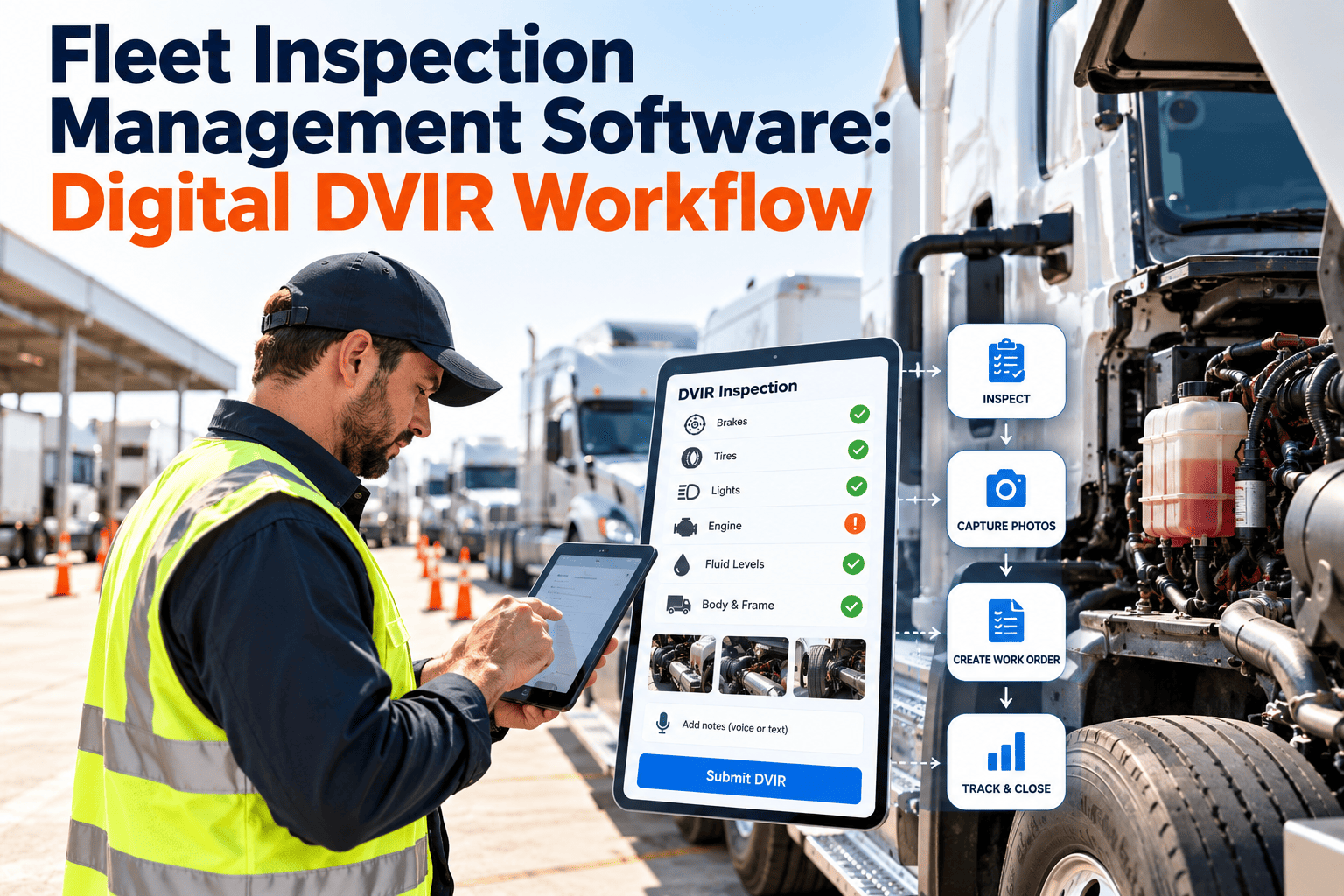
Most fleet maintenance software projects do not fail because of the software. They stall because drivers keep filling out paper inspections, technicians keep updating the whiteboard, and managers keep asking for reports nobody trusts. Adoption is a change-management problem with a maintenance workflow attached. A practical rollout starts with what each person gains in their daily routine, then builds habits around inspections and work orders. Teams using a fleet maintenance CMMS succeed when the tool removes steps instead of adding them.
Fleet Maintenance Adoption Strategy for Drivers and Technicians
A phased plan to get drivers reporting defects and technicians closing work orders in one system, without slowing down the shop or the route.
Why adoption stalls in fleet maintenance
On the driver side
- Inspections feel like paperwork with no visible result.
- Reported defects disappear without feedback.
- Apps that are slow or confusing cost time before a route.
- Shared devices and poor signal make reporting unreliable.
On the technician side
- Entering data feels like time taken from wrench work.
- Work orders arrive with vague descriptions.
- Parts are not linked, so jobs stall mid-repair.
- Past repairs are hard to find, so the system seems pointless.
The real cost of partial adoption
When half the fleet is in the system and half is on paper, asset history has gaps and reports mislead. Managers lose trust in the data, and the team falls back to old habits.
What each role needs to see in it for them
| Role | Daily friction today | What the workflow should change |
|---|---|---|
| Driver | Paper pre-trip, no response to reports | Quick mobile checklist and status updates on reported defects |
| Technician | Unclear jobs, missing parts, repeat questions | Complete work orders with history, checklists, and parts in one view |
| Shop supervisor | Chasing status, juggling priorities | Live queue sorted by severity and due date |
| Dispatcher | Surprise vehicle downtime | Visibility into which units are in the shop and when they return |
| Fleet manager | Reports built by hand | Dashboards for PM compliance, downtime, and cost |
A 30-60-90 day adoption roadmap
Foundation
- Import vehicles and key components.
- Build one inspection checklist per vehicle type.
- Choose pilot drivers and technicians.
- Agree on what counts as a defect.
Pilot and learn
- Run mobile inspections daily.
- Convert defects into work orders.
- Hold a short weekly feedback huddle.
- Fix confusing steps quickly.
Scale
- Add remaining vehicles and shifts.
- Activate preventive maintenance schedules.
- Begin tracking adoption metrics.
- Retire paper forms by group.
Make the first week easy and the benefits obvious
Oxmaint helps fleets introduce mobile inspections and work orders in stages, so crews feel the benefit before the workload grows.
Winning drivers over
Keep the inspection under a few minutes
Drivers adopt tools that respect their time. Use pass or fail items, photo capture for defects, and only the checks that matter for that vehicle.
Close the loop on every report
A driver who reports a defect and never hears back stops reporting. Show status changes such as received, scheduled, and repaired so the effort feels worthwhile.
Winning technicians over
- Give them better work orders.Clear defect descriptions, photos, and vehicle history reduce guesswork.
- Make data entry short.Use pick lists, checklists, and mobile entry at the vehicle so notes are not written up later.
- Link parts to jobs.When parts are reserved and visible, fewer repairs stall waiting for stock.
- Involve senior technicians early.Ask them to shape the checklists. Their approval influences the rest of the shop.
- Show the history payoff.Searching past repairs for a recurring fault proves the value of consistent records.
Resistance and practical responses
| Common pushback | Underlying concern | Response |
|---|---|---|
| "Paper is faster." | Time pressure before a route | Trim the checklist and test it on real devices |
| "Nobody reads these reports." | No feedback on defects | Show status and repair outcome to the reporting driver |
| "I have no time to log work." | Admin load in the bay | Mobile entry, templates, and fewer required fields |
| "This is for tracking us." | Fear of blame | Position data as a tool for resources and safety, not punishment |
| "The old way works." | Comfort with routine | Share a concrete example where history solved a repeat issue |
Measuring adoption, not just usage
Review the numbers with the crew
Share trends in shop meetings and ask what slows people down. Adoption improves when the team sees the data used to fix problems, not only to audit them.
How Oxmaint supports each stage
- Prepare: asset management records and configurable inspection checklists.
- Pilot: mobile workflows for drivers and technicians, with work orders created from reported defects.
- Expand: preventive maintenance scheduling by time or usage, plus inventory linked to jobs.
- Sustain: dashboards and reports for PM compliance, downtime, and repair history.
Common mistakes to avoid
- Launching every vehicle and shift at once.
- Copying paper forms into the app without simplifying them.
- Skipping training for supervisors who must enforce the process.
- Measuring logins instead of completed, useful records.
Fleet maintenance adoption FAQs
How long does fleet software adoption take?
It varies by fleet size and shifts. A pilot of a few weeks followed by phased expansion is a common pattern.
Should drivers or technicians start first?
Start both in a small pilot, since defect reports and work orders depend on each other.
What if drivers have poor connectivity?
Test the workflow in real conditions and plan for depot sync points. Book a demo to review your setup.
How do we get technicians to log work?
Make entry mobile and brief, and show how history reduces repeat diagnosis.
Can we try this on a few vehicles first?
Yes. Create an account and load one vehicle class to test inspections and work orders.
Build habits your drivers and technicians will keep
Start with one pilot group, prove the value, and scale with Oxmaint inspections, work orders, and maintenance history.