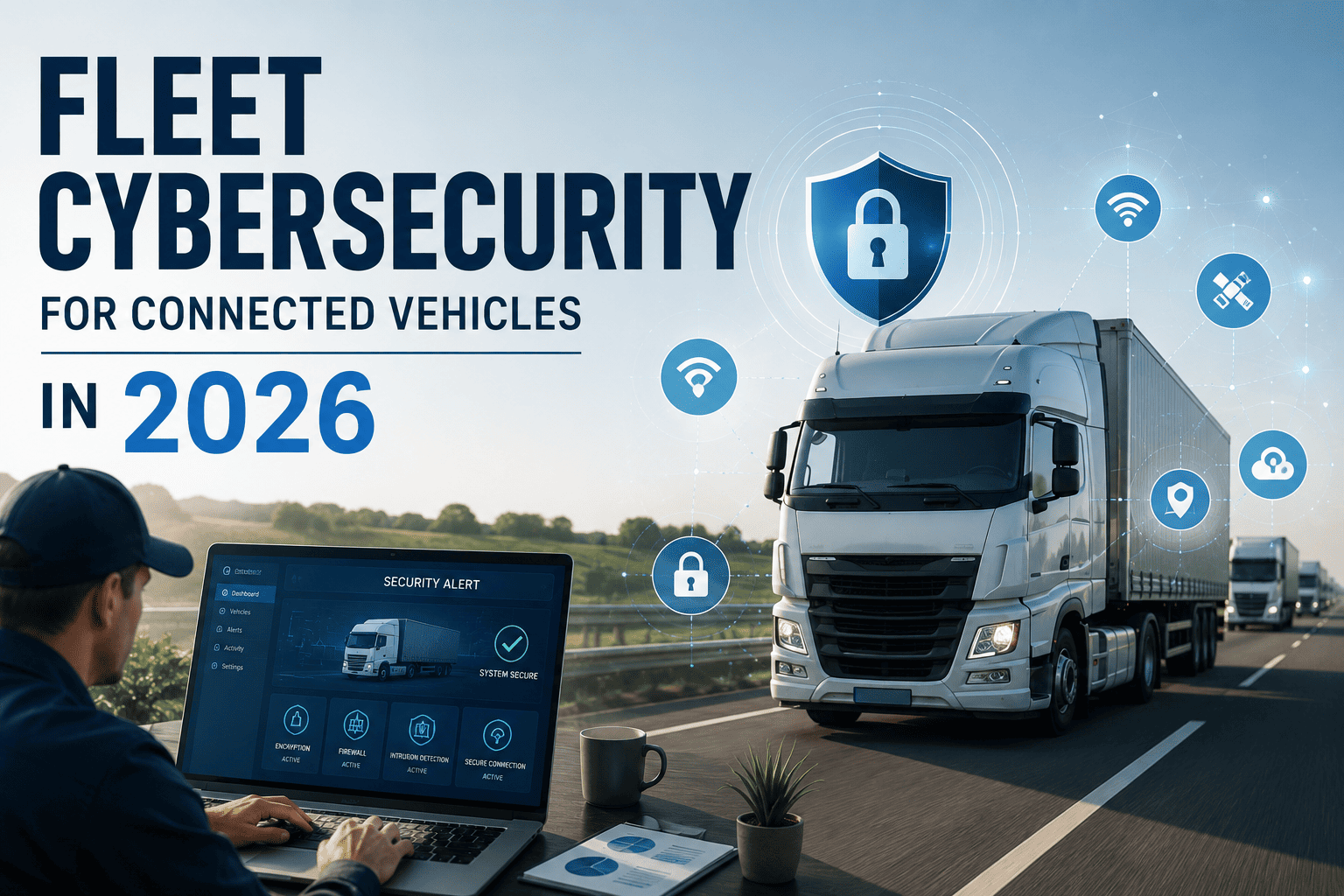
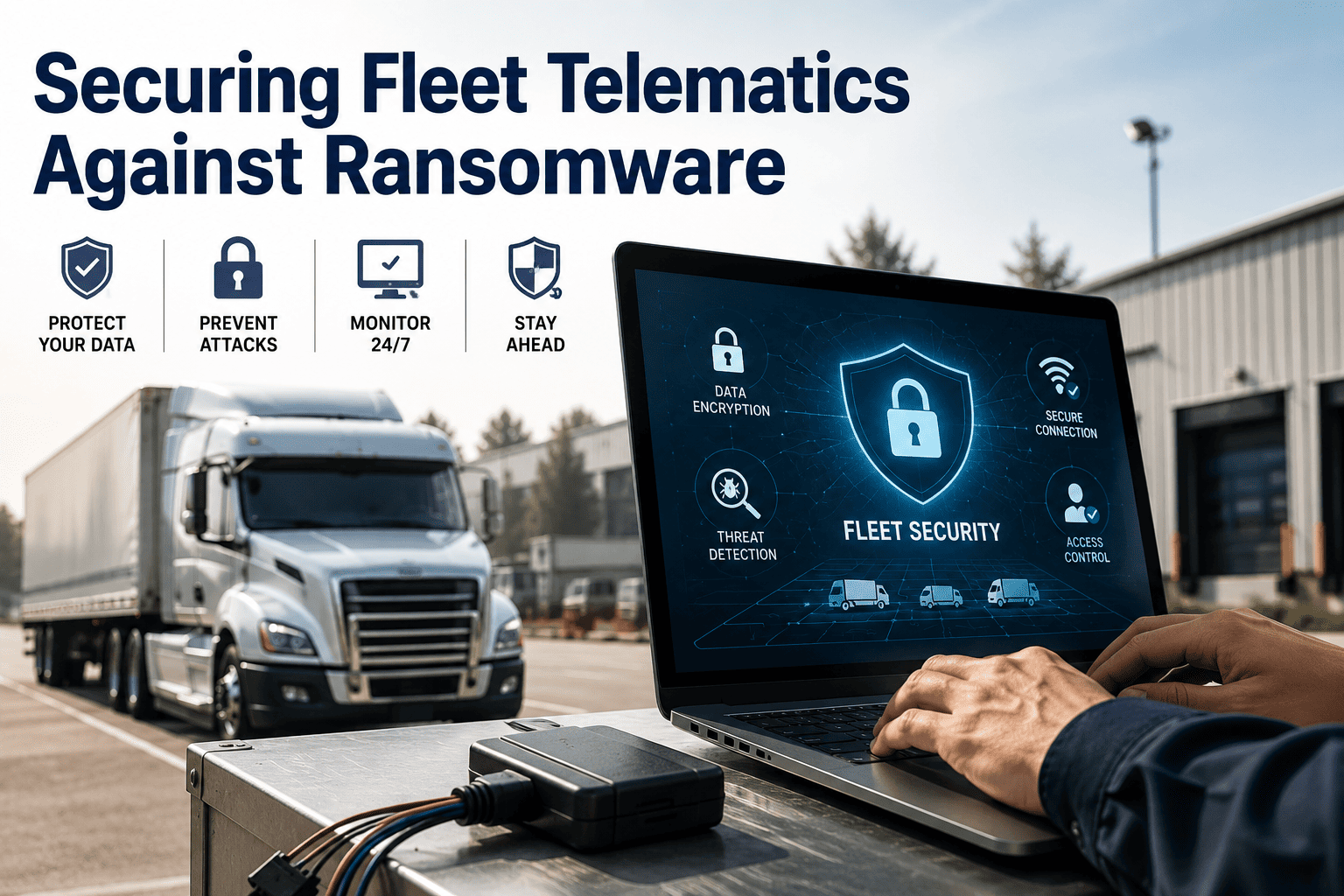
Fleet operations in 2026 face an unprecedented cybersecurity landscape where connected vehicles, telematics systems, GPS trackers, and integrated management platforms create dozens of potential attack vectors that didn't exist a decade ago. Modern commercial vehicles are essentially computers on wheels—containing multiple electronic control units (ECUs), wireless communication modules, GPS receivers, cellular connections, and cloud-connected software systems that enable operational efficiency but simultaneously expose fleets to cyberattacks ranging from vehicle theft to ransomware to data breaches compromising driver privacy and competitive intelligence. The threat isn't theoretical: fleet cybersecurity incidents have increased 340% since 2020, with successful attacks resulting in stolen vehicles, operational disruptions lasting days, regulatory fines for data breaches, and reputational damage that impacts customer confidence. Yet most fleet managers still approach cybersecurity as an IT department problem rather than an operational imperative requiring systematic controls, vendor risk management, and continuous monitoring. The assumption that "hackers don't target fleets" is dangerously outdated—criminal organizations increasingly recognize that fleet systems have weaker security than corporate networks while controlling valuable physical assets and containing exploitable financial and operational data. By implementing Oxmaint's Cybersecurity and Data Protection platform, fleet operators establish comprehensive security frameworks covering vehicle systems, communication networks, data storage, access controls, and incident response—transforming cybersecurity from an afterthought into a systematic defense protecting both digital and physical fleet assets against evolving threats.
340%
increase in fleet cyberattacks since 2020
$2.4M
average cost of successful fleet cyber breach
72%
of fleets lack formal cybersecurity programs
4.5 Days
average operational downtime from ransomware
Don't wait for a breach to take cybersecurity seriously. Sign up for Oxmaint to implement enterprise-grade fleet cybersecurity that protects vehicles, data, and operations from evolving threats.
Fleet Cybersecurity Threat Landscape
Understanding the specific threats facing fleet operations is the first step toward effective defense. Unlike traditional IT systems, fleet cybersecurity must protect both digital data and physical assets, creating unique vulnerability patterns that require specialized mitigation strategies. The threat timeline below categorizes the primary attack vectors fleet operators face in 2026. To receive a customized threat assessment for your specific fleet technology stack, schedule a cybersecurity consultation with our fleet security specialists.
Critical Threat
Vehicle Systems Compromise
Attack Vectors:
Telematics unit exploitation, GPS tracker vulnerabilities, CAN bus injection, remote ECU manipulation, cellular modem hijacking, wireless key fob relay attacks
Business Impact:
Vehicle theft, unauthorized operation, safety system disablement, fleet-wide immobilization, multi-million dollar asset loss
→ Encrypted telematics communication
→ Firmware update authentication
→ Network segmentation for vehicle systems
→ Multi-factor vehicle access controls
Critical Threat
Management Platform Breach
Attack Vectors:
Credential theft via phishing, brute force attacks, SQL injection, API abuse, session hijacking, insider threats compromising admin access
Business Impact:
Complete fleet visibility loss, operational data theft, driver PII exposure, financial record compromise, regulatory fines, competitive intelligence leakage
→ Multi-factor authentication mandatory
→ Role-based access controls
→ Regular penetration testing
→ Comprehensive activity logging
High Threat
Ransomware & Operational Disruption
Attack Vectors:
Email phishing campaigns, drive-by downloads, infected USB devices, RDP exploitation, supply chain attacks through vendors
Business Impact:
System lockout preventing dispatch, encrypted backups, operational shutdown 4-5 days, ransom demands $150k-$500k, regulatory reporting, contract violations
→ Offline encrypted backups
→ Network segmentation limiting spread
→ Endpoint protection software
→ Incident response plans tested
High Threat
Data Privacy Violations
Attack Vectors:
Unauthorized driver location access, behavioral tracking exploitation, PII harvesting from HR records, dashcam footage theft, communication monitoring
Business Impact:
GDPR/CCPA fines up to 4% revenue, class action lawsuits, regulatory investigations, mandatory breach notifications, driver recruitment challenges
→ Data minimization policies
→ Encryption at rest and in transit
→ Access logging and monitoring
→ Automated data retention/deletion
Medium Threat
Supply Chain & Third-Party Risk
Attack Vectors:
Compromised vendor platforms, malicious software updates, insecure API integrations, cloud provider breaches, contractor access abuse
Business Impact:
Widespread fleet compromise via trusted relationships, difficult attribution, contractual liability disputes, vendor termination costs, cascading failures
→ Vendor security assessments
→ Contractual security requirements
→ API access controls and monitoring
→ Regular third-party audits
The Fleet Cybersecurity Framework
Comprehensive fleet cybersecurity requires a structured framework addressing technology, processes, and people across five interconnected domains. Weakness in any domain undermines overall security posture, making systematic implementation across all areas essential for effective protection.
Technical Controls
Foundation Layer
Network Security:
• Firewalls protecting fleet management systems
• VPN requirements for remote access
• Network segmentation isolating critical systems
• Intrusion detection and prevention systems
Endpoint Protection:
• Anti-malware software on all devices
• Device encryption requirements
• Mobile device management (MDM) policies
• Automated security patch deployment
Application Security:
• Secure coding practices and code reviews
• Regular vulnerability scanning
• Penetration testing annually minimum
• Bug bounty programs for critical systems
Data Protection
Core Security
Encryption Standards:
• AES-256 encryption for data at rest
• TLS 1.3 for data in transit
• End-to-end encryption for sensitive communications
• Hardware security modules for key management
Backup & Recovery:
• Automated daily backups with verification
• Offline backup copies preventing ransomware access
• Tested recovery procedures quarterly
• Geographic redundancy for critical data
Data Governance:
• Data classification policies by sensitivity
• Retention schedules with automated deletion
• Data loss prevention (DLP) systems
• Privacy impact assessments for new systems
Access Management
Control Layer
Identity & Authentication:
• Multi-factor authentication (MFA) required
• Strong password policies enforced
• Single sign-on (SSO) where appropriate
• Privileged access management for admins
Authorization Controls:
• Role-based access control (RBAC) implementation
• Principle of least privilege enforcement
• Regular access reviews and recertification
• Immediate access revocation upon termination
Activity Monitoring:
• Comprehensive audit logging
• Real-time anomaly detection
• User behavior analytics (UBA)
• Privileged session recording
Operational Processes
Management Layer
Vulnerability Management:
• Continuous vulnerability scanning
• Risk-based patch prioritization
• SLA for critical vulnerability remediation
• Vendor security advisory monitoring
Incident Response:
• Documented incident response plan
• Defined roles and escalation procedures
• Incident simulation exercises quarterly
• Post-incident review and improvement
Vendor Management:
• Security requirements in procurement
• Vendor risk assessments
• Contractual security obligations
• Third-party audit rights
Human Element
Cultural Layer
Security Awareness:
• Mandatory security training for all employees
• Phishing simulation exercises monthly
• Security champion program
• Regular security communications
Policy & Governance:
• Documented security policies
• Acceptable use policies signed by users
• Consequences for policy violations
• Annual policy review and updates
Reporting Culture:
• No-blame incident reporting
• Security hotline for concerns
• Recognition for security vigilance
• Regular security metrics sharing
Protect Your Fleet from Cyber Threats
Don't wait for a breach. Implement comprehensive cybersecurity controls with Oxmaint's fleet-specific security platform that protects vehicles, data, and operations from evolving threats.
Cybersecurity Investment Priority Matrix
Limited security budgets require strategic prioritization. The matrix below ranks security investments by impact and urgency, helping fleet managers allocate resources to maximize risk reduction per dollar spent.
Multi-Factor Authentication (MFA)
Cost: $5-15/user/month
Prevents 99.9% of account compromise attacks
Offline Encrypted Backups
Cost: $500-2,000 one-time + storage
Enables ransomware recovery without paying ransom
Security Awareness Training
Cost: $20-50/employee annually
Reduces phishing success rate by 70%+
Patch Management Program
Cost: Staff time + automation tools
Closes known vulnerabilities before exploitation
Endpoint Detection & Response (EDR)
Cost: $30-80/endpoint/month
Detects and contains threats antivirus misses
Incident Response Plan & Testing
Cost: $5,000-15,000 for development
Reduces breach recovery time by 50%+
Network Segmentation
Cost: $10,000-50,000 depending on complexity
Limits lateral movement during breaches
Vendor Security Assessments
Cost: Staff time for questionnaires
Prevents supply chain compromise
Security Information & Event Management (SIEM)
Cost: $50,000-200,000 annually
Centralized visibility and threat correlation
Penetration Testing
Cost: $15,000-50,000 annually
Identifies vulnerabilities before attackers do
Cyber Insurance Policy
Cost: $5,000-25,000 annually
Transfers financial risk and provides recovery support
Data Loss Prevention (DLP)
Cost: $40,000-100,000 annually
Prevents sensitive data exfiltration
Threat Intelligence Platform
Cost: $30,000-100,000 annually
Proactive threat awareness and hunting
Security Operations Center (SOC)
Cost: $200,000+ annually (or managed service)
24/7 monitoring and rapid response
Zero Trust Architecture
Cost: $100,000-500,000 implementation
Assumes breach and verifies everything
Deception Technology
Cost: $50,000-150,000 annually
Early detection through honeypots and traps
Expert Cybersecurity Perspective
"Fleet operators who think 'we're too small to be targeted' fundamentally misunderstand modern cybercrime. Attackers use automated scanning tools that target vulnerabilities, not specific companies—if your systems are exposed and vulnerable, you will be attacked regardless of fleet size. The question isn't whether you'll face a cyber incident; it's whether you'll detect it quickly and recover effectively or suffer operational paralysis and financial devastation. Investing in cybersecurity isn't paranoia—it's recognizing that your fleet systems are now critical infrastructure requiring the same protection as your physical assets."
AB
Alex Bennett
Fleet Cybersecurity Consultant & Former CISO
Secure Your Fleet Operations Today
Cybersecurity threats targeting fleets are real, growing, and expensive. Implement comprehensive protection with Oxmaint's fleet-specific cybersecurity platform designed for modern connected vehicle operations.
No credit card • 14-day trial • Full Cybersecurity Suite Included
Frequently Asked Questions
Are fleet vehicles actually vulnerable to hacking or is this theoretical?
Fleet vehicle hacking is proven and documented, not theoretical. Security researchers have demonstrated remote exploitation of telematics units controlling steering, braking, and acceleration on multiple commercial vehicle platforms. Real-world incidents include GPS tracker vulnerabilities enabling vehicle theft, cellular modem hijacking providing unauthorized location access, and CAN bus injection attacks disabling safety systems. While manufacturers patch known vulnerabilities, the attack surface continues expanding as vehicles add connectivity features. Modern commercial vehicles contain 50-150 electronic control units with wireless communication capabilities—each represents a potential entry point requiring security consideration beyond traditional physical vehicle protection.
What's the realistic budget for fleet cybersecurity for a mid-size operation?
Mid-size fleets (50-200 vehicles) should budget $50,000-$150,000 annually for comprehensive cybersecurity covering technology investments, training, assessments, and incident response capabilities. This typically includes: MFA and access management ($5k-10k), endpoint protection ($15k-30k), security awareness training ($2k-5k), backup systems ($5k-15k), incident response planning ($10k-20k), penetration testing ($15k-30k), and staff time for security management. Smaller investments ($20k-40k annually) provide basic protection but leave significant gaps. Larger enterprises may spend $200k-500k+ for advanced capabilities like security operations centers and threat intelligence. The investment isn't overhead—it's insurance against incidents costing $2.4M average when they occur.
Should we pay ransom if our fleet systems get encrypted?
Paying ransom is discouraged by law enforcement and cybersecurity experts for multiple reasons: (1) No guarantee attackers will actually decrypt data after payment; (2) Payment funds criminal organizations targeting more victims; (3) Marks your organization as willing to pay, inviting repeat attacks; (4) May violate sanctions if attackers are nation-state actors. Instead, invest proactively in offline encrypted backups enabling recovery without ransom payment, incident response plans minimizing downtime, and cyber insurance covering recovery costs. If facing ransom demands, immediately engage cyber insurance carrier, legal counsel familiar with ransomware negotiations, and professional incident response firms—do not negotiate directly or make hasty payment decisions under operational pressure.
How do we balance cybersecurity with operational efficiency?
Security and efficiency aren't opposites—poor security creates operational disruption through breaches requiring emergency response. Well-designed security controls should be invisible to users performing legitimate activities while blocking malicious actions. Implement security that enables operations: SSO reduces password friction while improving security; automated patch management prevents disruption from unpatched vulnerabilities; MFA prevents account compromises that halt operations. Avoid security theater (policies without enforcement) and security friction (controls making legitimate work difficult). Focus on high-impact controls: prevent account compromise, ensure rapid recovery from ransomware, protect against vehicle theft—then optimize user experience within those security boundaries. Security enables sustainable operations, not constrains them.
What cybersecurity certifications or standards should fleet operators pursue?
Most fleet operators don't need formal certifications unless required by customers or regulations, but several frameworks provide valuable structure: NIST Cybersecurity Framework offers comprehensive baseline without certification requirements; ISO 27001 provides internationally recognized information security management standards with optional certification; SOC 2 demonstrates security controls to customers requiring vendor assurance. For regulated industries (government contractors, critical infrastructure), specific compliance requirements may mandate frameworks. Rather than pursuing certifications for their own sake, use frameworks as roadmaps for building security programs, then seek certification if business development or customer contracts justify the investment. The security controls matter more than the certificate.
How quickly can we implement basic fleet cybersecurity if starting from scratch?
Basic fleet cybersecurity (Level 2 maturity) can be implemented in 60-90 days with focused effort: Month 1—Deploy MFA, establish backup procedures, conduct security awareness training, document initial policies. Month 2—Implement endpoint protection, begin patch management, conduct vendor security reviews, establish incident response procedures. Month 3—Test backups and incident response, conduct initial vulnerability assessment, refine policies based on findings. This creates foundational protection while identifying areas requiring deeper investment. Comprehensive security (Level 3 maturity) requires 6-12 months building on this foundation. The key is starting immediately with high-impact basics rather than delaying while planning comprehensive programs—attackers don't wait for perfect security before attacking.