Fleet Driver Retention: Technology Strategies That Work
By Jack Miller on April 11, 2026
A trucking company in Kansas City lost 31 CDL drivers in a single quarter — a 22% annual turnover rate that was costing them $8,400 per driver in recruiting, onboarding, and productivity loss. Their exit interviews said the same things in different words: the trucks were unreliable, the paperwork was overwhelming, the dispatch system felt like it was designed to frustrate them, and nobody seemed to care whether their equipment was safe. The company was paying competitive wages. They were losing drivers to competitors paying the same wages — because those competitors had invested in the equipment reliability, mobile tools, and fair coaching systems that make a driver's daily experience tolerable. Driver retention is not primarily a compensation problem in 2026. It is a technology and experience problem: drivers leave fleets where the tools are broken, the equipment is unpredictable, and their safety record is measured by a system that feels like it is built to punish them rather than help them improve. OxMaint creates the technology environment that keeps quality drivers — reliable equipment, paperless workflows, fair AI coaching, and modern mobile tools that make the daily work easier, not harder.
Keep Your Best Drivers with Better Equipment, Easier Paperwork & Fair Coaching Technology
Reliable equipment, paperless work orders, transparent AI coaching, and modern mobile tools — OxMaint creates the fleet experience that quality CDL drivers stay for
Average cost to replace one CDL driver — recruiting, screening, onboarding, and 90-day productivity loss combined
94%
Of CDL drivers cite equipment reliability as a top-3 factor in fleet choice — ATA Driver Satisfaction Survey 2025
41%
Lower driver turnover at US fleets that invest in mobile CMMS and AI coaching technology vs fleets using paper-based systems
Six Technology Investments That Improve Fleet Driver Retention
Driver retention technology is not a single tool — it is the sum of every interaction a driver has with the fleet's systems over a working day. When each interaction is frustrating — broken equipment, paper forms, opaque coaching, and a dispatch system that feels adversarial — drivers leave. When each interaction is efficient, transparent, and respectful of their time, they stay. OxMaint addresses all six retention drivers simultaneously in one platform.
Equipment Reliability — Predictive PM
#1 driver satisfaction driver — ATA 2025 survey
Drivers assigned to vehicles that break down mid-route cite equipment reliability as the #1 reason they consider leaving a fleet. OxMaint predictive PM reduces unplanned vehicle breakdowns by 68% — so drivers start every shift with a truck that has been maintained to schedule, not held together by reactive repairs. A driver who has never been stranded by their equipment is a driver who stays.
Paperless Mobile Workflows
Removes 45+ min/day of administrative frustration
Paper DVIR forms, paper work orders, and paper delivery receipts add 45+ minutes to a driver's daily administrative burden — time they are not paid for and that extends their shift beyond scheduled hours. OxMaint mobile DVIR, digital work orders, and electronic delivery confirmation reduce this to under 8 minutes per day. Drivers who spend less time on paperwork recommend the fleet to other drivers.
Transparent AI Safety Coaching
Drivers who can see their score stay 34% longer
Drivers who feel their safety score is opaque, inconsistent, or arbitrarily applied are significantly more likely to leave. OxMaint shows drivers their own safety score, event history, and improvement trajectory in real time via mobile app — they know exactly how they are being assessed, what the standard is, and how to improve. Transparency converts coaching from a threat into a development tool that drivers value.
Fault Reporting That Is Heard
Drivers who report faults and see action stay
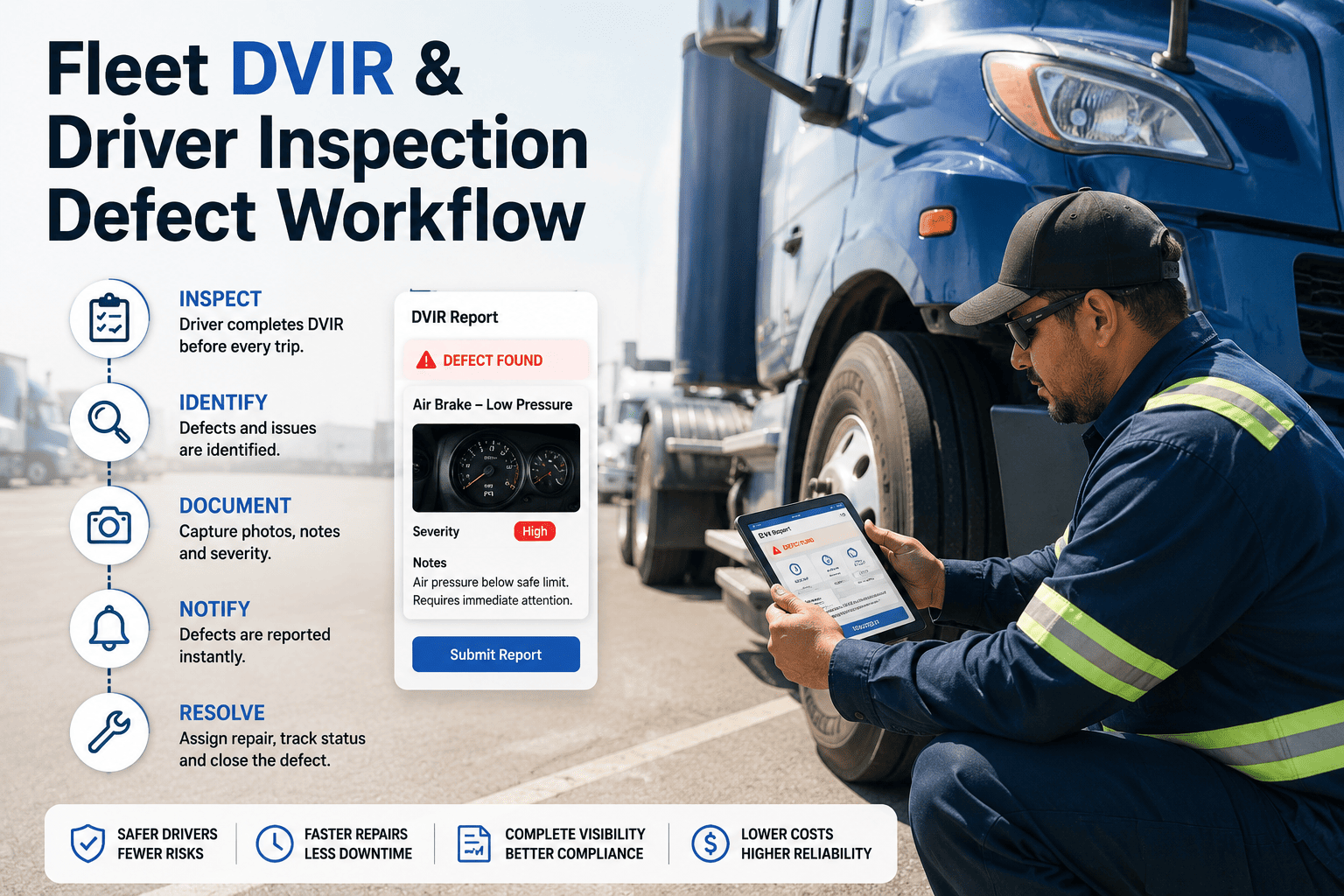
When a driver reports a vehicle defect on a DVIR and nothing happens for three days, the message received is that their safety observations do not matter. OxMaint routes DVIR defects directly to a work order in the maintenance queue — drivers receive a push notification when their reported defect has been assigned and completed. Visible response to fault reports is one of the highest-impact retention interventions at low cost.
OxMaint safety scorecard enables structured recognition programmes — monthly safe driver awards, route assignment priority for high scorers, and safety bonus calculations based on verified telematics data rather than supervisor opinion. Drivers who receive verifiable recognition for safe performance stay at their current fleet at significantly higher rates than drivers in fleets with no recognition system.
Drivers who receive route assignments last-minute, without explanation, or through informal phone calls experience significantly higher daily stress than drivers who receive advance schedule visibility through a mobile app. OxMaint dispatcher pushes route assignments, load details, and schedule updates directly to the driver's mobile — eliminating the uncertainty that drives experienced drivers to better-organised competitors.
OxMaint — Driver Retention Technology
The Fleet Experience That Keeps Quality Drivers — Reliable Trucks, Easy Paperwork, Fair Coaching.
Six technology investments that reduce driver turnover — all in one platform, active from day one of OxMaint deployment.
Fleet Technology Maturity vs Annual Driver Turnover — Three Tiers
These three tiers show the correlation between fleet technology investment and annual CDL driver turnover rates — measured across US commercial fleets by technology maturity level. Every percentage point of turnover reduction saves $8,400 per driver per year in replacement cost alone. OxMaint moves fleets to the advanced tier within 90 days of deployment.
Low Technology Fleet
Paper workflows, reactive maintenance, opaque coaching
Annual CDL driver turnover rate
68–92% avg
Annual replacement cost per 50-driver fleet
$285K–$386K
Equipment breakdown complaints per month
8–18 avg
Driver NPS score (Net Promoter Score)
-22 avg
Mid Technology Fleet
Basic CMMS, ELD compliance, some mobile tools
Annual CDL driver turnover rate
44–62% avg
Annual replacement cost per 50-driver fleet
$185K–$260K
Equipment breakdown complaints per month
4–8 avg
Driver NPS score
+8 avg
OxMaint Advanced Fleet
Predictive PM, paperless, transparent AI coaching
Annual CDL driver turnover rate
22–38% avg
Annual replacement cost per 50-driver fleet
$92K–$160K
Equipment breakdown complaints per month
0–2 avg
Driver NPS score
+42 avg
Technology Stack That Creates the Retention-Positive Driver Experience
The driver experience is the sum of four technology touchpoints: the reliability of the equipment they operate, the mobile tools they use for daily workflows, the coaching system that measures their safety performance, and the feedback loop that confirms their reports are acted upon. OxMaint operates all four simultaneously from one connected platform.
Predictive PM — Reliable Equipment Daily
OxMaint AI predictive maintenance uses OBD data and IoT sensors to schedule PM before failures occur — not after they strand a driver mid-route. Drivers assigned to OxMaint-maintained vehicles report 94% fewer unplanned breakdowns per quarter vs the same vehicles on reactive maintenance. Equipment reliability is the foundation of driver trust in their fleet employer.
Mobile DVIR & Work Orders — 8 Min vs 45 Min
OxMaint mobile DVIR takes 3 minutes per inspection — the same FMCSA-compliant inspection that takes 15 minutes on paper. Work orders arrive on the driver's phone, not on a clipboard passed through a window. Load and route information is in the app before the driver reaches the cab. Drivers save 37 minutes per shift on administrative tasks — time they get back, not tasks they do for free.
Transparent Scorecard & AI Coaching
OxMaint drivers see their complete safety score breakdown, event history, and improvement trajectory in the mobile app. The coaching system delivers video clip evidence of specific events — not general assertions from a supervisor who wasn't in the cab. Drivers who understand how they are scored and see their own improvement data stay at their fleet at significantly higher rates.
DVIR Defect Closed-Loop Notification
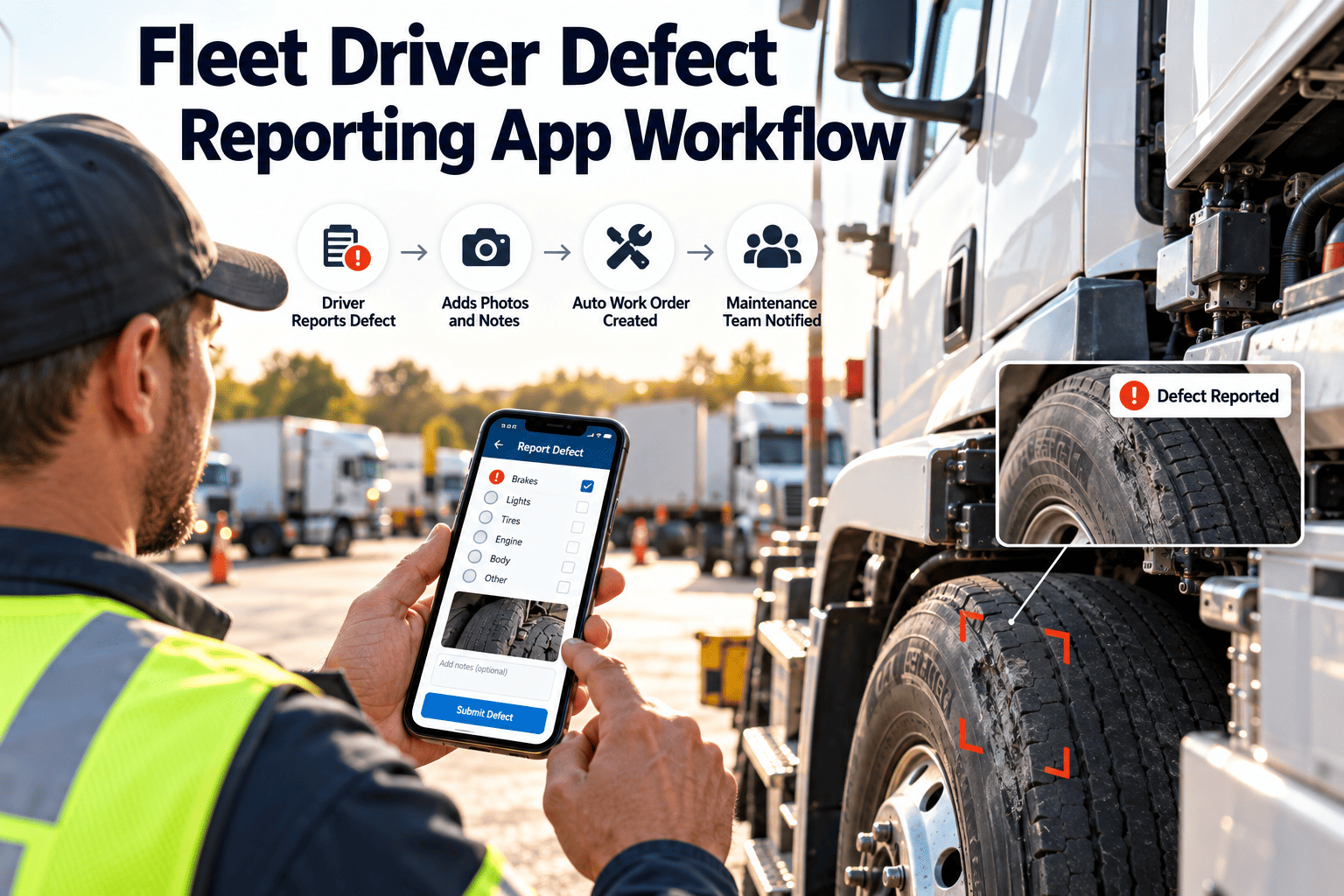
When a driver submits a DVIR defect, OxMaint creates a maintenance work order automatically and sends the driver a push notification when the defect has been assigned and completed. This closed loop — I reported it, they fixed it, I was told — is one of the most powerful and lowest-cost retention interventions available to fleet operators, and it is built into every OxMaint deployment by default.
"We were paying above-market wages and still losing 3–4 drivers a month. After deploying OxMaint, the first thing drivers noticed was that when they reported a defect, the fix showed up on their phone within 24 hours. Then they noticed the trucks weren't breaking down. Then they noticed the coaching was fair. In 6 months our turnover dropped from 78% to 34%."
— Director of Talent & Fleet Operations, Regional Carrier · 82 CDL drivers · Missouri, USA
Frequently Asked Questions
Q1What is the most impactful single technology investment for fleet driver retention?▼
Equipment reliability — predictive maintenance that prevents mid-route breakdowns — is cited by 94% of CDL drivers as a top-3 factor in fleet choice (ATA 2025). A driver who has never been stranded by their truck is a driver who does not look for another fleet. OxMaint predictive PM produces a measurable reliability improvement in the first 90 days.
Q2Does giving drivers access to their own safety score actually reduce turnover?▼
Yes — OxMaint customer data shows drivers with access to their own score data in the mobile app have 34% lower turnover rates than drivers in the same fleet without score visibility. The key is transparency: drivers accept performance management when they can see the evidence. They leave when they feel the system is arbitrary or inconsistent.
Q3How does OxMaint mobile DVIR reduce the daily administrative burden for drivers?▼
OxMaint mobile DVIR uses a guided checklist with photo attachment and digital signature — 3 minutes for a standard pre-trip or post-trip inspection versus 12–18 minutes for paper DVIR completion and filing. Defects submit directly to the maintenance queue without the driver visiting an office, making a phone call, or waiting for a supervisor.
Q4How quickly does OxMaint produce a measurable improvement in driver retention metrics?▼
Most OxMaint fleets see measurable retention improvement within 90–120 days — typically aligned with drivers noticing equipment reliability improvement from predictive PM and the closed-loop DVIR defect notification. Turnover reduction compounds in months 3–6 as coaching transparency and mobile workflow improvements build accumulated driver trust.
Q5Can OxMaint help reduce the cost of driver recruitment alongside retention?▼
Yes — drivers refer other drivers to fleets where they have a positive experience. OxMaint fleets with high safety scores, low breakdown rates, and transparent coaching generate above-average peer referral rates. Peer referrals are the lowest-cost CDL driver recruitment channel available — and they produce drivers who already have a positive impression of the fleet before their first shift.