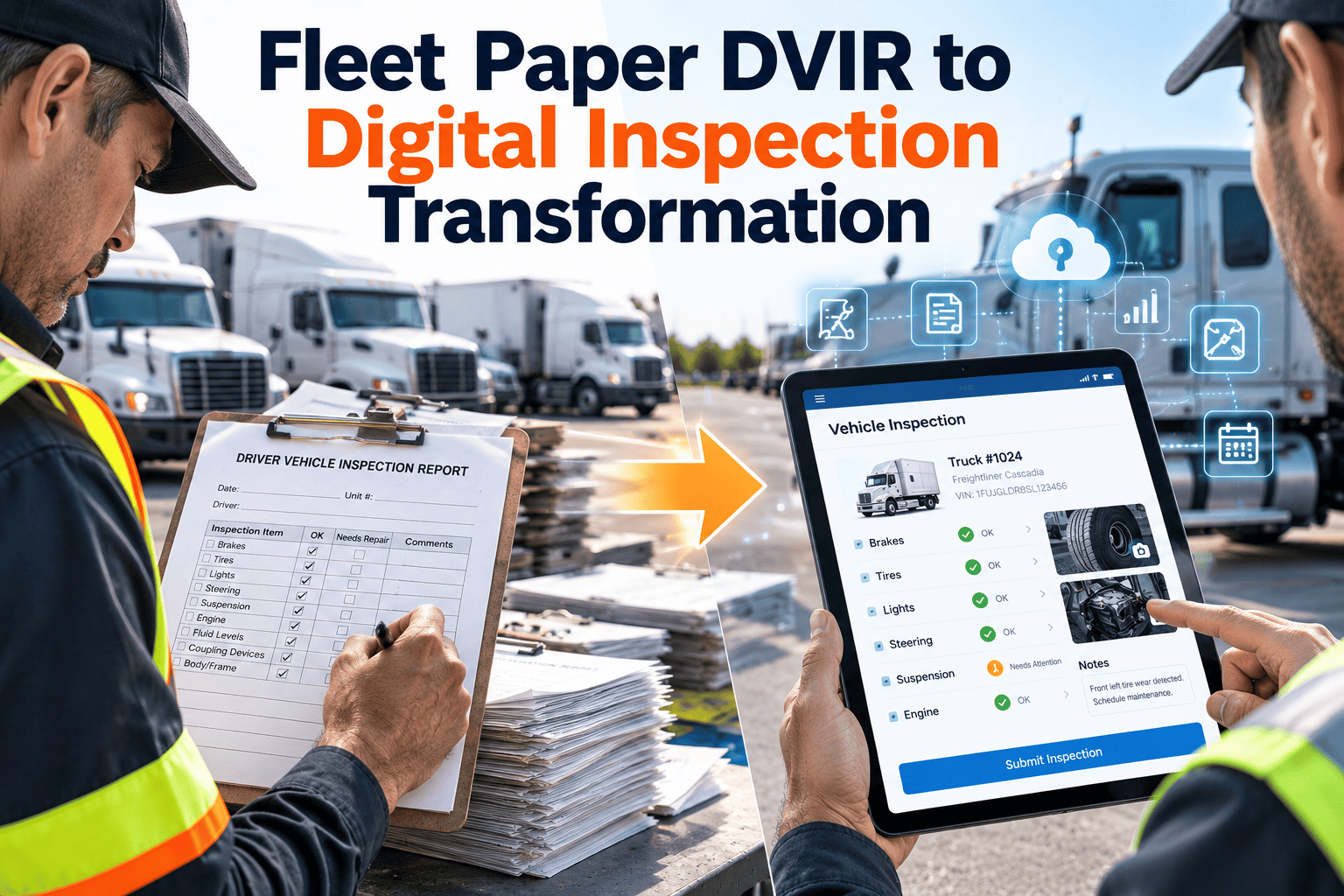
Every commercial motor vehicle operated on public roads requires a Driver Vehicle Inspection Report before and after each trip — that is not optional, it is federal law under FMCSA regulation 396.11. Yet DOT auditors report that 34% of fleets have DVIR documentation gaps that expose them to violations, fines, and increased liability in accident investigations. The consequences are not hypothetical: a missing DVIR on a vehicle involved in an incident can result in negligent entrustment claims that pierce corporate liability shields. This DOT-compliant DVIR template provides the pre-trip and post-trip inspection format required for trucks, trailers, and buses — with all inspection points mandated by FMCSA regulations. Download it for immediate use, or upgrade to Oxmaint's digital DVIR system that captures driver inspections on mobile devices with photo documentation, timestamps, and automatic defect escalation to maintenance. Paper forms get lost. Digital records do not. Book a demo or start a free trial to see digital DVIR in action.
Fleet Driver Vehicle Inspection Report (DVIR) Template: DOT Compliant
Pre-trip and post-trip inspection format for trucks, trailers, and buses. Covers all FMCSA 396.11 required inspection points. Digital and PDF versions available for immediate compliance.
Download the DVIR Form or Go Digital
Use the PDF for paper-based driver inspections. For digital DVIRs with mobile capture, photo documentation, automatic maintenance alerts, and audit-ready records, Oxmaint eliminates the gaps that lead to DOT violations.
FMCSA Required Inspection Points
FMCSA regulation 396.11 specifies the components that must be inspected on every pre-trip and post-trip DVIR. This template includes all required inspection points organized by vehicle system. Missing any required item creates a compliance gap.
Brake operation, air pressure, brake adjustment, parking brake function. Primary safety system. Brake defects are the most common OOS (out-of-service) violation at roadside inspections.
Steering wheel play, power steering fluid, linkage condition. Steering defects account for 12% of CMV crash contributing factors per FMCSA analysis.
Headlights, taillights, turn signals, brake lights, clearance lights, reflective tape. Required for visibility. Lighting violations are second most common roadside citation.
Tread depth, inflation, sidewall condition, lug nut tightness, wheel seal leaks. Tire failures cause 8% of large truck crashes. 4/32 tread minimum for steer tires, 2/32 for drive and trailer.
Horn audibility, wiper operation, washer fluid level. Required safety equipment. Inoperative wipers are OOS violations during precipitation.
Mirror adjustment, mirror condition, windshield cracks, window operation. Visibility defects create liability exposure beyond DOT compliance.
Fifth wheel condition, kingpin, safety chains, air and electrical connections. Uncoupling incidents are catastrophic. 100% of coupling components must be inspected on combination vehicles.
Fire extinguisher, warning triangles, spare fuses. Required safety equipment. Must be present and functional on every CMV.
Pre-Trip vs. Post-Trip: What Each Inspection Covers
Pre-trip inspections verify vehicle safety before operation. Post-trip inspections document condition at end of shift and report defects for maintenance action. Both are required by FMCSA. The template includes separate sections for each inspection type.
| Inspection Element | Pre-Trip | Post-Trip |
|---|---|---|
| All FMCSA 396.11 Components | Required | Required |
| Defect Identification | Report defects found | Report defects discovered during operation |
| Previous Defect Review | Verify prior defects corrected | N/A |
| Driver Certification | Vehicle safe to operate | Condition at end of trip |
| Maintenance Action Required | If defects found, do not operate until corrected | Defects reported for next-day correction |
| Documentation Retention | 90 days minimum | 90 days minimum |
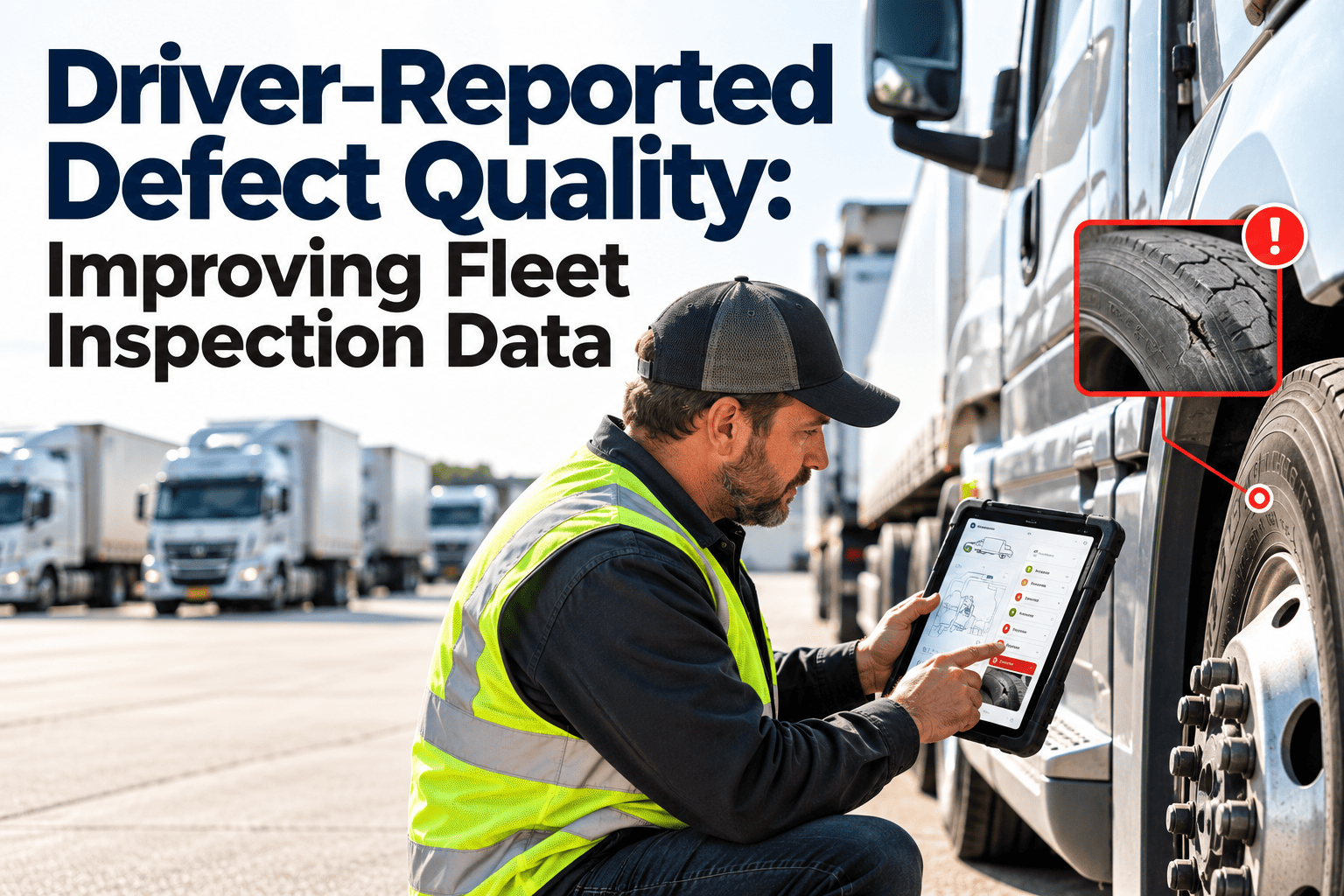
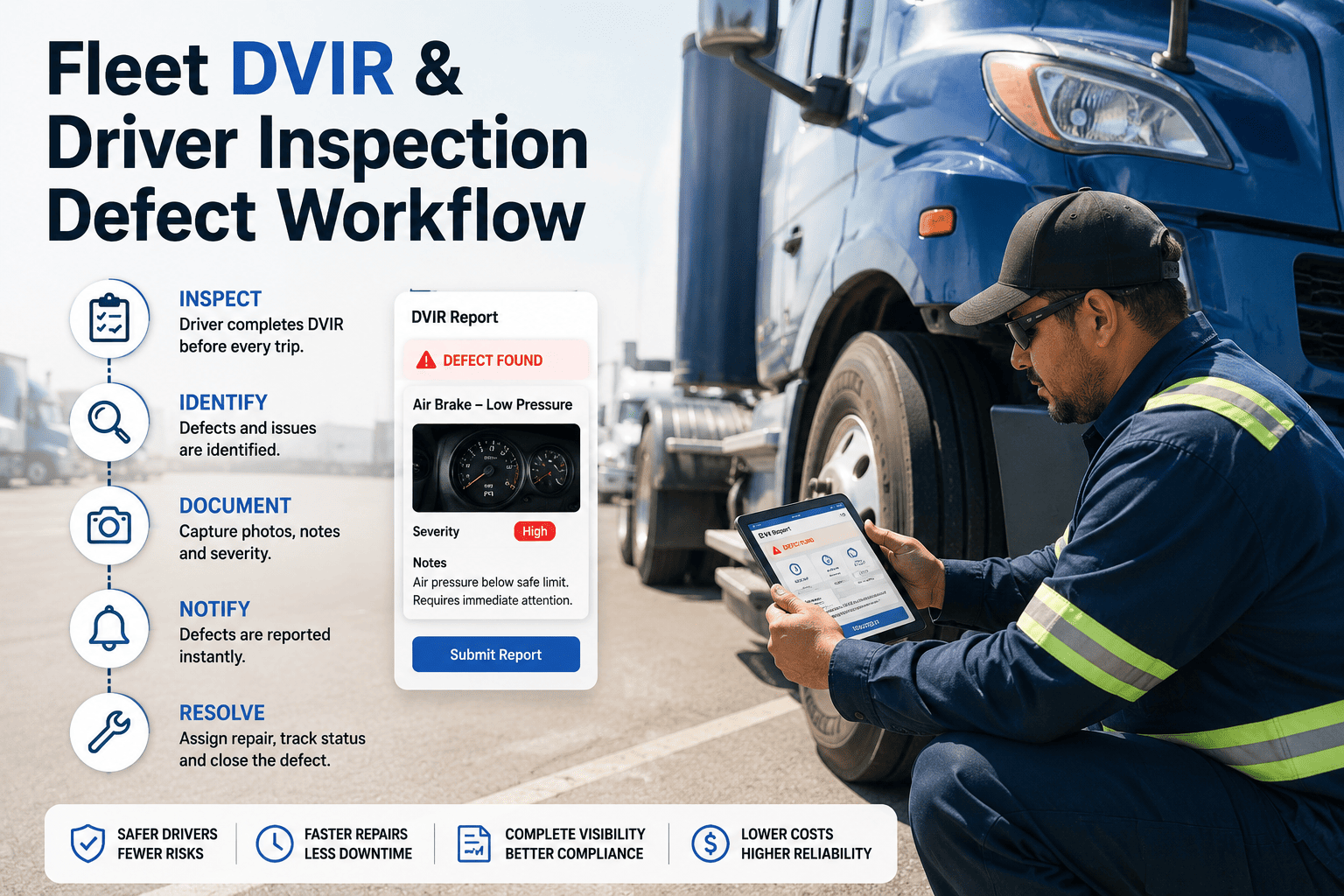
Paper DVIRs get lost, damaged, or incomplete. Oxmaint's digital DVIR system captures driver inspections on mobile devices with mandatory fields that cannot be skipped, photo documentation of defects, automatic timestamps, and instant escalation to maintenance when defects are reported. DOT auditors can access 90+ days of records in seconds — not hours of searching filing cabinets.
Defect Severity Classification
Not all defects require immediate action. FMCSA distinguishes between defects that place a vehicle out-of-service and minor defects that should be repaired but do not prevent operation. The template includes severity classification guidance for common defects.
Brake failure or adjustment beyond limits, steering system defects, tire tread below minimum, inoperative headlights (night), air loss exceeding 3 psi/minute, coupling device defects. Operating with OOS defects results in driver and carrier violations.
Cracked mirror, inoperative turn signal (if others functional), minor oil leak, windshield chip (not in driver view), loose trim. Must be documented and repaired within reasonable timeframe. Ignoring minor defects leads to OOS conditions.
Frequently Asked Questions
How long must DVIR records be retained?
What happens if a driver finds a defect during pre-trip inspection?
Are electronic DVIRs accepted by DOT?
Do I need DVIRs for vehicles under 10,001 lbs?
Stay DOT Compliant With Every Inspection
DVIR compliance is non-negotiable for commercial fleets. The paper template gets you started. Oxmaint's digital DVIR system ensures every inspection is complete, every defect is escalated, and every record is audit-ready. Fleets using digital DVIRs have 89% fewer documentation violations during DOT audits. Download the template or go digital today.