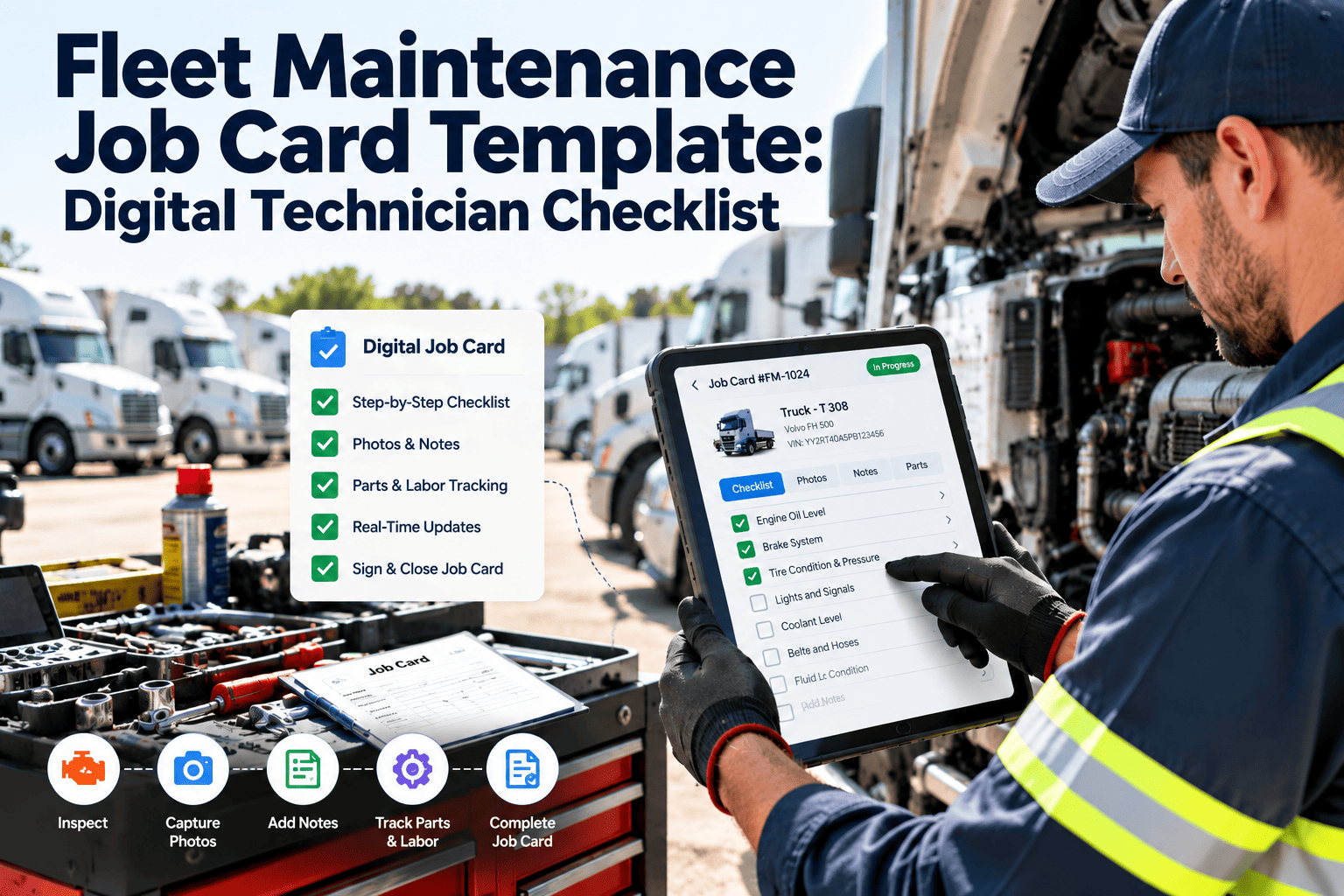
The difference between a fleet that controls costs and one that hemorrhages money on emergency repairs comes down to one discipline: preventive maintenance executed on schedule. Fleets with structured PM programs experience 45% fewer breakdowns, 28% lower repair costs, and 67% higher vehicle availability than those operating reactively. Yet 54% of fleet operations still lack a documented PM schedule — relying on technician memory, driver complaints, or dashboard warning lights to trigger maintenance. This preventive maintenance schedule template provides the complete framework for monthly, quarterly, and annual service intervals across trucks, vans, and heavy equipment. Download it to structure your PM program today, or connect with Oxmaint's fleet CMMS to automate PM scheduling with mileage-based triggers, technician assignments, and mobile work orders that ensure nothing falls through the cracks. The template starts your program — Oxmaint runs it automatically. Book a demo or start a free trial to see the difference automation makes.
Fleet Preventive Maintenance Schedule Template: Monthly, Quarterly, and Annual
Complete PM interval framework for trucks, vans, and heavy equipment. Covers oil changes, brake service, fluid flushes, safety inspections, and annual DOT compliance. Excel and PDF formats available.
Download the Schedule or Automate Your PM Program
The Excel template gives you a structured PM schedule to implement immediately. When you are ready to automate PM triggers based on mileage, engine hours, or calendar dates — with mobile work orders and compliance tracking — Oxmaint handles it automatically.
PM Schedule Framework: Intervals by Service Type
This template organizes preventive maintenance into four interval categories based on industry standards and manufacturer recommendations. Each category includes specific service tasks, inspection points, and documentation requirements.
Oil and filter changes, tire pressure checks, fluid level inspections, belt and hose visual inspection, wiper blade condition, exterior lighting check, brake visual inspection. Most frequent PM activities. Critical for high-mileage vehicles.
Tire rotation, air filter replacement, cabin filter replacement, brake pad measurement, battery testing, steering and suspension inspection, exhaust system inspection, fuel filter inspection. Catches wear before it becomes failure.
Transmission fluid service, coolant flush, power steering fluid service, differential fluid service, spark plug inspection (gas), fuel injector cleaning, wheel alignment check. System-level maintenance that extends component life.
DOT annual inspection, timing belt inspection, brake system overhaul evaluation, suspension component replacement evaluation, HVAC system service, emission system inspection. Major maintenance and compliance activities.
Complete PM Checklist by Interval
The template includes detailed checklists for each PM interval. Here is the complete breakdown of service tasks organized by frequency.
| Service Task | Monthly | Quarterly | Semi-Annual | Annual |
|---|---|---|---|---|
| Oil and Filter Change | X | X | X | X |
| Tire Pressure Check | X | X | X | X |
| Fluid Level Inspection | X | X | X | X |
| Exterior Lighting Check | X | X | X | X |
| Tire Rotation | X | X | X | |
| Air Filter Replacement | X | X | X | |
| Brake Pad Measurement | X | X | X | |
| Battery Testing | X | X | X | |
| Transmission Service | X | X | ||
| Coolant Flush | X | X | ||
| Wheel Alignment | X | X | ||
| DOT Annual Inspection | X | |||
| Brake System Overhaul Eval | X | |||
| Suspension Replacement Eval | X |
The spreadsheet requires manual tracking and calendar management. Oxmaint automates PM triggers based on mileage, engine hours, or calendar dates — sending mobile work orders to technicians automatically and tracking completion in real time. PM compliance rates jump from 62% average to 94%+ with automated scheduling.
Vehicle Class-Specific PM Intervals
PM intervals vary by vehicle class and usage pattern. The template includes pre-configured schedules for common fleet vehicle types. Here are the baseline intervals included.
F-150, Transit, Sprinter, ProMaster class vehicles. Standard commercial duty cycle. Intervals based on mixed city/highway usage averaging 20,000 miles per year.
Box trucks, stake beds, and medium-duty chassis. Higher oil capacity allows extended intervals. Brake intervals longer due to engine braking capability.
Semi-tractors, straight trucks, and heavy equipment. Extended intervals based on commercial diesel specifications. DOT annual inspection mandatory.
Excavators, loaders, forklifts, and industrial equipment. Hour-based intervals rather than mileage. Template includes hour-to-calendar conversion for low-use equipment.
Frequently Asked Questions
Should I use mileage or time-based intervals for PM scheduling?
How do I handle PM scheduling for different vehicle types in the same fleet?
What PM compliance rate should I target?
How do I document PM completion for DOT compliance?
Build a PM Program That Prevents Breakdowns
Every breakdown that could have been prevented by timely PM costs your fleet $1,200-$3,400 in direct repairs plus $800+ per day in lost productivity. The preventive maintenance schedule template gives you the framework. Oxmaint gives you the automation to ensure every PM happens on time, every time. Download the template today, or go digital and never track PM in a spreadsheet again.