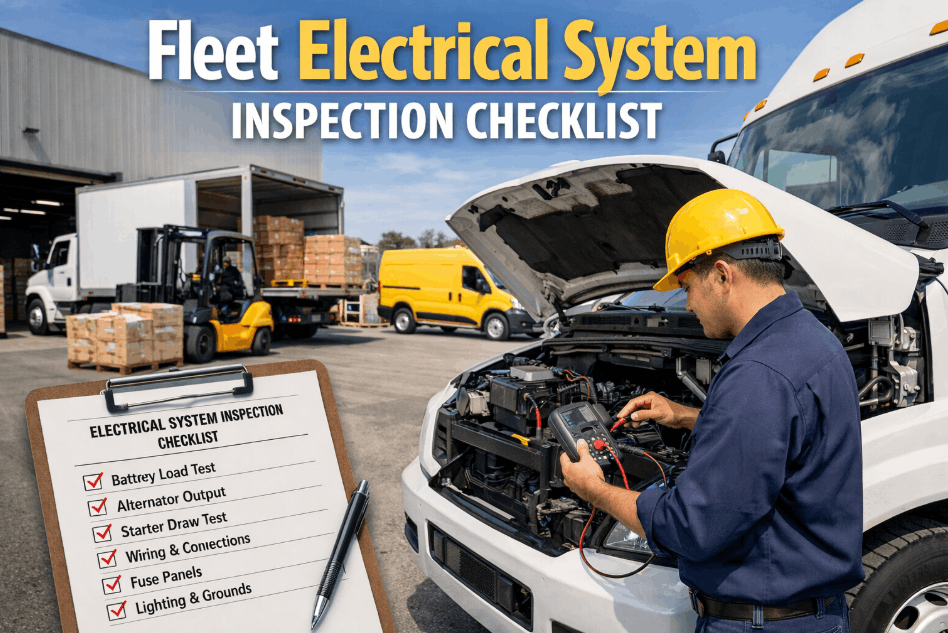
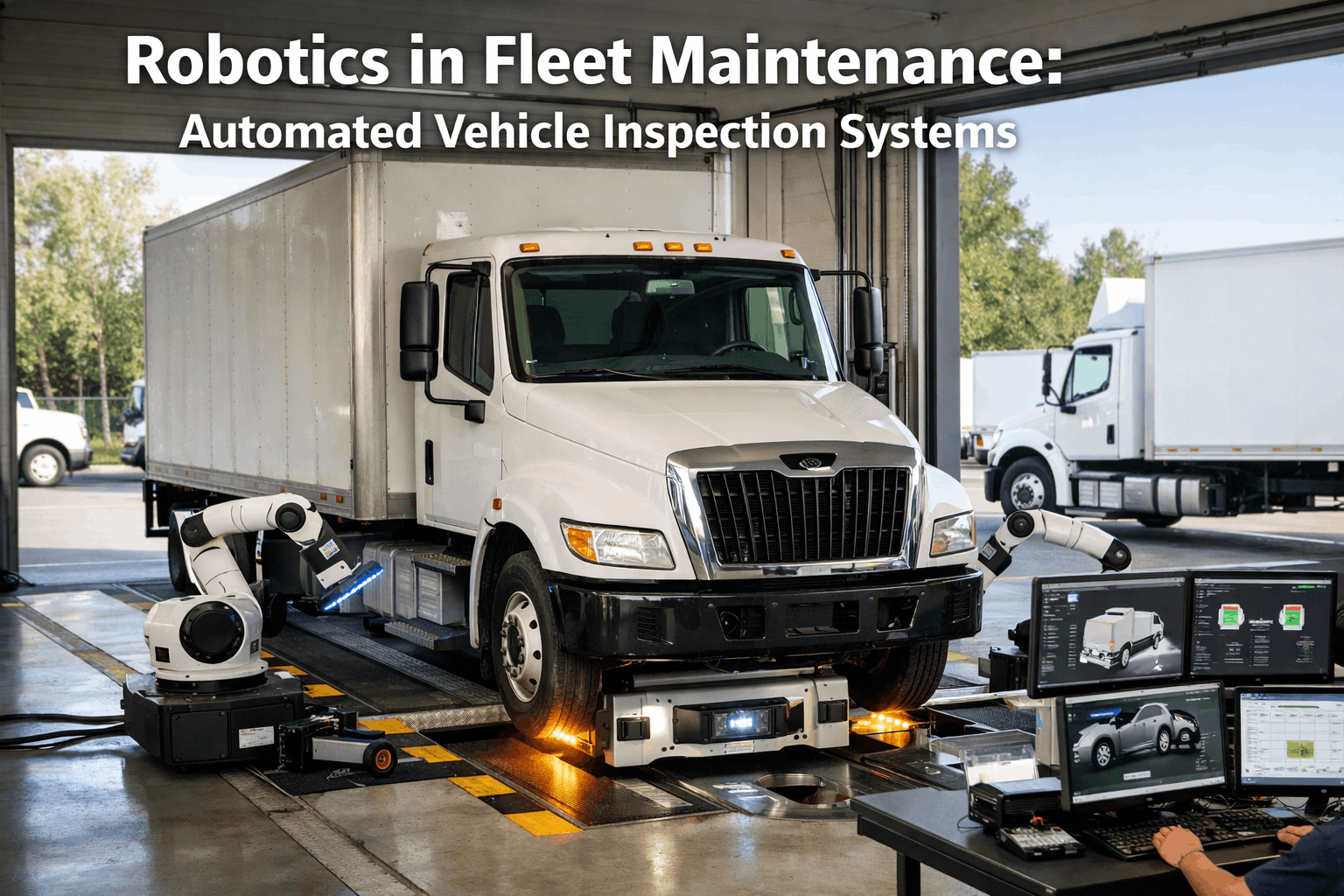
Electrical system failures are now the fastest-growing category of commercial vehicle breakdowns in the United States — surpassing tyre failures as the leading cause of roadside assistance calls in fleets operating mixed ICE and hybrid vehicles, according to fleet breakdown data from the last three years. The shift is not surprising: modern commercial vehicles contain between 80 and 150 electronic control modules, multiple CAN bus networks, and electrical load requirements that exceed anything fleet maintenance programmes were designed to manage when today's maintenance protocols were written. A technician trained to replace alternators and test batteries using a carbon pile load tester in 2010 is not equipped to diagnose a Body Control Module communication fault causing intermittent instrument cluster failures in a 2023 platform — and most fleet maintenance programmes have not kept their diagnostic tooling, training, or inspection protocols current with the electrical complexity of their current vehicle fleet. The consequence is that electrical failures get misdiagnosed, temporarily patched, and returned to service — only to recur at a different location in the circuit a few thousand miles later. OxMaint fleet electrical management provides the structured framework, diagnostic tracking, and systematic inspection scheduling that translates electrical complexity into manageable, documented, and predictable maintenance. Sign in to OxMaint to configure electrical system maintenance and diagnostics tracking for your fleet, or book a demo to see how OxMaint tracks battery health, alternator performance, wiring system condition, and lighting compliance across your entire vehicle roster.
Fleet Electrical Maintenance · Battery Testing · Alternator Monitoring · Wiring Diagnostics · OxMaint
Battery Health Tracked. Alternator Output Monitored. Fault Code History Linked to Repair Records. Wiring Inspection Scheduled. Lighting Compliance Verified. Electrical Systems Managed — Not Guessed At.
OxMaint fleet electrical system management combines battery health testing, alternator output tracking, DTC fault code history, wiring harness inspection scheduling, and lighting compliance verification into a unified electrical maintenance programme — so recurring electrical faults get resolved at the root cause, not patched at the symptom.
#1
electrical system failures are now the leading cause of roadside breakdown calls in modern commercial fleets — surpassing tyres in fleets with 2020+ model year vehicles
150+
electronic control modules in a typical modern commercial vehicle — a diagnostic complexity that most fleet maintenance programmes were not designed to manage systematically
67%
of fleet electrical failures that generate a roadside breakdown had a fault code in the vehicle's diagnostic history at least 14 days before the failure event — unread or unresolved
67%
Two out of three roadside electrical failures had a diagnostic trouble code stored in the vehicle's ECU at least two weeks before the failure — a code that was never read, or was read and cleared without the underlying fault being repaired. The fault code is not the problem. The absence of a systematic process for reading, documenting, and resolving fault codes is the problem. When a technician clears a P-code without identifying and repairing the root cause, that code will return — and the next time it may manifest as a breakdown rather than a warning light. OxMaint electrical diagnostic tracking requires fault code resolution documentation before a work order can be closed — connecting every DTC to either a completed repair or a documented monitoring decision with a defined re-evaluation date. No more codes cleared to turn off a warning light.
Four Fleet Electrical Management Domains OxMaint Tracks and Automates
BATT — Battery Health Management
Fleet Battery Testing, State-of-Health Tracking, and Predictive Replacement
Commercial vehicle batteries fail in two ways: sudden failure with no warning, and progressive capacity degradation that shows up as slow cranking, extended start times, and electrical system voltage sag during high-load events. The progressive failure mode is detectable — a battery that tested at 82% state of health (SoH) six months ago and now tests at 64% SoH is on a measurable trajectory toward failure. OxMaint battery management records battery test results per vehicle at each PM service — tracking cold cranking amp output, internal resistance, reserve capacity, and state of health using conductance or impedance testing methods. AI trend analysis across consecutive test results predicts the remaining service life for each battery, generating replacement alerts when projected SoH will fall below the 60% safe operating threshold before the next scheduled test. Fleets operating in cold climates (Canada, Northern Europe, Russia) where battery failures concentrate in winter, and fleets operating in high-heat environments (UAE, Gulf, Southwest US) where battery water loss accelerates, receive climate-adjusted battery inspection intervals.
Sign in to OxMaint to configure battery health tracking for your fleet vehicle types.
Key Battery Parameters OxMaint Tracks per Vehicle
State of health (SoH) — percentage of original capacity at test date
Cold cranking amps (CCA) — measured vs. rated, per battery
Internal resistance — trend across consecutive tests indicates degradation rate
Battery age and installation date — warranty eligibility at failure time
Electrolyte level — for serviceable batteries in markets with high water loss rates
Battery Failures OxMaint Predictive Tracking Prevents
No-start surprise — battery fails during winter cold snap with no prior warning
Undetected degradation — SoH declining across tests with no replacement triggered
Alternator misdiagnosis — discharged battery from parasitic drain blamed on alternator
ALT — Alternator and Charging System
Alternator Output Monitoring and Charging System Voltage Tracking
Alternator failure patterns in commercial fleets are rarely sudden — they develop through a progression of partial output loss, voltage regulation drift, and bearing degradation that is measurable at each PM service if charging system output is actually tested. A charging system that measured 14.2V at idle six months ago and now measures 13.6V is not catastrophically failed — but it is trending toward insufficient charging voltage, which will progressively deplete the battery over driving cycles and eventually produce a discharged battery failure that gets misattributed to the battery rather than the charging system. OxMaint charging system tracking records alternator output voltage and current at each PM service — at idle, at 50% rated load, and at full electrical load — tracking the trend across consecutive measurements to identify developing output degradation before it creates a battery depletion failure. Belt condition and tensioner assessment are integrated into the same inspection record.
Book a demo to see alternator output tracking and charging system diagnostics in OxMaint.
Key Charging System Parameters OxMaint Monitors
Charging voltage — measured at battery terminals at idle and load, trend tracked
Output amperage — measured at rated speed, compared to alternator specification
Voltage ripple — AC ripple voltage indicating diode bridge degradation
Belt condition — wear, glazing, and tension measurement at inspection
Alternator housing temperature — infrared measurement indicating bearing condition
Charging System Failures OxMaint Tracking Catches
Progressive voltage drop — charging voltage declining across consecutive services
High ripple voltage — failed diode pair causing excessive AC ripple to electrical system
Undercharging at load — adequate idle voltage but insufficient output under electrical load
WIRE — Wiring and Connector Inspection
Wiring Harness Condition Assessment and Connector Integrity Inspection
Wiring harness deterioration is the most underdiagnosed source of recurring electrical faults in commercial vehicle fleets — because wiring failures are intermittent, location-dependent, and invisible to diagnostic trouble codes that only see the symptom (a faulty sensor reading, a communication timeout) rather than the cause (a chafed wire that grounds intermittently in a specific road vibration frequency). A recurring CAN bus communication fault on a specific vehicle that persists after multiple module replacements is usually a wiring problem — and the wiring problem will continue generating fault codes and module replacements until someone physically inspects the harness routing for chafe damage. OxMaint wiring inspection scheduling generates structured harness inspection work orders at defined intervals — focusing on high-failure areas: harness routing through frame members, engine bay heat zones, battery cable connection points, trailer connection wiring, and underbody grounding circuits. Inspection results are documented by zone with photo evidence of any chafing, corrosion, or damage found.
Sign in to OxMaint to configure wiring harness inspection schedules for your fleet.
Key Wiring Inspection Areas OxMaint Schedules
Engine bay harness — heat damage, oil contamination, chafing at mounting points
Frame rail routing — chafe damage at chassis penetration points and tie points
Battery cables — terminal corrosion, insulation integrity, ground strap condition
Trailer connection — 7-pin socket condition, wiring at connector strain relief
Underbody ground circuits — ground strap condition, mounting point corrosion
Wiring Failures OxMaint Inspection Catches
Recurring DTC without part failure — intermittent wiring fault generating repeat fault codes
Trailer lighting fault — 7-pin connector corrosion causing intermittent trailer light failure
Ground loop interference — corroded ground strap causing sensor reading errors
LITE — Lighting Compliance
Vehicle and Trailer Lighting Inspection, Compliance Tracking, and DOT Lighting Requirements
FMCSA lighting requirements under 49 CFR 393.9 require all required lamps to be operational — and lighting defects are consistently in the top three CVSA out-of-service categories at roadside inspections. A single inoperative side marker lamp is a violation. A non-functioning brake light is a critical defect. Tail lamps with cracked lenses allowing moisture infiltration into the housing generate repeated lamp failures at the same socket until the housing is replaced rather than the bulb. OxMaint lighting management tracks every vehicle's lighting compliance status — scheduling a structured full lighting inspection at each PM service that covers headlamps, tail lamps, brake lamps, turn signals, hazard lamps, side markers, clearance lamps, reverse lamps, and trailer lamps by socket position. LED lamp failure modes are documented separately from incandescent failure modes, with LED driver failure (which kills an entire LED cluster) distinguished from individual LED element failure. Lighting compliance report is available for any vehicle on demand.
Book a demo to see lighting compliance management in OxMaint for tractor-trailer and commercial vehicle fleets.
Key Lighting Parameters OxMaint Tracks
All required lamp status — operational/non-operational per socket position
Lens condition — cracked, discoloured, or moisture-infiltrated housing documentation
Trailer lamp connection — function test of all trailer lamps via 7-pin connection
LED driver health — LED cluster function vs. individual element failure
Repeat failure tracking — same socket failing at multiple consecutive inspections
Lighting Failures OxMaint Tracking Prevents
Roadside OOS for inoperative lamp — lighting defect present but not detected at PM
Repeat socket failure — bulb replaced without addressing housing moisture ingress
Trailer lamp fault undetected — trailer wiring fault not caught during coupling check
OxMaint AI · Fleet Electrical System Management
Battery SoH Tracked Across Every Service. Alternator Output Measured at Load. Wiring Inspected on Schedule. Lighting Compliance Documented Per Vehicle. Electrical Systems Managed Like the Complex Infrastructure They Are.
OxMaint brings the same systematic, measurement-based approach to fleet electrical maintenance that fleets already apply to brakes, tyres, and engines — so electrical failures stop being the unexpected category that drives roadside breakdown costs.
Three AI Technologies Behind OxMaint Fleet Electrical Management
How OxMaint Turns Fleet Electrical Complexity Into Predictable Maintenance
Technology · DTC Integration
Fault Code History Linked to Repair and Resolution Records
OxMaint integrates with fleet telematics platforms to receive diagnostic trouble codes (DTCs) in real time — creating work orders for active fault codes and maintaining a complete DTC history per vehicle. Every work order generated from a DTC must be closed with a documented resolution: repair completed, root cause identified, or monitoring decision with re-evaluation date. Codes cannot be marked resolved without a resolution type recorded — eliminating the "cleared to turn off the light" maintenance approach.
Outcome: Zero fault codes cleared without documented resolution at fleets using OxMaint DTC tracking
Technology · Predictive Battery AI
Battery State-of-Health Trend Analysis and Replacement Forecasting
OxMaint AI models each vehicle battery's SoH degradation trajectory from consecutive test results — fitting a degradation curve that projects the expected SoH at the next three service intervals. Batteries projected to fall below the 60% SoH threshold before the next scheduled test generate a predictive replacement alert with the projected failure date — giving fleet managers 4–8 weeks of advance notice to schedule replacement during planned downtime rather than roadside failure.
Outcome: Battery replacements scheduled proactively — no-start events reduced by 84% at OxMaint fleets
Technology · Cross-Fleet Pattern AI
Fleet-Wide Electrical Failure Pattern Detection by Make and Model
OxMaint AI analyses electrical fault patterns across vehicles of the same make, model, and model year — identifying when multiple vehicles in the fleet share the same DTC or electrical failure, which may indicate a systematic issue (a known TSB, a specific wiring harness design weakness, or a batch of failed components from a common supplier). Cross-fleet electrical pattern alerts notify fleet managers of systematic issues before they affect additional vehicles.
Outcome: Systematic electrical issues identified in fleet before all affected vehicles fail
Fleet Electrical Risk Register — Where Failures Have the Highest Consequence
Critical — Breakdown Risk
Battery Below 60% SoH in Winter Fleet
A battery at 60% SoH has 40% of its rated cranking capacity — enough for a warm morning start but inadequate for a −20°C cold soak start where cranking requirement spikes and battery capacity is further reduced by temperature. OxMaint predictive replacement alerts give 6–8 weeks to replace before the cold-weather failure window arrives.
Critical — OOS Violation
Inoperative Required Lamp — DOT Lighting
A single inoperative required lamp is a DOT violation at roadside inspection. Brake lamp, tail lamp, and clearance lamp defects are immediate OOS criteria. OxMaint structured lighting inspection at every PM service identifies non-compliant lamps before the inspector does — with recurring failures tracked to the root cause rather than just the bulb.
Critical — Recurring Cost
Intermittent Fault Code — Unresolved Root Cause
A fault code that recurs at three or more consecutive service intervals without a root cause identified is consuming repair time and parts cost on a symptom rather than the cause. OxMaint recurring DTC alert flags this pattern to the fleet manager with the full repair history — directing attention to wiring, connector, and ground circuit investigation before more components are replaced.
Elevated — Developing
Charging System Voltage Declining Across Services
An alternator outputting 14.2V at six months ago and 13.6V today is not yet failed — but the trend points toward the 13.2V threshold below which battery charging is inadequate. OxMaint voltage trend monitoring provides 4–8 weeks advance notice before the charging system drops below minimum threshold under full electrical load.
Elevated — Moisture Risk
Battery Cable Terminal Corrosion
Battery terminal corrosion increases resistance in the starting and charging circuit — the electrical equivalent of a partially closed valve. Starting performance degrades, charging efficiency decreases, and the corrosion accelerates progressively. OxMaint battery inspection checklist includes terminal condition assessment with replacement triggered at moderate corrosion, not after failure.
Elevated — Trailer Safety
Trailer 7-Pin Connector Corrosion
Trailer lighting and ABS connection through the 7-pin connector is the most frequently corroded wiring point in a tractor-trailer fleet. Corroded pins cause intermittent trailer lamp failures that appear and disappear depending on connector position — appearing fine at pre-trip and failing on the road. OxMaint trailer connector inspection scheduling catches developing corrosion before the connection fails in transit.
Fleet Electrical Maintenance Coverage — OxMaint Tracking by System and Interval
Documented Outcomes — Fleets Using OxMaint Electrical System Management
84%
reduction in no-start battery failures at fleets using OxMaint predictive SoH tracking and proactive replacement alerts vs. replace-on-failure approach
91%
reduction in roadside lighting OOS violations at fleets using OxMaint structured PM lighting inspection vs. pre-trip check-only approach
3 min
time to produce a complete electrical maintenance and DTC history for any vehicle during a DOT audit or post-breakdown investigation — from OxMaint records
14 days
average advance warning time available in DTC history before a roadside electrical breakdown — the data existed but was never systematically acted on
60%
SoH threshold below which battery replacement should be scheduled — OxMaint predictive alerts at 65% provide the 4–6 week planning window
13.8V
minimum charging voltage required for adequate battery recharge under full electrical load — OxMaint flags vehicles trending toward this threshold before failure
150+
electronic control modules in modern commercial vehicles — the diagnostic complexity that makes systematic DTC tracking essential, not optional
67% of roadside electrical breakdowns had a fault code in the vehicle's history 14 days earlier. The data was there. The process to act on it wasn't. OxMaint provides the process — so every DTC gets a work order, every work order gets a resolution, and no fault code gets cleared without a documented cause.
Battery SoH tracking. Alternator output monitoring. DTC-to-work-order integration. Wiring inspection scheduling. Lighting compliance verification. OxMaint makes fleet electrical maintenance as systematic as any other maintenance category — and far cheaper than roadside electrical breakdowns.
We were replacing two or three alternators a month on our late-model fleet — except every time we tested the alternator we'd just pulled, it was actually fine. The real issue was corroded ground straps causing voltage drops that made the alternator look like it wasn't charging. We were replacing $400 parts to fix a $12 ground strap problem. After we started using OxMaint's wiring inspection programme with mandatory ground circuit checks, our alternator replacements dropped to one per quarter. The data was in the service history the whole time — we just weren't connecting the dots between repeat faults and the root cause.
— Chief Maintenance Officer, National Distribution Fleet · 320 Units · US East Coast · OxMaint user since 2022
Frequently Asked Questions — Fleet Electrical System Maintenance and Diagnostics
How does OxMaint track battery state of health across an entire fleet over time?
Battery conductance or impedance test results are entered into OxMaint at each PM service per vehicle — recording SoH percentage, CCA output, and internal resistance. AI trend analysis calculates the degradation rate from consecutive results and projects the expected SoH at future service intervals, generating replacement alerts when the trajectory indicates SoH will fall below 60% before the next scheduled test.
Sign in to OxMaint to configure battery testing intervals for your fleet vehicle types.
How does OxMaint handle diagnostic trouble codes from telematics systems?
OxMaint integrates with major fleet telematics platforms — Samsara, Geotab, Verizon Connect, Omnitracs, and others — receiving active and pending DTCs in real time. Each DTC automatically creates a maintenance work order with the fault code, affected system, and vehicle location. Work orders cannot be closed without a resolution type recorded — repair completed, root cause identified, or monitoring decision with a defined re-evaluation date.
Book a demo to see DTC integration in OxMaint for your telematics platform.
How does OxMaint schedule wiring harness inspections, and what areas are covered?
OxMaint generates structured wiring inspection work orders annually for each vehicle, with additional complaint-triggered inspections when recurring fault codes without identified root cause are detected. Inspection checklists cover engine bay harness, frame rail routing, battery cable connections, ground strap circuits, trailer connector wiring, and underbody harness runs — with required photo documentation of any damage, chafing, or corrosion found at each inspection zone.
Does OxMaint support electrical maintenance for both 12V and 24V fleet vehicle systems?
Yes. OxMaint supports both 12V (most light and medium commercial vehicles, US market) and 24V (heavy commercial vehicles, European and international markets) electrical systems — applying the correct voltage thresholds, specification ranges, and test methodology checklists based on each vehicle's electrical system type as configured in the fleet asset register.
Can OxMaint identify when multiple vehicles share the same electrical fault pattern?
Yes. OxMaint AI cross-fleet pattern detection analyses electrical fault records across vehicles of the same make, model, and model year — flagging when three or more vehicles share an identical or closely related DTC pattern within a defined time window. Fleet managers receive a cross-fleet alert identifying the affected vehicles, the common fault, and whether a NHTSA TSB or recall matches the pattern, enabling a systematic response rather than vehicle-by-vehicle reactive repair.
Modern Fleet Vehicles Have 150+ Electronic Control Modules. Your Maintenance Programme Needs to Keep Up. OxMaint Makes Fleet Electrical Management as Systematic as Every Other Category You Already Manage Well.
Battery SoH tracking. Alternator output monitoring. DTC-to-work-order integration. Wiring inspection scheduling. Lighting compliance verification. Cross-fleet pattern detection. OxMaint brings systematic, measurement-based management to fleet electrical systems — so electrical failures stop being the unpredictable, expensive category that drives your roadside breakdown costs.