-maintenance-checklist.png)
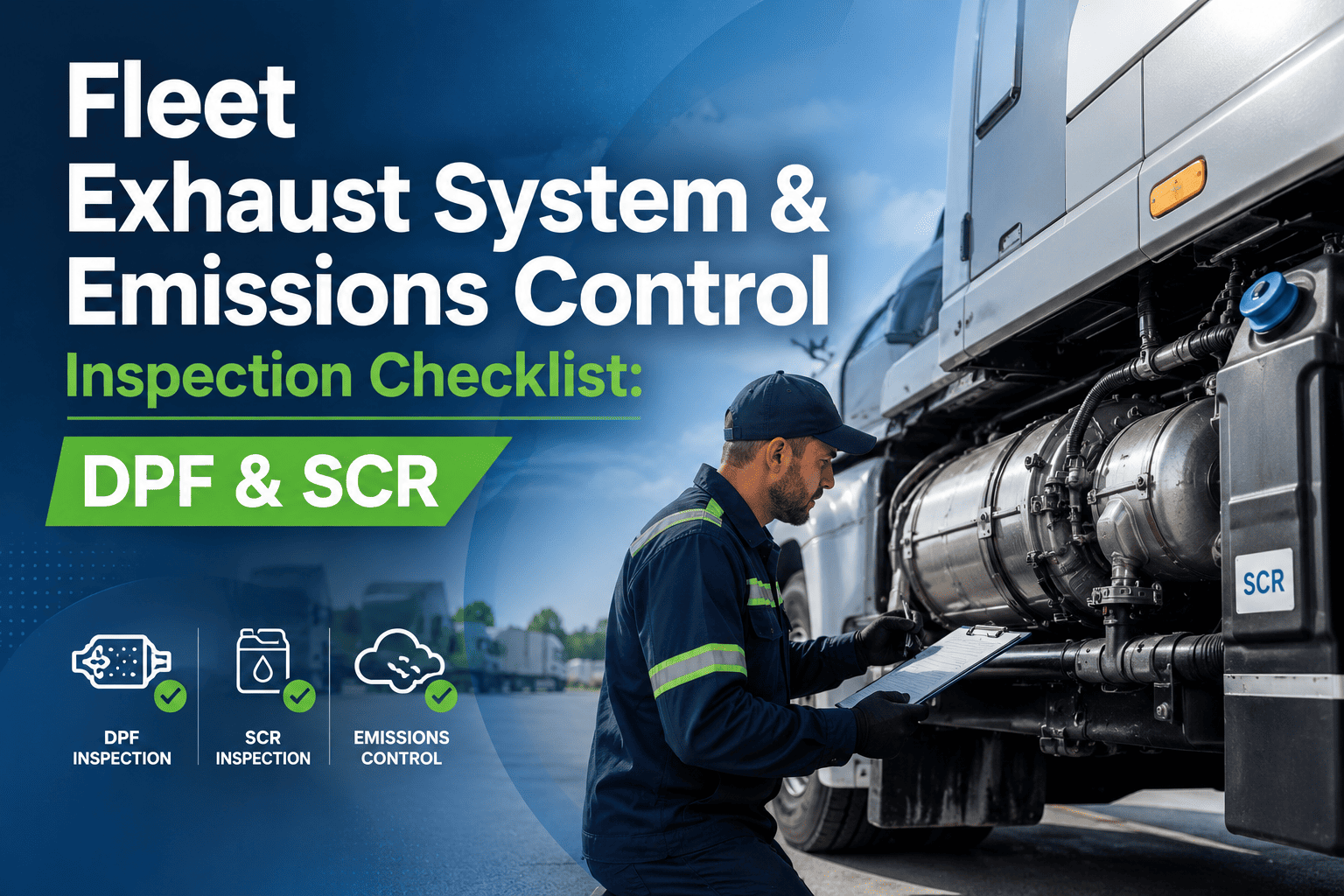
Modern diesel emission systems — DPF, DEF/SCR, EGR, and DOC — are the most technically complex maintenance category on any Euro 5/6 or EPA 2010+ commercial vehicle, and the most penalised when neglected. A DPF that reaches 100% soot load and enters limp mode strands the vehicle immediately. A DEF system fault that triggers a torque derate reduces engine output to 25–50% within hours. An EGR cooler that develops an internal leak dilutes engine oil with coolant silently over weeks, causing engine damage that costs 20× more to repair than the cooler itself. Oxmaint's emission system PM module tracks DPF soot load, DEF level trends, and EGR valve cycle counts — alerting technicians to intervention triggers before OBD fault codes ground the vehicle.
Emission System PM — 5-Layer Inspection Framework
A complete emission system PM works from the air and fuel inputs through to the final exhaust output — not just the components that are triggering fault codes. Each layer depends on the layer below it performing correctly. Skipping a layer produces a finding you will misdiagnose because you haven't checked the root cause first.
Technology That Transforms Emission System PM
Emission system faults are among the most data-rich failures in any modern diesel — the ECM generates dozens of sensor readings, DTC codes, and regeneration event records that tell the complete story of system health without removing a single component. Four technologies now make that data actionable before the fault becomes a derate or a DEF tankful from limp mode. Oxmaint integrates all four into a single emission system PM workflow.
1. DPF Maintenance and Regeneration Checklist
The Diesel Particulate Filter is the highest-maintenance, highest-failure-cost component in the emission system. DPF failure is almost always preventable — it results from ignored regeneration cycles, incorrect oil grades, excessive idle time, or missed cleaning intervals rather than component defects. Every item in this section directly extends DPF service life. Track DPF soot load and regen history per vehicle with Oxmaint.
DPF soot load % — read via OBD at every PM
Read DPF soot load % from the ECM at every PM. Consistently above 60% signals insufficient passive regen — check for excessive idle time, short routes, or a failing DOC. Monitor — above 60% consistently
DPF differential pressure sensor — values within specification
High delta-P at low flow = elevated soot/ash. Zero delta-P at all conditions = failed sensor or ruptured substrate — both require immediate investigation. OOS — suspected rupture
DPF cleaning interval — ash accumulation schedule
Ash cannot be burned off — clean professionally every 150,000–200,000 miles. Overdue cleaning causes permanent performance degradation that regeneration cannot fix. Defect — overdue cleaning
Engine oil — low-SAPS specification verification
Use API CJ-4/CK-4 or ACEA C3/C4 low-SAPS oil only. Standard oils generate 3–5× more ash, cutting cleaning intervals from 200k to under 75k miles. Defect — wrong oil grade
Regen inhibit switch — confirm not permanently activated
Inhibit switch must be off during highway operations. Leaving it on prevents passive regen and drives soot toward forced-regen threshold within 1–2 shift cycles. Defect — permanently inhibited
OBD Monitoring tip: Oxmaint pulls DPF soot load percentage, regen event frequency, and regen inhibit activation history via OBD at every vehicle return — giving maintenance managers a fleet-wide DPF health dashboard without any technician action required beyond the vehicle connecting to the depot network. See Oxmaint's automated DPF monitoring dashboard.
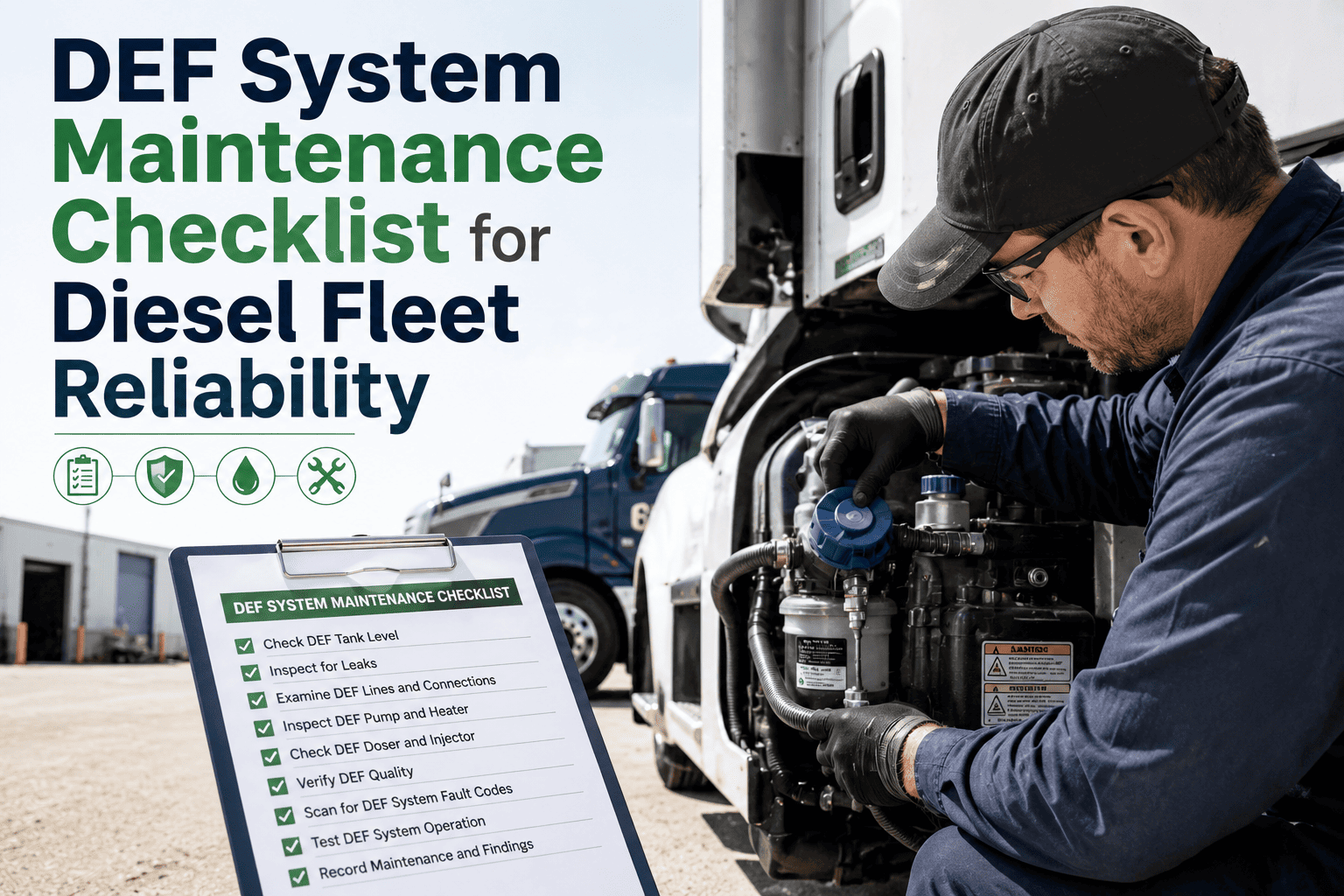
2. DEF System and SCR Catalyst Checklist
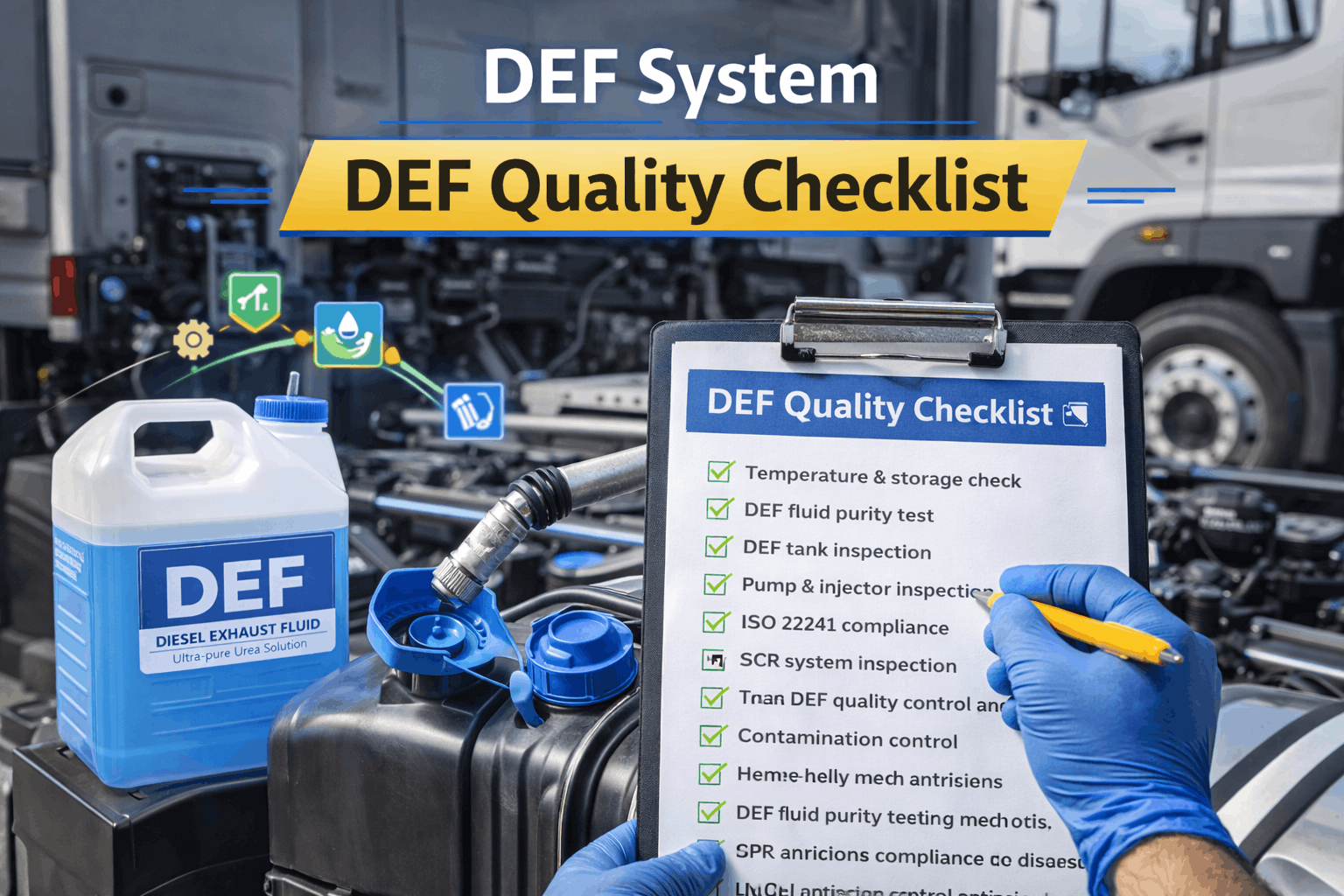
The DEF (Diesel Exhaust Fluid) system and SCR catalyst are the primary NOx reduction system on every EPA 2010+ diesel. DEF quality degradation, contamination, or incorrect concentration generates SCR faults that trigger engine derates with no warning to the driver — vehicles are sometimes stranded mid-route by DEF faults that began weeks earlier with a single tankful of degraded fluid. Log DEF quality test results and SCR fault history with Oxmaint.
DEF concentration — refractometer test at every fill
Correct concentration: 32.5% urea. Outside 31–34% range triggers SCR faults and derates. Test bulk storage tanks monthly — heat above 95°F degrades concentration. Defect — outside 32–33% range
DEF contamination — visual and sensor check
Any discoloration, cloudiness, or wrong odour = contaminated DEF. Contaminated fluid destroys the SCR catalyst washcoat — a $3,000–$8,000 replacement that a visual check prevents. OOS — contaminated DEF
DEF injector — dosing rate and nozzle condition
Compare OBD dosing rate to expected value. Below rate = blockage; above rate = stuck-open, causing urea crystallisation in the SCR inlet. Inspect nozzle for white deposits at every PM. Defect — dosing rate deviation
SCR catalyst — NOx conversion efficiency via OBD
Read upstream and downstream NOx sensors — efficiency must exceed 85%. Below 70% generates DTCs and triggers derate. Schedule replacement when successive readings show consistent decline. Defect — efficiency below 70%
DEF tank heater — function test before winter season
DEF freezes at -11°C. A failed heater triggers immediate cold-weather derate. Test element resistance before first frost and inspect DEF lines for insulation in cold undercarriage zones. Defect — failed heater
3. EGR System and DOC Checklist
The EGR (Exhaust Gas Recirculation) valve and cooler are the highest-maintenance individual components in the emission system. EGR valve carbon build-up causes sticking that first appears as cold-start smoke and rough idling, progresses to fault codes, and ends with the valve seized either open or closed — both conditions causing significant engine damage if not addressed. The DOC (Diesel Oxidation Catalyst) must function to initiate passive DPF regeneration — a failing DOC is often the root cause of persistent DPF soot accumulation problems. Schedule EGR valve service intervals and DOC inspection records with Oxmaint.
EGR valve — position feedback and carbon inspection
Commanded vs. feedback position mismatch over 5% = carbon binding. Catch it early — in-place cleaning saves $600–$1,200 vs. replacement after seizure. Defect — position feedback mismatch
EGR cooler — internal leak test
Signs: unexplained coolant loss, white exhaust smoke after warm-up, sweet exhaust smell. Confirm with CO test strips. Internal leak dilutes engine oil and causes progressive engine damage until replaced. OOS — confirmed internal leak
EGR cooler — external condition and mounting
Inspect for coolant staining, end-tank cracks, and loose hose clamps. A failed EGR cooler hose causes rapid coolant loss and potential overheat within minutes. Defect — staining/crack
DOC — exhaust temperature differential across catalyst
A working DOC raises exhaust temp by 50–150°F across the catalyst. No temperature rise = failed substrate — passive DPF regen stops, forcing active regen every shift. Defect — no temperature rise
Emission system sensors — DPF delta-P, NOx, O2, and temperature
Read all emission sensors via OBD. Freeze-frame any out-of-range value before clearing. Slow-response sensors cause incorrect DEF dosing that degrades SCR efficiency over time. Defect — out-of-range reading
Digital Twin tip: A vehicle's digital twin that tracks EGR valve position feedback deviation across successive PM readings provides 8–10 weeks of advance warning before the valve seizes — allowing scheduled cleaning during a planned downtime window rather than an emergency replacement during a breakdown. Book a demo to see Oxmaint's emission system predictive maintenance.
We replaced four DPFs in one quarter before connecting our fleet to Oxmaint's OBD monitoring. Once we could see soot load trending per vehicle, we caught every subsequent DPF approaching forced-regen threshold 3–4 weeks out and scheduled the regen during planned downtime. No unplanned DPF events in 18 months and our cleaning cost has replaced replacement cost entirely.
Emission System PM — Key Metrics
Professional DPF cleaning costs $300–$600. Replacement costs $8,000–$12,000. Structured PM at the correct cleaning interval eliminates replacement cost in most cases.
Digital twin DPF soot load forecasting gives maintenance teams 3–4 weeks of advance notice before any vehicle reaches forced-regen or limp-mode threshold — enough time to plan regen or cleaning into scheduled downtime.
Engine output after a full SCR/DEF derate — a fault left unresolved for 4–8 operating hours. Some vehicles derate in steps; others go directly to limp mode requiring a full system reset before normal operation resumes.
Maximum EPA civil penalty per day per vehicle for emission system tampering or defeat devices. Emission system PM is both a reliability programme and a legal compliance requirement with significant personal liability implications.
Frequently Asked Questions
The most common questions from diesel technicians and fleet managers about emission system maintenance, DPF cleaning, DEF quality, and EPA compliance requirements.
Every 150,000–200,000 miles on highway duty with correct low-SAPS oil; every 75,000–100,000 miles on city/construction duty. Read ash load via OBD rather than applying a fixed mileage interval to all duty cycles.
32.5% urea per ISO 22241. Acceptable range 31.8–33.2% — test with a calibrated refractometer. Off-spec fluid triggers SCR derate events within 50–100 operating miles.
No — inhibit is only for enclosed spaces with active fire/safety risk. On highway, it prevents all passive regen and accelerates soot accumulation to forced-regen threshold within a fraction of the normal interval.
Unexplained coolant loss, white exhaust smoke after warm-up, sweet exhaust smell at idle, or milky coolant. Confirm with a CO test strip dipped in the coolant — positive = combustion gas in the cooling circuit, replace immediately.
No — it is a federal Clean Air Act violation carrying up to $44,000 per vehicle per day plus potential criminal prosecution. Defeated systems also void EPA certification and can affect operating authority and insurance.
Oxmaint pulls DPF soot load, DEF quality, SCR efficiency, and EGR feedback via OBD at every return — showing all vehicles on a single emission health dashboard with automated alerts before any parameter reaches intervention threshold.