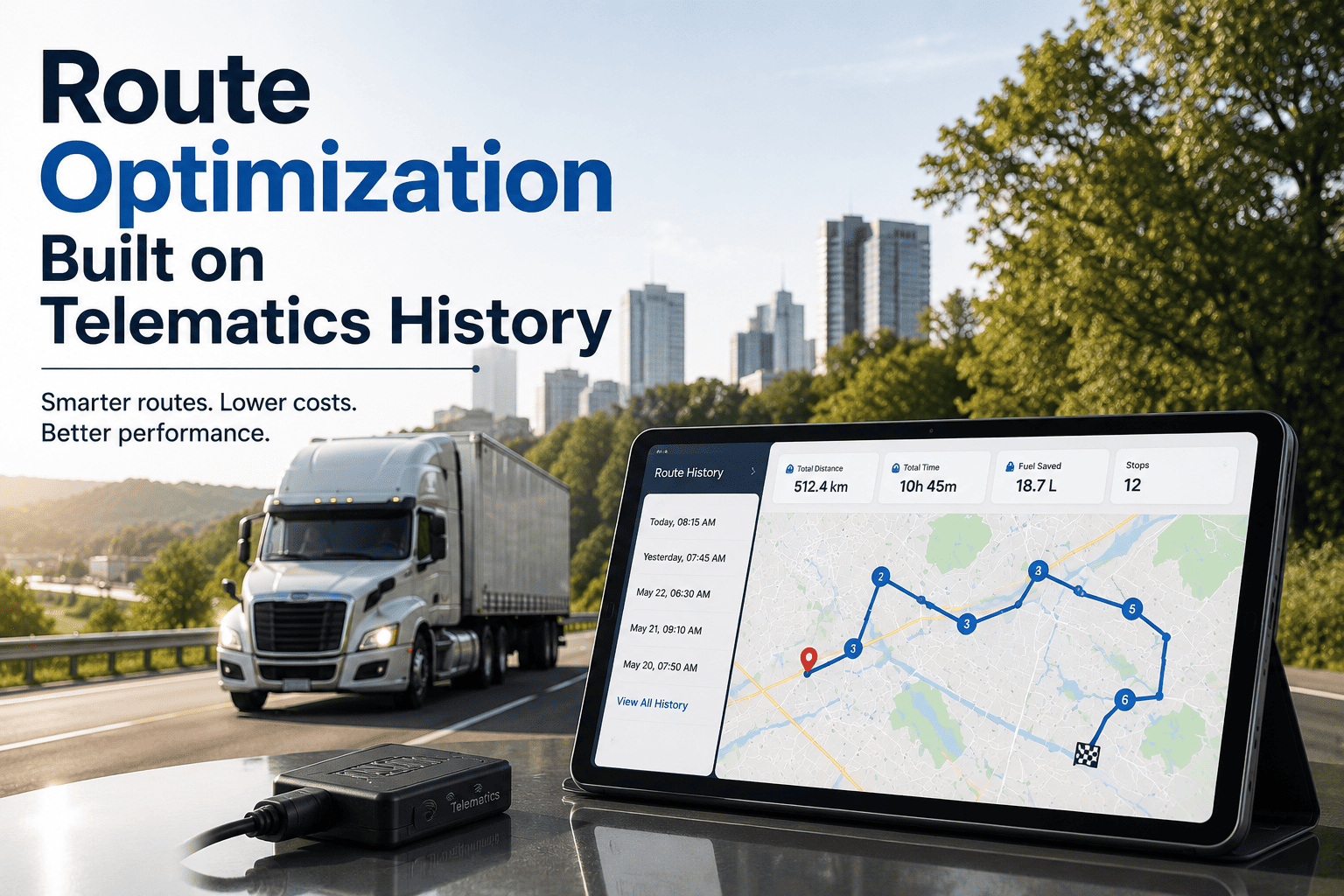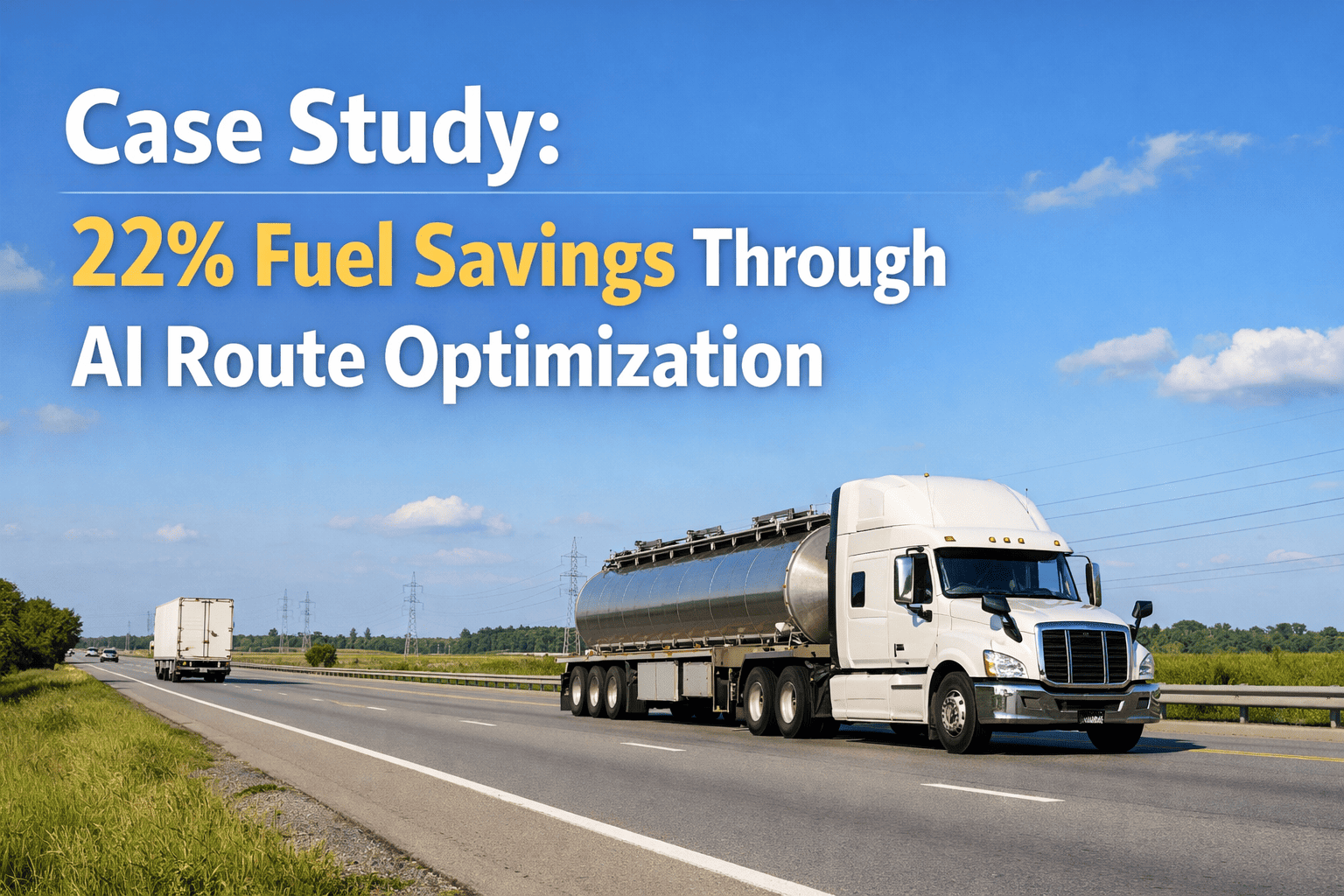
A mid-size logistics company in Nashville, Tennessee was running 180 delivery vehicles across a four-state distribution network when their CFO drew a line on the whiteboard: fuel was 31% of total operating cost and had increased 18% year-over-year. The operations team knew their drivers had variable habits — some were efficient, some were expensive — but with no data they could only guess at who and why. When OxMaint's AI driver behaviour module was connected to the fleet's existing telematics in January 2023, the picture became clear within 30 days: the top 20% most fuel-efficient drivers were averaging 8.4 mpg on identical routes; the bottom 20% were averaging 6.1 mpg on the same routes. The gap was entirely in driving behaviour — idling, acceleration profiles, speed management — not in routes or vehicle condition. OxMaint's AI coaching system targeted the behaviour gap with driver-specific coaching alerts, route efficiency scoring, and real-time feedback. Over 12 months, fleet-wide fuel consumption dropped 22%. Total fuel cost reduction: $412,000 annually. Book a demo to run your fleet's driver efficiency analysis.
The Fuel Gap — Where 22% Was Hiding
Every fuel-wasting behaviour leaves a telematics signature. The Nashville fleet's data revealed four distinct driver behaviour gaps that collectively accounted for the full 22% fuel waste. OxMaint's AI scored every driver on all four dimensions from day one of integration.
The 12-Month Coaching Programme — How the 22% Was Achieved
Coaching without data is opinion. Coaching with OxMaint data is evidence. Every coaching session was backed by the driver's own telematics record — specific events, specific dates, specific fuel cost impact. Drivers responded to evidence far more than to generalised reminders.
- Telematics connected — all 180 drivers scored
- Bottom 20% (36 drivers) identified and coached
- Idle reduction programme launched fleet-wide
- Pre-trip tyre pressure check added to checklist
- Fuel result: −8% fleet-wide
- Speed band programme — 70 mph ceiling enforced
- Harsh acceleration score added to weekly report
- Top 20% drivers recognised on fleet leaderboard
- Route profile analysis — 12 routes re-sequenced
- Fuel result: −15% fleet-wide cumulative
- AI-optimised PM intervals — fuel-relevant services
- Air filter and fuel injector PM tightened on high-hour trucks
- OBD fuel system fault alerts activated
- Second round coaching — remaining 15% inefficient drivers
- Fuel result: −19% fleet-wide cumulative
- Fleet average mpg: 6.1 → 7.8 mpg
- Idling reduced 71% fleet-wide
- Speed violations below 4% of drive time
- $412,000 annual fuel saving confirmed vs baseline
- Fuel result: −22% fleet-wide year-over-year
Fuel Savings Breakdown — The $412,000 Attribution
The $412,000 annual fuel saving came from four specific interventions. The table below shows the exact contribution of each — so any fleet can prioritise which lever to pull first based on their own telematics data.
Technology That Made the 22% Measurable and Repeatable
Four OxMaint technology integrations worked in parallel — connecting telematics data to coaching, maintenance to fuel efficiency, and real-time alerts to driver behaviour change.
We always knew our drivers weren't equal on fuel efficiency — we just couldn't prove it or act on it. OxMaint gave us a number next to every driver's name. When we showed a driver their idle data in a coaching session they couldn't argue with it. In 12 months we cut $412,000 from our fuel bill without changing a single route. That's real money.— VP of Operations, 180-vehicle Logistics Company, Nashville TN · OxMaint customer since 2023