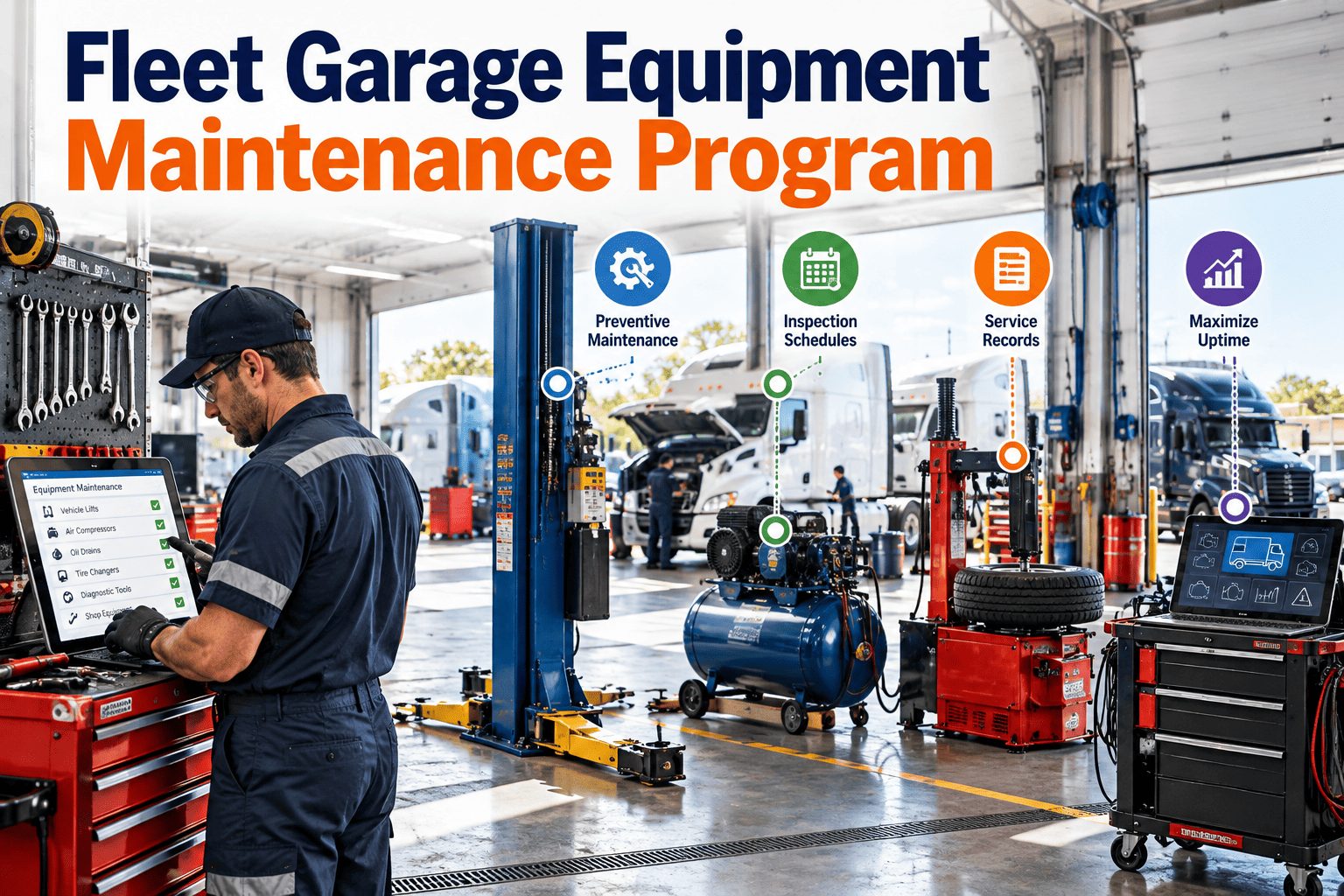
A fleet garage equipment maintenance program keeps the tools behind every repair, such as lifts, compressors, tire machines and diagnostic gear, safe and available. When a lift is tagged out or a scan tool needs an update in the middle of a shift, vehicle repairs stall even if parts and technicians are ready. Many shops service vehicles carefully and treat shop equipment as an afterthought. This guide explains how to structure inspections, calibration and repairs, with a CMMS for shop equipment holding the schedule and history.
Fleet Garage Equipment Maintenance Program
Protect bay throughput and technician safety by managing lifts, compressors, tire and wheel equipment and diagnostic tools like the critical assets they are.
Why Shop Equipment Deserves Its Own Program
Bay equipment sits upstream of every vehicle repair. One failed asset can slow several jobs at once.
- Lifts inspected only when something looks wrong
- Compressor drains and filters forgotten
- Calibration dates tracked on sticky notes
- Spare parts ordered after a failure
- No equipment history for replacement decisions
- Daily and annual lift inspections scheduled and recorded
- Air system service tied to run hours and calendar
- Calibration due dates tracked with alerts
- Critical spares stocked based on lead times
- Repair cost and downtime history guides replacement
Equipment Classes and Typical Checks
Start by listing every asset in the garage. The table below gives a planning starting point, and manufacturer manuals should set final tasks.
| Equipment Class | Typical Checks | Timing Idea | Records to Keep |
|---|---|---|---|
| Vehicle lifts | Locks, cables, pads, arms, hydraulics, anchors | Daily user check and periodic qualified inspection | Inspection reports and repairs |
| Air compressors | Drain tank, belts, filters, relief valve, oil level | Daily drain, monthly checks, annual service | Run hours and service dates |
| Tire changers and balancers | Clamps, bead breakers, calibration, wear parts | Weekly checks and scheduled calibration | Calibration results |
| Alignment systems | Sensors, targets, rack level, software | Per manufacturer, often annual verification | Verification and software versions |
| Jacks, stands and shop cranes | Welds, pins, hydraulics, locking mechanisms | Before each use and scheduled inspections | Inspection and removal-from-service tags |
| Diagnostic tools | Software updates, cables, battery health | Monthly updates and quarterly checks | License and update history |
| Torque wrenches and gauges | Calibration and condition | Per calibration policy | Calibration certificates |
| Parts washers and fluid systems | Filters, pumps, hoses, leaks | Weekly and monthly checks | Service and waste records |
| Safety equipment | Eyewash, fire extinguishers, ventilation and exhaust extraction | Weekly and monthly checks | Inspection logs |
Common Failure Modes and Early Warning Signs
Knowing how equipment fails lets you inspect for it before downtime hits.
| Equipment | Typical Failure | Early Warning | Preventive Action |
|---|---|---|---|
| Vehicle lift | Hydraulic leak, worn cable, lock failure | Slow lift, uneven rise, noise | Daily inspection and scheduled service |
| Air compressor | Water in tank, belt wear, valve failure | Long run times, pressure loss | Daily drain, belt and valve checks |
| Tire changer | Worn clamps, air leaks | Slipping rims, poor bead seating | Weekly checks and part replacement |
| Wheel balancer | Calibration drift | Inconsistent readings | Scheduled calibration and verification |
| Shop crane or jack | Seal leak, bent component | Slow rise, drift under load | Inspection before use and seal service |
| Diagnostic tool | Software or cable failure | Connection errors, outdated data | Updates and spare cables |
Building the Equipment Register
Equipment Lifecycle in a Managed Garage
Each asset moves through the same stages, and your program should cover each one.
Register Every Bay Asset in One Place
Track shop equipment alongside your fleet, with schedules, history and documents ready when you need them.
Compressed Air System Care
- Drain tanks and moisture traps on a set schedule
- Inspect belts, guards and mounting
- Replace intake and line filters on time
- Test safety relief valves according to the manual
- Check lines and fittings for leaks, which waste energy and run time
- Record run hours to time oil and service tasks
Daily to Annual: A Practical Rhythm
Vehicle Lifts: The Highest-Consequence Asset
Lifts carry vehicles and people beneath them, so inspection discipline matters most here. Industry standards from the Automotive Lift Institute and ANSI call for operator checks and periodic inspection by a qualified person, so confirm current requirements and the manufacturer's instructions.
- Safety locks engage and release correctly
- Cables, chains, sheaves and pads show no wear or damage
- Hydraulic lines and cylinders are free of leaks
- Arm restraints and swing arm stops operate properly
- Anchors and baseplate show no looseness or cracks
- Capacity labels and operating instructions remain visible
- Any defect results in removal from service until repaired
Tire and wheel service equipment
- Inspect clamps, bead breakers and turntables for wear and cracking.
- Verify inflation cages and gauges are intact and accurate.
- Check balancer calibration with a known weight and record the result.
- Keep adapters and cones organized to prevent damage to wheels.
Calibration and Measurement Control
Measurement tools affect repair quality and safety. Missed calibration can quietly create rework.
- Assign a calibration interval and due date to each torque wrench, gauge and balancer.
- Remove overdue tools from service and tag them clearly.
- Store calibration certificates against the asset record.
- Track diagnostic software versions so tools stay compatible with new vehicles.
- Verify alignment equipment after relocation or impact.
Garage Safety and Compliance Items
Safety devices are equipment too. Confirm local rules and manufacturer guidance for your region.
| Item | Typical Check | Timing Idea |
|---|---|---|
| Fire extinguishers | Visual check for pressure, access and damage; annual maintenance by a qualified person | Monthly and annual |
| Eyewash stations | Activate to flush lines and confirm flow | Weekly |
| Exhaust extraction | Inspect hoses, fans and connections | Monthly |
| Spill kits and absorbents | Verify contents and replace used items | Monthly |
| Battery charging area | Check ventilation, cables and signage | Monthly |
| First aid supplies | Replace expired or used items | Monthly |
What an equipment history should contain
- Purchase date, vendor and warranty terms
- Manuals and parts lists
- Inspection and calibration reports
- Every repair with cause, parts, labor and downtime
- Operator-reported defects and corrective actions
- Planned replacement year and budget notes
Equipment Criticality Ranking
Rank assets so limited maintenance time goes to the ones that matter most.
Handling Equipment Downtime Without Losing the Day
Training technicians on equipment use
- Teach safe operation for lifts, tire machines and presses before first use.
- Review the daily check form so it is completed accurately.
- Explain why damaged equipment is removed from service immediately.
- Refresh training after incidents, near misses or equipment changes.
Reducing waste in air systems and fluids
- Fix air leaks promptly, since leaks make compressors run longer.
- Service fluid dispensers to avoid spills and over-use.
- Track consumable use to find unusual spikes.
Responsibilities and Removal From Service
- Complete daily checks before use
- Report defects immediately
- Tag and stop using damaged equipment
- Perform scheduled service
- Repair and verify before return
- Update the asset history
- Enforce removal-from-service rules
- Review overdue inspections weekly
- Approve repair or replacement decisions
Spares and Consumables Planning
- Lift hydraulic hoses and seals
- Compressor belts, filters and pressure switches
- Tire changer wear components
- Common sensors and cables for diagnostic tools
- Hydraulic and compressor oil
- Air filters and desiccant
- Lift pads and adapters
- Cleaning solvents and parts washer fluid
- Supplier and lead time
- Compatible models and part numbers
- Minimum and maximum stock levels
- Last purchase cost and date
Repair, Rebuild or Replace
Use history to decide when to stop repairing.
Isolated failure with low recurrence and low cost.
Recurring fault caused by missed maintenance.
Core component wear but sound structure.
Complex equipment requiring specialist skills.
Repeated failures, parts unavailable or safety concerns.
Hot Work, Electrical and Hand Tool Control
Smaller assets still carry risk and cost when they go missing or fail.
- Inspect welding leads, regulators, hoses and clamps before use, and store gas cylinders securely.
- Check cords, plugs and ground-fault protection on portable electric tools and chargers.
- Track tool crib items such as specialty tools and torque wrenches so they can be found and calibrated.
- Remove damaged cords and tools from service and tag them until repaired.
- Review shop electrical panels and outlets during annual inspections.
Using data to tune equipment PM
- Review repeat failures by asset to find tasks missing from the PM template.
- Shorten intervals where early wear appears and extend them where inspections find nothing.
- Compare run hours to failure dates so hour-based tasks trigger at the right time.
- Record every adjustment and check results after a full cycle.
Capital Planning for Shop Equipment
Equipment history makes replacement budgeting more defensible.
- Track age, cost to maintain and downtime for each major asset.
- Flag assets with repeated failures or unavailable parts.
- Confirm lift capacity and adapters when heavier battery-electric vehicles enter the fleet.
- Plan safety upgrades alongside regular replacement cycles.
- Compare vendor service contracts to in-house repair cost.
Vendor and contractor service records
- Log every outside inspection, calibration and repair against the asset.
- Store reports and certificates where auditors can find them.
- Track warranty dates and service contract terms.
A 30-60-90 Day Rollout
Scheduling Equipment Service Around Bay Demand
Taking a lift out of service during peak hours can cost more than the repair itself, so schedule with the shop floor in mind.
- Plan annual inspections and calibration in slower periods and spread them across assets so every bay is not down at once.
- Service one lift or tire machine at a time, and keep a backup station available.
- Group related tasks such as compressor service and air line checks into a single downtime window.
- Share the equipment schedule with dispatch and shop supervisors so vehicle work is routed ahead of time.
- Review missed or postponed equipment tasks weekly, and record the reason for each deferral.
KPIs for Garage Equipment
| KPI | What It Shows |
|---|---|
| Equipment availability | Share of time bay assets are ready for use |
| Overdue inspections | Gaps in safety and compliance routines |
| Calibration currency | Tools within their calibration dates |
| Bay downtime hours | Repair delays caused by equipment issues |
| Repeat failures per asset | Fixes that did not address the cause |
| Maintenance cost per asset | Cost trend supporting replacement decisions |
How Oxmaint Supports Garage Equipment Maintenance
Oxmaint maintenance management software lets you treat garage equipment as managed assets.
- Asset management for lifts, compressors, tools and safety equipment with documents and manuals attached.
- Preventive maintenance schedules for daily, monthly and annual tasks.
- Inspection checklists and mobile workflows for technicians.
- Work orders for repairs with labor, parts and downtime recorded.
- Inventory control for shop equipment spares and consumables.
- Reports and dashboards that show overdue tasks and repair cost trends.
Frequently Asked Questions
Keep Every Bay Productive and Safe
Plan inspections, track repairs and prove calibration with one maintenance system built around your garage assets.