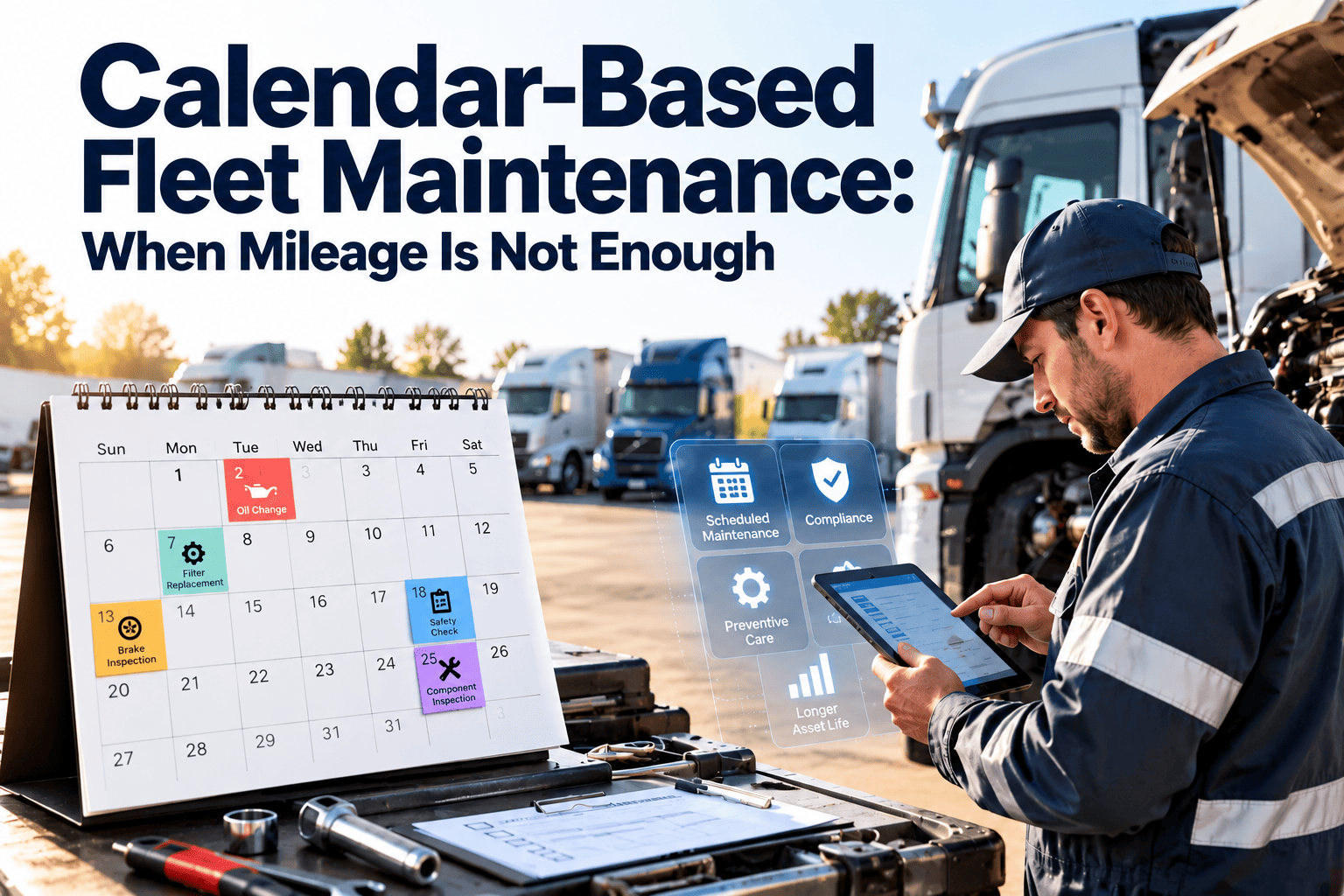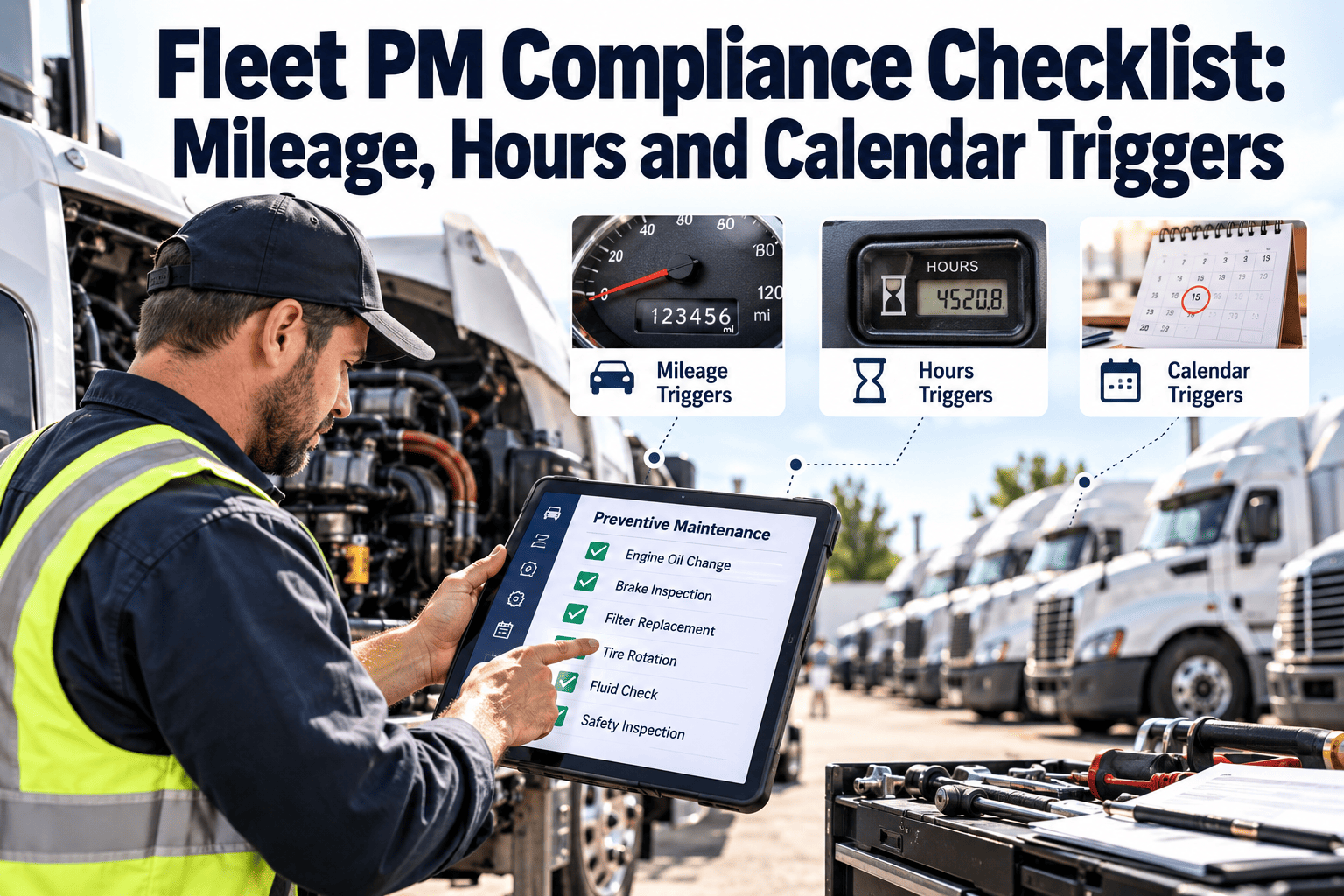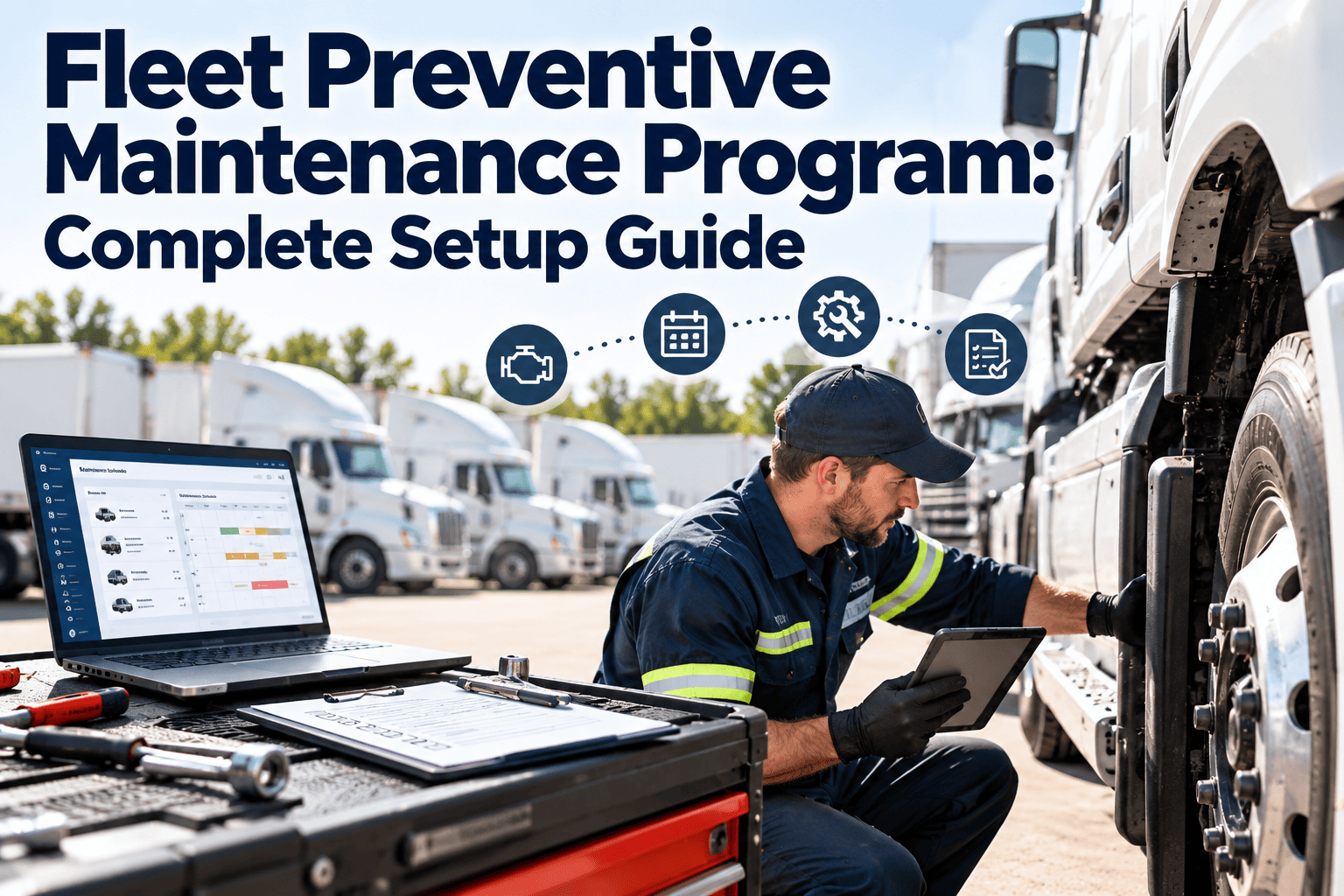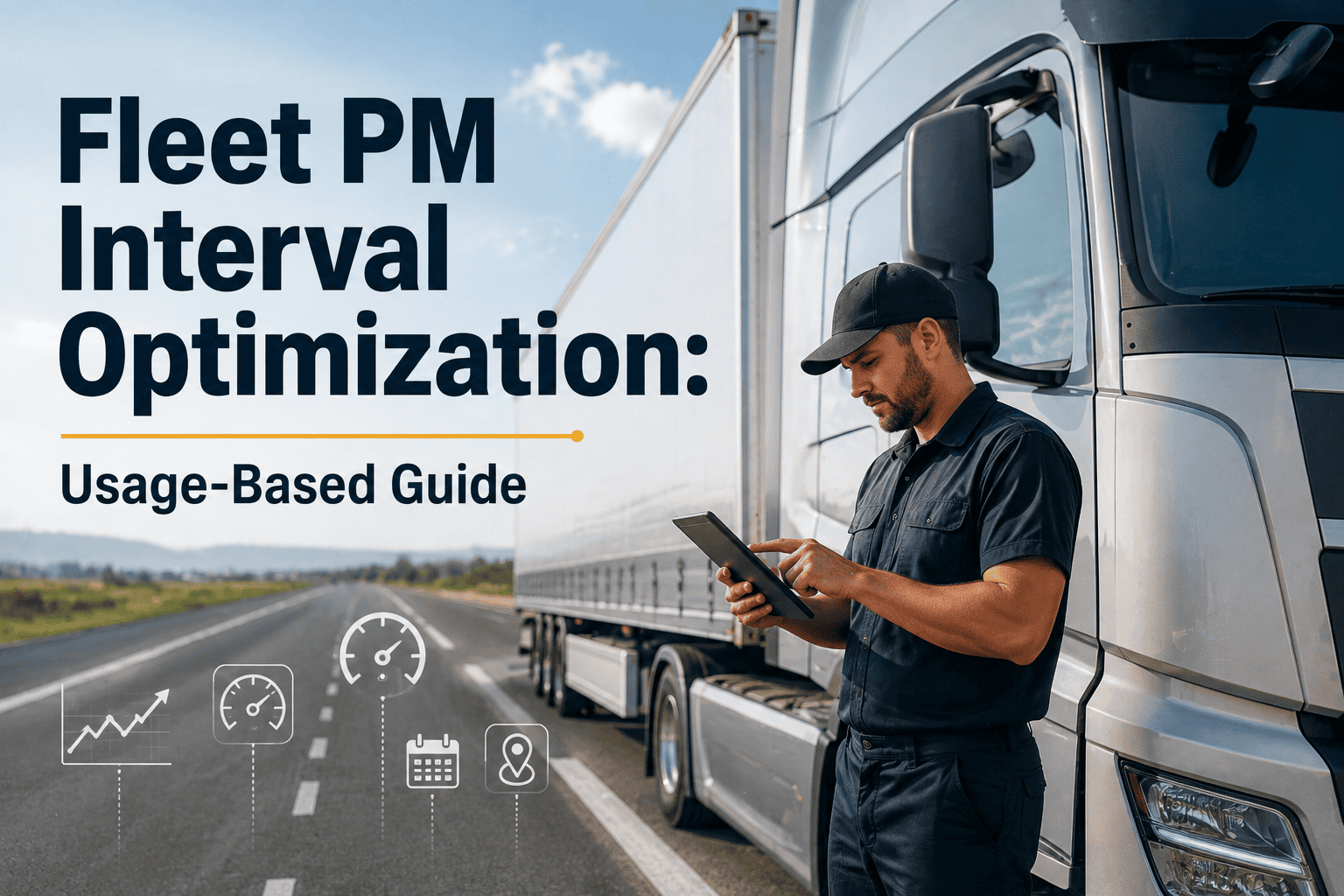
A truck rarely dies from one big failure. It dies from a chain of small ones — an oil change pushed back three weeks, a brake inspection that missed its mileage mark, a coolant flush nobody scheduled because nobody was tracking the calendar. A documented preventive maintenance program closes that gap by servicing vehicles on mileage, engine hours, and calendar triggers before wear turns into downtime. Fleets running this kind of structured PM program report up to 45% fewer breakdowns and 28% lower repair costs than fleets working from memory or a whiteboard. This guide breaks down exactly how to build one for your fleet in 2026, and you can book a demo to see it running on your vehicles.
A Preventive Maintenance Program Built on Usage, Not Guesswork
Mileage, engine hours, and calendar days — tracked together, triggered automatically, so the shop always knows which truck is due before it becomes a roadside call.
Why One Schedule Never Fits Every Vehicle
A linehaul tractor covering 400 miles a day wears nothing like a yard tractor that barely moves but idles for hours doing dock work. Servicing both on the same mileage number either wastes money or invites a failure. The strongest 2026 programs track all three triggers at once and service on whichever fires first.
Oil, tires, and drivetrain wear track distance directly. A steady long-haul route can be scheduled almost entirely off the odometer — typically every 7,500 to 25,000 miles depending on the service item.
Vocational trucks, reefers, and yard tractors idle without covering distance. One engine hour wears a truck roughly like 25–33 miles — hours catch that wear when an odometer completely misses it.
Rubber, fluids, and seals degrade with time even when a truck sits parked. A 90-to-180-day backstop keeps low-mileage vehicles from going a year without basic service.
A truck hits 7,500 miles in 3 months — it gets serviced at 7,500 miles. The same truck covers only 2,000 miles in 6 months — the calendar trigger fires instead. Whichever threshold arrives first wins, every time, for every vehicle.
Stop Tracking Three Triggers on a Spreadsheet
Oxmaint tracks mileage, engine hours, and calendar days for every vehicle at once, applies the first-to-occur rule automatically, and raises the work order 10–14 days before the window closes — so parts get ordered at planned rates, not emergency prices.
PM Levels by Class — What Gets Serviced, and When
Most 2026 fleet programs organize service into tiers rather than one flat interval. Each tier bundles related tasks so the truck only comes off the road once for a group of jobs, instead of five separate times for five separate triggers.
| Tier | Typical Trigger | What It Covers | Vehicle Fit |
|---|---|---|---|
| Tier A | 5,000–15,000 mi | Oil & filter, fluid levels, tire pressure, visual brake check, lighting | All classes, every fleet |
| Tier B | 15,000–30,000 mi | Tier A plus air/cabin filters, brake pad measurement, battery test, suspension check | Light & medium duty |
| Tier C | 30,000–60,000 mi or 1,200 hrs | Tier B plus transmission service, coolant system check, driveline inspection | Heavy duty, regional haul |
| Tier D | 90–180 calendar days | Seasonal fluids, seal & hose inspection, desiccant, low-mileage backstop service | Yard, seasonal, low-utilization units |
The Five Ways a PM Program Quietly Fails
Manual odometer entry is the single biggest source of missed triggers — a skipped log, a typo, or a forgotten update lets a service window pass unnoticed.
Applying a single mileage number to both highway tractors and yard equipment either over-services one or leaves the other running well past its real wear point.
When six trucks come due the same week, an unmanaged queue puts 20% of the fleet off the road on a single Monday instead of spreading the load.
Sourcing parts once a truck is already in the bay adds a 15–30% emergency premium that a 10–14 day advance work order avoids entirely.
A defect a driver notes on a walk-around should flow straight into the maintenance queue — not sit on a form until someone happens to read it.
What a Documented PM Program Is Worth
Most Fleets Are Live on Automated PM Within a Week
Set up your vehicle classes once, and Oxmaint inherits the right PM tier automatically for every truck you add — mileage, hours, and calendar triggers included, with work orders generated before the window closes.
Fleet Preventive Maintenance Program Questions
Should PM be scheduled by mileage, engine hours, or calendar time?+
How much does a structured PM program actually save?+
How do I convert engine hours to an equivalent mileage figure?+
What is the first-to-occur rule in PM scheduling?+
Can a small fleet automate PM without a big software project?+
Your Next Breakdown Is Probably a Missed Trigger, Not Bad Luck
Map your vehicle classes, assign the right mileage, hour, and calendar triggers to each, and let the system raise the work order before anything slips. Most fleets are running automated PM within days of setup.