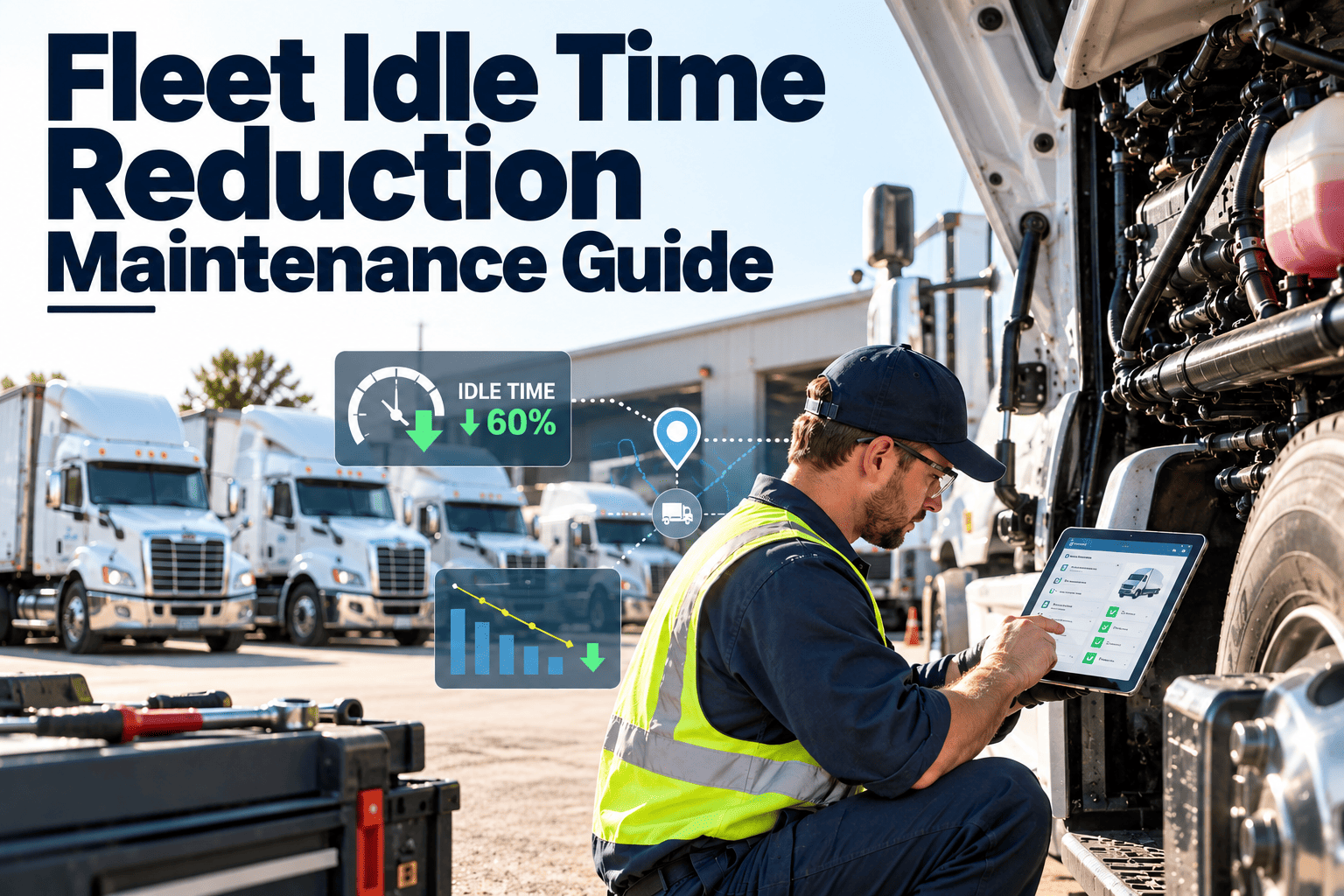
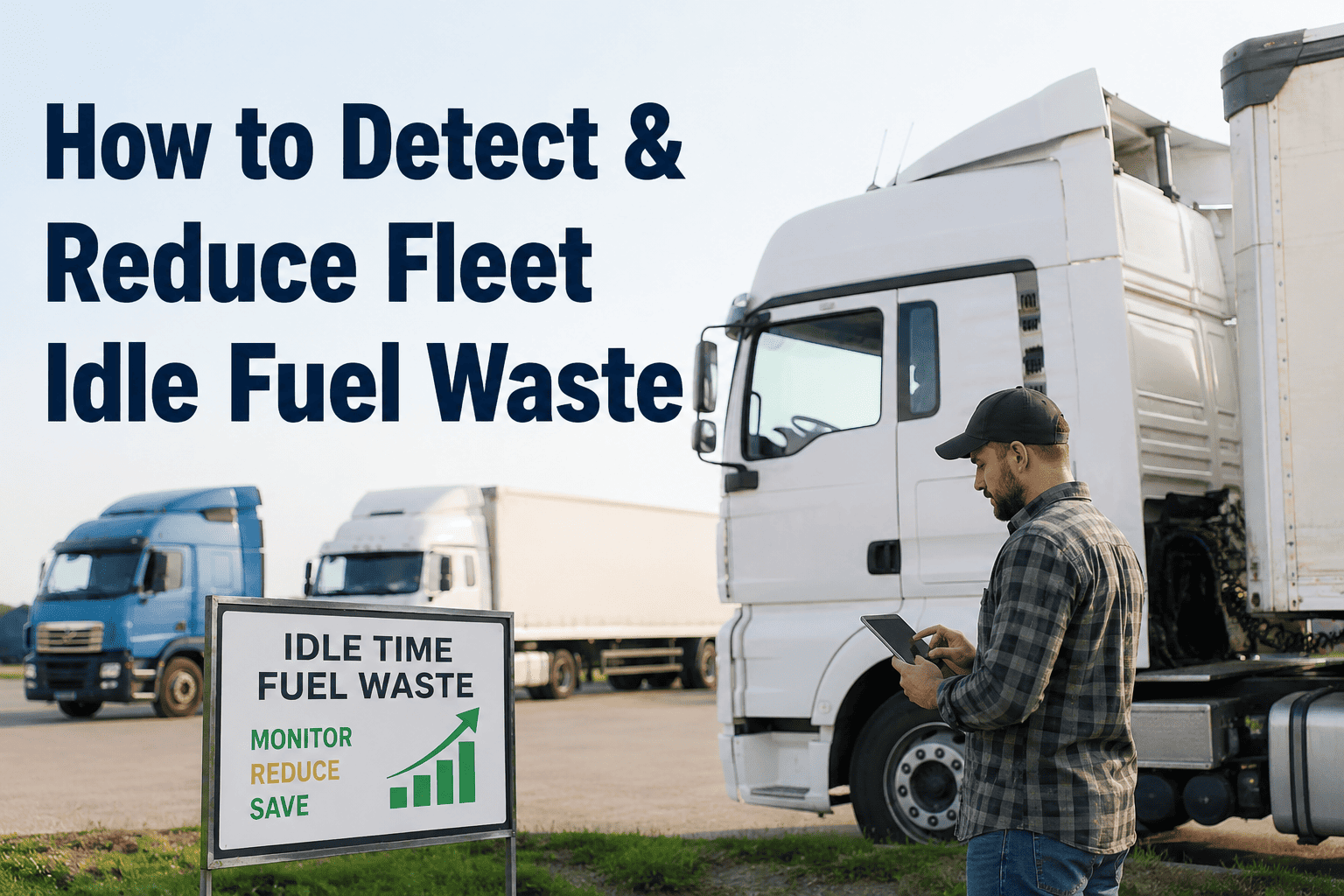
A trucking company in Georgia completed an OBD-II telematics audit across 280 vehicles and found that their fleet was idling an average of 52 minutes per vehicle per day — costing $1.9 million in fuel annually in engine-on time that produced zero miles. Drivers idling for temperature comfort, waiting for dispatch, warming up engines out of habit, and running auxiliary loads from the main engine rather than from auxiliary power units. None of these idling patterns were visible to fleet management before the telematics audit — they were invisible costs embedded in monthly fuel invoices that everyone assumed were route-driven. Idle reduction is the fastest fleet fuel saving available to most operators because it requires no new vehicles, no infrastructure investment, and no route changes — only visibility into what is already happening, and a coaching programme that changes the behaviour. Sign in to OxMaint to activate idle monitoring and anti-idling coaching for your fleet, or book a demo to see how OxMaint's idle analytics module identifies idle cost by vehicle, by driver, by route, and by time of day across your entire operation.
Fleet Idle Reduction · Anti-Idling Technology · Driver Coaching · OxMaint
52 Minutes of Idling Per Vehicle Per Day Is $1.9M in Annual Fuel Waste for a 280-Vehicle Fleet. OxMaint Makes Every Idle Minute Visible — and Actionable.
OxMaint's idle reduction module tracks every idle event by vehicle, driver, location, and duration — generating driver scorecards, APU utilisation reports, anti-idling alerts, and fleet-wide idle cost analytics that turn fuel waste into a measurable, reducible operating expense.
52 min
average daily idle time per commercial vehicle — representing 8–15% of total engine runtime producing zero productive miles
$0.87
fuel cost per idle hour for a Class 8 diesel truck — $1,900–$4,200 wasted annually per vehicle in typical fleet operations
23%
average fleet fuel reduction achieved through structured idle reduction programmes with OBD monitoring and driver coaching
$2.8K
average first-year fuel saving per vehicle at fleets implementing anti-idling OBD alerts and weekly driver scorecards
Idle fuel waste is the most recoverable cost in fleet operations — because it requires no capital investment to reduce it. Every dollar saved on idling comes from behaviour change, not vehicle replacement. A fleet that reduces average idle time from 52 minutes to 18 minutes per vehicle per day saves $1.3 million annually on a 280-vehicle diesel fleet — without purchasing a single new vehicle or changing a single route. The barrier is not the cost of change — it is the absence of data that makes the idle cost visible. OxMaint provides that data per vehicle, per driver, per day.
Six Idle Patterns That Cost US Fleets the Most — and What Drives Them
Wait-for-Dispatch Idling
$380–$620 per vehicle per year
Driver idles for 20–45 minutes while waiting for load assignment, dock appointment, or pickup confirmation. Fix: APU or shore power at staging areas.
Climate Control Idling
$640–$1,100 per vehicle per year
Driver runs main engine for cab heating or cooling during rest breaks and overnight stops. Fix: APU installation — pays back in 14–22 months of fuel saving.
Pre-Trip Warm-Up Idling
$210–$380 per vehicle per year
Drivers idle 15–30 minutes before departure for engine warm-up — unnecessary on modern engines above -15°C. Fix: Driver coaching with OBD-verified warm-up time limit.
Loading Dock Idling
$290–$520 per vehicle per year
Engine left running during dock unload/load cycle averaging 45–90 minutes. Fix: Shore power at dock doors and mandatory engine-off dock SOP with OBD verification.
Post-Trip Cool-Down Idling
$160–$280 per vehicle per year
Drivers idle 10–20 minutes after arrival for turbocharger cool-down. Modern turbos cool within 3–5 minutes at light load. Fix: Driver coaching and OBD idle limit enforcement.
Admin and Paperwork Idling
$180–$310 per vehicle per year
Engine runs while driver completes delivery paperwork, trip logs, or device tasks at end of route. Fix: Electronic logging on tablet with shore power — engine-off administrative SOP.
How OxMaint Idle Reduction Works — From Idle Detection to Verified Behaviour Change
OxMaint Idle Reduction Programme — Data to Verified Fuel Saving
01
OBD Detection
Every idle event detected in real time via OBD-II — duration, location, time of day, and engine load logged automatically
02
Alert to Driver
In-cab alert fires after configurable idle threshold — 5, 10, or 15 minutes. Driver is informed before idle becomes a coaching issue
03
Driver Scorecard
Weekly idle scorecard per driver — total idle time, idle cost, improvement vs prior week, and rank in fleet idle performance
04
Fuel Saving Verified
Monthly fleet idle cost dashboard compares actual fuel spend vs idle reduction target — saving verified in dollar terms per vehicle
OxMaint Idle Analytics
The Fastest Fleet Fuel Saving Available Requires No New Vehicles — Just Visibility Into What Is Already Happening
Technology Stack — How OxMaint Builds a Complete Idle Reduction Programme
OBD-II Telematics — Real-Time Idle Event Detection and Classification
Every idle event is captured via OBD-II with engine status, idle duration, location, and whether APU was available and unused — classifying idle as avoidable or justifiable. Avoidable idle generates driver alerts; justifiable idle is excluded from coaching scores. This distinction prevents driver pushback that undermines poorly designed anti-idling programmes.
AI Digital Twin — Fleet-Wide Idle Pattern Modelling
Digital twin models of the fleet's idle behaviour combine route schedule data, driver patterns, and seasonal temperature to predict which routes and time windows will generate the highest idle costs — letting fleet managers pre-position APU assets and adjust driver briefings before idle-heavy periods rather than responding after fuel invoices arrive.
AI Camera Vision — APU and Shore Power Utilisation Monitoring
Cameras at depot staging and dock areas detect which vehicles are connected to shore power or APU versus running main engine — generating compliance reports that show whether APU and shore power investment is actually being used, and identify drivers bypassing available alternatives to idle the main engine instead.
SAP Integration — Idle Fuel Cost in Fleet Operating Budget
OxMaint calculates idle fuel cost per vehicle per period and pushes it to SAP as a separate cost category — making idle waste visible as its own line item in fleet operating budgets and enabling fleet managers to present the cost of idle reduction investment against a documented, quantified baseline.
Idle Reduction Impact — Before and After OxMaint Anti-Idling Programme
No Anti-Idling Programme
Avg daily idle52 min per vehicle
Idle fuel cost$2,900–$4,200 per vehicle/year
Driver visibilityNo idle data — no coaching basis
Compliance statusState idle laws unverifiable
APU utilisationUnknown — not tracked
Emission exposureUnquantified idle NOx risk
VS
OxMaint Anti-Idling Programme
Avg daily idle18–24 min — 23% reduction
Idle fuel cost$1,100–$1,800 per vehicle/year
Driver visibilityWeekly scorecard per driver
Compliance statusIdle event log audit-ready
APU utilisationTracked per vehicle — ROI verified
Emission exposureIdle NOx documented and reduced
23%
average idle reduction at fleets using OxMaint OBD monitoring and weekly driver scorecard programme
$2.8K
average first-year fuel saving per vehicle at fleets that reduced idle from 52 min to under 22 min per day
90 days
average time to measurable idle reduction — first driver scorecard review typically produces 15–18% reduction immediately
We were spending $1.9 million per year on idle fuel we couldn't see. OxMaint showed us exactly where it was going — wait-for-dispatch idling at three terminals was responsible for 38% of it. We added shore power at those locations, deployed the driver scorecard, and recovered $740,000 in year one. The scorecards changed behaviour faster than any training programme we had run.
— VP Operations, Regional Trucking Company · Georgia · 280-vehicle fleet · OxMaint user since 2022
How does OxMaint distinguish avoidable idling from necessary idling on driver scorecards?
OxMaint classifies idle using context data — location (dock, depot, roadway), time of day, APU availability, temperature, and idle duration. Idle below the configurable threshold in justified contexts is excluded from coaching scores. Only avoidable idle above threshold counts against the driver's weekly score.
What is the maximum legal idle time for commercial trucks in most US states?
Most US states with idle laws limit non-exempt idling to 3–5 minutes. California, New York, Texas, and most northeastern states enforce limits with fines of $300–$10,000 per violation. OxMaint configures idle thresholds to match your operating states and flags events that exceed the local legal limit.
How quickly does the OxMaint driver scorecard programme produce measurable idle reduction?
Most fleets see 15–20% idle reduction after the first weekly scorecard review when drivers can see their own data. Full programme results averaging 23% reduction are typically achieved within 90 days as the scorecard becomes part of the weekly operations review cycle.
Can OxMaint track APU usage and prove APU return on investment?
Yes. OxMaint tracks APU engine runtime per vehicle and correlates it against main engine idle events that occurred when APU was available but unused. This produces an APU utilisation rate and calculates the fuel saving actually delivered by the APU investment vs the theoretical maximum — verifying ROI per unit.
Does OxMaint idle monitoring work on mixed fleets including EVs?
Yes. OxMaint tracks idle for diesel, natural gas, and hybrid vehicles via OBD-II. For EVs, the system monitors unnecessary accessory load when the vehicle is stationary — the EV equivalent of idle waste. Mixed-fleet dashboards show ICE idle cost and EV stationary power cost on one report. Sign in to OxMaint to configure idle monitoring for your fleet composition.
Idle Reduction · OxMaint