A fuel filter replacement request sits in a technician's paper inbox at Depot A while the same truck breaks down 200 miles away at Depot C. The service history exists—somewhere—but no one at the remote location can access it. Three hours of diagnostic guesswork later, the $40 filter becomes a $1,200 tow bill, a missed delivery window, and an angry customer demanding answers.
Regional delivery fleets operate across geographic boundaries where vehicles rarely return to the same maintenance bay twice. Paper work orders, disconnected spreadsheets, and siloed depot systems create data fragmentation that turns routine maintenance into operational chaos. When technicians lack visibility into a vehicle's complete service history, they make decisions based on incomplete information—leading to redundant repairs, missed warning signs and preventable failures.
This guide establishes a framework for implementing digital work orders with data governance principles designed specifically for regional delivery operations. Organizations that centralize fleet maintenance data achieve 40-60% reduction in unplanned breakdowns while ensuring fleet management compliance requirements across multiple jurisdictions. Ready to eliminate paper-based inefficiencies? Sign up free to centralize your fleet work orders.
What if every technician at every depot could access complete vehicle history in seconds—regardless of where that vehicle was last serviced?
Part 1: Understanding Digital Work Orders for Fleet Operations
What Makes Fleet Work Orders Different
Fleet work orders differ fundamentally from fixed-asset maintenance requests. A building's HVAC system stays in one location—technicians know its history, quirks, and previous repairs. Fleet vehicles move constantly, crossing depot boundaries, jurisdiction lines and maintenance territories. This mobility creates unique data challenges that paper systems cannot solve.
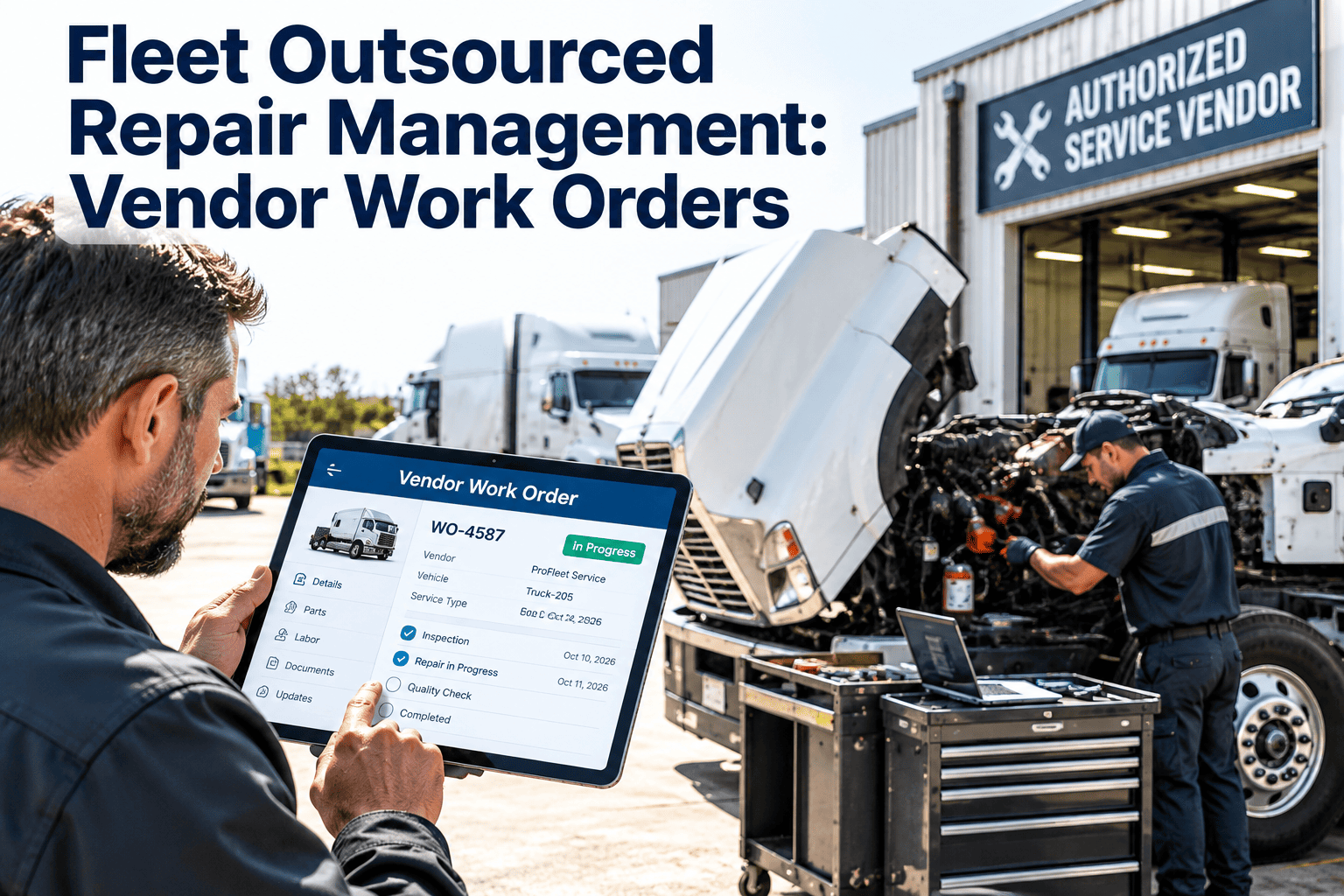
Digital work orders for fleet technicians must capture not just what was done, but where, when, by whom, and under what conditions. They must be accessible from any location, sync in real-time across depots, and maintain complete audit trails for compliance documentation.
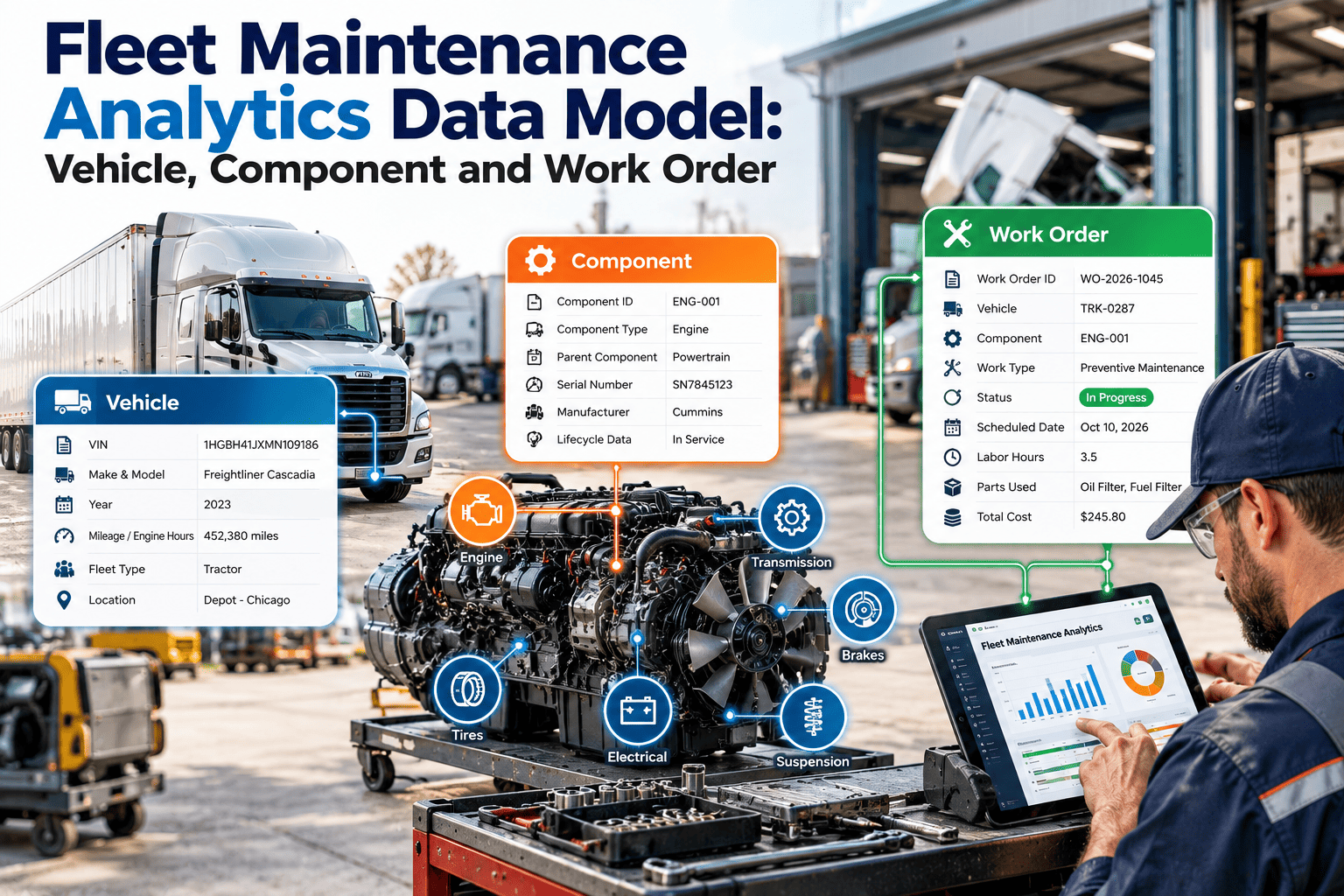
Required at Work Order Creation
- Vehicle ID and VIN
- Current mileage and engine hours
- Reported symptom description
- Priority level assignment
- Originating depot location
Required at Work Order Completion
- Root cause code
- Repair action performed
- Parts used with quantities
- Labor hours and technician ID
- Next service recommendation
The Paper-to-Digital Transition Challenge
Most regional fleets have accumulated years of paper records, tribal knowledge, and depot-specific processes. Transitioning to digital work orders requires more than software implementation—it demands process standardization, data migration planning, and technician buy-in across multiple locations.
The transition typically fails when organizations attempt "big bang" deployments that disrupt operations at all depots simultaneously. Successful implementations follow phased rollouts that prove value at pilot locations before expanding, allowing technicians to experience benefits firsthand rather than having change imposed upon them.
Part 2: Data Governance Framework for Regional Delivery
Why Data Governance Matters for Fleet Maintenance
Data governance establishes the rules, standards, and accountability structures that ensure maintenance data remains accurate, accessible, and actionable across your entire operation. Without governance, digital work orders become another form of chaos—inconsistent entries, duplicate records, and unreliable reporting that undermines the system's value.
Establishing Data Standards Across Depots
Data standardization begins with agreeing on common definitions. What constitutes a "brake service" at Depot A must mean the same thing at Depot C. Failure codes must be consistent—a technician in Phoenix and a technician in Portland should categorize identical problems identically. Without this foundation, cross-fleet analytics produce meaningless results.
Oxmaint CMMS provides configurable templates that enforce standardization while accommodating legitimate regional variations. Work order categories, severity levels, and required documentation fields remain consistent across all locations, while depot-specific information like local vendor contacts and parts sources can be customized.
Part 3: From Reactive to Predictive — A Fleet Management Framework with Mobile Apps
The Maturity Model for Fleet Maintenance
Fleet maintenance operations evolve through distinct maturity stages. Understanding where your organization currently operates—and what's required to advance—enables realistic planning and measurable progress toward predictive maintenance fleet management.
Vehicles are repaired when they break down. No systematic data collection occurs. Maintenance decisions rely on driver complaints and roadside failures. Costs are unpredictable and typically highest at this stage.
Scheduled maintenance occurs at fixed intervals based on mileage or time. Digital work orders capture service history. Basic reporting enables cost tracking and compliance management.
Condition monitoring and AI analytics identify maintenance needs before failures occur. Interventions are scheduled based on actual equipment condition rather than arbitrary intervals.
Mobile Apps: The Technician Interface
Digital work orders only deliver value when technicians actually use them. Mobile apps transform work order management from an administrative burden into a productivity tool that makes technicians' jobs easier—not harder.
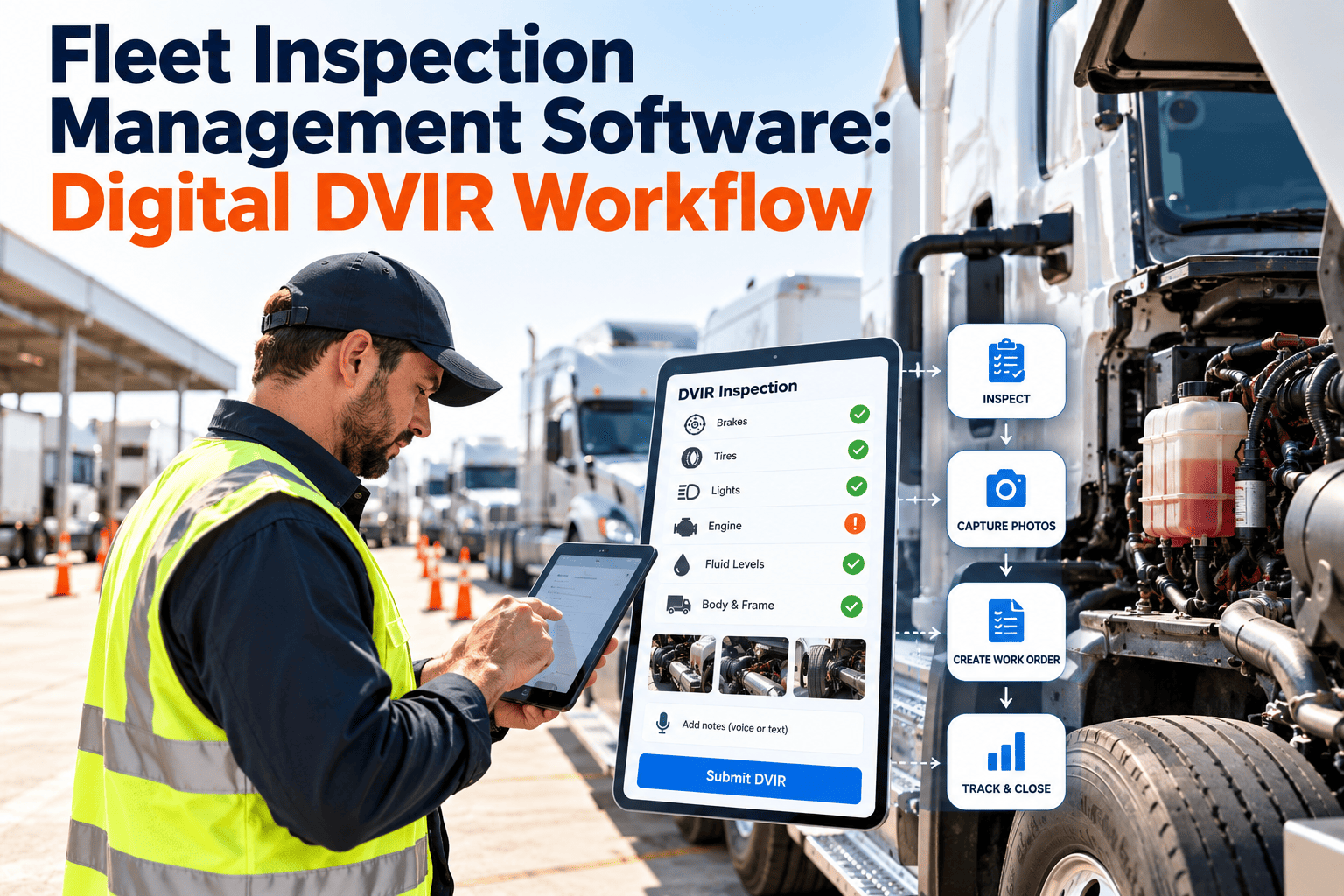
Effective mobile interfaces provide technicians with immediate access to vehicle history, diagnostic guidance, parts availability, and completion workflows without requiring them to return to a desktop computer. Photo documentation, digital signatures, and real-time status updates happen at the vehicle—capturing data when accuracy is highest. Try free to experience the mobile technician interface.
Part 4: Condition Monitoring and AI Analytics
Data Points That Predict Failures
Predictive maintenance requires capturing the right data consistently. Digital work orders serve as the collection mechanism, but value emerges from analyzing patterns across thousands of service events to identify the warning signs that precede failures.
| Vehicle System | Key Data Points | Warning Indicators | Lead Time |
|---|---|---|---|
| Engine/Drivetrain | Oil analysis, coolant condition, fault codes | Oil TBN declining, coolant pH drift | 2-6 weeks |
| Braking System | Pad measurements, ABS event logs | Accelerated wear, ABS trigger increase | 1-3 weeks |
| Tires/Suspension | Tread depth, pressure history, alignment | Uneven wear, pressure variance | 3-8 weeks |
| Electrical System | Battery voltage, alternator output | Voltage decline pattern | 1-4 weeks |
| Fuel System | Filter condition, fuel economy trends | MPG decline, filter restriction | 2-6 weeks |
Work Order Automation Triggers
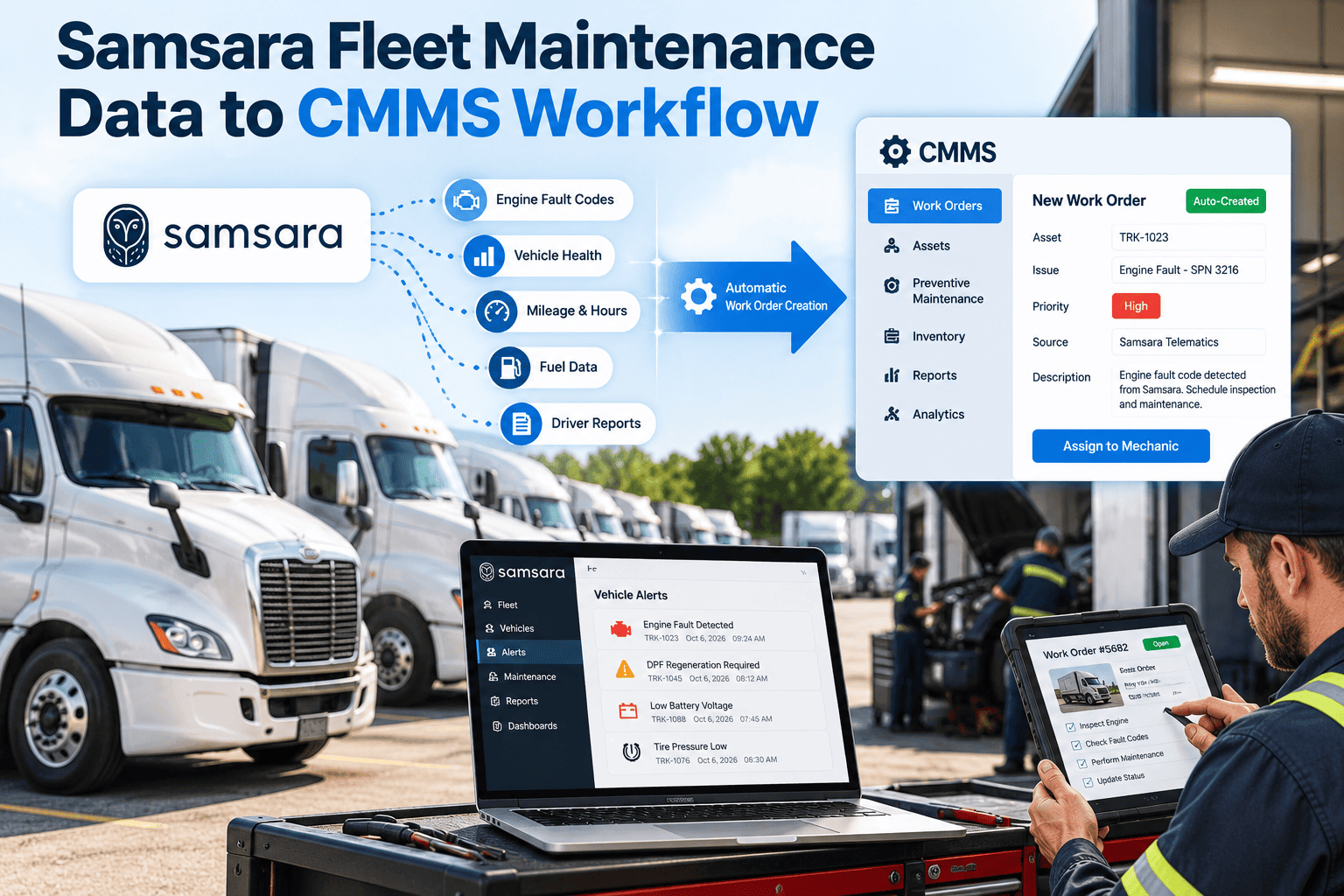
AI analytics transform raw data into automated work orders when conditions warrant attention. Rather than waiting for failures or relying on calendar schedules, the system generates service requests based on actual equipment condition—routing them to the appropriate depot based on vehicle location and parts availability.
Automation triggers require careful configuration to avoid alert fatigue. Thresholds must balance sensitivity (catching problems early) against specificity (avoiding unnecessary work orders). Oxmaint CMMS allows threshold customization based on fleet-specific operating conditions and historical failure patterns.
Part 5: Multi-Site Rollout Strategy
Phased Implementation Approach
Regional delivery fleets face unique implementation challenges: multiple locations, varying technician skill levels, different local processes, and continuous operational demands that prevent extended downtime for system transitions. Success requires phased deployment with clear milestones and feedback loops.
Deploy at highest-volume location, enroll all vehicles, configure templates. Target: 100% vehicle enrollment.
Hands-on mobile app training, work order workflows, photo documentation standards. Target: 90% adoption rate.
Analyze pilot data, adjust workflows based on feedback, document lessons learned. Target: 85% completion rate.
Roll to remaining depots, enable cross-depot visibility, activate compliance reporting. Target: Full fleet coverage.
Change Management Considerations
Technology implementation fails when human factors are ignored. Technicians who have used paper systems for years may resist digital alternatives—not because the technology is difficult, but because change threatens established routines and expertise.
Successful change management focuses on demonstrating personal benefit. When technicians experience faster parts lookups, easier warranty documentation, and reduced administrative burden, adoption accelerates naturally. Resistance typically indicates that the system creates work without providing equivalent value—a signal to refine the implementation rather than force compliance.
Part 6: Compliance and Documentation
Fleet Management Compliance Requirements
Regional delivery fleets navigate complex regulatory landscapes spanning DOT inspections, state-specific requirements, FMCSA documentation, and emissions certifications. Manual compliance tracking consumes administrative hours while creating gaps that surface during audits.
Digital work orders with proper data governance transform compliance from a separate administrative function into a byproduct of daily operations. Every service event automatically updates compliance records, triggers upcoming requirement reminders, and generates audit-ready documentation on demand.
Part 7: Measuring Success — KPIs and Performance Metrics
Key Performance Indicators for Fleet Operations
Digital work orders generate the data foundation for meaningful performance measurement. Without consistent data capture, KPIs rely on estimates and assumptions. With proper data governance, metrics become actionable management tools.
Part 8: ROI Analysis and Business Case
Quantifying the Value of Digital Work Orders
Digital work order implementation requires investment in software, training, and process change. Building a business case requires quantifying both cost reductions and operational improvements in terms finance teams understand.
- Unplanned breakdowns: 8-12/month
- Repair cycle time: 6.5 hours avg
- Audit prep: 40+ hours
- Parts stockouts: 15-20/month
- Warranty recovery: Below 60%
- Unplanned breakdowns: 2-4/month
- Repair cycle time: 3.2 hours avg
- Audit prep: 2 hours
- Parts stockouts: 3-5/month
- Warranty recovery: Above 85%
ROI Summary — 75-Vehicle Regional Fleet
Stop losing revenue to preventable breakdowns. Start building a data-driven maintenance operation that scales with your delivery network.