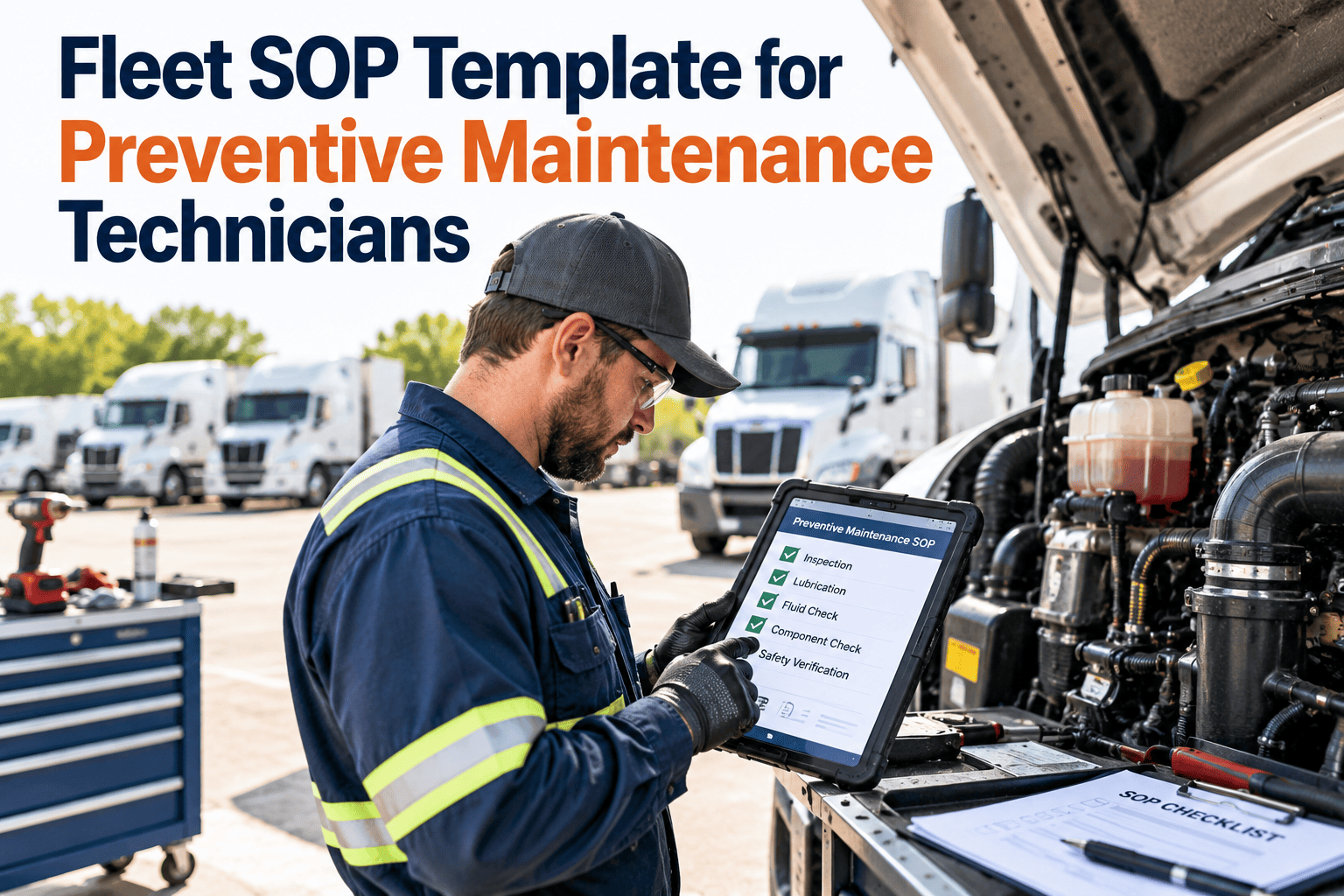
Two technicians can service the same truck and leave behind very different results. One follows a clear routine and records what was found. The other relies on habit, skips steps under time pressure and writes a one-line note. A standard operating procedure closes that gap by defining what a complete preventive maintenance visit looks like, what counts as pass or fail, and what must be recorded. This guide gives fleet teams a practical SOP template, checklists and review controls, and shows how fleet maintenance software keeps procedures consistent in daily work.
Fleet SOP Template for Preventive Maintenance Technicians
Standardize every PM service with a repeatable procedure covering safety, inspection points, acceptance criteria, parts, records and escalation, so quality does not depend on who holds the wrench.
Why a written SOP matters for PM quality
Preventive maintenance only reduces breakdowns when every scheduled task is done the same way, every time. A written procedure makes that expectation visible and testable.
Consistency
Each technician follows the same steps, so inspection depth does not vary by shift, shop or experience level.
Training
New hires learn from a defined standard instead of informal advice, which shortens the time to competent work.
Accountability
Managers can compare what was done with what the SOP requires, and correct gaps without guesswork.
The SOP template, section by section
Use these eight sections for every PM procedure. Keep each one short enough to be used at the vehicle, not just filed in an office.
Purpose and scope
State what the procedure achieves, which vehicles or equipment it covers and which service interval it applies to.
Roles and qualifications
Name who may perform the task, who reviews it and any training or certification needed for special systems.
Safety requirements
List personal protective equipment, lockout steps, jack and stand rules, and hazards such as hot fluids or stored energy.
Tools, parts and fluids
Identify required tools, filters, lubricants and consumables, with part numbers where possible.
Step-by-step procedure
Write numbered, action-based steps in the order the work is performed, with a measurement or condition for each check.
Acceptance criteria
Define pass, monitor and fail conditions so technicians know when to proceed, flag or stop.
Records and sign-off
Specify what must be entered: readings, findings, parts used, time spent, photos and technician sign-off.
Revision control
Track version number, change reason, approver and effective date so everyone works from the current copy.
Pre-task checklist before any PM begins
Most skipped steps happen before the first wrench turns. Confirm these items every time.
Vehicle and work order
- Correct vehicle and asset number confirmed
- Current odometer or hour reading recorded
- Open defects and recent driver reports reviewed
- Previous PM findings checked for repeat items
- Warranty or recall notices noted
Safety and setup
- Vehicle parked, secured and keys controlled
- Wheel chocks, stands and lifts inspected
- Personal protective equipment in place
- Spill containment and waste containers ready
- Work area clear and lit
Parts and tools
- Filters, fluids and consumables staged
- Specialty tools and torque tools available
- Diagnostic equipment ready if required
- Replacement parts reserved against the work order
- Disposal method confirmed for used fluids
Put your PM procedures where technicians actually work
Attach checklists to work orders so every service follows the same steps and leaves a record.
Master PM checklist for technicians
Print this or load it onto the work order. Tick each line only after the check is complete, and record readings where a value is required.
1. Arrival
- Asset number matches the work order
- Meter reading recorded
- Driver defect reports reviewed
- Warning lights and fault codes noted
- Photos of existing damage taken
2. Engine and fluids
- Oil and filter serviced
- Coolant level and hoses checked
- Belts inspected for wear and tension
- Fuel and air filters serviced as due
- Leaks checked under the vehicle
3. Brakes, tires, steering
- Brake wear measured and recorded
- Tire tread and pressure recorded
- Wheel fasteners checked
- Steering play and linkage checked
- Suspension components inspected
4. Electrical and safety
- Battery tested and terminals cleaned
- All exterior lamps working
- Wipers and washer fluid checked
- Horn and mirrors checked
- Extinguisher, triangles and first aid kit present
5. Test and release
- Road or function test completed
- No new leaks or noises
- Fluid levels rechecked
- Tools and rags removed from vehicle
- Vehicle status set to available
6. Records
- Parts and fluids logged to the order
- Labor time entered
- Defects raised as follow-up orders
- Next PM due date confirmed
- Work order signed and closed
Core inspection points for a fleet PM visit
Adjust the list to your vehicle types and the manufacturer service schedule. This table shows how to turn each check into a measurable pass or fail decision.
| System | Check | Pass | Monitor or fail |
|---|---|---|---|
| Engine | Oil level and condition, leaks, belts, hoses | Level correct, no active leaks, belts intact | Leak, cracked belt or contaminated oil: create a work order |
| Brakes | Pad or lining thickness, rotors or drums, air or hydraulic lines | Wear within manufacturer limits | Near limit: schedule. Below limit or leaking: remove from service |
| Tires and wheels | Tread depth, pressure, sidewall, lug nuts | Even wear, correct pressure, no damage | Uneven wear, cuts or loose hardware: repair or replace |
| Steering and suspension | Play, bushings, tie rods, shocks, springs | No excessive movement or noise | Looseness or damage: escalate to supervisor |
| Electrical | Battery, terminals, charging, lamps | Charge and terminals clean, lamps working | Weak battery or failed lamp: replace and record |
| Fluids and filters | Coolant, transmission, power steering, air and fuel filters | Levels correct and filters serviced on schedule | Low fluid or contamination: investigate source |
| Safety equipment | Extinguisher, triangles, first aid kit, seat belts | Present, charged and in date | Missing or expired: replace before release |
Stop, flag or continue: decision rules for technicians
Technicians need clear authority to act on what they find. Put these rules in the SOP so decisions are consistent.
Continue and record
- Measurements are within limits.
- Minor wear is expected for the interval.
- Notes and readings are entered on the work order.
Flag and schedule
- A component is near its limit.
- A non-critical defect needs a parts order.
- Create a follow-up work order with a due date.
Stop and escalate
- The defect affects braking, steering or load security.
- A fluid leak or structural damage is present.
- Remove from service and notify the supervisor.
Documentation standards that make the record useful
A completed PM is only valuable if the next person can understand what happened. Set simple rules for what a good entry looks like.
Weak entry
- Checked brakes, ok.
- No readings or measurements.
- No mention of parts or fluids used.
- Unsigned or signed days later.
Strong entry
- Front pad thickness recorded against the limit.
- Defects listed with location and photo.
- Parts, quantities and fluids logged to the order.
- Signed on completion with date and time.
Training, review and continuous improvement
An SOP that is never reviewed becomes outdated. Build a light-touch cycle that keeps procedures accurate.
Measures to review each month
- PM completion on time, by interval and vehicle group.
- Checklist completion rate and items marked not checked.
- Repeat repairs within a short period after a PM.
- Defects found at PM versus defects found on the road.
- Average labor time compared with the planned time.
Adapting the SOP for different service types
One template can serve many services if each variation adds only what is different. Keep shared steps in the base procedure and add targeted items for each service level.
| Service type | Add to the base SOP | Extra record to capture |
|---|---|---|
| Basic interval service | Fluid and filter changes, lubrication, visual inspection | Meter reading, parts used, defects found |
| Intermediate service | Brake measurements, steering and suspension checks, belt and hose review | Measured values against limits |
| Major or annual service | Full inspection, test drive, safety equipment review, cooling and electrical testing | Complete checklist with reviewer sign-off |
| Seasonal service | Battery load test, tire and wiper checks, heating and cooling system review | Condition findings by system |
| Trailer and equipment service | Lights, landing gear, coupling, axle ends, hydraulics or refrigeration units | Equipment hours and component condition |
Writing standards for clear procedures
Technicians use SOPs in a noisy shop with dirty hands. Write them to be understood at a glance.
One action per step
Each numbered step should describe a single task so nothing is skipped when steps are combined into long sentences.
Measurable language
Replace words like worn or loose with a measurement, a limit or a clear visual condition the technician can confirm.
Warnings before the step
Place safety cautions ahead of the action they apply to, not after it, so they are read in time.
Formatting rules that help
- Use short sentences and the same terms the shop already uses.
- Include photos or diagrams for components that are hard to identify.
- Keep one page per task where possible, and group steps by vehicle zone to reduce walking.
- Show torque values, fluid capacities and part numbers directly in the step that needs them.
Rolling out a new SOP without disrupting the shop
Even a good procedure fails if it arrives as a surprise. Introduce it in stages and listen to the people who will use it.
Signs the roll-out is working
- Technicians complete checklists without prompting.
- Defects found at PM increase at first, then road failures fall.
- Questions shift from what the step means to how to improve it.
- New hires reach independent work faster.
Quality review checklist for completed PM work
A supervisor can review a completed work order in a few minutes using these checks.
Completeness
- Every checklist line answered
- Readings entered for measured items
- Meter value recorded
- Time spent entered
Accuracy
- Findings match the vehicle history
- Parts match the service type
- Defects have photos where needed
- Notes are specific
Follow-up
- Defects converted to work orders
- Due dates and owners assigned
- Safety items escalated
- Vehicle status updated
Why PM visits fall short and how the SOP prevents it
Most weak PM visits share a handful of causes. Build the fix directly into the procedure.
| Problem | Effect on the fleet | SOP fix |
|---|---|---|
| Steps skipped under time pressure | Defects are missed and appear later as breakdowns | Required checklist lines that must be answered before closing |
| Parts not ready | Vehicle waits or leaves with the job half done | Parts staged and reserved before the vehicle arrives |
| Vague notes | The next technician cannot tell what was found | Required readings, photos and defect descriptions |
| No clear escalation path | Safety issues sit unreported | Stop and escalate rules with named contacts |
| Outdated procedures | Technicians follow old practices on new equipment | Version control with a scheduled review date |
How Oxmaint helps enforce the SOP
The SOP is only effective if it is present at the point of work. A maintenance management system turns the document into an assigned, trackable task.
| SOP requirement | Oxmaint capability | Benefit |
|---|---|---|
| Scheduled by interval | Preventive maintenance schedules by date, mileage or hours | Services are generated automatically |
| Standard steps | Checklists attached to work orders | Technicians follow the same procedure |
| Parts and fluids | Inventory linked to work orders | Consumption and stock levels stay accurate |
| Findings and follow-up | Corrective work orders raised from PM results | Defects do not get lost |
| History and review | Asset records and reporting | Managers see trends and compliance |
Frequently asked questions
How detailed should a fleet PM SOP be?
Detailed enough that a qualified technician can follow it without guessing, and short enough to use at the vehicle. Add detail for safety-critical steps.
Do we need a separate SOP for each vehicle type?
Usually one per asset group and service interval, since tasks differ between a van, a tractor and a trailer. Always align with manufacturer schedules.
Who should approve SOP changes?
A maintenance supervisor or manager, with input from safety or compliance when requirements change. Record the version and effective date.
Can checklists be attached to PM work orders in Oxmaint?
Yes, inspection checklists can be used with scheduled work so each service follows a defined list. You can book a demo to see the setup.
How do we know technicians are following the SOP?
Review completed work orders for readings, notes and sign-offs, and spot-check vehicles. Tracking this in maintenance software makes gaps easy to see.
Make every PM service follow the same standard
Bring schedules, checklists, work orders and records together so quality does not depend on who is on shift.