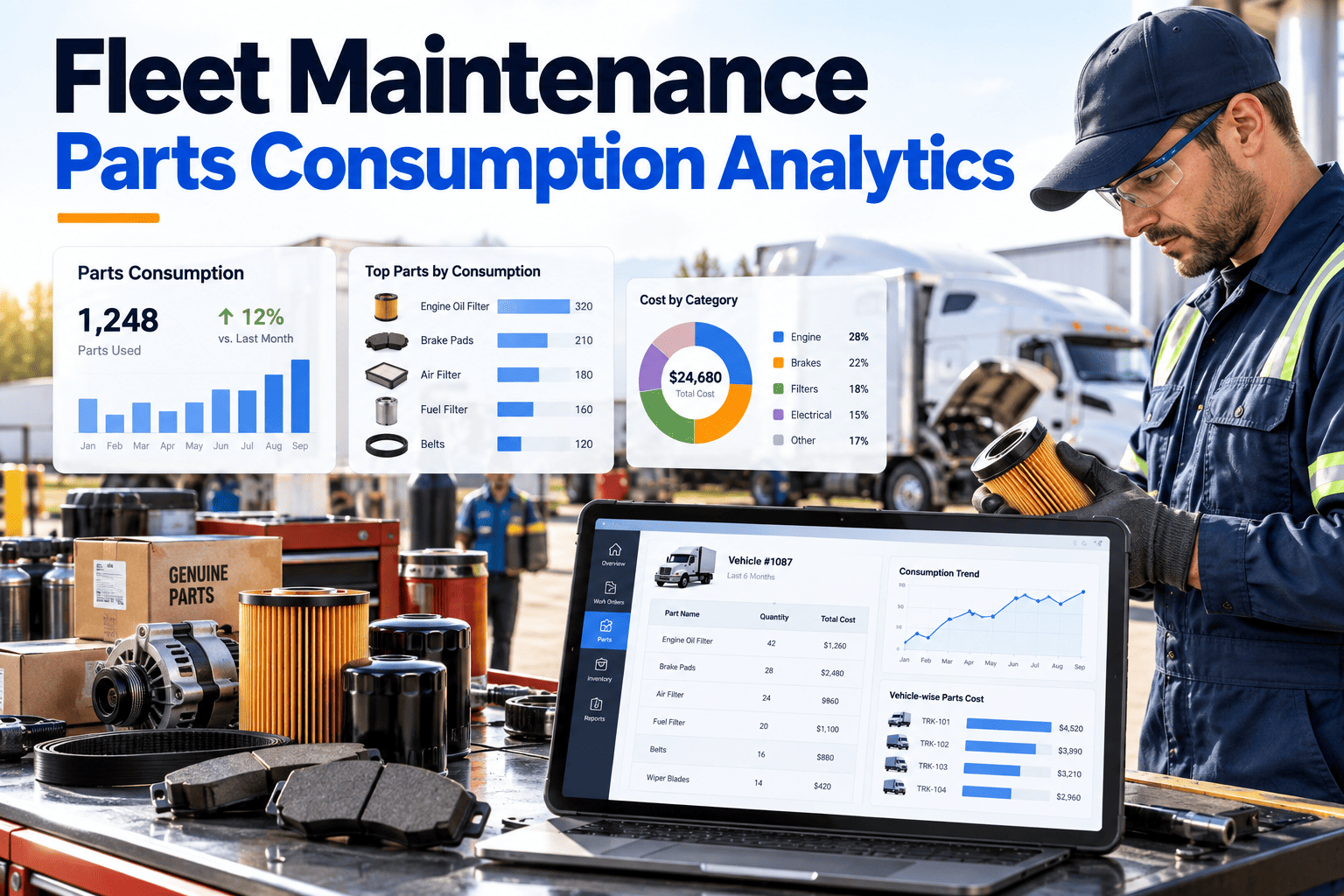
A fleet manager in Phoenix running 94 light commercial vehicles was convinced his highest-cost vehicle was the 2018 Ford Transit with three engine repairs in 18 months. He was wrong. When OxMaint aggregated all labour hours, parts invoices, and downtime costs per vehicle, the highest total maintenance spend was a 2020 Ram ProMaster with chronic brake and electrical issues that had never individually crossed the threshold that would have triggered attention — but collectively cost $14,200 in the prior 12 months, more than any other vehicle in the fleet. Paper-based maintenance tracking and disconnected repair invoices hide this pattern every single day in most American fleets. OxMaint's maintenance cost analytics platform aggregates every dollar of labour, parts, and downtime per vehicle — so the highest-cost assets are visible instantly and every budget decision is backed by actual spend data rather than gut feel. Book a demo to see your fleet's cost breakdown.
See Every Dollar of Maintenance Spend — Per Vehicle, Per Month
Labour tracking, parts spend analysis, and AI budget forecasting — all in OxMaint
Of fleet maintenance spend is untracked or misallocated without a CMMS cost system
$14,200
Typical annual spend on a hidden high-cost vehicle — never visible without per-vehicle cost aggregation
19%
Average maintenance budget reduction after deploying spend analytics — from eliminating waste and hidden high-cost assets
The 6 Maintenance Cost Categories OxMaint Tracks
Fleet maintenance spend splits across six distinct cost categories — each with different drivers, different benchmarks, and different interventions. OxMaint tracks all six per vehicle and per fleet so you always know what you're spending, where it's going, and whether it's justified.
1
Labour Cost
38–45% of total maintenance spend
Technician hours per work order, overtime frequency, and diagnostic time tracked per job. Fleets without digital work orders lose 40% of billable technician time to admin, parts chasing, and undocumented work.
2
Parts & Materials
28–35% of total maintenance spend
Emergency parts at retail vs contracted rates adds $180–$420 per unplanned repair. OxMaint PM forecasting triggers SAP purchase orders before parts are needed — eliminating the premium on every planned service.
3
Downtime & Lost Revenue
14–22% of true maintenance cost (hidden)
The cost of a vehicle off the road — rental units, contractor coverage, missed deliveries, and driver overtime — rarely appears in the maintenance budget but is the largest cost of unplanned failures.
4
Outsourced & Vendor Repairs
12–18% of total maintenance spend
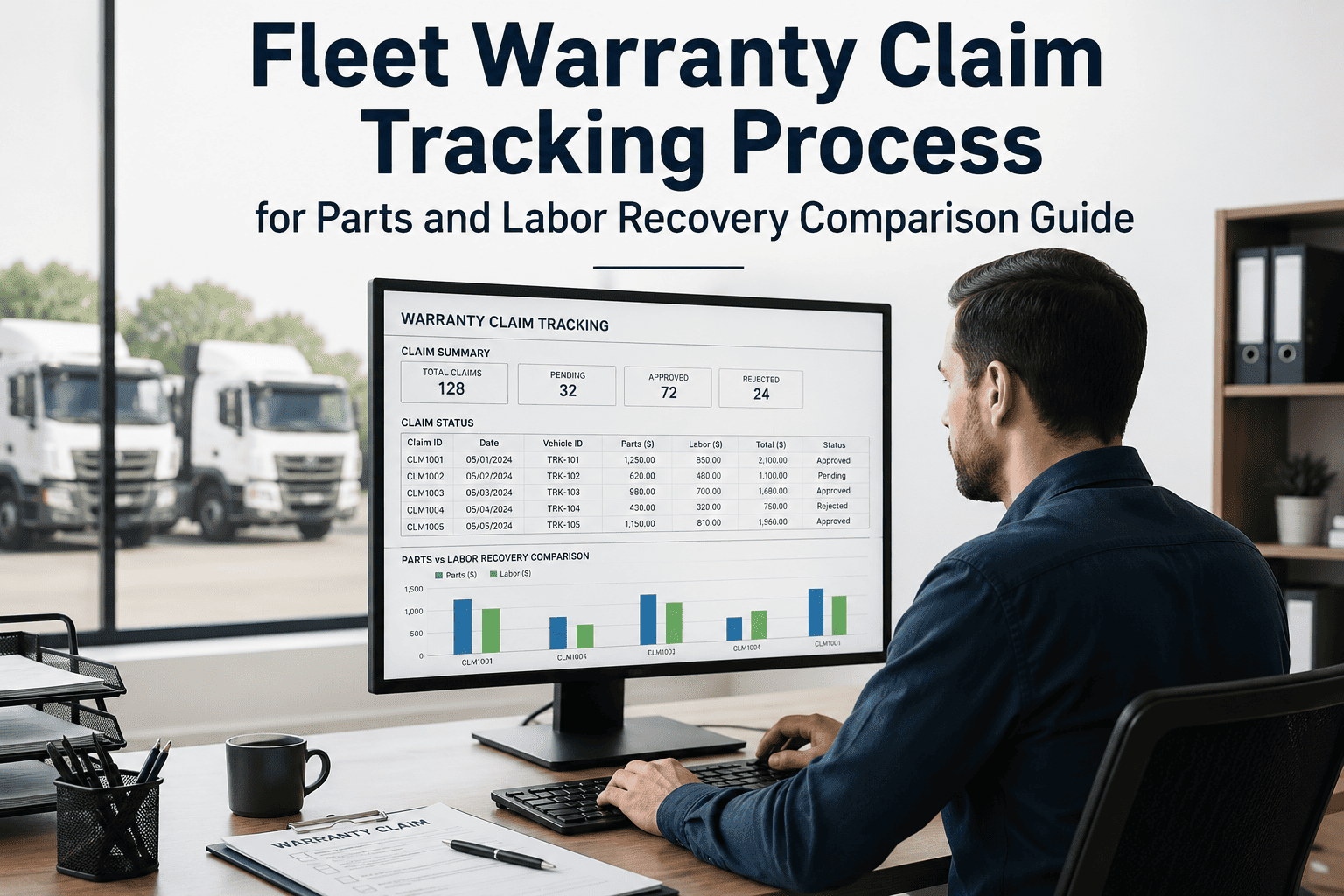
External repair invoices without job-level detail are impossible to benchmark or challenge. OxMaint stores vendor invoices against work orders — flagging repeat repairs on the same system that should be warranty claims.
5
Tyres & Consumables
8–12% of total maintenance spend
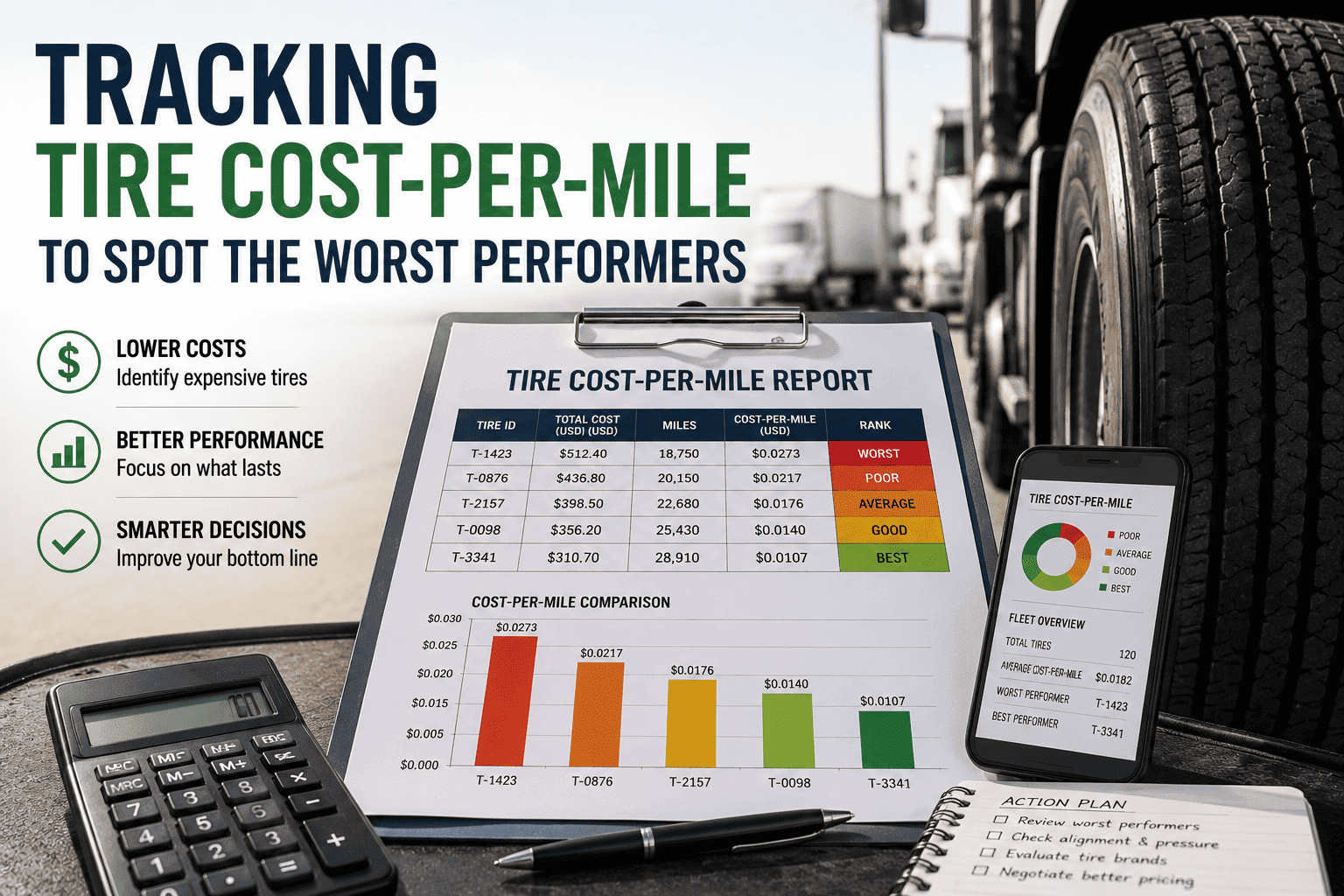
Tyre cost is the easiest maintenance line to optimise but the most commonly over-spent. Tracking cost-per-mile per tyre set across vehicle types reveals which vehicles are burning tyres faster than their routes justify.
6
Compliance & Inspection
4–8% of total maintenance spend
Annual inspections, certification renewals, and DOT compliance tests are fixed-cost items that become variable when missed — FMCSA violations average $16,500 per incident in fines, downtime, and remediation.
Maintenance Analytics — OxMaint
Every Cost Category. Every Vehicle. Real-Time.
OxMaint tracks all six maintenance cost categories per vehicle — with AI forecasting that predicts next month's spend before it happens.
How OxMaint Tracks Maintenance Cost — From Work Order to Dashboard
Maintenance cost visibility requires a closed loop between work order creation and financial reporting. Without that loop, every invoice is just a line item — not a data point that improves future decisions. OxMaint closes the loop automatically so every dollar is tracked from the moment a work order opens to the moment the vehicle returns to service.
Step 1
Work Order Opens
PM trigger, OBD fault, or defect report creates a work order — vehicle, system, estimated parts and labour cost captured at creation
Step 2
Labour Time Captured
Technician clocks in and out per work order on mobile — actual hours vs estimate tracked per job and per technician
Step 3
Parts Consumed Logged
Every part used is logged against the work order with part number, quantity, and unit cost — inventory deducted automatically
Step 4
Work Order Closed
Supervisor signs off — total job cost calculated: labour + parts + downtime hours × vehicle daily revenue rate
Step 5
Analytics Dashboard Updated
Vehicle's rolling 12-month cost updated — AI forecasts next 3 months of spend and flags vehicles approaching replacement threshold
Maintenance Cost Benchmarks — US Fleet Averages by Vehicle Class
Knowing your maintenance cost per vehicle per year is not enough — you need to know whether it is high or low for your vehicle class and operation type. The table below shows 2024 US fleet benchmarks from ATRI and ATA data.
Vehicle Class
Avg Annual Maint Cost
Top Quartile
Labour %
Parts %
Class 8 Truck
$18,400
$11,200
42%
31%
Class 6–7 Truck
$12,600
$7,800
40%
33%
LCV / Delivery Van
$4,200
$2,600
44%
28%
Transit Bus
$28,000
$17,400
38%
35%
Refuse / Municipal
$41,000
$26,000
36%
38%
Light Passenger / SUV
$1,900
$1,200
46%
26%
AI Budget Forecasting — Know Next Month's Spend Before It Happens
Maintenance budgets built on last year's actuals are always wrong — because last year's fleet is not this year's fleet. AI forecasting in OxMaint uses PM schedules, vehicle age curves, and historical failure patterns to predict the next 90 days of maintenance spend per vehicle with 88% accuracy.
Scheduled PM Forecast
Predictable, plannable spend
Forecast accuracy
94–97%
Advance notice
30–90 days
AI input sources
PM intervals, mileage, engine hours
Budget variance
<6%
Predictive Repair Forecast
AI-predicted unplanned spend
Forecast accuracy
82–88%
Advance notice
14–60 days
AI input sources
OBD fault codes, failure patterns, digital twin
Unplanned cost reduction
40–65%
Lifecycle Replacement Forecast
Capital planning intelligence
Replacement timing accuracy
Within 6–12 months
Planning horizon
1–5 years
AI input sources
Depreciation curve, maint cost trend, age
Capital budget accuracy
±8% of actual
Before OxMaint we had no idea which vehicles were bleeding money — we just knew the overall maintenance line kept going up. Within 90 days of deploying cost tracking, we identified 11 vehicles consuming 34% of our maintenance budget. We replaced 6, intensified PM on 3, and reassigned 2 to lighter routes. Total maintenance spend dropped $180,000 in year one.
Four technology integrations connect the real-world cost data to the analytics dashboard — each one eliminating a manual step that currently hides spend from the budget picture.
SAP / ERP Integration
OxMaint work order costs sync directly to SAP — no manual reconciliation. Every parts invoice, labour charge, and vendor repair is in the maintenance budget the day it closes.
OBD / Telematics
Fault codes auto-generate work orders with pre-populated cost estimates — every unplanned repair is tracked from the moment the DTC fires, not from when someone remembers to file the paperwork.
AI Digital Twin
Digital twin models each vehicle's future maintenance cost trajectory — identifying the exact mileage where projected repair costs exceed residual value and disposal becomes the cheaper option.
AI Camera Vision
Pre-trip camera inspections detect visible wear and damage before it becomes an expensive repair — and log every finding with a timestamp so the cost of deferred maintenance is always visible in the analytics.
Frequently Asked Questions
How does OxMaint calculate total maintenance cost per vehicle?
OxMaint aggregates all closed work order labour hours (at configured rates), parts consumed (at purchase cost), and vendor invoices per vehicle — updated with every closed work order to give a rolling 12-month total.
Can OxMaint track labour cost per technician as well as per vehicle?
Yes — OxMaint tracks labour hours and cost at the technician level across all work orders. This surfaces productivity differences, overtime patterns, and the true cost of diagnostic time per job type.
How does AI maintenance cost forecasting work in OxMaint?
OxMaint AI models each vehicle's upcoming PM schedule, age-adjusted failure probability, and historical spend pattern to forecast the next 90 days of maintenance cost with 88% accuracy — updated monthly.
Does OxMaint integrate with QuickBooks or other accounting software?
OxMaint integrates with SAP, Oracle, and major accounting platforms via API. Work order cost data exports in standard formats compatible with QuickBooks, Xero, and Sage for reconciliation.
How quickly does maintenance cost tracking become accurate after deployment?
Per-vehicle cost accuracy reaches full reliability within 60–90 days as open work orders close and historical data accumulates. AI forecasting improves continuously — most fleets see meaningful predictive accuracy within 6 months.