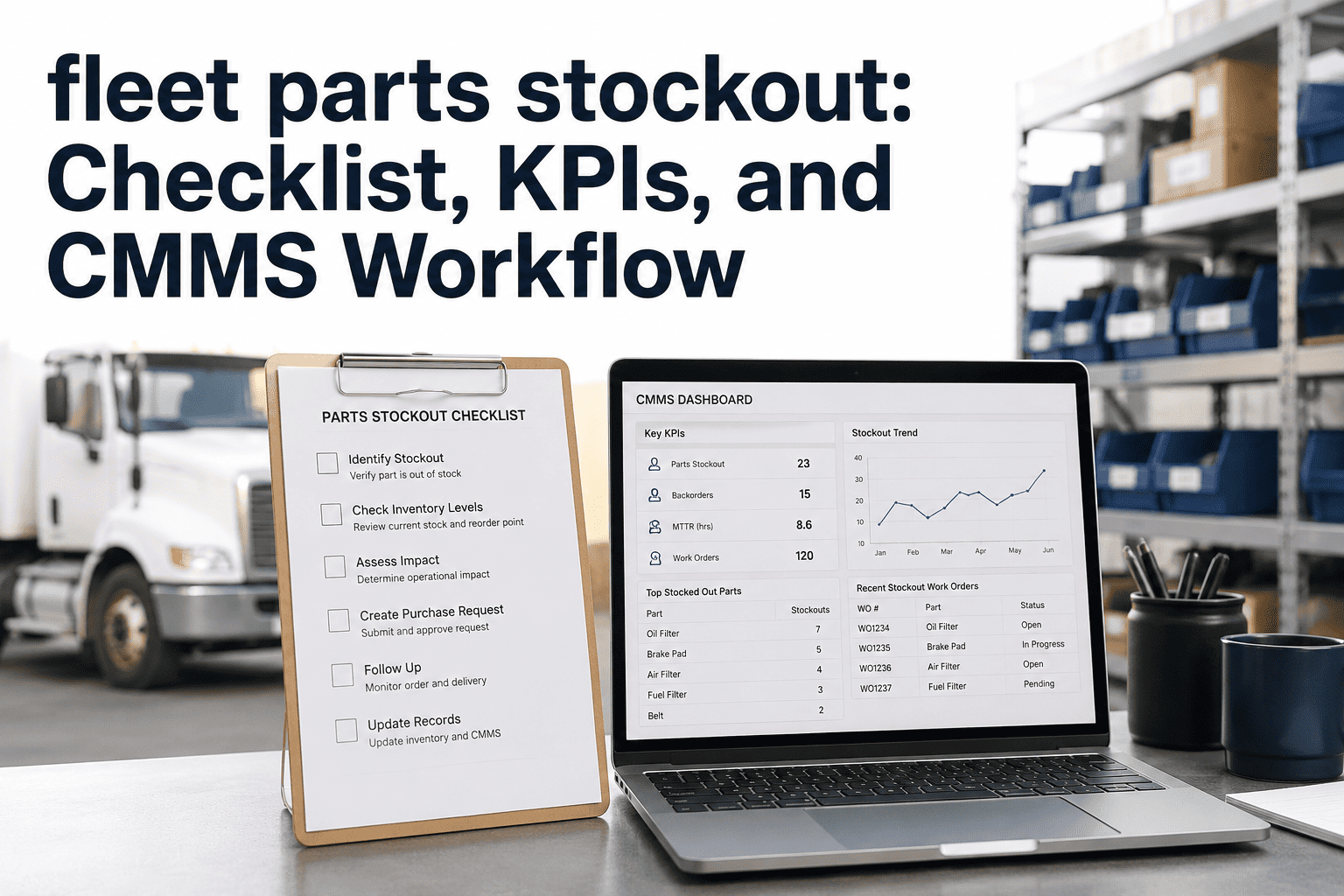
Fleet maintenance lead time is the stretch between the moment a defect is found and the moment the vehicle is safe, tested and back on the road. In most shops, technicians are turning wrenches for only a fraction of that time. The rest is spent waiting for approvals, parts, open bays and qualified people. This guide shows where parts and labor delays come from, which controls shorten them, and how a maintenance-first fleet CMMS keeps every repair order moving.
Fleet Maintenance Lead Time Reduction: Parts and Labor
Cut the waiting between defect and departure. Align parts availability, technician capacity and bay scheduling inside one repair-order flow, so vehicles spend less time parked and more time earning.
What Fleet Maintenance Lead Time Actually Includes
Lead time covers every hour a vehicle is unavailable because of a repair, not only the hours a technician spends on it. Teams that track repair hours alone miss the larger share of the delay, which usually sits in queues between steps.
Why parts and labor dominate the clock
Two resources gate nearly every repair: the part that fixes the fault and the qualified person who installs it. When either is missing, the vehicle sits. Reducing lead time is mostly about making both ready at the same moment, not about working faster once the truck is on the lift.
Seven Wait Points Between Defect and Departure
Parts Lead Time: Patterns Behind the Waiting Truck
Parts delays rarely come from one cause. They come from several small gaps in how parts are specified, stocked, ordered and tracked. The table below pairs common symptoms with the control that addresses each one.
| Symptom | Typical root cause | Control that shortens the wait |
|---|---|---|
| Part on the shelf but not found | No bin location or a different part number in each system | One item master with locations, cross-references and counts |
| Frequent stockouts of fast movers | Reorder points set once and never reviewed | Min/max levels tied to actual consumption on work orders |
| Overstock of slow movers | Bulk buys and parts left over from retired models | Usage reports by part and by vehicle class |
| Order placed but status unknown | Purchase details held in email or phone calls | Open orders visible against the repair order that needs them |
| Wrong part delivered | Specification taken from memory, not vehicle records | Part lists linked to each asset, including VIN and configuration |
| Technician makes extra trips | Parts issued after the vehicle is already in the bay | Parts-ready check before bay assignment |
Plan parts from the maintenance schedule
Preventive maintenance is predictable, so its parts should never cause a delay. Filters, belts, brake components, fluids and wear items can be forecast from the service schedule and reserved against upcoming work orders before the vehicle arrives.
Know which parts carry long external lead times
Some items cannot be fixed by better shelf management. Specialty components, certain electrical modules and parts for older vehicles may depend on supplier availability. Flag these as critical spares, agree target lead times with suppliers, and decide in advance when a vehicle will be repaired, sourced elsewhere or substituted.
Stop Letting Vehicles Wait on Parts You Already Own
Connect inventory, work orders and asset history so the right part is ready before the vehicle reaches the bay.
Labor Lead Time: Skills, Scheduling and Shop Flow
Labor delay is rarely a headcount problem alone. It is often a matching problem: the right skill, in the right bay, at the right time, with the right information. A shop can be fully staffed and still leave vehicles waiting.
Common labor bottlenecks
Level the load with preventive maintenance windows
Scheduling preventive work during low-demand windows, such as overnight or between routes, spreads the load and keeps bays available for breakdowns. When PM is grouped sensibly, one vehicle visit can complete several due tasks instead of triggering three separate shop trips.
One Repair-Order Flow With Gates for Parts and Labor
The fastest shops treat parts and labor as a single plan. A vehicle is called into the bay only when both are confirmed. The gates below show one way to build that rule into the work order lifecycle.
What to do when a gate fails
Not every part can be ready on time. Decide in advance what happens: expedite, substitute an approved equivalent, pull from another location, or release the vehicle with a documented restriction when it is safe and compliant to do so. Safety-critical defects should never be released on a workaround.
Metrics That Show Whether Lead Time Is Falling
Pick a small set of measures and review them weekly. Each one should point to an owner and an action. Baseline them first, then track change rather than comparing with an outside average.
| Measure | How to calculate | What it reveals |
|---|---|---|
| Request-to-release time | Release timestamp minus request timestamp | The total lead time operations experiences |
| Parts wait time | Hours work orders spend in a waiting-for-parts status | Whether stocking and ordering are working |
| Bay and labor wait | Hours between parts-ready and work start | Whether scheduling matches capacity |
| First-time fix rate | Repairs not repeated within a set window, divided by repairs | Quality of diagnosis and repair |
| PM compliance | PM completed on time divided by PM due | Whether planned work prevents urgent work |
| Stockout rate | Requests unable to be filled from stock divided by requests | Health of reorder points and critical spares |
| Wrench-time share | Logged repair hours divided by paid hours | How much technician time is lost to non-repair tasks |
How Oxmaint Supports Parts and Labor Control
Oxmaint is a maintenance management platform built around the work order, the asset and the part. Each capability below maps to a delay described earlier on this page.
Keep it practical
Start with the assets and parts that cause the most delay, not the whole fleet. A focused first phase produces data quickly, and the results guide where to expand. Teams that want to see this flow with their own vehicles can book a walkthrough with the Oxmaint team.
Supplier, Warranty and Core Handling That Quietly Add Days
Some of the longest delays happen outside the shop floor. They sit in supplier agreements, warranty claims and returned parts, where nobody owns the clock. Making these steps visible on the work order turns them into manageable tasks.
Balance speed with cost
Faster is not always cheaper. Expedited freight, premium parts and overtime can reduce lead time while raising cost per repair. Compare the cost of the extra spend with the cost of keeping the vehicle idle, and set clear rules for when expediting is approved.
Review the exceptions, not only the averages
Average lead time hides the repairs that hurt most. Look each week at the longest open work orders and ask the same three questions: what is it waiting for, who owns the next step, and what would release it today. The answers usually point to a small number of fixable habits.
A 90-Day Plan to Reduce Lead Time
Lead time audit checklist
- Every work order has request, start and release timestamps.
- Waiting-for-parts time can be reported separately from repair time.
- Critical spares are listed and have named suppliers and target lead times.
- Reorder points were reviewed against the last quarter of usage.
- Technician skills are recorded so work can be matched to the right person.
- Preventive maintenance is scheduled around bay availability.
- Repeat repairs are flagged and reviewed for root cause.
- There is a written rule for vehicles that cannot be repaired within the target window.
Questions Fleet Teams Ask About Lead Time
It depends on vehicle type and repair class, so set targets from your own baseline. Segment by routine service, breakdown and major repair rather than using one average. Sign up to start capturing the timestamps.
Only where usage justifies it. Stock the fast movers and critical spares, and plan the rest from the PM schedule. Inventory reports show which parts earn their shelf space.
Track waiting-for-parts and waiting-for-labor as separate statuses. After a few weeks of data, the larger bucket becomes clear and the next fix is obvious.
It shortens the lead time of urgent repairs by reducing them, and lets parts be staged for planned work. It works best when due dates and bay slots are visible together.
Yes. Even a small shop benefits from timestamped statuses and linked parts. You can schedule a demo to see a setup sized for your fleet.
Shorten the Time Between Defect and Departure
Give your shop one place to plan parts, labor and bays, and see exactly where each vehicle is waiting.