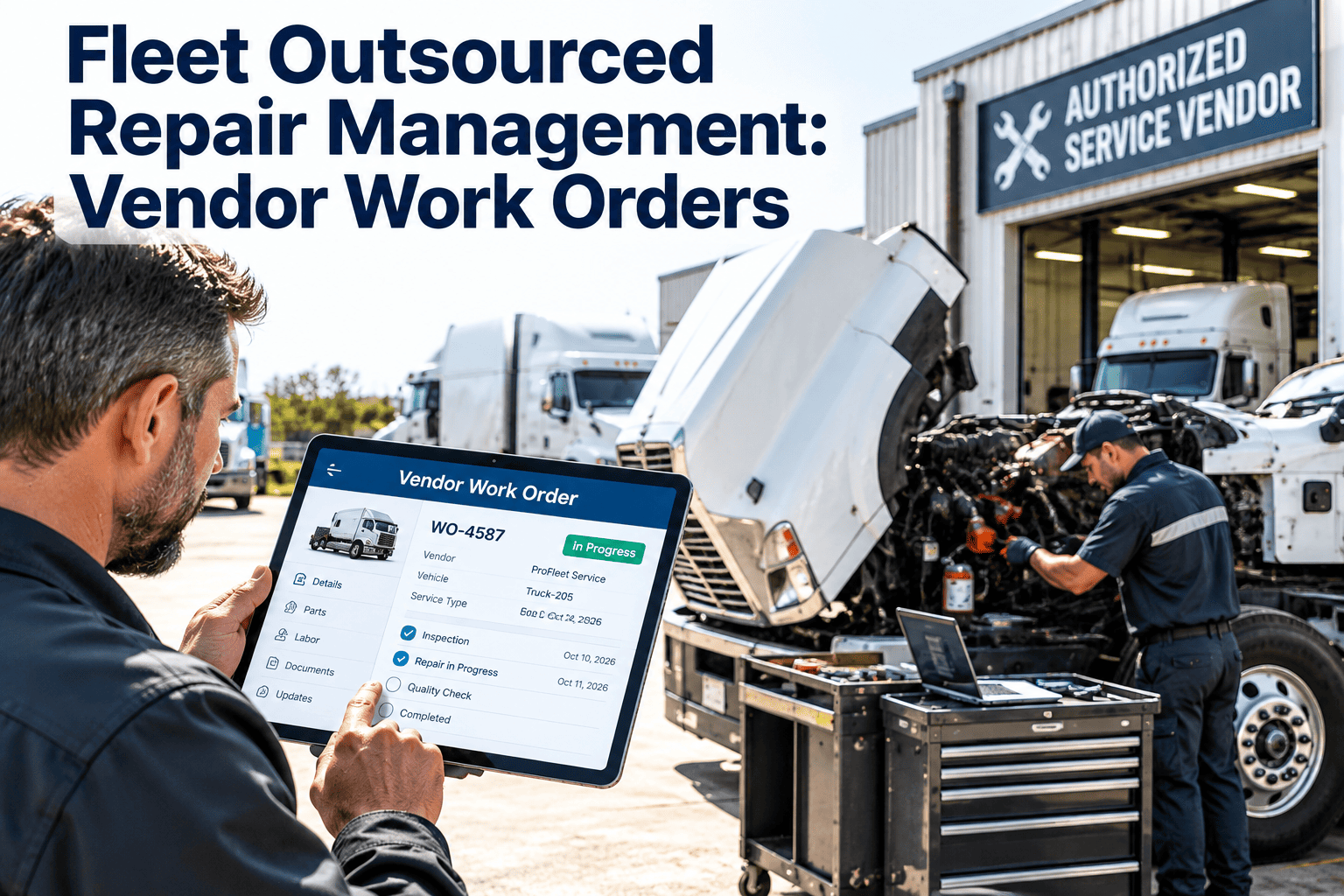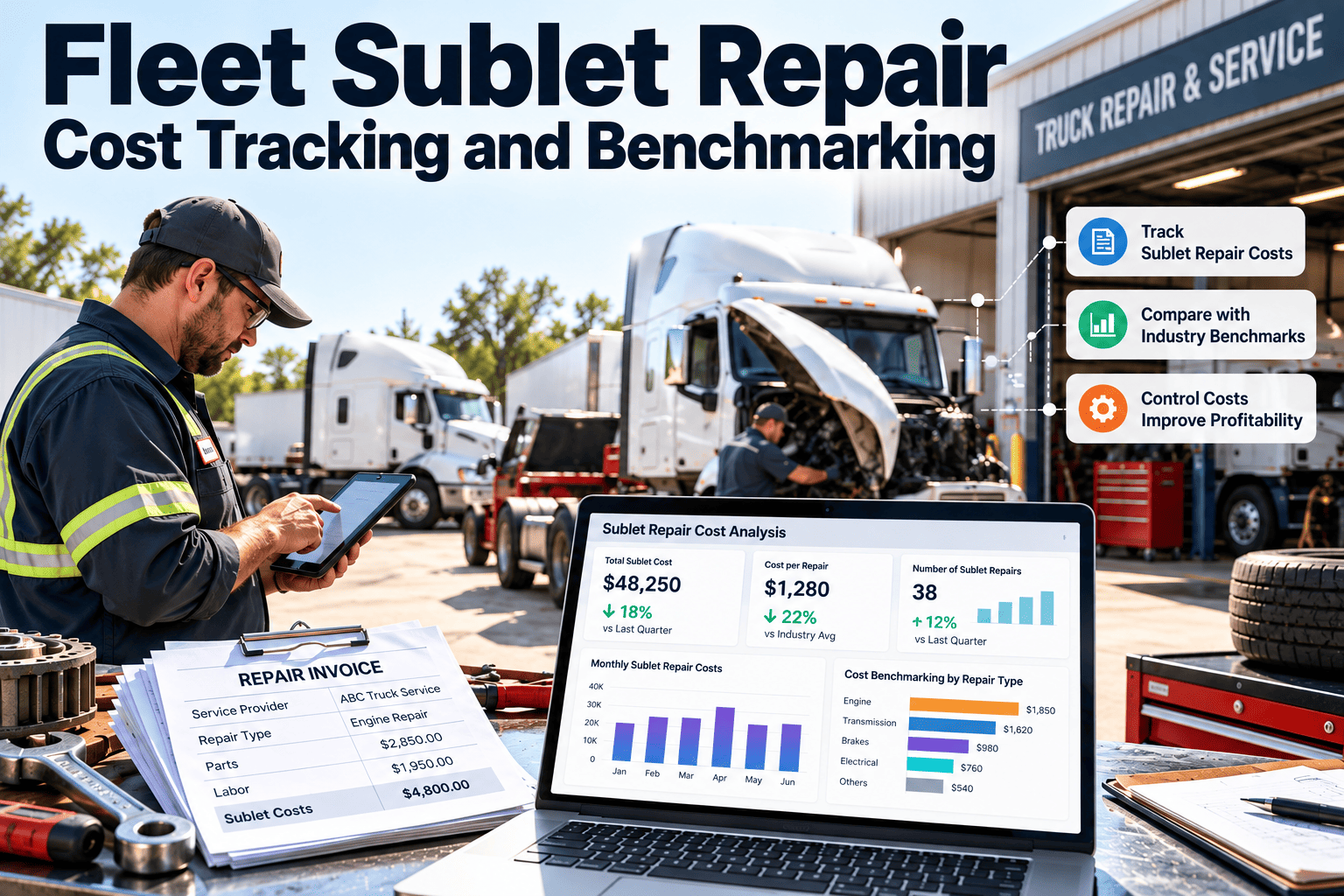
Sublet repairs are the part of fleet maintenance that most often escapes normal cost control. When a vehicle leaves for a dealer, specialty shop, or body vendor, its work order can go quiet while quotes, approvals, and invoices move through email. Tracking sublet repair cost and benchmarking it against in-house work and other vendors turns outside jobs into measurable decisions. This guide covers the data to capture, the comparisons that matter, and how a work-order-based CMMS such as Oxmaint keeps it in one record.
Fleet Sublet Repair Cost Tracking and Benchmarking
Know what every outside repair really costs. Link each sublet job to its work order, vendor, and vehicle so you can compare vendors, challenge invoices, and decide what belongs in your own shop.
Why sublet spend is hard to see
Sublet work sits between two systems. The shop sees the vehicle leave, and accounts payable sees an invoice weeks later. Nobody owns the story in between.
Untracked sublet work
- Quotes arrive by email and are never attached to the repair
- The invoice amount is the first time anyone sees the real price
- Vendors are compared by habit instead of results
- Comebacks are fixed again without being linked to the first job
- Vehicle cost history shows gaps where outside work happened
Tracked sublet work
- Every outside job starts from a work order with a defined scope
- Quote, approval, and invoice sit side by side
- Vendors are compared on cost, speed, and repeat repairs
- Returned vehicles are inspected and failures are tied to the original job
- Vehicle cost history includes all labor, parts, and outside charges
Make or buy: when sublet is the right call
Sublet is not a failure of the shop. It is a deliberate choice when in-house work would be slower, riskier, or more expensive. The goal is to make that choice with data.
| Situation | Favors in-house | Favors sublet | Data to check |
|---|---|---|---|
| Specialty equipment | Tools already owned and used often | Tool or software needed rarely | Frequency of the job over 12 months |
| Warranty or recall work | Dealer authorization not required | Only authorized dealers may perform it | Coverage terms and install history |
| Peak workload | Bays and technicians available | Backlog would delay safety repairs | Open work order age and bay load |
| Safety-critical systems | Certified technicians on staff | Certification held only by vendor | Technician certifications on file |
| Body and paint | Minor repairs with simple tools | Collision or structural repair | Repair scope and downtime estimate |
| Electronics and diagnostics | Software and training in place | Proprietary software required | Diagnostic time spent versus fixed |
| Repeat sublet jobs | Volume justifies tools and training | Volume too low to justify investment | Sublet count and cost by job type |
Where sublet cost leaks
Most overspend does not come from one large mistake. It builds through small gaps in scope, authorization, and follow-up.
Unscoped quotes
A vague quote such as "repair as needed" leaves room for added items. Without a defined scope, the invoice cannot be tested against the approval.
Parts markup without visibility
Vendors may supply parts at prices the fleet could beat through its own suppliers. Without line detail, the markup stays hidden.
Overlapping work
A vehicle returning for one repair may also be charged for tasks already done in-house, because the vendor never saw the work order history.
Comebacks and rework
A repair that fails soon after return costs twice. If the second job is not linked to the first, the vendor never feels the cost.
Extended downtime
Days spent waiting at a vendor are a cost even when the invoice looks fair. Without timestamps, nobody can compare vendor turnaround.
Invoices without references
A bill with no work order number is difficult to match, easy to pay twice, and impossible to benchmark.
The sublet record: data that makes benchmarking possible
Benchmarking only works if every outside job is recorded the same way. These fields give you a comparable record across vendors, vehicles, and time.
Job and vendor data
- Vehicle, meter reading, and linked work order
- Defect description and repair category
- Vendor name and contact
- Date sent, promised date, and actual return
- Quote number and approved scope
- Authorizer and approval date
Cost and quality data
- Quoted labor and parts amounts
- Final invoice labor, parts, and fees
- Variance between quote and invoice
- Warranty offered on the repair
- Return inspection result
- Link to any repeat repair on the same system
Put every outside repair on the same record as the vehicle
Track sublet quotes, approvals, and invoices against the work order so cost history is complete and vendor comparisons are fair.
How to benchmark sublet repair costs
You do not need external industry data to benchmark well. Comparing your own jobs against each other is the fastest way to find overspend and strong vendors.
| Benchmark | What you compare | Question it answers | Watch out for |
|---|---|---|---|
| Vendor versus vendor | Cost and turnaround for the same job type | Which vendor delivers best value? | Different vehicle ages and conditions |
| Sublet versus in-house | Total cost including downtime | Should this job move in-house? | Leaving out technician and tool overhead |
| Quote versus invoice | Final amount against approved quote | Are scopes controlled? | Approved changes recorded late |
| Period versus period | Monthly or quarterly sublet spend | Is outside spend rising? | Seasonal workload shifts |
| Vehicle class versus class | Sublet cost per vehicle or per mile | Which units drive outside spend? | Mixed duty cycles in one class |
A vendor scorecard for fleet sublet partners
A scorecard replaces opinion with a consistent view. Adjust the weights to match your priorities, but keep them fixed long enough to compare quarters.
Closeness of invoice to approved quote and fair parts pricing on itemized lines.
Share of jobs returning for the same issue within a set window.
Actual days at vendor against the promised return date.
Itemized invoices, work order references, and photos or test results.
Speed of quote replies and willingness to honor repair warranties.
KPIs for sublet cost tracking
A small set of measures keeps the discussion practical. Review them monthly with maintenance and finance together.
Sublet spend share
Outside repair cost as a share of total maintenance cost. Shows dependence on vendors.
Quote-to-invoice variance
Average difference between approved quote and final bill. Tests scope control.
Sublet cost per vehicle
Outside spend by unit. Highlights vehicles that consume vendor labor.
Vendor turnaround days
Days from handoff to return by vendor. Exposes hidden downtime.
Comeback rate
Repeat repairs on the same system after sublet work. A direct quality signal.
Unmatched invoices
Bills with no work order link. Should trend toward zero.
The sublet workflow in four stages
A short, repeatable flow keeps shop staff and vendors aligned and gives finance what it needs.
Request and quote
Create the sublet task on the work order, define the scope, and attach the vendor quote.
Authorize and hand off
Approve against rules, record vehicle condition, and set the promised return date.
Return and inspect
Verify the repair, update meter and notes, and log any warranty terms.
Invoice and review
Match the bill to the quote, post cost to the asset, and score the vendor.
Policy controls that keep sublet work auditable
Clear rules protect the budget and give auditors a clean trail without slowing urgent repairs.
Approval controls
- Set spending thresholds that require supervisor or manager approval
- Require a written scope before any outside work begins
- Allow emergency authorization with documented review afterward
Record controls
- Require a work order number on every vendor invoice
- Keep quotes, photos, and test results with the job
- Retain warranty terms for the period they apply
Review controls
- Review vendors quarterly using the scorecard
- Flag jobs repeated often enough to consider in-house capability
- Check overlapping work between vendor invoices and shop labor
Operational impact of untracked outside repairs
Weak sublet tracking affects more than the repair budget. It changes how the whole fleet plans, schedules, and serves its customers.
Availability effects
- Vehicles are unavailable longer than planned because return dates are not managed
- Dispatch cannot plan coverage when return timing is uncertain
- Spare units or rentals are used longer than needed
Financial effects
- Costs reach the vehicle record late, so lifecycle decisions rely on incomplete totals
- Overlapping or repeated charges are paid because nothing links them
- Budget variances are explained after the fact instead of controlled before it
Quality and safety effects
- Repairs returned without inspection may carry defects into service
- Warranty terms from the vendor are lost or forgotten
- Repeat failures are not traced back to the original outside job
Trends in sublet repair management for 2026
Fleets are tightening outside repair control as technician shortages and vehicle complexity make some sublet work unavoidable.
More specialty and electronic work
Modern vehicles carry more electronic systems and proprietary diagnostics, so some work leaves the shop even for capable teams. Tracking becomes more important as that share grows.
Pressure on technician capacity
When skilled labor is limited, fleets use vendors to protect safety repairs and preventive schedules. Benchmarking shows when that choice pays off.
Digital quotes and photo evidence
Vendors increasingly send itemized digital quotes and photos. Attaching them to the work order creates a stronger audit trail than email alone.
Vendor performance reviews
Fleets are moving from relationship-based vendor selection to documented performance, using cost accuracy, turnaround, and comeback data.
How to read a vendor comparison
A comparison is only useful if it is interpreted carefully. Follow these steps before changing vendors or moving work in-house.
Group similar jobs
Compare like with like, such as brake jobs on the same vehicle class, so averages are meaningful.
- Separate light-duty from heavy-duty units
- Separate routine from complex repairs
Check volume
A vendor with three jobs may look better or worse by chance. Look for enough jobs to see a pattern.
- Flag small samples
- Combine similar quarters if needed
Add quality and time
Price is only one part of cost. Include comebacks and days at vendor in the review.
- Count repeat repairs within a set window
- Convert idle days into availability impact
Decide and document
Record the decision and the evidence so the next review starts from facts.
- Keep, renegotiate, or replace the vendor
- Note jobs to consider in-house
A monthly sublet review agenda
A short monthly meeting between maintenance and finance keeps outside spend under control without adding heavy reporting.
Maintenance questions
- Which vehicles are currently at vendors and when are they due back?
- Which jobs repeated within the warranty window?
- Which sublet jobs could our shop handle with training or tools?
- Did any vendor miss its promised date?
Finance questions
- Which invoices arrived without a work order reference?
- Where did final cost exceed the approved quote?
- Is outside spend trending above plan by vehicle class?
- Are accruals for open sublet jobs accurate?
How Oxmaint supports sublet tracking
Oxmaint organizes outside repair activity around the work order and asset record so cost and history stay connected.
- Work orders hold the defect, scope, approvals, and outside vendor tasks
- Asset records show total repair cost including sublet charges
- Preventive maintenance schedules reduce urgent outside repairs
- Inventory tracking shows whether parts could be supplied in-house
- Mobile workflows let staff record handoff and return condition
- Reports compare spend by vendor, vehicle, and time period
What changes for each role
- Shop staff log handoff condition and return dates in the same work order
- Supervisors approve outside work with full vehicle history in view
- Fleet managers compare vendors and sublet share without building spreadsheets
- Finance matches each invoice to a quote and a completed repair
Common sublet tracking mistakes
Most problems have simple fixes once the process is visible.
| Mistake | Result | Fix |
|---|---|---|
| Paying invoices without work order numbers | Duplicate or unverified charges | Make the reference mandatory before payment |
| Approving verbal quotes | Scope disputes later | Attach a written quote to the work order |
| Comparing vendors on price alone | Cheap jobs that fail early | Include comebacks and turnaround in scoring |
| Ignoring days at vendor | Hidden downtime cost | Record handoff and return dates |
| Never reviewing repeat jobs | Missed in-house opportunities | Review sublet job counts each quarter |
Frequently asked questions
What is fleet sublet repair cost tracking?
It records every outside repair against the vehicle and work order, including quote, approval, invoice, and turnaround, so costs can be compared.
How do I benchmark sublet vendors fairly?
Compare similar job types and vehicle classes, then score cost accuracy, quality, and turnaround. You can book a demo to see vendor reporting.
Should some sublet work move in-house?
Review jobs that repeat often. If volume and technician skills support it, in-house work may lower cost and downtime.
How do I control quote-to-invoice differences?
Require a written scope and approval before work, and record approved changes on the work order before the invoice arrives.
Where should a fleet start?
Start with your most frequent sublet job type and set up a work order process for it before expanding.
Make every sublet dollar visible and comparable
Track outside repairs, challenge unclear invoices, and choose vendors with evidence from your own maintenance records.