Fleet management cost optimization has become the defining challenge for operations leaders in 2025. With fuel representing 25-35% of total operational costs and maintenance expenses rising to $0.202 per mile, the difference between a profitable fleet and a draining one lies in strategic cost control. The latest industry data reveals that fleets leveraging integrated fuel and maintenance software are achieving 15% higher vehicle uptime compared to traditional approaches, while predictive maintenance is reducing costs by up to 30% through early fault detection.
Whether you're managing 10 vehicles or 1,000, the pressure to reduce operational expenses while maintaining service quality has never been more intense. This comprehensive guide explores proven strategies that are delivering measurable results across the industry—from AI-powered predictive maintenance that prevents breakdowns before they happen, to telematics systems that cut fuel consumption by 12-15% through behavior-based optimization. Sign up today to transform your fleet operations with intelligent cost management tools designed for modern fleet managers.
The True Cost Breakdown: Where Your Money Goes
Understanding your Total Cost of Ownership (TCO) is the foundation of optimization. Direct costs consume approximately 80% of fleet budgets:
Source: Arval Mobility Observatory 2025 TCO Scope Report
Strategy 1: Predictive Maintenance Revolution
Predictive maintenance represents the single most impactful shift in fleet cost management. Unlike reactive approaches that address failures after they occur, predictive systems analyze vehicle data to send alerts 15 days before likely breakdowns. A recent case study of a 250-vehicle transportation fleet revealed staggering results: 45% reduction in downtime, 30% decrease in maintenance costs, and $1.8 million in annual savings.
The technology works by continuously monitoring engine diagnostics, vibration patterns, oil quality, and performance metrics through IoT sensors and telematics. When anomalies are detected, the system generates work orders automatically, ensuring parts are ordered and technicians are scheduled before catastrophic failures occur. This proactive approach not only prevents emergency repair premiums—which often cost 3-4 times more than scheduled maintenance—but also extends component life by up to 40%.
Implementation is simpler than most managers assume. Modern platforms integrate seamlessly with existing fleet management software, providing real-time dashboards that highlight priority vehicles requiring attention. Book a demo to see how predictive analytics can identify maintenance needs in your fleet before they become budget-draining emergencies.
Key Predictive Maintenance Benefits
- 60% Fewer emergency repairs through early fault detection
- 97% Fleet uptime achieved (vs. 92% with reactive maintenance)
- 25% Reduction in unplanned downtime incidents
Strategy 2: Fuel Management Through Behavioral Analytics
Fuel costs remain the most volatile expense in fleet operations, yet most organizations overlook the 12-15% savings available through behavior-based optimization. Telematics systems now provide granular visibility into driving patterns that directly impact fuel consumption—harsh acceleration, excessive idling, speeding, and inefficient routing.
The data reveals compelling opportunities. Vehicles operating above 50 mph experience rapid fuel economy degradation, with every 5 mph over 50 mph costing approximately $0.30 per gallon in efficiency. Similarly, idling consumes between 0.25 to 0.5 gallons per hour—translating to thousands in annual waste for fleets with poor idle management. By implementing driver scorecards and gamified incentive programs, organizations have documented fuel savings of up to 24% within the first six months.
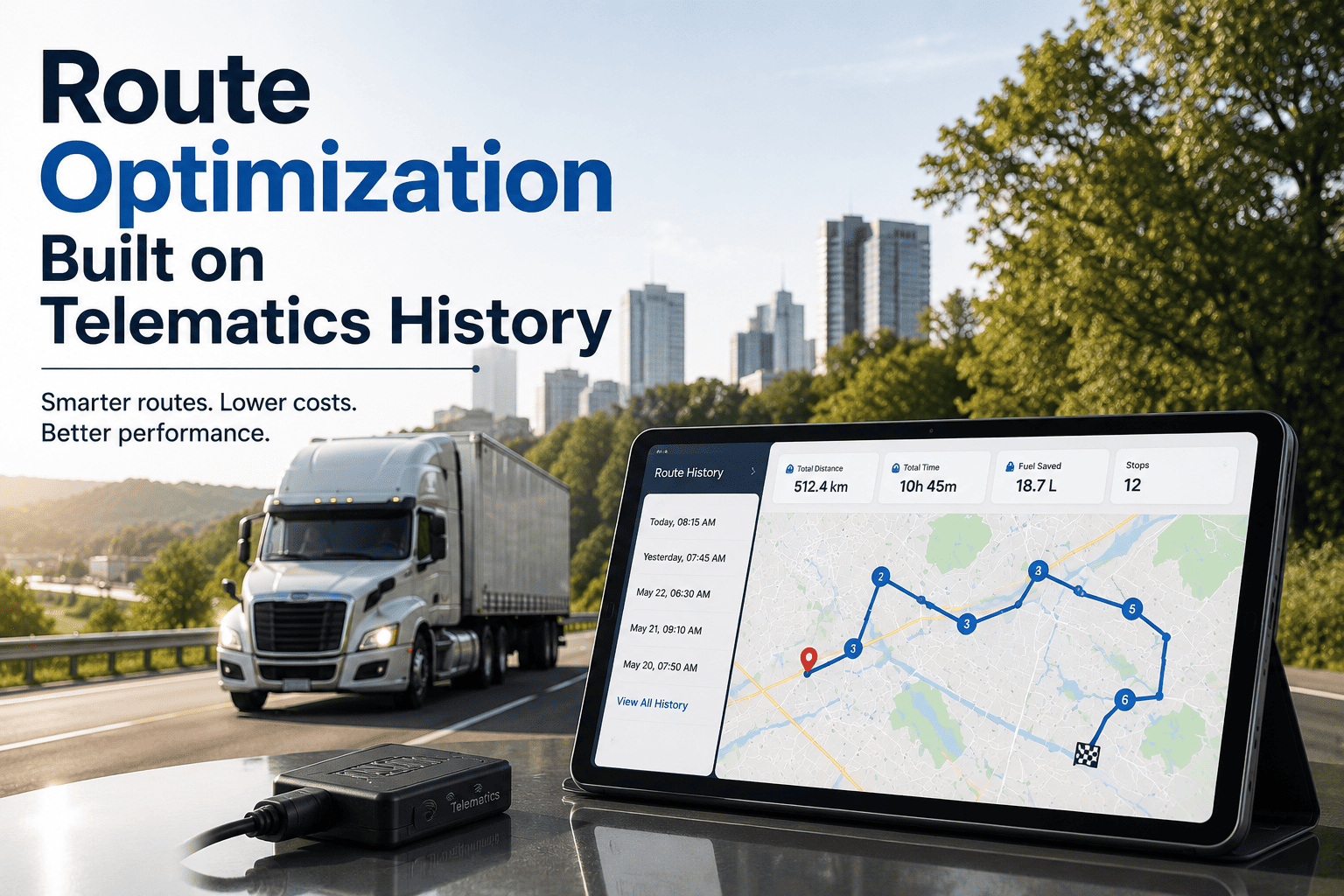
Route optimization complements behavioral improvements by reducing unnecessary mileage. Modern GPS systems analyze real-time traffic, construction zones, and elevation changes to recommend fuel-efficient paths. One construction fleet reported saving 2.5 hours per vehicle daily through intelligent routing—equivalent to adding staff without hiring costs. Start your free trial to access integrated fuel tracking that identifies your highest-consumption vehicles and drivers.
Monitor Behavior
Track acceleration, braking, idling, and speeding patterns through telematics
Coach Drivers
Provide personalized feedback and eco-driving training programs
Incentivize Savings
Implement reward systems for drivers achieving fuel efficiency targets
Strategy 3: Preventive Maintenance Optimization
While predictive maintenance handles unexpected failures, preventive maintenance ensures optimal vehicle health through scheduled servicing. Research indicates that well-maintained vehicles achieve up to 3.3% better fuel economy simply through proper tire inflation and clean air filters. When extended across an entire fleet, these percentages translate to substantial annual savings.
The key lies in transitioning from calendar-based to usage-based maintenance schedules. Traditional approaches service vehicles every 3,000 miles regardless of actual condition, leading to unnecessary interventions or missed critical needs. Condition-based monitoring uses actual engine hours, mileage, and diagnostic codes to trigger maintenance only when scientifically warranted—reducing labor costs while improving vehicle reliability.
Critical maintenance checkpoints include tire pressure monitoring (under-inflation increases rolling resistance by 15%), oxygen sensor functionality (faulty sensors can reduce mileage by 40%), and regular fuel system cleaning to remove carbon buildup. Fleets implementing comprehensive preventive programs report 25% lower maintenance expenses and 30% reduction in brake and tire costs. Schedule your consultation to design a customized preventive maintenance schedule tailored to your fleet's specific operational demands.
Ready to Cut Your Fleet Costs by 30%?
Join hundreds of fleet managers who have transformed their operations with Oxmaint's integrated cost optimization platform.
Strategy 4: Integrated Fleet Management Software
Disconnected systems create invisible costs through data silos, manual entry errors, and delayed decision-making. Integrated fleet management platforms consolidate fuel cards, maintenance records, telematics, and compliance documentation into unified dashboards—reducing administrative time by up to 80% while improving data accuracy.
The ROI is immediate and measurable. A 50-vehicle fleet spending $1,800 annually on comprehensive software typically saves $250 monthly through reduced downtime and administrative labor alone—achieving break-even in just 7.2 months. Beyond direct savings, automation reduces compliance risks and eliminates the penalties associated with missed inspections or documentation errors.
Modern platforms offer AI-powered insights that identify patterns invisible to manual analysis. These systems can predict which vehicle types deliver lowest TCO for specific routes, optimal replacement timing to maximize resale value, and inventory management recommendations that prevent both stockouts and overstock situations. Create your account to experience how unified data transforms cost management from reactive firefighting to strategic optimization.
Strategy 5: Strategic Fleet Electrification
2025 marks a pivotal year for fleet electrification economics. With combustion vehicle taxes now representing 28% of TCO—nearly double previous years—and electric vehicles achieving cost parity at 80,000-100,000 kilometers, the business case for electrification has become undeniable. Electric fleets report 60% lower combined energy and maintenance costs compared to combustion equivalents.
However, successful electrification requires strategic analysis rather than wholesale replacement. Ideal candidates for immediate electrification include vehicles traveling under 200 km daily with regular return-to-base patterns—typically urban delivery vans and service vehicles. These use cases maximize the benefits of regenerative braking and minimize range anxiety while leveraging overnight charging infrastructure.
The financial incentives amplify savings potential. Many regions now offer up to $5,000 ecological bonuses, tax exemptions for clean vehicles, and 40% accelerated depreciation for electric fleet assets. When combined with reduced fuel costs and elimination of oil changes, transmission service, and exhaust system repairs, electric vehicles deliver compelling total cost of ownership despite higher upfront acquisition costs. Talk to our experts about electrification readiness assessment for your specific fleet profile.
Essential Cost Management KPIs
Implementation Roadmap: Your 90-Day Cost Reduction Plan
Transforming fleet cost management requires systematic implementation rather than overnight overhaul. The most successful organizations follow a phased approach that builds momentum while minimizing operational disruption.
Days 1-30: Assessment and Baseline—Conduct comprehensive TCO analysis across all vehicle categories. Audit current fuel consumption patterns, maintenance histories, and downtime incidents. Identify the 20% of vehicles generating 80% of unexpected costs.
Days 31-60: Quick Wins Deployment—Implement telematics for immediate visibility into driving behaviors. Launch driver coaching programs focused on idling reduction and smooth acceleration. Establish preventive maintenance schedules for high-cost units.
Days 61-90: Advanced Optimization—Deploy predictive maintenance algorithms based on accumulated data. Optimize routes using historical traffic patterns. Evaluate electrification candidates for next replacement cycle. Get started with your assessment using Oxmaint's fleet audit tools designed for rapid cost identification.
Transform Your Fleet Economics Today
Don't let another quarter pass with unchecked fuel waste and reactive maintenance draining your budget. The tools for 30% cost reduction are available now.
Frequently Asked Questions
What is the fastest way to reduce fleet fuel costs?
Implementing telematics-based driver behavior monitoring delivers the fastest ROI. Fleets typically see 10-15% fuel reduction within 60 days by addressing excessive idling, harsh acceleration, and speeding. Combining this with route optimization software can increase savings to 20-24%.
How much can predictive maintenance actually save my fleet?
Industry data shows predictive maintenance reduces maintenance costs by 25-30% and unplanned downtime by 45%. For a 100-vehicle fleet, this typically translates to $1-1.5 million in annual savings through prevented breakdowns, extended component life, and optimized parts inventory.
Is fleet management software worth the investment for small fleets?
Absolutely. Fleets as small as 10 vehicles achieve positive ROI within 6-8 months. The software eliminates manual tracking (saving 10-15 hours weekly), prevents missed maintenance that leads to costly repairs, and reduces fuel waste through behavior monitoring. Cost per vehicle typically ranges from $30-50 monthly, while generating $100-200 in savings per vehicle.
When should I replace fleet vehicles to optimize costs?
TCO analysis typically indicates optimal replacement between years 4-6 for light-duty vehicles and years 5-7 for heavy-duty units. Beyond these points, maintenance costs increase exponentially—often rising 40% after year 5—while resale values decline rapidly. Use cost-per-mile tracking to identify when individual vehicles exceed your economic threshold.
How do I convince drivers to participate in fuel-saving initiatives?
Gamification and incentives work best. Implement driver scorecards with monthly leaderboards, offer bonuses for top performers (typically $50-100 monthly), and provide constructive coaching rather than punitive measures. Emphasize safety benefits—fuel-efficient driving correlates with 20% fewer accidents. Share the financial impact of their efforts to build ownership.
What maintenance tasks have the biggest impact on fuel economy?
Tire pressure maintenance delivers the highest ROI—proper inflation improves mileage by up to 3.3%. Oxygen sensor replacement prevents 40% mileage degradation. Regular air filter changes improve airflow and combustion efficiency. Combined, these basic maintenance items can improve fleet fuel economy by 8-12% at minimal cost.
Fleet cost optimization is not a one-time project but a continuous discipline. The organizations achieving the greatest savings treat cost management as a core competency, leveraging technology to transform data into actionable insights. With fuel and maintenance representing up to 50% of operating costs, the question is not whether you can afford to optimize—it's whether you can afford not to.